






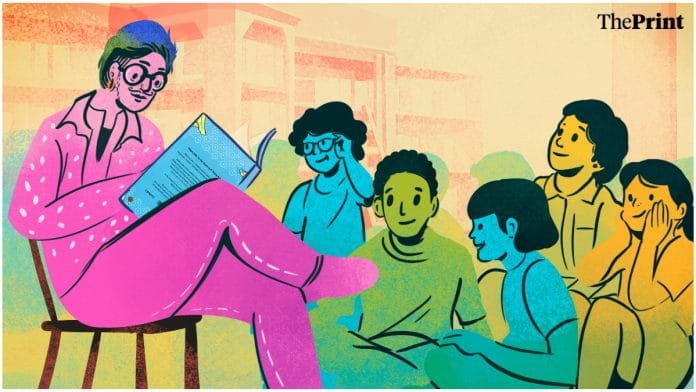


As June heralds global Pride Month, public discourse surrounding the Indian LGBTQ+ community predictably and necessarily gravitates toward the socio-legal sphere. The conversation is anchored in marriage equality petitions, horizontal reservation frameworks, and the push for comprehensive anti-discrimination statutes. Yet, parallel to these constitutional trajectories, a profound structural shift has materialised within the subcontinent’s literary landscape.
For decades, Indian queer literature was functionally tethered to the politics of survival. The dominant, almost exclusive, modes of expression were the coming-out memoir, the trauma-centric auto-fiction, and the anthological plea for basic visibility. Today, that paradigm has fractured. Contemporary Indian queer writing has transcended the didactic burden of explaining its mere existence to a heteronormative gaze, boldly claiming space within the architectures of mainstream genre fiction: science fiction, high fantasy, gothic horror, and unvarnished romance.
The early canon of Indian queer literature was characterised by an urgent, existential necessity to document lived realities. The most culturally seismic example remains Ismat Chughtai’s 1942 Urdu masterpiece, Lihaaf (1942). Charged with obscenity by the British Crown and subjected to a protracted trial in Lahore, Chughtai’s narrative never explicitly named the relationship between the neglected aristocrat Begum Jaan and her masseuse, Rabbu. Instead, queerness was mapped onto the domestic geography of the zenana (women’s quarters) and communicated entirely through suggestion—specifically, the terrifying, elephant-like shadows cast by the titular lihaaf (quilt) against a bedroom wall. For decades, Lihaaf dictated the parameters of Indian queer literature: it was a literature of euphemism, where marginalised identities were forced to inhabit the shadows of the text to evade legal and societal retribution.
Queer literature as sociological evidence
As the grip of strict realism began to loosen in the late 20th century, authors began unearthing these classical anecdotes to construct early forms of queer speculative fiction. Suniti Namjoshi’s groundbreaking Feminist Fables (1981) and her subsequent novel The Conversations of Cow (1985) pioneered this method, weaponising ancient myth and Aesopic allegory to satirise a heteronormative patriarchy. Similarly, Amruta Patil’s seminal graphic novel Kari (2008) utilised a deeply mythic, almost dystopian urban smog to frame the alienation of its lesbian protagonist. Works such as Hoshang Merchant’s 1999 anthology Yaraana, alongside the autobiographical interventions of activists such as Ashok Row Kavi, operated as literary evidence of queer existence against the bleak backdrop of colonial-era criminalisation under Section 377.
Consequently, the literary output of the 2000s and early 2010s was predominantly realist and autofictional, heavily indexing themes of familial rejection, systemic isolation, and the psychological violence of the closet. During this period, queer literature served as sociological evidence. R Raj Rao’s uncompromising novel The Boyfriend (2003) bypassed the sanitised elite to map gay desire onto Mumbai’s underbelly, dissecting the violent intersections of caste, class, and sexuality. Similarly, Vasudhendra’s landmark Kannada short story collection Mohanaswamy (2013), translated by Rashmi Terdal, shifted the gaze from metropolitan bubbles to the casual cruelties and quiet heartbreaks of small-town India. Hansda Sowvendra Shekhar’s My Father’s Garden (2018) further decentralised the narrative, embedding queer desire within the deeply entrenched patriarchal and political realities of a Santhal medical professional in Jharkhand.
While these narratives were historically vital for securing socio-legal visibility, they inadvertently established a monolithic “queer trauma plot”. This narrative framework, though rooted in authentic suffering, began to severely curtail the imaginative scope of LGBTQ+ protagonists within Indian publishing, inadvertently reducing queer lives to singular tragedies meant for the consumption of a sympathetic but detached mainstream audience.
The current decade, however, marks a radical departure from this utility-driven literature. Authors are increasingly leveraging the expansive world-building capacities of speculative fiction to decouple the Indian queer identity from systemic trauma, thereby granting their protagonists unprecedented agency, power, and narrative complexity.
This literary maturation is strikingly visible in the realm of science fiction and dark fantasy. A critical precursor to this contemporary wave was Indra Das’s The Devourers (2015), a gothic dark fantasy that flawlessly wove queer fluidity and transcultural monstrosity through the dual timelines of Mughal India and modern Kolkata. Das used the werewolf mythos not to allegorise trauma, but to interrogate hybridity and the beast-human dichotomy, allowing queer desire to exist organically within a brutal, magical universe.
More recently, this generic expansion has accelerated. In Samit Basu’s acclaimed near-future dystopian novel, The City Inside (2022), the protagonist Joey’s queerness is treated as a normalised, incidental facet of her character as she navigates corporate surveillance, climate collapse, and bio-engineered realities. The narrative refuses to pause to justify her sexuality; it is seamlessly integrated into the fabric of a hyper-mediated Delhi. Similarly, the publication of Zorian Cross’s The Yogi Witch (2023) signals the arrival of unapologetic urban fantasy in the Indian queer canon. The novel centres on Jai Gill, a gay protagonist who divides his time between teaching yoga, reading tarot, and slaying demons. By placing a marginalised identity at the epicentre of a magical lineage, Cross subverts the heteronormative tropes of the urban fantasy thriller.
Also read: Indian drag scene is a messy place—and yet full of possibilities
Mythopoeia and the romance recalibration
The integration of queer narratives into mythopoeic (high fantasy) and historical fiction further demonstrates this evolutionary leap. Shastri Akella’s The Sea Elephants (2023) uses the performative traditions of Indian street theatre and mythology to explore gender fluidity and queer desire, moving deliberately beyond the binary constraints of modern societal expectations. Works such as SJ Sindu’s graphic novel Shakti (2023) continue this trajectory, merging ancient speculative mythological elements with complex explorations of identity. Furthermore, authors such as Mary Anne Mohanraj (Jump Space and The Stars Change, 2015) and Shweta Narayan (The Padishah Begum’s Reflections, 2015) have been instrumental in authoring South Asian speculative fiction where queer identities are foundational to space-faring societies and alternative histories.
For years, the domestic sphere remained heavily guarded, breached only occasionally by works such as Manju Kapur’s A Married Woman (2002), which explored an illicit lesbian romance against the backdrop of the Babri Masjid demolition. Yet, such narratives ultimately retreated to the safety of heteronormative resolutions.
Crucially, the romance genre—long a bastion of rigid, cisgender-heterosexual tropes in Indian commercial fiction—is undergoing a queer recalibration. The phenomenal endurance of Sachin Kundalkar’s Cobalt Blue (2013), translated by Jerry Pinto, proved the literary and commercial viability of the queer romantic tragedy. Today, the market has expanded to include lighter, trope-driven romances that mirror mainstream sensibilities, such as Ajay K Pandey’s An Unexpected Gift (2019) and Snehal Arora’s Love Differently (2023). Authors are increasingly producing narratives where the central conflict is not the trauma of coming out, but the universal mechanics of heartbreak, meet-cutes, and romantic resolution.
The significance of this generic diversification cannot be overstated. Genre fiction—particularly science fiction and fantasy—operates as a literary laboratory for social reorganisation. When an author places an Indian queer character at the helm of a space opera or an urban magical conflict, they engage in a radical act of speculative imagination. They compel the reader to envision a universe where heteronormativity is not the default architectural setting of existence. This liberates the queer body from the perpetual loop of victimhood, repositioning it as a site of heroism, moral complexity, and adventure.
Furthermore, this paradigm shift reflects a maturing readership and a more sophisticated publishing ecosystem. The commercial triumph of these genre novels indicates that Indian audiences are increasingly willing to consume queer narratives that are not explicitly packaged as educational or activist texts. Publishers are recognising that LGBTQ+ readers, like any demographic, seek escapism, elaborate world-building, and genre-specific catharsis.
As the literary community reflects on the evolution of queer writing, the metric of progress must extend beyond mere representational headcounts. The true triumph of contemporary Indian LGBTQ+ literature lies in its generic audacity. By abandoning the restrictive confines of the trauma memoir and infiltrating the expansive territories of science fiction, fantasy, and romance, Indian queer authors are not merely claiming space on the bookshelf; they are rewriting the ontological parameters of imagination. And the Indian queer protagonist is no longer merely surviving; they are rewriting history, exploring the cosmos, and mastering the arcane.
Deeksha Tyagi is a research associate at the Sri Aurobindo Centre for Advanced Research, Puducherry. Her X handle is @deekshatyagii. Views are personal.
(Edited by Prasanna Bachchhav)