




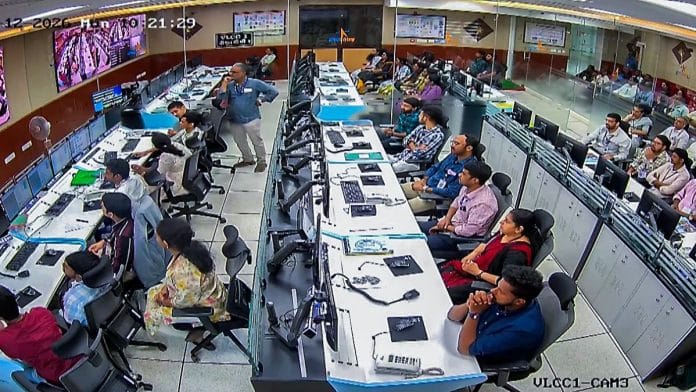

Reports that around 120 scientists have resigned or sought voluntary retirement from the Indian Space Research Organisation over the past few months have triggered predictable concern. The Department of Space has tightened scrutiny of resignations from scientists working on critical programmes, while commentators have described the departures as a “brain drain” that threatens India’s ambitions in space.
While the concern is understandable, it sits on an unstated premise: that every scientist who leaves ISRO is a scientist India has lost. It isn’t. The objective of India’s space programme is not to maximise the number of scientists employed by ISRO. It is to maximise India’s ability to build rockets, satellites and world-class space technology. Those are not the same thing.
For decades, ISRO was effectively the only organisation in India where an engineer could work on launch vehicles, propulsion systems or spacecraft. That monopoly was both a strength and a limitation. It allowed ISRO to build remarkable capabilities under severe budget constraints, but it also meant that India’s entire space ecosystem depended overwhelmingly on a single government institution.
Recognising this, the government began liberalising the sector in 2020. It established IN-SPACe to authorise and facilitate private participation, opened ISRO’s facilities to non-government entities, adopted the Indian Space Policy 2023 to give private firms a much larger role across the space value chain, and later liberalised foreign investment rules to attract greater capital into the sector. A country that only wanted a successful space agency would not have done any of this. India wanted a space industry.
If that was the objective, then the recent resignations should not come as a surprise. They are one of the most predictable consequences of the reform. A private space industry cannot exist without experienced space engineers. Startups developing launch vehicles cannot wait fifteen years for an entirely new generation of engineers to accumulate flight experience. In the early years of any industry, expertise has to come from somewhere. In India’s case, it comes largely from ISRO. This is how industries develop.
Consider Skyroot Aerospace. When two ISRO scientists left the organisation in 2018 to found the company, the decision could easily have been portrayed as ISRO “losing talent”. This week, Skyroot’s Vikram-1 became the first privately-built Indian rocket to reach orbit, making India only the third country with private orbital launch capability. The company has raised $160 million from investors including Singapore’s sovereign wealth fund GIC and funds managed by BlackRock. Its $1.1 billion valuation has made it India’s first space unicorn. Global capital is not making Indian aerospace talent flee. It is chasing it.
Did India lose capability when those scientists resigned? Or did it gain another organisation capable of building orbital rockets?
The same logic applies more broadly. Scientists leaving ISRO to join Indian space companies are not taking their expertise out of the country. They are taking it to other Indian organisations working on Indian technology. That is not a brain drain. It is the emergence of a genuine labour market for aerospace talent.
Nor are these engineers overwhelmingly leaving for foreign firms. Export controls and national security restrictions make aerospace one of the least portable professions in the world. An ISRO propulsion engineer’s alternatives are, almost by definition, Indian ones.
Indeed, it is difficult to celebrate the rise of India’s private space sector while simultaneously lamenting that private companies are hiring experienced engineers. These are not contradictory developments. They are the same development viewed from different perspectives.
Also read: Skyroot’s Vikram-1 success shows it’s time for ISRO to redefine its role
Managing the transition
This does not mean every resignation is inconsequential. Losing experienced engineers from mission-critical programmes can create genuine short-term challenges. Aerospace expertise takes years to develop, and major projects inevitably depend on institutional memory. But that is a question of managing the transition to a more competitive ecosystem, not of preventing the transition itself. ISRO can manage it the way every organisation facing competition for talent does: retention incentives for mission-critical roles, structured knowledge transfer, and succession planning, rather than by trying to make leaving harder.
For decades, ISRO has been treated as synonymous with India’s space programme. That was understandable when ISRO was almost the only institution capable of undertaking frontier space missions. It is becoming less accurate today. A mature space ecosystem consists of launch companies, satellite manufacturers, propulsion startups, component suppliers, software firms, investors, universities and research institutions, not just a national space agency.
The success of India’s space reforms should therefore be measured not by whether ISRO retains a monopoly over aerospace talent, but by whether India develops multiple organisations capable of competing at the technological frontier.
Ironically, the anxiety surrounding these resignations may itself be evidence that the reforms are beginning to work. For the first time in India’s history, talented aerospace engineers have meaningful alternatives to a government career. They can build launch vehicles in startups, attract global investment, pursue commercial opportunities and expand India’s space capabilities beyond a single institution. That is precisely what a liberalised space sector was supposed to achieve.
The real question is not why scientists are leaving ISRO.
It is why we expected them never to.
Ajay Mallareddy is co-founder of Hyderabad-based Centre for Liberty. His X handle is @IndLibertarians.
(Edited by Theres Sudeep)