





Swami Vivekananda had said: “India for thousands of years peacefully existed. We, of all nations of the World, have never been a conquering race. And that blessing is on our head. And therefore we live.”
This precisely defines India’s cultural and civilisational heritage and its soft power.
What is soft power? As disseminated through inclusive cultural and civilisational heritage across millennia, India’s soft power demonstrates that its values of tolerance, inclusiveness and cross-fertilisation of cultures are more important than ever before in today’s conflicted world.
Soft power promotes inter-cultural dialogue, which is essential to counter the multiple challenges to the existing world order. Non-State actors espouse the theory of clash of cultures and civilisation to justify fundamentalist ideology.
An understanding of what our culture and civilisation is takes us on a historical journey into the past. Culture and civilisation include tradition and heritage. They are interlinked.
Heritage is not static since each generation changes the content, sometimes substantially. This civilisational heritage, called ‘sanskriti’ or ‘shristhi’ when juxtaposed with ‘prakriti’ or natural heritage, becomes cultural heritage or Indian culture. Societies that boast of multiple cultures like India need to be both inclusive and multi-dimensional.
India’s civilisational heritage and soft power
How should we mark the territorial boundaries of India’s civilisation? The concept of civilisation has become territorially open-ended. This highlights the importance of safeguarding India’s civilisational and cultural integrity in a globalised age of multiculturalism, hybridism and trans-cultural norms.
E.H. Carr notes: “History is a continuous process of interaction between the historian and his facts, an unending dialogue between the present and past, a dynamic, dialectical process, which cannot be limited by mere empiricism or love of facts alone.”
Another aspect is the inter-linkage between culture and imperialism in the 19th century. Dr. Edward W. Said noted in his seminal work on ‘Culture and Imperialism’: “Partly because of empire, all cultures are involved in one another; none is single and pure, all are hybrid, heterogeneous, differentiated and un-monolithic”.
This is an excellent definition of India’s culture.
Efforts to date our civilisation began with the Harappan culture in 2500 BC, the rise of Buddhism and Jainism around 486 and 468 BC, the invasion of Alexander the Great in 326 BC and the rise of the Great empires in North and South India thereafter, such as the Mauryas, Guptas, as well as the Pallavas and Chalukyas.
Efforts were made to belittle or downgrade our heritage after the arrival of the Dutch, Portuguese, French and British to India, the rise of the foreign settlements, the complete domination of India under colonial rule and rise of our national movement.
During this period, as chronicled by Edward W. Said, interpretation of our heritage was dominated by the notion that the West needed to bring civilisation to primitive people or to destroy it where it existed. Said noted that the notion of inferior races helped fuel the imperial acquisition of territory during this period.
One of the most authoritative works of British historian AL Basham, titled The Wonder That Was India, rejects the earlier prevalent Western interpretation of Indian civilisation as spiritual and unchanging. Basham demonstrated that India has a dynamic civilisational and cultural heritage and Indian civilisation is much more than a history of its religions.
India’s oral traditions have an important contribution. They informed the people through the ages, making them conscious of the antiquity of their own culture. India has one of the oldest continuous cultural traditions globally.
The civilisation that developed in the Valleys of the two great river systems, the Indus and the Ganges—although in a sharply demarcated geographical region due to the Himalayas—was never an isolated civilisation.
This resulted in the development of a complex pattern of multi-dimensional culture, demonstrated in the art and cultural traditions from ancient to modern India. Whether the dancing Buddhas of the Gandhara school of art, strongly influenced by the Greeks, to the great temples of North and South India, to Mughal architecture and miniature paintings, which were an amalgamation of Hindu and Muslim traditions.
The Harappan civilisation survived till about 2000 BC, when it was affected by climate change. A sudden weakening of the summer monsoon 4,100 years ago in north-west India led to 2 centuries of drought, the disappearance of the river Saraswati and the decline and death of this civilisation as its people migrated in search of water, mostly to the fertile Gangetic plains.
The Aryan period saw the development of Vedic literature as well as the Puranas. The earliest literary source was the Rig Veda and the two epics, the Ramayana and the Mahabharata.
Due to cross-fertilisation of cultures, India’s ancient history did not perish with the coming of Muslim invaders, unlike the decline of ancient Persian culture and civilisation. Temple architecture from the 6th century shows some Greek influence, while later the construction of the roof of the temple, which went from wood to stone, showed Muslim influence.
The ancient Indian culture did get severely impacted by invasions of the Muslim rulers from the 10th century onwards. Much destruction followed. The Mughals then rose to power and there evolved a distinct Indo-Islamic style of art and culture. The Taj Mahal remains the best example of it. Similarly, Mughal miniature paintings, although based on the Iranian style, derived their distinctive character from the indigenous painters employed by Akbar.
What developed in Mughal times was an eclectic pattern of civilisation.
India has been a prominent member of UNESCO’s prestigious World Heritage Committee, which oversees the conservation and protection of World Heritage Sites globally.
A major achievement came in July 2006, when the World Heritage Committee, meeting in Vilnius, Lithuania, inscribed ‘Aapravasi Ghat’ on UNESCO’s World Heritage List with India’s support. Established by the former colonial authorities after the formal abolition of slavery in 1834, Aapravasi Ghat was the point through which indentured labourers passed, either to remain in Mauritius and work on sugar plantations or to sail to other destinations, including Guyana, Suriname and Réunion Island.
India is also home to 45 world heritage sites, including many in Delhi. One of them, Humayun’s Tomb, has been enhanced through UNESCO designation of a dozen other tombs in its vicinity as monuments of outstanding universal heritage.
India is also an important member of the UNESCO Committee on Intangible Cultural Heritage (ICH). The country has 16 elements on UNESCO’s Representative List of ICH, including Vedic chanting, sacred theatre, Yoga, Durga Puja, and Kumbha Mela, Garba and Deepavali.
In 2025, a serial nomination of 12 forts (11 in Maharashtra & one in Ginjee, Tamil Nadu) titled ‘Maratha Military Landscape’ was a major recognition. In 2026, the Ancient Buddhist Site, Sarnath, Varanasi, was inscribed. For the 2027 cycle, a joint nomination with Mauritius called “Chhath Mahaparv” is being sought for inscription.
It is internationally recognised that one of India’s significant global contributions has been the exercise of its soft power, drawing on its ancient cultural and civilisational roots. ‘Vasudhaiva Kutumbakam’ from the Maha Upanishads was among the first precursors of Global Citizenship as it is understood today.
‘Udara charitanama tu,
Vasudaiva kutumbakam’.
It means that the world is one family, and it forms the basis of UNESCO’s ongoing dialogue between cultures, religions and civilisations.
India’s soft power, as represented through its vibrant cultural and civilisational heritage and through its diaspora, has spread worldwide. It serves as a powerful reminder that India’s values of tolerance and inclusiveness and cross-fertilisation of cultures are more relevant than ever before in the current un-making of the world order.
Also read: Indians want democracy but also a strong leader. What this paradox does
A gift to the world
Cultural diplomacy is an important dimension of a country’s soft power. In India, it preceded, in many ways, the evolution of its hard power. Soft power is India’s civilisational heritage. Its international impact was felt long before the term found a place in popular parlance. Indian arts, culture and spiritualism have attracted people from all around the world for centuries.
Cultural bonding can be one of the ways to prevent conflict and promote peace. The pursuit of cultural diplomacy and soft power in India is underpinned by the Ministry of External Affairs’ iconic institutional structure, the Indian Council for Cultural Relations (ICCR) established in 1950. The objective was to revive and strengthen India’s cultural relations with the rest of the world.
This reorientation of our foreign policy was indeed timely and intrinsic to a successful foreign policy initiative. Not just in our neighbourhood but also with our strategic partners and new dialogue partners in Africa and Latin America.
Moreover, Indian spirituality has had a global presence for centuries. One of its important manifestations in today’s world is the large number of Yoga centres spread across the world. Due to the initiative taken by Prime Minister Narendra Modi soon after his first election in 2014, the UN General Assembly recognised 21 June as International Day of Yoga.
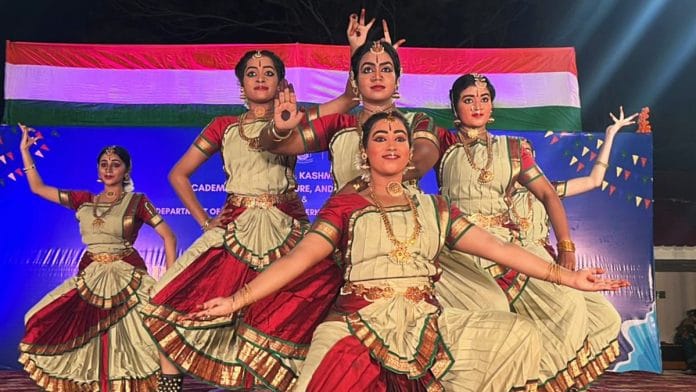
Other elements of India’s soft power include Indian classical dance in various forms, which enjoy a high degree of worldwide acclaim and appreciation. The global popularity of Bollywood films is another instance of India’s soft power, almost as famous as Indian cuisine. UK defines its national food as ‘Chicken Tikka Masala’!
Religious tourism is another way to spread this soft power across India’s borders, including through the ‘Buddhist Circuit’. This constitutes a journey purely for internal peace. It is a journey through austere Stupas and ancient monasteries reverberating with the mystical chants of sacred Buddhist mantras. Every point on the Buddhist circuit has a history steeped in myth and meaning; every monument stands as testimony to faith fused into reality.
Cultural diplomacy and soft power are important instruments in regional and international cooperation and are of particular relevance in our neighbourhood. It has emerged as the force to connect, to build bilateral relations and to heal the ruptures created by history and politics. It may take time for such a process to mature since some of our neighbours continue to be apprehensive of cultural connectivity across states and frontiers.
Our culture and civilisation is our gift to the world. It reflects the evolution of our own history, the manner in which India seamlessly absorbed other cultures but never lost its own.
William Dalrymple has pertinently noted in White Mughals: Love and Betrayal in Eighteenth-Century India: “India has always had a strange way with her conquerors. In defeat, she beckons them in, then slowly seduces, assimilates and transforms them”.
Dalrymple was only echoing Rabindranath Tagore. When I visited Visva-Bharati University, Shantiniketan, I read Tagore’s inspirational message, which still resonates today.
“India represents the wealth of mind which is for all. We acknowledge India’s obligation to offer to others the hospitality of her best culture. And India’s right to accept from others their best.”
India’s soft power is a living culture and can only survive if nurtured and strengthened by successive generations, including by citizens who live abroad. Unless we present our traditions called ‘parampara’ and our civilisation and cultural heritage in a manner which is both comprehensible and attractive to young Indians, this precious heritage cannot be nurtured and strengthened.
It is an important mechanism to rebuild trust and harmony in an emerging and new world order. It has more strength than conventional hard power.
Bhaswati Mukherjee is a retired IFS officer. She has served as India’s ambassador to UNESCO, Paris, and the Netherlands. She tweets @AmbBhaswati1. Views are personal.
(Edited by Ratan Priya)
The biggest component of Indian soft power, from the early years of independence, is global respect for a poor country, emerging from two centuries of colonial rule, with abysmal levels of education to begin with, making a success of its liberal democracy and an enlightened, secular Constitution, designed specifically for such a diverse country. It was not a question of punching beyond the weight created by hard power. There was genuine admiration for what India was attempting.