




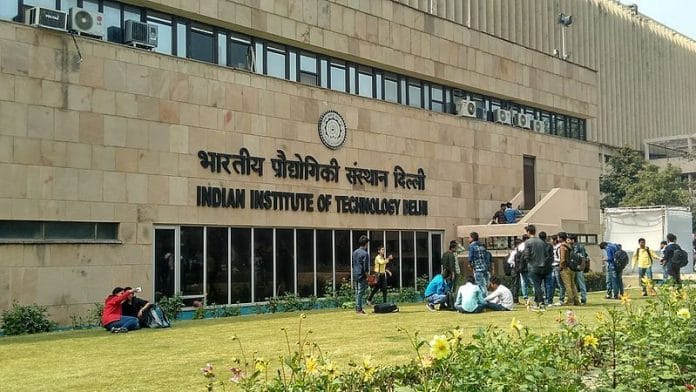

Every few years, India asks why its Indian Institutes of Technology do not produce more researchers, and the same three answers come back. The first is money: larger endowments and better laboratories are lacking. The second is talent, although the IITs admit what is arguably the most rigorously selected group of young people anywhere, which makes talent the least plausible explanation of all. The third, louder lately, is that the humanities and social sciences distract from pure engineering and should be removed.
Each answer touches something real, but none explains why the institutions that send the largest share of their graduates into research look nothing like what these answers prescribe. The question deserves care, because the IITs are among independent India’s great institutional achievements: within a generation, they built one of the most respected engineering names in the world, and their graduates now lead companies, laboratories and universities around the world. The more fundamental question is what the IITs are for.
The wrong mirror
The IITs are habitually measured against Stanford and MIT, universities whose endowments and annual budgets run into billions of dollars. This comparison functions as a two-way convenience — establishing benchmarks beyond India’s present developmental capacity while simultaneously justifying the failure to meet them. India’s population, resources, social and economic needs, and stage of development are different, and a comparison that ignores this produces either despair or ranking-chasing, never critical insight.
A more useful mirror is a small American college built around undergraduates. Harvey Mudd College in California is an undergraduate-only science and engineering college. It was founded in 1955, making it an exact contemporary of IIT Kharagpur and IIT Bombay. Harvey Mudd’s analysis of US National Science Foundation (NSF) data estimates that 28.7 per cent of its graduates go on to earn a doctorate in science or engineering, the second-highest rate of any institution in the country. A recent analysis of doctorate recipients per thousand undergraduates places Harvey Mudd just behind Caltech and ahead of MIT, with Swarthmore College in Pennsylvania, a liberal arts college with only a small engineering department, close behind. The NSF’s own analysis confirms the pattern: per capita, graduates of such colleges earn science and engineering doctorates at higher rates than graduates from any other type of institution.
These liberal arts colleges, it should be said for Indian readers, are not humanities colleges; they are small undergraduate institutions that teach the sciences, mathematics, and humanities together. Swarthmore shows how far that breadth can go: the social sciences are its largest field of study, accounting for about 22 per cent of graduates, with computer science and mathematics close behind, and yet an estimated 21.3 per cent of its graduates go on to earn a doctorate. The same culture produces inventors as well as scholars, and among Harvey Mudd’s alumni are the co-inventor of SQL, the language that underpins most of the world’s databases, and the creator of Flash.
Honesty requires two qualifications. These colleges spend more per student than the IITs, even allowing for India’s lower costs, though by a margin far smaller than the difference in what their graduates go on to do. They also attract students already inclined toward research, and their small size means a handful of students can move a percentage. Neither money nor self-selection explains the whole gap, and the remainder is institutional design, which India can learn from without needing to import it.
An institution in the middle
The IITs are often described as undergraduate institutions when that explains a shortfall in research or rankings, and as research institutions when that justifies a budget or aspiration. The ambiguity is not only theirs. It mirrors a national indecision about what India wants from its leading institutions. The IITs were founded with a clear purpose, to supply the engineers that a newly industrialising country needed. After liberalisation in the 1990s, the state never redefined that purpose, so the global labour market defined it instead, and the placement package became the institution’s measure of success. Since then, mandates have been added rather than chosen: global rankings, doctoral expansion, new campuses, incubators, overseas outposts, and online degrees.
The signals even contradict one another. The National Education Policy of 2020 states that even engineering institutions such as the IITs will move toward more holistic and multidisciplinary education with more arts and humanities, while the ranking frameworks that these institutes chase reward doctoral volume and paper counts.
Other Indian institutions have chosen. BITS Pilani committed to professional formation and built its Practice School around it. St. Stephen’s, Hindu College, and Lady Shri Ram College committed to the humanities and social sciences and earned their standing there. The IITs try to be all of these at once. South Korea founded the Korea Advanced Institute of Science & Technology (KAIST) with an explicit national purpose and held it across governments, and Israel tied its leading institutions to needs it could name.
India has not said what it wants, and the IITs have not decided for themselves either. Harvey Mudd, born in the same decade as the first IITs, chose its identity and held on to it for 70 years; nobody handed it one. That identity is not a compromise in the middle but a deliberate combination of rigorous science, serious humanities and undergraduate research, and the difference between being in the middle by default and combining by design is the whole lesson.
What a culture of inquiry is made of
The difference begins with access, not machinery. The older IITs possess supercomputers and cleanrooms no small college could afford. But in a large research institution, that equipment and the faculty attention that matters more flow first to doctoral students and postdoctoral researchers, while most B.Tech students meet research only in a constrained final-year project. Harvey Mudd has no graduate students, so when a professor wins a grant, undergraduates run the instruments, co-author the papers, and learn early that they can produce knowledge rather than merely absorb it. The IITs already know this can work.
Several of them run summer research programmes and honours tracks that place undergraduates in faculty laboratories, and those programmes show that the model needs no American campus to succeed. The question is whether such programmes remain at the margins of an IIT education or move to its centre. Access is the mechanism that matters most, and it is also the cheapest to change.
It continues with incentives, and with what an institution means by rigour. The Joint Entrance Examination (JEE) is an extraordinary filter that rewards speed, stamina and convergence on the single correct answer, and it serves a country that needs fair selection at enormous scale. The trouble begins after admission, because the rank never retires. It follows the student into branch allocation, then into the CGPA, then into the placement season, where status is measured by the size of a salary offer. And at every stage, the lesson is to optimise a metric someone else has defined.
It is tempting to conclude that IIT graduates choose industry simply because the money is too good to refuse. Harvey Mudd’s graduates complicate that conclusion: PayScale ranked them first in the United States for early-career pay in 2024, with a median above $115,000, ahead of Caltech and MIT, and yet the college sends one of the country’s highest shares of graduates into doctoral research. Generous salaries and a strong research pipeline can coexist, which suggests that what a student chooses depends heavily on what the institution celebrates.
The gap between an industry salary and a doctoral stipend weighs more heavily on many Indian families, and that pressure is real, but it does not explain why choosing research so often has to be justified as if it were a failure, or why a graduate who leaves industry for a doctorate is seen as stepping down rather than moving on. Research rewards the opposite of the habit the rank instils, since a doctorate has no syllabus and no answer key, and a wrong answer is not a penalty but data. Williams College in Massachusetts builds that habit through tutorials in which students defend their own work in front of a professor, and Harvey Mudd through its senior Clinic Program, a fixture of its curriculum for more than 60 years, which puts student teams on open-ended problems for industry and other outside sponsors. Neither is gentler than an examination; both demand a different kind of rigour.
The humanities belong in this account, though in a narrower role than either their defenders or their critics usually claim. No one can show that a humanities requirement by itself produces researchers. What can be shown is that the institutions at the top of the research-yield tables all keep one. Harvey Mudd requires roughly a third of each student’s coursework outside science and engineering. Swarthmore requires every student to take at least three courses each in the arts and humanities, the social sciences, and the natural sciences and engineering, along with three writing-intensive courses. Caltech requires 99 units in the humanities and social sciences, explaining that this study gives its graduates the ability to understand the societal, political and economic forces that shape their work and are shaped by it. MIT requires eight subjects across the humanities, arts and social sciences of every undergraduate.
None of these institutions removed the humanities to concentrate on science. A proposal to strip them from the IITs therefore moves the institutes away from every model that reliably produces researchers, and against the government’s own education policy, and the burden of proof lies with those who propose it.
Learning, not transplanting
None of this argues for importing an American model. Some of it translates directly: IIT faculty already run sponsored projects, and placing undergraduates inside them costs almost nothing. Some of it needs adapting: a Clinic-style programme in India would draw its sponsors from public sector undertakings, defence laboratories, state governments and deep-technology startups, and might be a track rather than a requirement. Some elements do not survive the change in scale, since tutorials are impossible at IIT class sizes, although the principle that some assessment should require students to defend their own work survives intact.
The humanities need integration more than addition, because the departments already exist. India has also begun its own experiments, since the IISERs and the undergraduate programme at IISc were created to steer strong students toward research, and the IITs have as much to learn from them as from any college abroad. Some of the necessary choices sit with the institutes, such as what they celebrate and where they direct faculty attention, and some only the state can make, such as setting the mandate and deciding what rankings and funding formulas reward.
Also read: Gurukuls, Nalanda, madrasas: India’s ‘traditional’ education was never for everyone
The patience to choose
Impatience runs through every level of this story. For the student, the placement offer is the fastest available proof of success, and a doctorate the slowest. For the institution, rankings, new programmes, and new campuses show progress within a director’s term, while a culture of inquiry shows itself only decades later, in what alumni go on to do. For the state, announcing new institutions is quick, and deciding what the existing ones are for, then holding to that decision, is slow and unglamorous.
Harvey Mudd and the first IITs began in the same decade, and the difference between them today is less a matter of money than of 70 years of consistency, just as KAIST’s purpose outlasted the governments that set it. Before asking why the IITs do not produce more researchers, India might ask whether it has ever told them that it wants them to, and whether it is willing to wait for the answer, because a culture of inquiry is among the things a country can only choose to patiently build.
Vasu Eda is the Founding Director of the August 15, 2047 Project and the author of ‘Get Job Ready’ and the forthcoming ‘Innovation and the Future of India’. He tweets @VasuEda. Views are personal.
(Edited by Aamaan Alam Khan)