




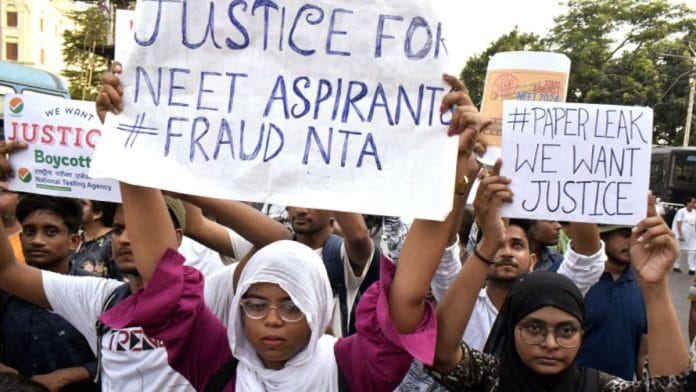

The Central Bureau of Investigation was handed its 18th exam fraud investigation since 2015 on 12 May. The National Eligibility cum Entrance Test, NEET-UG 2026, the national medical entrance examination that 22.75 lakh students had registered for, was cancelled hours before it was due to begin, after a paper leak at a printing facility in Jaipur. The students went home. A probe was ordered, and the country resumed waiting for a conviction that, based on the last decade of evidence, is extremely unlikely to come.
This is not a story of one single exam but a system that has been failing, continuously, for 20 years and a state that has consistently treated each scandal as an occasion for outrage rather than an imperative for reform.
To understand the gravity of the situation, we deployed multiple AI algorithms, analysed court orders, tracked CBI/ED investigations, and went through more than 500 media reports.
A comprehensive analysis of exam fraud in India between 2005 and 2026 has documented 220 incidents spanning 21 states. The cases cover paper leaks, proxy impersonation, OMR tampering, result manipulation, and electronic cheating. Together, they affected an estimated 10 crore students.
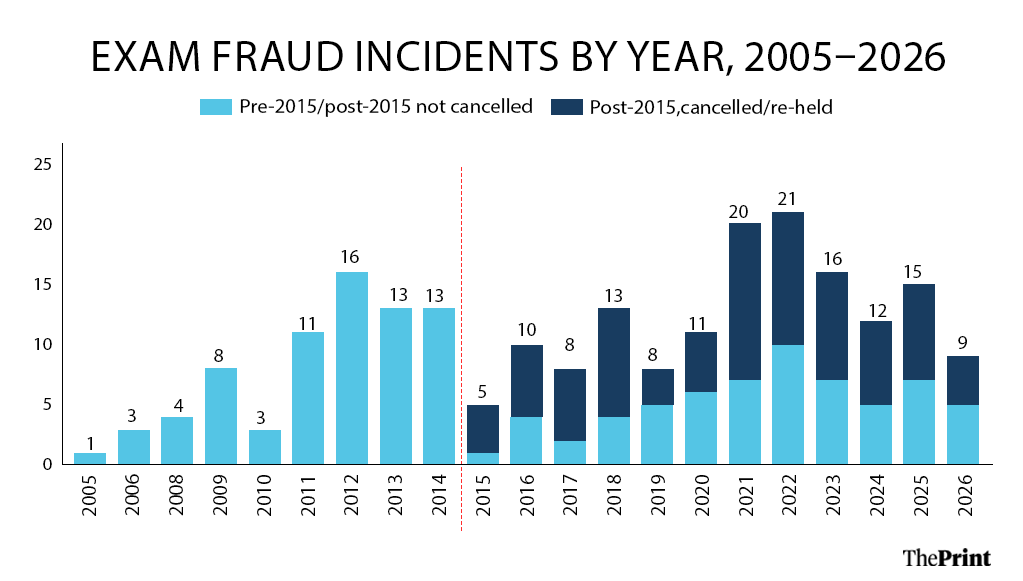
The dataset is not evenly distributed across time. Before 2015, the team documented 72 cases, which is a rate of roughly seven per year. After 2015, that number nearly doubled—148 cases have been documented since 2015, averaging 12 per year.
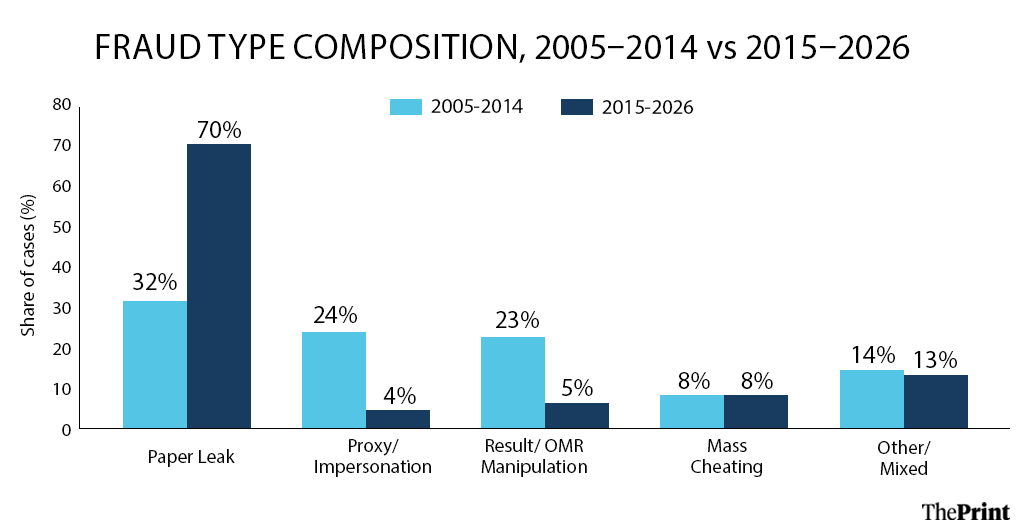
The nature of fraud has also shifted in ways that make detection harder and prevention even harder. Before 2015, paper leaks accounted for roughly 32 per cent of documented cases, but after 2015, paper leaks shot to 70 per cent of all cases. The explanation is rather simple: “The WhatsApp era” reduced the labour cost of a leak to near zero. One corrupt employee with a phone camera at a printing warehouse is now enough to compromise an examination taken by millions.
All six anti-leak laws passed in Rajasthan, Uttarakhand, Gujarat, Odisha, Jharkhand, and at the Centre are primarily punitive. They criminalise leaks and collusion after the fact. None mandates end-to-end preventive controls across paper setting, printing, transport, scanning, and tabulation.
A geography of failure
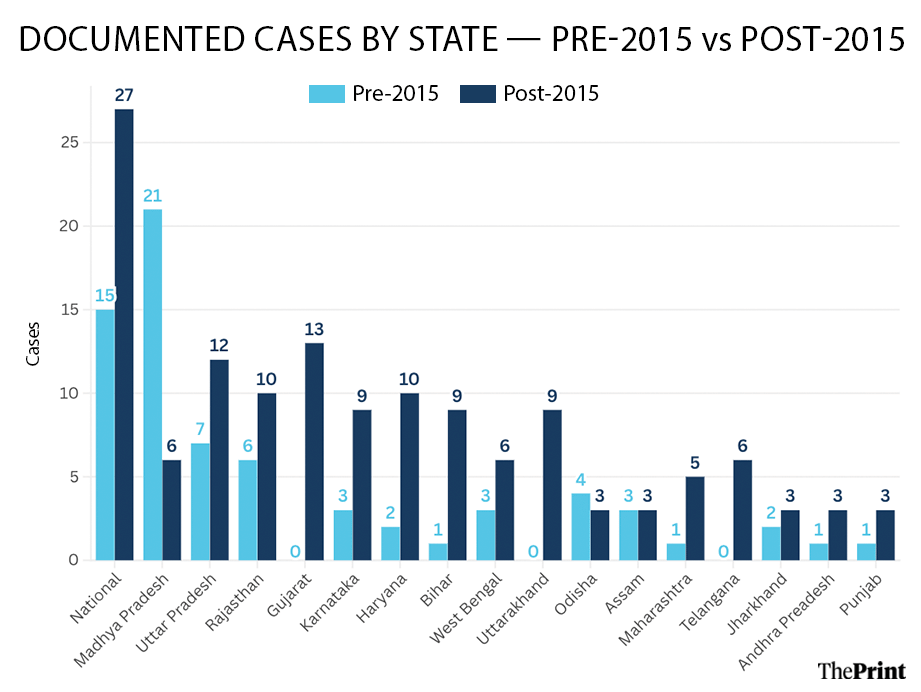
The post-2015 surge in examination fraud is not spread uniformly across India. Five states account for the sharpest deterioration: Gujarat had zero documented cases before 2015 and 13 since, Uttarakhand was absent from the pre-2015 dataset and now has nine cases, Haryana moved from two to 10, and Telangana also previously absent, now has six cases. Rajasthan worsened from six to 10, and Uttar Pradesh from seven to 12.
Gujarat’s record warrants particular attention. The state passed two successive anti-leak laws, and its worst years came after both. Asit Vora, BJP member and chairman of the Gujarat Secondary Service Selection Board, oversaw 11 consecutive documented leaks according to an investigation by The Wire. He was retained through every incident and resigned only after a criminal chargesheet was filed in the case. Though his name was not mentioned in the chargesheet. Madhya Pradesh shows a nominal post-2015 decline (21 to six cases), reflecting the end of the Vyapam cycle rather than improved governance; only one of its six post-2015 cases resulted in cancellation. Uttar Pradesh is the only state in the high-fraud cluster where the problem genuinely crosses party lines, distributed across Bharatiya Janata Party (BJP), Samajwadi Party (SP), and Bahujan Samaj Party (BSP) governance periods.
Politics of paper leaks
To be clear, exam fraud is not a BJP-only problem. It happened under Congress. It happened under Bharat Rashtra Samithi (BRS), All India Anna Dravida Munnetra Kazhagam (AIADMK), and Jharkhand Mukti Morcha (JMM). But the data shows one party’s footprint is so dominant that it cannot be explained away.
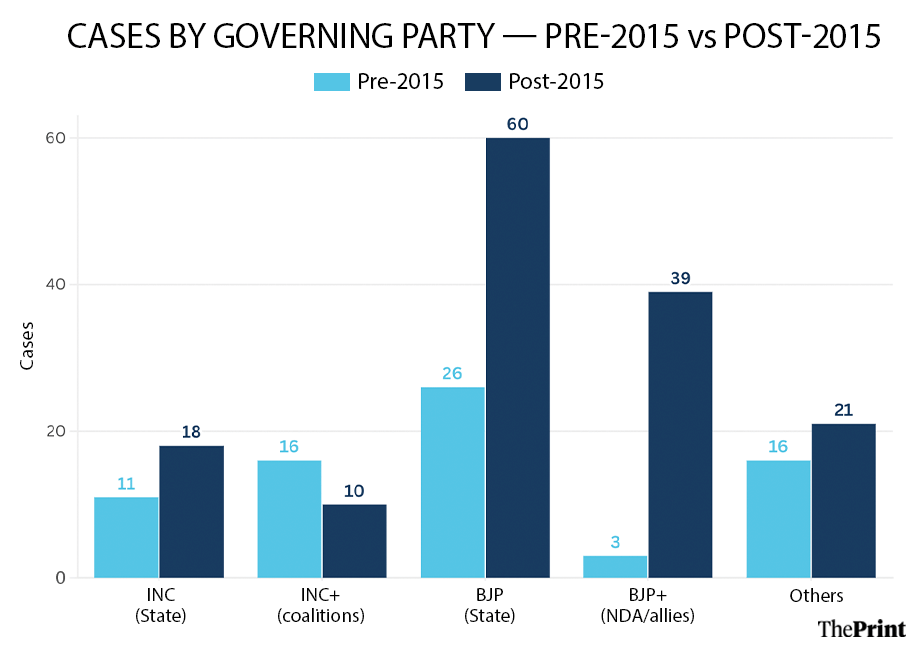
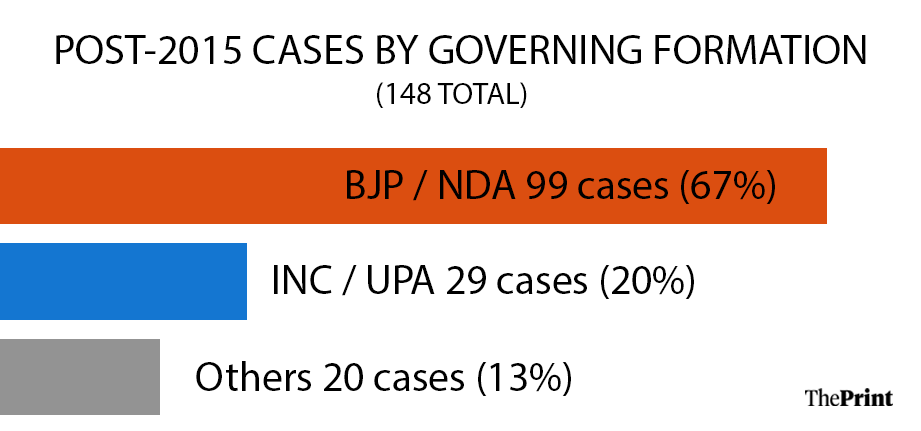
Across the entire 220-case dataset, the BJP and its NDA allies account for 128 cases (58 per cent). The Indian National Congress (INC) and its allies account for 55 (25 per cent). Post-2015, the BJP’s share rises: 99 of 148 cases (67 per cent) occurred under BJP or NDA governance.
India’s most compromised exam
No exam family in the dataset has been more persistently compromised than the medical entrance cluster. At least 15 distinct incidents are documented when NEET and its predecessor, All India Pre-Medical Test (AIPMT), state PMTs, All India Institute of Medical Sciences (AIIMS) PG, National or Foreign Medical Graduate Examination, and Madhya Pradesh’s Pre-PG examinations are counted together as a continuous record of fraud spanning all 20 years of the study period.
The Vyapam PMT ran fraudulently across six consecutive annual cycles from 2008 to 2013, using organised impersonation networks. No exam in the cycle was cancelled at the time. The Supreme Court later upheld the cancellation of 634 MBBS admissions and degrees tied to those cycles.
In 2015, the national AIPMT was cancelled and reheld after the paper circulated electronically across roughly 10 states—a network traced to operator Ravi Attri, who would later resurface in connection with UP leaks in 2024. The pattern of the same individuals reappearing across multiple incidents years apart is one of the dataset’s most arresting features. Each reappearance is a quiet indictment of every investigation that came before
NEET-UG 2024 was the most consequential recent incident. A paper leaked in Hazaribagh and Patna. Approximately 155 students are believed to have benefited. The Supreme Court upheld the examination rather than ordering a full retest. The National Medical Commission suspended 26 MBBS students and cancelled 14 admissions.
NEET-UG 2026, cancelled on 12 May, is the latest chapter. The Public Examinations (Prevention of Unfair Means) Act 2024 has been invoked, and a CBI probe has been ordered.
Collapse of criminal accountability
The CBI is most frequently assigned to investigate exam fraud at the national level. Before 2015, it had a credible record. It convicted 10 people, including the RRB Mumbai chairman, in the 2010 railway recruitment fraud case. It convicted three people in the 2009 CRPF constable case, including a former Deputy Inspector General. In the Vyapam matter, it has produced convictions across multiple sub-cases built on pre-2015 FIRs.
Since 2015, the CBI has been handed at least 17 exam fraud investigations. Its conviction record in this duration is zero. Complete zero.
The CBI’s post-2015 record: Involved in NEET UG 2024, UGC-NET 2024, SSC CGL 2017, JEE Main 2021, WB SSC 2016, HP Police Constable 2022, Army CEE 2017, Karnataka PSI 2021, and at least nine other cases.
Documented convictions from its own post 2015 investigations: zero. In NEET-UG 2024, the agency missed the 90-day chargesheet deadline, allowing the key accused to walk free. In UGC-NET 2024, it investigated a supposed leak and then filed a closure report, finding that the evidence was a doctored screenshot. Over 11 lakh registered candidates had already been displaced.
The Enforcement Directorate has been involved in at least 11 post-2015 exam fraud cases through the Prevention of Money Laundering Act 2002 (PMLA) proceedings, attaching crores in alleged proceeds. It has produced zero convictions. ED prosecutions depend on the underlying criminal case being successfully prosecuted first, and when state police investigations stall, the money laundering case stalls with them.
UGC-NET 2024 stands as a case study in what happens when an act that should have reflected institutional prudence instead becomes a troubling spectacle of administrative haste. The Ministry of Education cancelled the examination the day after it was held on account of an integrity compromise. However, CBI later filed its closure report in the case, saying that the case was fabricated and based on a doctored screenshot. No Ministry official has been held accountable. No one who fabricated the intelligence has been charged.
Individuals the system protects
Alongside the aggregate failure is a gallery of individuals whose names appear repeatedly in fraud cases, arrested, charged, and then released, sometimes with the assistance of the very political structures they are accused of having compromised.
Rajeev Nayan Mishra: Linked to four exam leaks across UP and Madhya Pradesh: UPTET 2021, NHM Staff Nurse MP 2023, UPPSC RO/ARO 2024, and UP Police Constable 2024. He allegedly operated seven shell companies; alleged co-mastermind with Ravi Attri. Named in an ED PMLA prosecution complaint in January 2026. Obtained anticipatory bail from the Allahabad High Court in September 2025, partly because the ED’s own summons was procedurally defective–Rs 1.02 crore attached. Zero documented convictions.
Bandi Sanjay Kumar: Then Telangana BJP president and Lok Sabha MP, named A-1 by Warangal Police in the Telangana SSC Class 10 Hindi paper leak (2023) and arrested at midnight from his residence. The Telangana High Court quashed the FIR in 2025 for insufficient material. He denies sourcing the leak and is now the Union Minister of State.
Asit Vora: BJP member and chairman of the Gujarat Secondary Service Selection Board. Oversaw 11 consecutive documented leaks at Gujarat Subordinate Service Selection Board (GSSSB) and affiliated bodies according to The Wire’s investigation. Retained through every incident; resigned only after a criminal chargesheet was filed. The BJP officially stated his resignation had ‘nothing to do with the paper leak.’
Hakam Singh Rawat: BJP Uttarkashi Zila Panchayat member. Arrested by the Uttarakhand STF as the alleged Uttarakhand Subordinate Service Selection Commission (UKSSSC ) paper leak mastermind (2022), his illegally constructed resort was demolished by court order. Re-arrested in 2025 for the same alleged modus operandi, reportedly demanding Rs 12–15 lakh per candidate. Expelled from the BJP for six years.
Laxmikant Sharma: BJP Minister for Technical and Higher Education in Madhya Pradesh. Ran the ministry that oversaw the exam board, conducting 17 fraudulent exams under Vyapam. Chargesheeted by the CBI in the Vyapam contractual teacher branch (2018). The same CBI gave him a clean chit in January 2019, citing a lack of evidence while convicting dozens of low-level impersonators from the same scam.
Also read: Why PM Modi’s austerity call needs real fiscal teeth
What 20 years of failure look like
The pre-2015 era produced approximately 12 documented conviction clusters across all exam fraud cases. The post-2015 era, across 148 cases, has produced exactly one conviction, that is the Haryana Judicial Services 2017 case, decided by a Delhi court in August 2024 after investigation by a Chandigarh SIT, not the CBI.
The students who sat for examinations that were never cancelled before 2015 — the Bihar Board candidates across six years, the thousands who sat for compromised Vyapam exams — largely saw their results stand. The doctors, police officers, and government employees selected through those frauds are in service today. That is not a failure of law but a deliberate policy choice, repeated across governments, that exam fraud is a manageable political cost rather than a criminal accountability problem.
Six anti-leak laws in four years represent the most intensive legislative response to exam fraud in India’s history. None of them changes the architecture of the system: who sets papers, under what controls, where the paper is printed, how it is transported, who scans it, and under what audit regime it is tabulated. Until those questions are answered with enforceable process — not punitive law — the annual cycle of cancellation, CBI referral, chargesheet, bail, and impunity will continue.
NEET-UG 2026 cancellation led four students to die by suicide. A re-test has been announced by the government.
Twenty-two lakh students are waiting for justice to be served by the system where corruption seeps in through the cracks it was meant to seal. But all the data above shows that there is little to no possibility of justice happening.
This article is part of the investigation report titled ‘India’s Examination Fraud Crisis: 2005-2026‘ by Parivartan, a youth-centric social and activist organisation based in Rajasthan with a focus on recent fraud in Rajasthan government exams.
Ashutosh Ranka is the Founder and President of Parivartan. He is also the national spokesperson for the Aam Aadmi Party. He is a public health consultant and a graduate from IIT Kanpur and the London School of Economics. Nice Paudel is Secretary, Student Wing at Parivartan and is a third-year student at Kanoria College, Rajasthan.
(Edited by Ratan Priya)