



There is a popular saying in Dhaka’s political circles that if you can’t change the queen, you change yourself. With Khaleda Zia dead, there is only one former queen, or begum if you please, who still refuses to be cowed down by critics, even as she remains in exile in India.
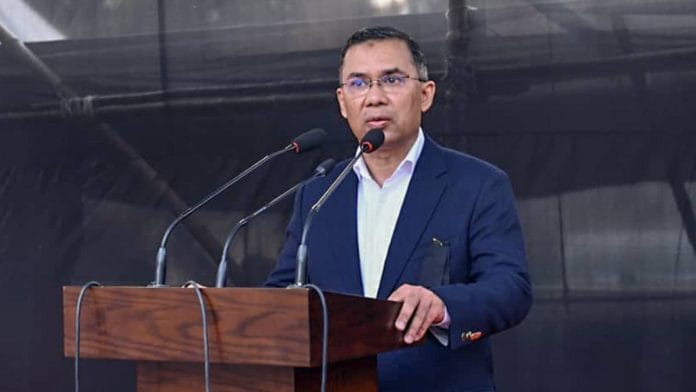
With Sheikh Hasina’s unchanging stance on a December return to her country and with the political unrest that is now fast spreading in Bangladesh and putting his government to test, Prime Minister Tarique Rahman will need to bring all major political parties together to tide over the crisis.
But for that to happen, he may have to change his stance and give in to the opposition’s one big ask: the July National Charter.
Winter of discontent
This has been a season of protests in Bangladesh. On 3 November, the BBC reported that hundreds of garment factories across Bangladesh had been forced to close after days-long protests by workers demanding higher wages. The report said garment workers turned violent in Dhaka by blocking roads, vandalising factories and setting vehicles on fire.
“They also clashed with police, who fired tear gas to disperse them. Police later said that dozens of protesters had been arrested. Workers are demanding a minimum monthly wage of 30,000 taka, more than double the current standard, citing rising costs of living,” the report said.
The garment workers’ protests were preceded by auto-rickshaw drivers’ protests. In October, battery-run auto-rickshaw drivers had blocked several roads in the capital Dhaka, demanding an end to eviction drives and permission to operate on main roads. Local reports said the protests caused severe traffic congestion during the rush hours, even as shortage of auto-rickshaws in Dhanmondi, Mohammadpur, Basila and other areas in Dhaka left commuters struggling to reach their destinations.
Bangladeshi political journalist Sahidul Hasan Khokon told ThePrint that the big reason behind such protests has been the Tarique Rahman government’s failure to address economic woes of citizens.
“Instead of fixing the economy, the government chose to blame the Awami League for fermenting instability in the country. Rahman government cried wolf every time and now the wolf has made a visit,” Khokon said, referring to the ongoing protests by the Awami League that have turned violent.
With Sheikh Hasina slated to return in December and amid the Awami League’s agitation and nationwide lockdown call on 19 November, the length and breadth of Bangladesh has seen an unparalleled rise in political violence. In the last one week alone, clashes, looting and arson were reported from Gopalganj, Chittagong, Dhaka, Sylhet, Narayanganj, Rajshahi, Jashore, Barishal, Bagerhat and Pirojpur.
On 17 November, activists of the Awami League and its students’ wing Chhatra League stormed the premises of the Tungipara police station in Gopalganj and set it on fire. This came after the arrest of several party leaders and activists. The attackers reportedly freed the detainees and looted firearms from the police station. The house of Bangladesh Nationalist Party lawmaker from Gopalganj-3 constituency, SM Zilany, was also set on fire.
In Chittagong’s Panchlaish area, the ancestral home of Professor Muhammad Yunus, chief adviser of the former interim government, was set on fire. Grameen Bank, set up by Yunus, gave a statement saying that as many as 22 of its branches had been subject to arson attacks in the last few days.
But it was the petrol bomb attacks and arson at the village home of Abu Sadik Kayem, the Dhaka University Central Students’ Union Vice President and Jamaat-e-Islami-nominated mayoral candidate for Dhaka South City Corporation, in Khagrachhari around 3 am on 22 November that got Tarique Rahman a stern warning. And it came from none other than Bangladesh’s leader of opposition and emir of the country’s largest Islamist party, the Bangladesh Jamaat-e-Islami, Dr Shafiqur Rahman.
Taking to X, Rahman said: “The Home Ministry’s extreme inaction and indifference are primarily responsible for this. If the government fails to fulfill its responsibilities in this matter, it will have to pay a heavy price. There is no room to remain silent any longer.”
With violent protests showing no signs of getting over, it seems Tarique Rahman is running out of time. What the Prime Minister needs now is for all political parties to come together to tackle the issue of political violence that has gripped the country before Hasina’s planned return in December.
Also read: Bangladesh’s handling of madrasa rapes show it puts religion over safety of children
July solution for December problem
On the issue of Sheikh Hasina, there has been a tacit understanding, at least in public, among major political players in Bangladesh: that there is no space for her in Bangladesh politics any more. But now it comes with a rider: Rahman has to implement the July Charter.
Jamaat-e-Islami secretary general Mia Golam Porwar has announced that his party will take to the streets alongside other forces against the Awami League’s violence and hegemonic influence if the government accepts the referendum verdict and implements the July National Charter.
Porwar said the July National Charter was the main foundation of the unity forged among political parties and the people of Bangladesh during the July uprising of 2024, which aimed to dismantle the existing state structure and establish a new system of governance. He added that nearly 70 per cent of voters had supported the July National Charter in the referendum.
It is not just the Jamaat, but the 11-party alliance as a whole that it heads that has vowed to remain on the streets to resist “sabotage and criminal activities by the Awami League”.
“We want to send an ironclad message of unity to the nation. We must resist these defeated fascist forces and their agents of hegemonic powers at any cost,” Bangladesh Khelafat Majlis Ameer Mamunul Haque said.
But Haque also pointed out that failure to implement the July Charter and the referendum verdict had contributed to divisions among political forces and it must be corrected now.
The BNP government has been accused by the opposition of dragging its feet on the July Charter after over 62 per cent backed the reforms in the 12 February 2026 referendum.
But now Tarique Rahman may have no option but to adopt the political reform framework that will bring about constitutional, electoral, and institutional changes in Bangladesh. And even set a limit of 10 years to his own or any future prime minister’s term.
Deep Halder is an author and a contributing editor at ThePrint. He tweets @deepscribble. Views are personal.
(Edited by Aamaan Alam Khan)