




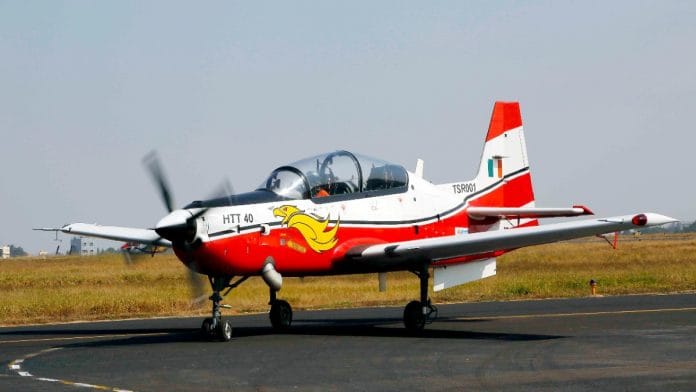

With the critical milestone of handing over the HTT-40 basic trainer aircraft to the Indian Air Force now achieved, Hindustan Aeronautics Limited enters a new phase in the programme’s history. For HAL, the delivery is more than just the completion of a development project. It is the culmination of years of technical effort, institutional perseverance and the determination to prove that an indigenous trainer aircraft could meet the Air Force’s requirements.
Not very long ago, scepticism surrounding the HTT-40 was widespread. Questions were raised in the public domain, within sections of the IAF and across the defence media about HAL’s ability to deliver the aircraft in an acceptable timeframe. Given the delays that had affected several indigenous aerospace programmes in the past, those concerns were not entirely without basis.
Well over a decade ago, I distinctly remember Air Chief Marshal NAK Browne, then Chief of the Air Staff, recommending that the Air Force procure 106 Pilatus PC-7 MkII trainer aircraft rather than wait for HAL’s HTT-40. His argument was straightforward. The Air Force required a reliable trainer urgently and could not afford to let pilot training suffer while waiting for an indigenous platform. He also publicly questioned whether development benchmarks had been diluted to keep the programme alive.
The IAF finally contracted 75 Pilatus PC-7 MkII trainers in 2012, fewer than the 100-plus aircraft it had earlier projected as a requirement.
The contrast with later years could not have been sharper. As the HTT-40 accumulated flying hours, crossed certification milestones and demonstrated its capabilities during trials, perceptions within the Air Force began to evolve.
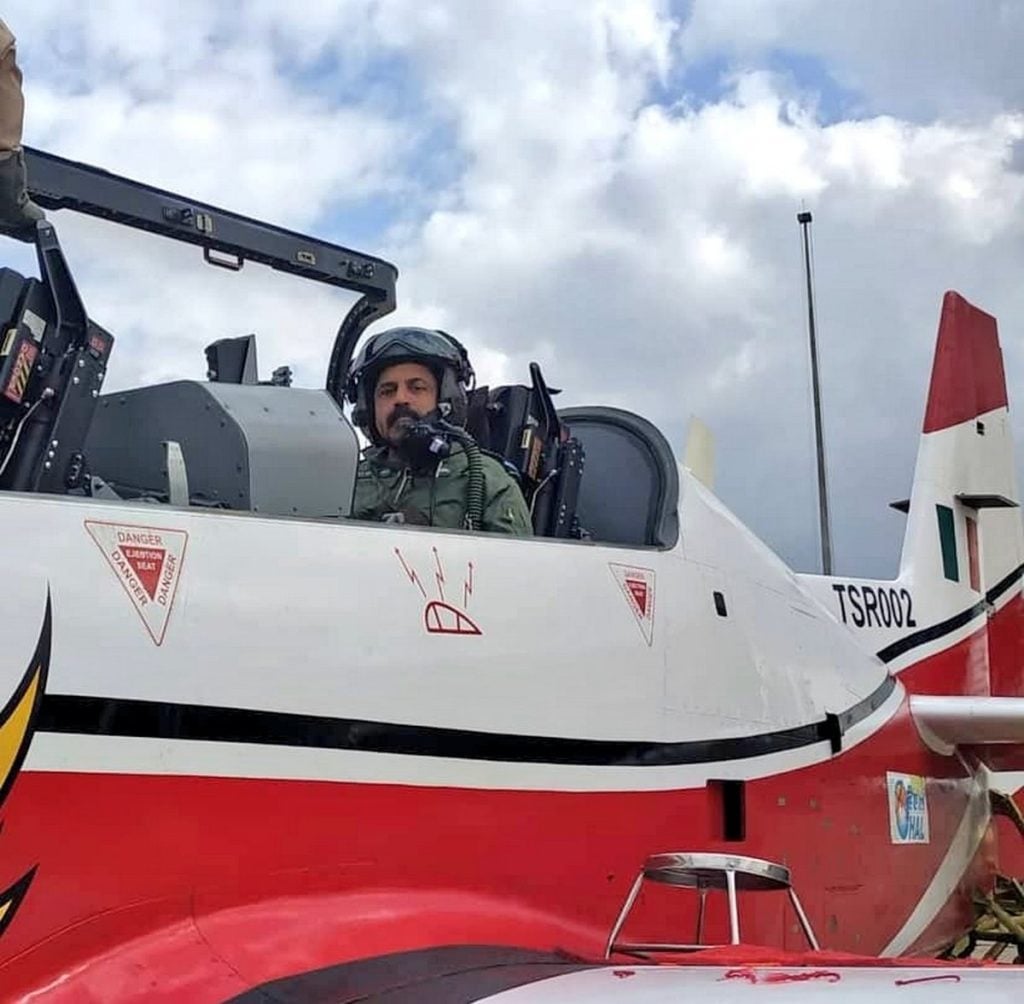
In 2019, then Chief of the Air Staff RKS Bhadauria publicly supported the programme and even flew the HTT-40 himself, signalling growing confidence in the indigenous trainer. What had once been viewed by many as an uncertain proposition was increasingly seen as a viable long-term solution for India’s basic flying training requirements. He happened to be the first serving Air Chief to fly an HAL-developed aircraft at the prototype stage.
Also Read: HAL is already overburdened. Inclusion of private players for AMCA is a pragmatic approach
From doubt to delivery
The doubts around the HTT-40 were real, public and difficult for HAL to counter. In many ways, the aircraft became a focal point in a larger debate about whether India should persist with indigenous development when proven alternatives were readily available in the global market.
Yet HAL pressed ahead. The project formally began in 2013 with internal funding of around Rs 350 crore. That decision itself was significant. At a time when confidence in the programme was far from universal, HAL chose to back the project with its own resources. A relatively young team of engineers, designers and test personnel carried the programme forward despite recurring doubts about its viability.
I recall the determination with which former HAL Chairman RK Tyagi approached the programme. Having arrived from Pawan Hans, a comparatively smaller aviation organisation, he took up the HTT-40 almost as a personal mission. At a time when many wondered whether the programme would survive, he remained committed to seeing it through.
Successive HAL leaderships continued to support the programme, ensuring that the momentum built during its early years was not lost. The aircraft itself reflected that journey. In its initial years, the prototype carried the initials “TSR” on the tail, a tribute to T Suvarna Raju, one of the key architects of the programme and the first Chairman and Managing Director of HAL under the revised corporate structure. Before that, HAL’s top executive carried the title of Chairman. The inscription served as a reminder of the leadership that had championed the project during some of its most uncertain phases.
Why the HTT-40 faced delays
Support and optimism, however, could not alter the realities of aircraft development. Building a military aircraft from a clean-sheet design is a lengthy and exacting process. Unlike a production programme, a developmental aircraft has to undergo extensive design validation, structural qualification, systems integration and certification before it can be declared fit for service.
The HTT-40’s development coincided with a period when HAL was handling multiple major programmes across both fixed-wing and rotary-wing segments. The trainer had to satisfy demanding military airworthiness standards while incorporating improvements that emerged during testing. Every modification required fresh validation and additional evaluations.
From the outside, progress often appeared slow. But aerospace development rarely moves in a straight line. Each milestone generates new lessons, which in turn require refinement and further testing.
I remember that it took nearly five years for the prototypes to enter spin-testing trials, one of the most critical phases of the certification process. For observers and critics, that timeline appeared excessive. For engineers and test pilots, however, it reflected the complexity of ensuring that the aircraft could safely recover from potentially dangerous flight conditions.
The long journey through flight testing
The HTT-40’s real test began once it entered the flight-test phase. The maiden flight was only the beginning of a long and demanding campaign involving hundreds of sorties. Test pilots evaluated handling qualities, avionics, aerodynamic performance, safety systems and operational characteristics across a wide flight envelope.
Among the most significant milestones was spin testing, which assesses the aircraft’s behaviour during stall and spin conditions as well as its recovery characteristics. It is one of the most demanding aspects of trainer aircraft certification because trainees routinely fly close to performance limits while learning basic flying skills.
Over time, the flight-test programme expanded to include aerobatic manoeuvres, navigation profiles, instrument flying evaluations, formation flying, night operations and various operational scenarios. Each trial built confidence in the aircraft’s reliability and safety.
The pace of development may have invited criticism, but the eventual completion of these demanding trials demonstrated that the programme was steadily maturing. By the time it approached certification and induction, the HTT-40 had undergone a far more rigorous validation process than many critics initially appreciated.
Indigenous trainer debate
The HTT-40 eventually became a symbol of a broader debate about India’s aerospace ambitions. Critics questioned not only the timelines but also the rationale for continuing a domestic programme when an operationally proven foreign trainer had already been inducted. They argued that the Air Force’s immediate needs should take precedence over long-term industrial objectives.
Some defence analysts pointed to India’s mixed record with indigenous aerospace programmes and wondered whether the trainer would meet the timelines and performance expectations set for it. Others argued that HAL was asking the Air Force to wait too long for a platform that remained under development. In hindsight, many of those concerns were genuine. The Air Force’s requirement was immediate, and pilot training could not be compromised.
At the same time, supporters of the project maintained that every successful indigenous programme contributes to a larger ecosystem of aircraft design, manufacturing, testing and certification. They argued that developing those competencies within the country was strategically important even if doing so demanded patience.
Today, with the aircraft handed over to the IAF, the debate has evolved. While questions about delays remain part of the programme’s history, the successful delivery of the aircraft— christened Ankur—strengthens the argument that indigenous programmes deserve persistence alongside accountability.
HAL has handed over three HTT-40 basic trainer aircraft to the IAF. The aircraft is powered by Honeywell Aerospace’s TPE331-12B turboprop engine. In June 2026, Honeywell delivered the first three engines to HAL. Engine availability had been a significant bottleneck for HTT-40 deliveries.
More than a trainer aircraft
The HTT-40 is designed to fulfil the primary training requirements of India’s military aviation ecosystem.
The aircraft will be used for multiple stages of basic pilot training, including aerobatics, general handling, instrument flying, navigation exercises, night flying and close formation flying.
It serves as the crucial first step in the journey of military aviators who may eventually transition to fighters, transport aircraft or helicopters. The significance of the HTT-40 therefore extends beyond its role as a trainer. It represents an indigenous effort to reduce dependence on imported solutions in a critical area of military aviation.
Also Read: India’s defence preparedness rests on HAL. Start with the weak link—human resources
The next challenge: delivering on time
If the handover marks the end of one chapter, it also signals the beginning of another, equally challenging phase. HAL has, to some extent, redeemed itself by reaching this milestone in what is perhaps a classic case of “better late than never.” However, the harder task may still lie ahead.
HAL must now ensure that it delivers all 70 contracted aircraft within stipulated timelines and does not disappoint the IAF. Development success alone will not define the programme. The Air Force will closely watch production schedules, serviceability levels, maintenance support, spares availability and long-term reliability.
Historically, development and production have presented different challenges. Building a prototype is one thing; sustaining assembly lines, ensuring quality control and maintaining fleet availability over decades is another.
For years, the discussion centred on whether the HTT-40 would fly, complete trials and enter service. Those questions have now largely been answered. The focus has shifted to whether Ankur can become the dependable backbone of India’s basic flying training system for decades to come.
The HTT-40’s journey is also a reminder that institutional views can evolve. A programme once questioned by Air Force leadership eventually earned the confidence of a later Chief who chose to fly the aircraft himself. That evolution underscores how persistence, testing and demonstrated performance can change perceptions.
HAL will be watched closely. The company has crossed an important milestone, but sustaining that success will require the same commitment that carried the HTT-40 through years of scrutiny and debate. What happens next will determine how history ultimately judges the programme.
Gopal Sutar is ex-spokesperson HAL and media analyst, SABIC/ARAMCO. Views are personal.
(Edited by Asavari Singh)