






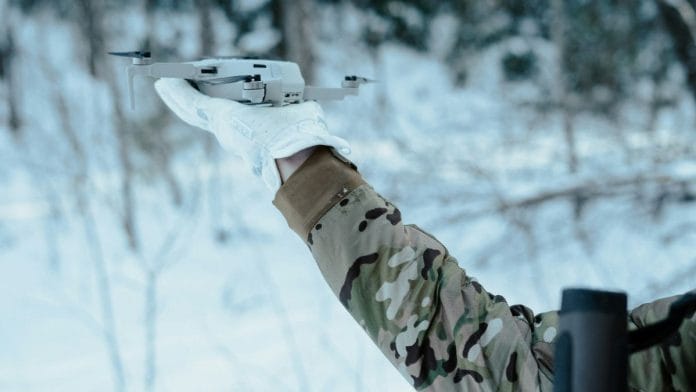

The Ukraine War has given China a close-up view of how drones are changing warfare. The Chinese military analysts are now discussing how low-cost, mass-produced unmanned systems disrupt conventional military tactics.
On 10 August, Ukrainian drones hit the TANECO oil refinery and petrochemical complex in Nizhnekamsk, Russia’s Tatarstan, located about 1,200 kilometres from the Ukrainian border.
A Sohu article described the drones as moving “like ghosts”. Their ability to penetrate deep into Russian territory illustrated a point that has featured in Chinese military discussions: drones are changing the geography of war and targets that once appeared safely beyond the battlefield can now be reached from hundreds of kilometres away.
For Chinese analysts, this discussion is particularly relevant for Beijing, which is already home to one of the world’s largest and fastest-growing drone industries.
Drones and the future battlefield
A Weibo post described the trajectory of drones in warfare in stark terms: “From mechanisation to informatisation and unmanned operations, this is the inevitable trend of the future battlefield.”
Xu Fangming from the Academy of Military Sciences has argued that unmanned combat systems, including drones and unmanned vessels, are reshaping modern warfare and global security. As these systems become cheaper and more widely available, they are moving beyond supporting roles and becoming important combat forces in their own right.
One of the recurring themes in Chinese commentary is the economics of this change. The Russia-Ukraine war has provided numerous examples of relatively inexpensive drones being used against much more expensive military systems. This raises a difficult question for militaries: how much should a defender spend to destroy a drone that may cost a fraction of the weapon used against it?
The question becomes more consequential when drones are used in large numbers. Niu Tanqin, a veteran media professional, has focused on the importance of scale. A single drone may have limited capabilities, but dozens or hundreds operating together create a very different military problem. Their relatively low cost also makes it possible to accept losses and replace systems in a way that would be difficult with traditional high-end platforms.
This is one reason swarm warfare is attracting growing attention in China. Chinese commentary is now connecting drone swarms with artificial intelligence, looking at systems that can coordinate with one another, redistribute tasks and continue operating even when individual drones are lost.
The technology needed to support this development is advancing alongside this shift. Solid-state batteries, for example, are being discussed as a way to extend endurance through greater energy density. Improvements in communications, sensors, autonomous navigation and computing could likewise allow drones to operate with less direct human control.
Also read: Iran can survive the war. But the cost of survival is changing
China’s drone advantage
What makes this debate on the Chinese internet particularly interesting is the country’s own trajectory in the industry. Over the past two decades, China has gone from a follower to a major global force in drones. The transformation, even if it’s at a commercial level, is seen by the Chinese commentary as an advantage at a time when drones are becoming more central to warfare.
A commentary argues three factors are driving that shift: strong policy support, falling costs and improving technology, and growing evidence that drone shows can generate real commercial value by attracting tourists and boosting local consumption. A Baijiahao commentary points to companies such as DJI, XAL, and Autel Robotics, and the depth of China’s supply chain as the foundations of this rise. Chinese drones are now used in agriculture, infrastructure inspection, mapping, logistics and public safety.
But the argument goes beyond individual companies. One Chinese commentary likened a drone to “a car compressed to its limit”. Behind a relatively simple-looking aircraft are batteries, motors, flight controls, sensors, cameras, communications modules and many other components. They all have to be light, reliable and cheap enough to produce in large numbers.
Chinese commentary emphasises the industrial chain. The challenge for several countries seeking drone production supremacy is recreating the network of suppliers, components, factories and engineering know-how that allows China to produce drones cheaply and at scale. One Chinese commentator provocatively put it: “For the West, what may be harder to replace than chips is China’s drone industry chain.”
On the Chinese internet, leaving Beijing out of the drone industry is also discussed. Analysts note that the US restrictions have not stopped China’s drone exports from growing. Beijing exported more than 2.4 million drones in the first half of 2026, about 25 per cent more than in the same period a year earlier.
Sources cited in the discussion claim that Chinese manufacturers account for more than 80 per cent of the global civilian and commercial drone market. The US market is becoming harder for Chinese manufacturers to access, but Chinese reporting points to continued demand elsewhere, including in Pakistan, Malaysia, Germany and the Philippines. The broader point in this discussion is that restricting access to one market has not, so far, stopped the expansion of China’s drone industry.
A recent example is Zhongwu UAV, which reported first-half 2026 revenue of RMB 1.634 billion (about $ 228 million), up 272.48 per cent year-on-year. The company says its supply chain includes more than 50 enterprises and research institutions, with production capacity for 200 medium- and large-sized UAVs annually. Its Wing Loong series has been deployed in more than 10 countries, with its business also spanning military and civilian uses, from reconnaissance and anti-submarine operations to firefighting, search and rescue and disaster relief.
China’s drone industry has grown partly because of military demand, but that is only a small part of the story. Much of its strength comes from a large commercial market, which gives companies the incentive to produce at scale, learn from how their products are used and bring down costs. The war in Ukraine is now giving that industrial base a new military context.
For China, the war also provides a way to assess what its own commercial drone industry could produce, how quickly it could scale, at what cost, and the viability of its dual nature. That link between a large civilian market and military demand could become important as China considers the future role of drones and its domestic production.
Sana Hashmi, PhD, is a fellow at the Taiwan-Asia Exchange Foundation. She tweets @sanahashm1. Views are personal.
(Edited by Saptak Datta)