



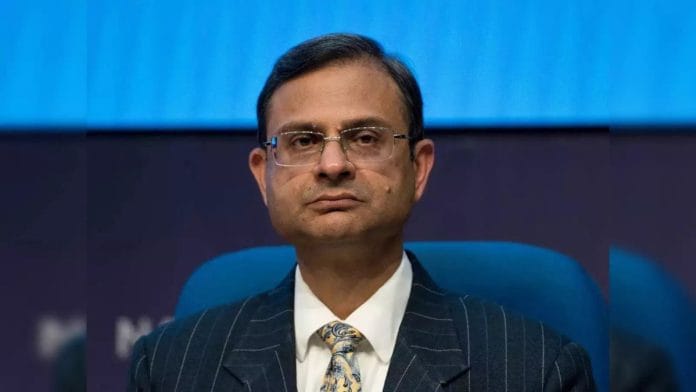
On August 5, during his post-policy press conference, RBI governor Sanjay Malhotra was asked directly about the potential early termination of the central bank’s special NRI deposit scheme, given the substantial inflow of funds. His response was unequivocal: there was no proposal to terminate the scheme prematurely. However, nine days later, on August 14, the RBI moved the deadline for new deposits under the scheme up by one month, from September 30 to August 31.
Shortly after the announcement, the rupee fell to a three-week low, while five-year government bond yields saw their steepest increase over a similar timeframe as prices fell. For the central bank, such developments are not coincidental; they represent the repercussions of a commitment that was not upheld.
What actually happened
In June, amid rising oil prices due to the West Asia conflict and pressure on the rupee, the Reserve Bank of India (RBI) introduced a special facility for Non-Resident Indians. Under it, they could make deposits in Foreign Currency Non-Resident (Bank), or FCNR(B), accounts for three to five years at exceptionally attractive rates, in some cases approaching 7 per cent, tax-free
The RBI facilitated this by absorbing the currency-hedging costs banks typically pass on to depositors, effectively subsidising the rate. The initiative received an overwhelming response.
As of August 21, banks had accumulated $65.4 billion solely through FCNR(B) deposits. When including External Commercial Borrowings (ECBs) and Overseas Foreign Currency Borrowings (OFCBs), the total reached $72.85 billion across the entire swap facility. This amount significantly exceeded the $50-70 billion range that analysts had forecast for the entire four-month period, achieving this in approximately ten weeks.
This success makes the closure of the FCNR(B) window noteworthy. This was not a scheme in distress requiring an urgent cessation; rather, it was performing beyond expectations. Yet it was concluded prematurely, immediately after the RBI governor had dismissed the possibility of an early closure.
The economics of a broken promise
In monetary economics, the concept of time inconsistency is well established in situations such as this. In 1977, Finn Kydland and Edward Prescott demonstrated that policymakers often possess a rational incentive to deviate from an announced plan once conditions change. Their work later earned them the Nobel Prize. Robert Barro and David Gordon further developed the idea in the context of monetary policy. They argued that a central bank’s credibility rests not on any single decision, but on the consistency between its statements and actions over time.
The possibility of an early closure was anticipated prior to August 5. By the time Malhotra spoke, inflows had already approached $28 billion, and markets were speculating that the window might shut ahead of schedule. The strong inflows later cited to justify the reversal were already evident when the reassurance was provided.
Scholars of central bank communication make an additional distinction relevant to this scenario: Odyssean guidance, where a policymaker commits to a future course of action akin to Odysseus binding himself to the mast, versus Delphic guidance, which resembles a forecast more than a commitment. Incidentally, Christopher Nolan’s The Odyssey, released this July, also showed Odysseus bound to the mast.
The RBI governor’s statement on August 5 can be seen as Odyssean — a declaration of intent around which markets could organise. However, when the RBI reversed course within nine days, it functioned as Delphic guidance, a forecast that proved inaccurate. Markets do not penalise central banks for changing their stance; rather, they react to the gap between a statement’s intended perception and its actual implementation.
Why the rupee and the yield curve actually moved
It is beneficial to distinguish between two effects of the RBI’s U-turn, as they operate through different mechanisms.
The first effect is mechanical in nature. The entire scheme was designed to attract foreign currency into India; an increased inflow of dollars helps stabilise the rupee, similar to how an increased supply of any commodity alleviates pressure on its price. Markets had anticipated these inflows to persist through September. However, when the RBI curtailed the window by a month, this expectation was abruptly revised downward. The anticipation of fewer dollars is, in itself, a reason for the rupee to depreciate.
The second effect is more nuanced and holds greater significance for the present argument: a credibility discount. This effect does not operate through the dollars themselves but through the degree of confidence markets place in subsequent RBI statements. When a public assurance is reversed within nine days, investors do not merely react to that isolated event; they subtly adjust their perception of the institution’s predictability moving forward. This adjustment manifests as a risk premium, representing the additional return investors require to hold rupee assets and Indian government bonds when policy predictability diminishes.
Consequently, the reaction was not limited to the currency; it also affected the 5-year bond yield. The pricing of a 5-year bond partly depends on confidence in the policy trajectory over that period, and this confidence had just experienced a noticeable decline.
These two effects are mutually reinforcing. However, the second effect is particularly noteworthy, as it persists beyond the closure of the scheme. It remains associated with every future RBI statement until the institution demonstrates, through consistent actions rather than further announcements, that it can be relied upon once more.
Also Read: Why India should fear oil prices more than US Federal Reserve rate decisions
What this means going forward
Given the persistent elevation of oil prices and the volatility of global capital flows, the RBI is anticipated to continue utilising forward guidance concerning rate paths, liquidity support, and potential measures related to NRIs or foreign exchange in the forthcoming months. These statements are now likely to be scrutinised more critically than they were in July.
Restoring trust does not require any grand gesture. What’s needed is disciplined adherence to announced timelines, even when circumstances might suggest early termination. Additionally, it is crucial to clearly communicate in advance the conditions under which a scheme might conclude prematurely, rather than offering reassurances followed by reversals.
This does not imply that the RBI’s decision to close the window early on economic grounds was incorrect. Limiting the size of a subsidised liability that could potentially destabilise the rupee is a justifiable decision. The issue lay in the sequencing: publicly reassuring markets and then reversing the decision. Central banks build credibility over years through consistent statements. The coming months will reveal whether the RBI has internalised this lesson or will give markets further reasons to doubt its commitments.
Bidisha Bhattacharya is ThePrint Consulting Editor (Economics) and an Associate Fellow, Chintan Research Foundation. She tweets @Bidishabh. Views are personal.
(Edited by Asavari Singh)