







The debate around delimitation has been vociferous given the government’s plan to address the issue head on by expanding the number of seats in parliament proportionately while the opposition has countered it with their own concerns of demography, electoral map redistribution and other implications. Yet the underlying essence of the story — why delimitation matters as a concept — seems to be missing. Besides the constitutional obligation for delimitation, what is its economic rationale?
The current governance structure in India is in need of reform. There is an urgent need for representation aligned with India’s economic geography and a precondition for the responsive, accountable governance that sustained economic success requires. When political representation systematically diverges from where value is created, the result is a persistent misallocation of public capital.
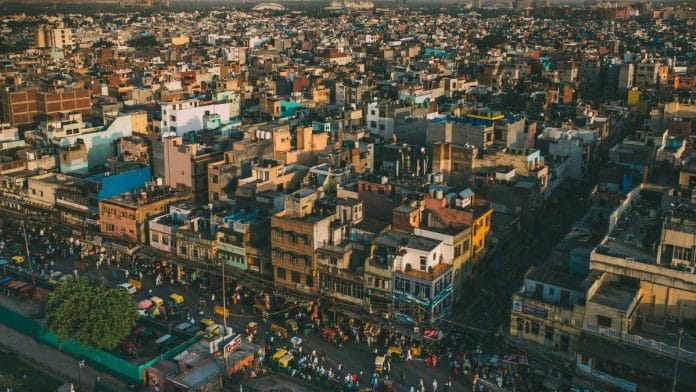
India’s urban areas, particularly its metros, are key engines of agglomeration and productivity growth yet they remain highly under-represented in the electoral map. For instance, India’s urban population is expected to grow from 410 million in 2014 to 814 million by 2050. India is projected to add 416 million urban dwellers by 2050 — more than any other country in the world. Urban India makes up roughly 37 per cent of the country’s population, yet the largest, most heavily urban constituencies such as Malkajgiri, Bangalore North, the Delhi-NCR seats, at 30–38 lakh elector, carry the same single vote in Parliament as constituencies a fraction of their size such as Lakshadweep with just about 50,000 electors. Urban voters are therefore structurally underweighted.
This leads to a situation where urban economic issues are not represented adequately and are given less electoral weight by politicians. Furthermore, since the urban population is more educated and demands greater accountability on economic issues such as housing, transit, and municipal finance that directly affect productivity, the case for increasing their political voice is an important shift in the economic story of India.
Another important economic factor that warrants change is the importance of decentralized governance. Ironically, even though delimitation might shift some political weight towards the more populated parts of the country, it might also ensure that decentralized governance takes place more effectively. Greater public representatives per capita can mean that local issues get more attention.
Also read: Nothing can stop Tukaram Mundhe. He’s after safe food—not restaurants, celebrities or publicity
Why representation matters for growth
Many developed countries such as the United States and Japan all pair large populations with empowered subnational units that deliver local public goods and compete to attract capital, and ensure effective business governance due to greater attention to issues raised by society. This could be an important factor in boosting ease of businesses especially in constituencies which have excessively large populations.
The empirical literature is clear that quality of governance, which correlates highly with per capita of public representatives at the state and central level, and political stability are significant determinants of sovereign risk premia (Bekaert et al.; the sovereign-spreads literature). As such, providing incentives for long term investment, channeling growth for more inclusive goals — which can be achieved effectively by credible and effective governance from the district level to the central administration — ensure that risks for investing in the country for foreign investors is being reduced. This also will ensure greater accountability among politicians and eventually lead to more refined political class. Therefore, it can play an important role in reducing long term risk premia for investors investing in the country.
Lastly, the aggregate impact at the level of the central government could be better and might lead to data systems that allow improved fiscal planning and alignment with the states. For instance, does it make sense for us to measure inflation of today using a basket of goods that were used in the 1970s? Similarly, how does it make sense to use the political representation from the 1970 census as a benchmark for electoral representation — the core of data driven public policy making — in 2026?
Greater representation per capita along with better governance would ensure that more accurate population and boundary data feed into resource allocation, welfare targeting, and planning. Better data can further reduce leakage and mismatches in how funds reach people. Therefore, all of this could lead to better state and central fiscal planning and coordination due to more effective representation of the people’s wishes.
Several of the structural reforms that economists have been urging governments to do could be addressed through the redesign of the governance pillars of the country. This provides an important opportunity for transparency and reforms for the delimitation exercise to engage with so as to ensure structural governance reforms are implemented by design and not necessarily by stealth and through legislative arduousness. These provide an important opportunity to ensure economic growth is accelerated through ease of governance at scale across the country.
An exercise built on consensus
Yet, given the importance of such a reform, it must be a consensus driven initiative which most of the political class is in agreement with. There are various challenges including issues of north-south divide, population-based representation, reservations from some affected states among others. These issues should be sorted through diplomatic efforts and a collective spirit for the larger cause of the nation.
Postponing the exercise due to its complexity and the need to make hard decisions is not doing justice to the aspirations of the youngest population in the world. The debates should be about how effective and inclusive the design of delimitation should be rather than questioning the importance of the exercise itself. A consensus driven delimitation exercise would be an important anchor for a developed India.
Sriram Balasubramanian is an economist and best-selling author of Dharmanomics. Views are personal.