







There was a rare moment of political grace during Keir Starmer’s final Prime Minister’s Questions, a half-hour weekly slot in the House of Commons that is the centerpiece of Britain’s parliamentary life. Kemi Badenoch used her six allotted questions as the Conservative Leader of the Opposition to set the tone for an exchange marked by flashes of good-natured humour, a softening of tone, and a warmth that revealed a private rapport lay buried under months of snippy public sparring.
The media took widespread note of this. The Scotsman said the Starmer-Badenoch exchange held out a lesson in a time when social media rage has been spilling out into the real world, creating a dangerous new culture. On LBC, the radio talk show station, the well-known liberal broadcaster James O’Brien seemed both surprised and pleased by the “grace and decorum” Badenoch showed, saying that he “was taken with the idea that this is what she would be like if Twitter didn’t exist”.
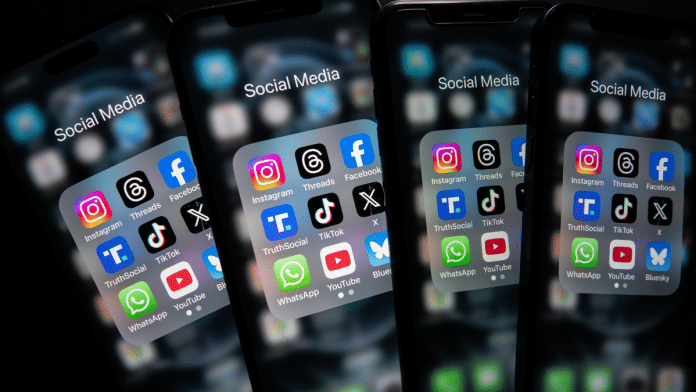
A similar thought crossed my mind when I watched the exchange. Would we be better versions of ourselves without the influence, nay the pervasiveness, of X and some other social media platforms?
Anyone familiar with X knows that the platform, which may have once carried exchanges that were at least approximations of debate, is now a place for insult, dogpiling and invective. I have seen people, many of whom I know, like and respect, succumb to their worst instincts, privileging ad hominem attacks over substantive rebuttal and conjuring straw men only to effortlessly knock them over and defeat their own inventions.
Confession: As a former journalist who found it impossible to disengage from X, which after all is a real-time news service, I have also felt on occasion the urge to lash out or swat someone down.
The temptation to do this is so much greater because social media platforms have that peculiar ability to lull users into believing that hate, malice and spitefulness only exist in others even as they are casually cruel online.
Why does social media seduce us into coarsening public discourse? There is a fair amount of serious work, academic and otherwise, that addresses this. Nastiness, as the computer scientist and longtime Silicon Valley insider Jaron Lanier wrote, is the “crude oil” of social media—the fuel that runs the behaviour-altering algorithms that stoke the outrage, anxiety and “latent tribalism” that keeps people hooked in a negative and addictive loop. To believe that X, Facebook, Instagram and other such platforms are essentially misused by some unpleasant people is to misunderstand the very nature of the business model itself.
Also read: The problem isn’t children on social media. It’s how the apps are designed
Degrees of polarisation
When Harvard professor Cass Sunstein published his groundbreaking #Republic: Divided Democracy in the Age of Social Media in 2017, the idea that social media was a deeply polarising force, one that created the schisms rather than merely reflecting it, was not fully appreciated. That we are being increasingly polarised is backed with strong empirical evidence—polarisation-deniers are not merely deluded, they just happen to lie at one end or the other of the pole.
One example Sunstein threw up in his book is that in 1960, five per cent of Republicans and four per cent of Democrats said they would be displeased if their child married outside their political party. This had increased to 49 and 33 per cent respectively in 2010.
You don’t need a formal schooling in US politics to make an educated guess that these percentages would have grown considerably since then. At the same time, the echo chambers and the information cocoons that Sunstein wrote about appear to have multiplied even as they shrunk, marked as they are now by fine internal distinctions and smaller differences. The old binaries of the orthodox versus the modern, the Left versus the Right, the liberal versus the illiberal have given way to a fractured disorder. A place, for example, where the Left is ranged against the slightly less Left, the liberal is pitted against the marginally less liberal and the conservative is locked in opposition with a half-ally who is ideologically but a half-step away.
Meanwhile, a growing body of research suggests that the algorithms creating such binaries also severely impact mental health, particularly among the young. Australia became the first country to make social media use illegal for children under 16. Prime Minister Narendra Modi described this policy as “highly inspiring” during his visit to the country earlier this month. If this is a hint that India will soon pass similar legislation, in line with a growing list of countries contemplating bans, this will be welcome.
This, of course, is far from enough. It is true that social media giants have made some piecemeal reforms to fix their algorithms. But, as Lanier correctly predicted some years ago, while these changes may have addressed some failings, they are unlikely to fundamentally alter the profit-reaping behaviour-modification model of the big tech companies.
It will require a great deal of public pressure before they alter the way their algorithms rank and recommend content and reduce the commercial incentive to boost engagement at the cost of mental health. In the meantime, a little more awareness about the manipulation and the psychological hooks is the only guardrail against snarling keyboard warriors and depressed doomscrollers.
Mukund Padmanabhan is a professor of philosophy at Krea University and former Editor of The Hindu. Views are personal.
(Edited by Theres Sudeep)
It would be nice to have unbiased and objective media. If social media is worse, darbaari media is evil personified.
Social media was not designed to make users lash out. The decade old version was definitely not. But as more users jumped in the numbers saturated and such platforms started fleecing advertisers by showing them the same old metrics of number of eyeballs or clicks grabbed, everything went downhill. For all the tech behind maintaining these platforms, has nobody wondered why bots cannot be removed ? First they discovered bots, next they discovered outrage. And all of this happens with impunity because governments are not courageous enough to look beyond these platforms as as mere intermediaries . No one calls them out because it seems no one knows where to draw the line between freedom of expression and spreading anarchy using these platforms.