






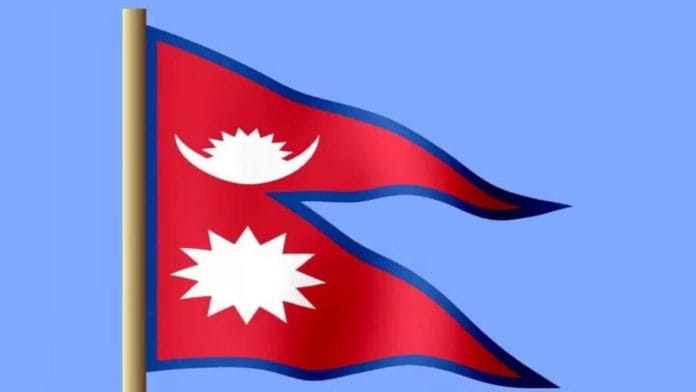


Balen Shah is back in the headlines, and this time, for the foreign policy choices he has made since taking office as Prime Minister of Nepal. With almost two months in office, Shah has sought to do away with Nepal’s traditional foreign policy, under which leaders leaned ‘first’ either toward India or China—a framework shaped largely by the country’s landlocked location between the two giant Asian powers.
The advent of democracy in 2008 was supposed to change that struggle, but it did not. The only change contributed by the 1996-2006 Maoist Insurgency was in the country’s political setup—establishment of a democratic republican state—and foreign policy remained a matter of practice.
While each movement brought a new government, leaders, and practices in foreign policy remained largely the same. However, following the Gen Z movement, the mandate of the new government has been to overhaul the entire system, in which foreign policy is driven by pragmatic national interest rather than by what the past has set as practice.
Attempts to overhaul have not been easy for Prime Minister Balen Shah. Although he has made efforts, including hosting ambassadors and representatives from two dozen countries in Kathmandu in a group rather than giving them separate individual audiences.
However, can avoiding one-on-one meetings with foreign delegates be called a balanced, neutral stance? Or is it a way to safeguard Nepal’s foreign policy from external influence?
Struggle finding neutrality and balance
This is not the first time a nationalist leader like Balen Shah has attempted to make Nepal a fortress against foreign intervention. In the 1970s, King Birendra Shah sought to galvanise global support for recognising Nepal as a ‘Zone of Peace’, which many considered a ‘stance of neutrality’. India reportedly objected, citing the 1950 Treaty of Peace and Friendship, which enshrined mutual security and concerns as the cardinal elements, and the proposal could not be materialised.
Balen Shah, too, may have tried in a different way by making limited engagement with foreign delegates part of his approach—possibly to avoid media speculation over which side Nepal is leaning toward. It has been reported that the United States had sought a meeting between Ambassador Sergio Gor, US President Donald Trump’s Special Envoy for South and Central Asia, and Balen Shah, but the latter declined, citing “domestic priorities and governance issues.”
While Gor met with high-ranking officials in Shah’s administration—Foreign Minister Shisir Khanal, Finance Minister Swarnim Wagle, and chairman of the ruling Rashtriya Swatantra Party (RSP) Rabi Lamichhane—there was no audience with the Prime Minister.
By declining to meet the special envoy of the world’s most powerful country, Shah has made one thing clear: he wants to run a foreign policy risk-free and does not want to be seen leaning toward any side.
Similarly, the Indian Foreign Secretary Vikram Misri was reportedly scheduled to head to Kathmandu on 11 May to invite Shah to visit India at the behest of Prime Minister Narendra Modi. That visit has been reportedly been shelved for a later date.
Notably, Shah’s visit to India was confirmed by Foreign Minister Khanal on the sidelines of the Indian Ocean Conference in Port Louis, Mauritius, on 11 April. However, given Prime Minister Balen Shah wants focus on domestic affairs for a year, prospects of Shah coming to India this year seem meagre.
Meanwhile, those in the media are finding Nepal’s recent objection to the Kailash Manasarovar Yatra, a sabotaging diplomatic stance. But it is also important to look into Balen’s long-held position on this issue, even when he was a mayor.
While Nepal has a position on the disputed territory, India and China have theirs as well. What has not changed are objections and responses on the issues of territorial disputes. It would be better left to diplomacy, not the media.
The Chinese Ambassador to Nepal, Zhang Maoming, has also tried to arrange an audience with Prime Minister Shah, but without success; they only met in a group setting. In fact, Beijing has been consistent in prioritising engagement with Nepal, and Tibet remains its top priority.
For a country sharing a long Himalayan border with Nepal, Beijing continues to seek Kathmandu’s security guarantees, including information regarding the activities of the Tibetan exiles in Nepal. Movements of these Tibetans, especially the ‘Free-Tibet’ movement, have kept the Chinese wary.
Since 2008, under the Maoist regime, Nepal has cracked down heavily on such protests, reducing them to a negligible level. Balen Shah is unlikely to change this stance as it remains the most sensitive topic.
In a meeting with former Home Minister in the Balen cabinet, Sudan Gurung, the Chinese Ambassador to Nepal reportedly conveyed Beijing’s sensitivities regarding activities linked to Tibet and Taiwan, expressing concern and seeking assurances.
While Tibet has traditionally been China’s concern in its relationship with Nepal, the youth element in the current administration of Balen Shah makes it more delicate. Nepalese youth have historically stood side by side with the Tibetan cause on many occasions.
By meeting all together rather than in private settings, Shah may have managed a diplomatic victory and resisted the pressure—something that geographically smaller and landlocked countries struggle to keep at bay.
But the key question remains: is it a viable strategy?
Also read: As 2 ministers exit, will Balen Shah have to sacrifice conviction for practical politics?
Risk of isolation
In diplomatic overtures, not engaging is not neutrality; it is an indication of bad policy planning. If reports are to be believed, the top advisors, including cabinet ministers, have advised the Prime Minister to engage before the envisioned neutrality becomes isolation.
However, for geographically smaller, landlocked countries, assertive manoeuvring in the foreign policy space is an arduous task. Either they are often made to choose between one another, or befriending one becomes critical for survival. But it comes at a cost, and if avoiding that cost is the goal by not engaging, the fear of isolationism becomes very prominent.
This is a geopolitical dilemma that Nepal has struggled with for decades. Choosing between India and China became the norm rather than a choice, as Prof. Leo E. Rose noted in his seminal 1971 book, Nepal: Strategy for Survival.
Meanwhile, if the Prime Minister sticks to the much speculated ‘no foreign visits for a year’ policy, the cost of such a risk needs to be weighed against the current geopolitical churnings.
Like other countries, the dent of rising crude oil prices is felt in the Nepalese economy; retail inflation is unavoidable, and when millions of Nepalese rely on their earnings in West Asia, mainly the Gulf region.
The timing may be too delicate to make such calls, given that landlocked countries face additional challenges, especially when they rely heavily on imports.
An alternative for Prime Minister Balen Shah is to first visit countries where Nepalese diaspora is concentrated in large numbers—the Gulf, Australia, Japan, and Malaysia, among others. The visit must be planned in a way that diaspora connect remains the key, and leaders’ engagement with Nepalese living abroad is seen as an acknowledgement of their remittance contributions to the country’s growth and economic stability.
While this could be an option, Balen Shah needs to seriously de-hyphenate and not engage in neutrality.
Author: Rishi Gupta is a commentator on global strategic affairs. Views are personal.
(Edited by Ratan Priya)
Nepalese have a famous saying, “why argue with an indian when you can just wait”.
modi is running india to the ground and here indian writers are trying to tell neighboring countries how to run their foreign policy.. the delusion level of indians!!!
Nepal’s median age is 25 years. There is a daily exit of young people, seeking their livelihood abroad. Remittances are a big part of GDP, estimates varying between 16% and 25%. The country’s substantial hydroelectric potential has barely been developed. Tourism an important revenue source. 2. If PM Balendra Shah wishes to prioritise the domestic economy, instead of being a ( very small ) pawn on a ( very large ) international chessboard, that is a sensible choice. In addition to the large boulders of India and China, USA ( representing Europe and Japan as well ) is now wooing Nepal. The recent half billion dollar Millennium Corporation grant. It would be good for Nepal’s future if its economy is thrown open to a level playing field for foreign enterprises. 3. India has a complex history with Nepal. They seem to have wearied of Micro management.