




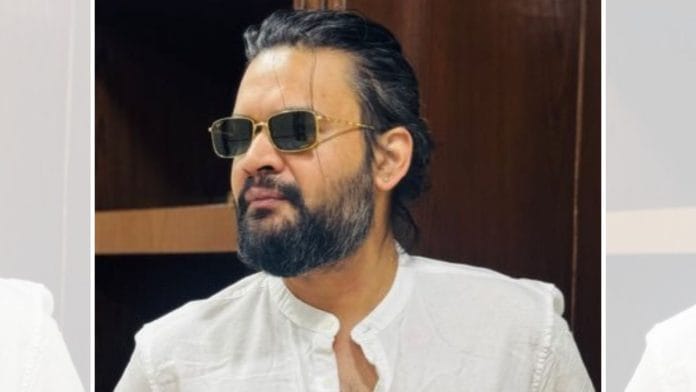

Nepal Prime Minister Balen Shah’s cabinet has lost two ministers in the past few weeks due to allegations of corruption. Shah, who came to power with the promise of controlling corruption and providing good governance and transparency, has had to let go of Labour Minister, Dipak Kumar Sah, and Home Minister, Sudan Gurung.
Gurung, considered the leader of the September 2025 Gen Z movement, tendered his resignation to the Prime Minister. Now, a parliamentary committee is reportedly being formed to investigate the alleged matter.
Within a week of entering office, Gurung’s actions were as powerful as his popularity. Agencies under his portfolio arrested KP Sharma Oli, former Prime Minister, and Ramesh Lekhak, former Home Minister, for their alleged role in police action against and killings during the Gen Z movement. While this was most likely a political vendetta, the majority saw it as a first step toward justice and good governance promised by the RSP during the electoral campaign. Interestingly, Gurung is not the first political fatality, but the first major one.
The first one was Sah, who was axed from the post earlier this month due to alleged ‘misuse of his position’ in influencing the appointment of his relatives to a corporate board. With two early departures, Prime Minister Shah has indicated strict adherence to his ‘zero tolerance’ policy against irregularities and misdeeds, as well as to transparency in governance and finances.
But what do these actions indicate for a government that won a historic near two-thirds (minus two seats) mandate in the parliamentary elections held this February? And do they impact the political health of the RSP?
Also read: Balen Shah is changing Nepal’s foreign policy. He’s treating India, China as equals
Numbers will define the future
In a parliamentary system, numbers speak louder than alliances in shaping government policies—something that almost all previous administrations since Nepal’s democratic advent in 2008 have reflected. No single party could sail to a two-thirds majority, nor did their alliances long stand. But Shah’s Rastriya Swatantra Party managed to get 182 of 275 seats.
Nepal’s constitution is such that a single party winning such a majority was close to impossible, but the Gen Z movement created that opportunity. Now Shah, the youngest Prime Minister, has not just the mandate but the questions that come with it. Social media and the streets of Nepal are closely debating policies and actions, and monitoring team Shah’s first 100 days.
What helps Shah is ‘no compulsion of coalition’. It was a bargaining chip often pulled out in previous governments to strike a deal for a ministry, premiership, or political and judicial immunities. A ‘no-deal’ often led to the government’s collapse overnight.
Shah represents an aspiring Nepal, strongly driven by youth energy. It doesn’t matter if the Opposition is pale in parliament, he has questions to answer to the public. It’s why the Shah-led government has the capacity to take strong actions, and Gurung’s exit is one such message of good governance.
Questions were raised whether a social media-driven campaign could bring victory to a newbie party and a populist leader who lacked administrative experience—it did. Moreover, Shah’s one-month report card has certainly defied political logic. He continues to stand tall with a stable government, delivering carefully crafted words in public, while avoiding media glare.
But while numbers and discipline do the magic, can Shah sustain a system he promised within the party? Especially considering he joined it and took over the reins just two months before the elections. It may be too early to speculate, but there are signs of worry as party RSP’s convener Rabi Lamichhane and Shah are at odds. So far, they seem to be navigating a cordial camaraderie.
Also read: Balen Shah starts his PM stint the Hindu way. Power, populism & patience will define his rule
Limits of aura
Gurung’s exit also exhibits the limits of social media in a democratic setup. There remains no doubt that social media empowered the likes of Sudan Gurung. The causes they stood for were not new, but they were presented at the right time and in the right space—the Gen Z movement —and then the Shah wave ensured an electoral victory.
Gurung was all about declaring things on social media with ‘swag/buzz/aura’. But he missed declaring his assets and financial dealings on paper.
There is no way accountability could be avoided, especially for a leader who carried the baton of the Youth Against Corruption campaign on the social media platform Discord.
Gurung came to the limelight after his 2025 campaign, Youth Against Corruption, but he has been involved in social work since the 2015 earthquake in Nepal. Hami Nepal, an NGO with which he was reportedly associated with also gained prominence for its campaigns calling for transparency in the country’s governance and financial spending. He contested from the Gorkha 1 constituency on the RSP ticket and won. While many expected the RSP chair Lamichhane to join the government and retain his previous portfolio as Home Minister (2022), Gurung was chosen instead, possibly because he led the Gen Z movement.
Despite his age and inexperience, the allocation of a key ministry was a strategic move, given Gurung’s popularity and his stand against Nepal’s grand-old parties and leaders. With mass following among the youth on social media, Gurung became the youngest elected Home Minister in Nepal’s political history.
Gurung used the same social media to announce his departure on 22 April. In a post on Facebook, Gurung wrote (in Nepali), “I, Sudan Gurung, have been working honestly on the responsibility of Home Minister since 2082 Chaitra 13. I have taken seriously the questions, comments and interests that have been raised from the citizen level in the recent days, including my share.”
Making the resignation a matter of transparency and morality, Gurung further wrote, “To me, morality is greater than position, and no power greater than public belief. The Gen Z movement demanding good governance, transparency and accountability in the country has also given the same message. Public lives should be clean; leadership should be responsible.”
Gurung ends the post with “For my country and for the respect of our security forces and for the youths of Nepal.”
As Prime Minister Balen Shah prepares to deliver the mandate promised to the people of Nepal, he will continue to face the challenge of keeping his house in order. Such decisions are tough, considering they could cause dissent within the party. But if ‘transparency’ is central to his governance, nothing is personal. The only policy is ‘Nepal First.’
But the question remains: Will this hardline style endure? Politics rarely rewards rigidity for long, and Nepal is a classic case in this regard. Sooner or later, even change-makers like Balen Shah will have to balance conviction with the practical demands of politics.
If he sustains, the country might actually see the advent of a Naya Nepal—a term that keeps resurfacing in political discourse after each major movement, whether the 1990s democratic movement or the 1990s Maoist one.
Rishi Gupta is a commentator on global strategic affairs. Views are personal.
(Edited by Theres Sudeep)