








As the Iran War drifts through an uneasy interregnum with intermittent strikes and a weaponised Hormuz, an undeniable reset is seen on the global energy map. America’s status as an energy exporting power house is redrawing that map—often in places one could least expect.
That’s where the UNESCO World Heritage city of Dubrovnik—the “Pearl of the Adriatic”, globally romanticised as a filming location for Game of Thrones—comes in. US Energy Secretary Chris Wright was there recently, and media attention followed. Against the backdrop of Renaissance-era walls and Baroque facades, Wright spoke of the strategic arc stretching from the Baltic Sea to the Adriatic and onward to the Black Sea—and its relevance for the US energy export infrastructure.
Wright was speaking at the Three Seas Initiative (3SI), a framework of connectivity and infrastructure projects spanning the 13 European countries bordering the Baltic, Adriatic, and Black sea regions—aka the three seas. As a policy framework, it has existed within European discourse since its launch in 2015, but has rarely garnered wider international attention, at least until now.
During his visit, Wright made a political point as much as an economic one. The US has recently poured billions into key LNG projects in select countries that receive EU aid for future membership. This contrasts the rigid regulatory outlook of Western Europe with what Washington is promoting as a more agile, opportunity-driven approach in Central and Southeastern Europe. Unsurprisingly, it was an uncomfortable message for the European establishment in Brussels.
What is the US pivot to Western Balkans about?
The region today sits uniquely at the intersection of the EU and American interests, Russian and Chinese influence (albeit in differing degrees), expanding Turkish presence, and a hunger for more investment. Weak institutions, vulnerable economies, and unfinished state-building have kept these countries far below their threshold potential.
Two points must be underscored:
First, the US investment is not an overnight development in the aftermath of the Iran War. Washington’s economic interest in the region has been building steadily. The US Congress incorporated the Western Balkans Democracy and Prosperity Act into the National Defense Authorization Act (NDAA) for fiscal year 2026, which was signed into law by President Donald Trump on 18 December 2025.
What the Iran War has done is to restart a larger discussion on global energy demand with two major verticals: a resurgence of hydrocarbon nationalism—epitomised by Trump’s “drill baby drill”—and a structural push toward renewables and energy transition.
While both trends are real and are accelerating simultaneously, global hydrocarbon demand remains enormous and is likely to remain upward for at least another decade. Also important is that the transition, wherever it is happening, is not linear because not all renewable technologies substitute for all hydrocarbon uses equally or immediately.
This partly explains why the UAE freed itself from OPEC production constraints: to best utilise the coming decade, which may represent the last great window for maximising hydrocarbon leverage before structural energy transitions deepen.
Second, while the US export scenario for oil is plush and American oil companies are raking in massive windfalls due to Hormuz disruptions, the challenge lies in exporting more gas.
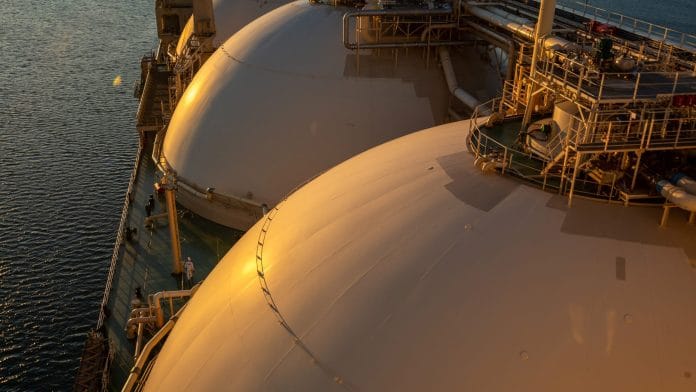
The paradox is compelling—import-dependent countries across Europe and Asia are scrambling for scarce supplies after Qatar’s LNG exports have shrunk. The US possesses enormous gas reserves and remains the world’s largest producer, consumer, and exporter of natural gas, with domestic prices at a 17–month low despite global turmoil. And yet, this cheap gas cannot reach more overseas buyers because American LNG export terminals are already operating near maximum capacity, and pipelines are full.
Regardless of whether LNG prices soar, the US cannot instantly convert more gas into exportable LNG without major new infrastructure investments.
With this background, the dots can be connected better.
The US limitation on gas exports makes regions such as the Western Balkans more strategically valuable. Their real value is as transit corridors, political footholds, and long-term infrastructure bets designed to anchor American energy into Europe for decades.
The US is already a major LNG supplier to Europe after the bloc diversified away from Russian gas dependence following the Russian invasion of Ukraine. But with Qatar’s export disruptions, there is even more incentive for the US to find footholds.
Additionally, Washington’s move undercuts Russian dependence for many of these poor countries. Bosnia alone imports roughly 225 million cubic metres of Russian gas annually via the Turkstream, and possesses virtually no domestic gas production capacity of its own. Diversification with robust US investments, expectedly, is more than welcomed by Sarajevo.
Also read: Why the Baltic states remember the Soviet Union as an occupier
Why the Western Balkans?
The current phase of US engagement in the 3SI focuses on three Western Balkan countries—Croatia, Bosnia-Herzegovina, and Albania.
The centrepiece US deal is the $1.5 billion pipeline project in the southern interconnection between Bosnia and Croatia, linking the former with the Croatian LNG terminal on the island of Krk and the wider Pan-European gas networks. Krk terminal is already a major conduit of US LNG into Europe, and the deal will eventually get much more American gas into the region.
Albania has signed a 20-year framework agreement worth nearly $6 billion for American LNG imports, linking state energy company Albgaz with US firm Venture Global and Greek infrastructure partners.
This process is unlikely to stop with Croatia, Bosnia, and Albania. Serbia, Montenegro, and North Macedonia are all viewed as the logical next steps if the initial projects succeed, particularly as Washington attempts to build an integrated energy and digital corridor across Southeastern Europe in a permanent pivot.
In the long term, this would serve the transatlantic alliance’s common goals of cutting Russian gas flows to the European bloc. In the short term, however, contrasting visions of project disclosures and quick changes to legislations in the already vulnerable Balkans—struggling for decades with the rule of law, curbing corruption, and democratic reforms—pit the US and European methodologies for the Balkans against each other.
Also read: Why India must find ways to be visible on the Middle East crisis
IMEC and 3SI
The discourse on the India-Middle East-Europe Economic Corridor (IMEC) has had a strong diplomatic push but a poor logistics outlay. The disruption of Hormuz, however, has necessitated a strategic urgency to diversify away from that dependence. What is actualising now is a latticework of projects and a network of infrastructures—what I called IMEC 2.0 in a recent piece. The same logic will apply to its European leg too, with multiple strategic entry points into Europe providing better access and logistics to the under-exploited potential of central, southern, and Baltic Europe. IMEC projects plugging into the 3SI is a matter of when, not if.
Therefore, recent US engagement in distant tourist spots has a strategic and economic significance for India. And for the Indo-Pacific watchers, Japan is already ahead of its regional peers in becoming a formal strategic partner of the 3SI.
The next phase will see investments from like-minded partners, an opening New Delhi has every reason to analyse if it wants to envision its place and stakes in transcontinental, multi-modal connectivity and infrastructure projects.
Swasti Rao is a Consulting Editor (International and Strategic Affairs) at ThePrint. She tweets @swasrao. Views are personal.
(Edited by Prasanna Bachchhav)