





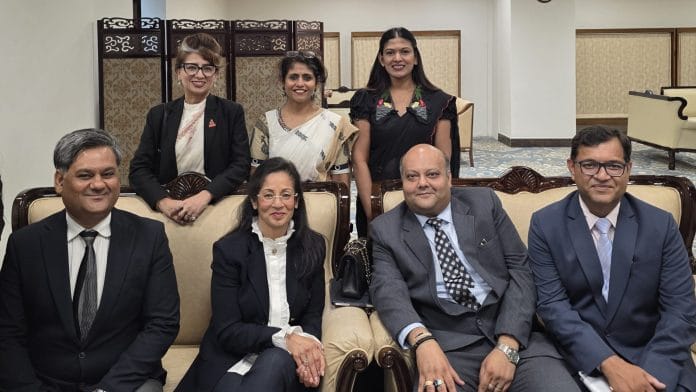


New Delhi: Justice Abha Nayar Patel, the first woman judge of Indian origin on the Zambia Supreme Court, on Thursday cautioned against unchecked innovation in the justice sector, saying it could “merely digitise” existing inequalities.
The judge was delivering the keynote address at a lawyers’ event organised by the Supreme Court Advocates-on-Record Association (SCAORA). She spoke on the “Future of Justice Delivery: Innovation, Inclusion, and Integrity.”
The event saw the participation of Chief Justice of India Surya Kant, Justice Vikram Nath and Justice V. Mohana.
Justice Patel said that technological tools should not be used in courts unless they improve both the fairness of outcomes and access to justice. A tool that fails to clear either of them is considered unfit for judicial use, irrespective of how impressive its engineering is.
“Innovation without integrity is dangerous. Integrity without inclusivity is incomplete, and inclusivity without innovation is often too slow to matter,” Justice Patel said.
On judiciaries across the world experimenting with AI in legal research, case management, e-filing and predictive analysis, the judge said technological tools are not replacing, but assisting judicial reasoning in high-volume, low-complexity matters.
She looked deep into “slow but meaningful steps” the Zambia Supreme Court has taken towards digitisation of court records and virtual testimony. Adopted out of necessity during Covid, these are now recognised as tools for improving access. Virtual hearings could improve access for a litigant who has a smartphone and stable internet connection, but exclude another litigant who has neither. Therefore, she called for “clear judicial and professional standards governing the use of technology in courts”.
Inclusivity in justice delivery should not be reduced to a slogan, she asserted.
“Inclusivity in justice means that the woman in a rural district who has never seen the inside of a courthouse can nonetheless understand what her rights are and how to assert them. It means that language, literacy, disability, distance, and cost do not quietly determine who receives justice and who does not,” Justice Patel said.
She also added that it required representation on the Bench, at the Bar and within institutions that frame policy. “Inclusivity is not a modern invention. It is unfinished business, generations in the making, and it remains ours to carry forward to its logical conclusion.” She also spoke about mediation as an emerging alternative dispute resolution mode that is less intimidating and more responsive to the lived realities of parties.
(Edited by Jeyasri AT)