



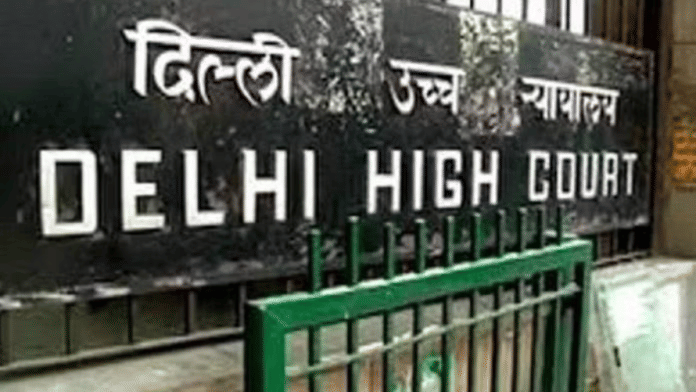
New Delhi: The Delhi High Court has directed a trial court to file a criminal complaint against five Central Bureau of Investigation (CBI) officials and a special public prosecutor for allegedly making a false statement in court in a case involving former IRS officer Ashok Kumar Aggarwal.
The officials are accused of falsely stating that correspondence with the government was underway on further legal action against Aggarwal, who had been discharged in a corruption case after the high court invalidated the sanction for his prosecution.
Justice Madhu Jain on Tuesday set aside an October 2025 order of a special judge at Delhi’s Rouse Avenue Court, who had refused to initiate proceedings under Section 340 of the CrPC. The provision allows a court to initiate a complaint when it finds that an offence affecting the administration of justice, such as giving false evidence, may have been committed in proceedings before it.
The special judge had found that the CBI’s reply created a wrong impression about the status of its communication with the government but declined to order prosecution.
The high court directed the trial court to file a criminal complaint against Sushil Dewan, then an inspector with the CBI; Vineet Vinayak, then head of zone; Amit Kumar, then head of branch; Raman Tyagi, then superintendent of police; Prem Kumar Gautam, an officer involved in processing the file; and Md Azad, special public prosecutor under IPC Sections 191 (false evidence), 193 (punishment for false evidence) and 209 (dishonestly making a false claim in court).
Also Read: 11 months, 7 listings but the needle has barely moved on challenge to EC immunity law in SC
Case background
The CBI was investigating Aggarwal in a corruption case registered in 1999 under the Prevention of Corruption Act. In January 2016, the Delhi High Court held that the sanction for his prosecution was invalid. A special judge subsequently discharged Aggarwal in March that year.
The CBI then considered challenging the high court’s judgment before the Supreme Court and referred the proposal to the Law Ministry for its opinion. On 8 June 2016, the ministry said there appeared to be no reasonable grounds to pursue the matter further. The Department of Personnel and Training (DoPT) conveyed this opinion to the CBI on 1 July 2016.
On 8 July 2016, Aggarwal applied to the special judge for the return of documents seized during the investigation. These included documents relied upon by the prosecution, those not relied upon and records said to belong to other individuals or public authorities.
The CBI did not oppose the return of documents it had not relied upon but objected to releasing the remaining records. In its reply to the trial court on 2 August 2016, the agency said correspondence with the DoPT on further legal action was “underway” and that the documents might be required for subsequent proceedings.
The special judge found that the reply did not clearly establish the status of the proposed challenge and directed the CBI to file a “clear cut reply”, specifying whether an appeal or revision had been filed or was pending.
On 8 August 2016, Aggarwal filed an application under Section 340 CrPC before the same court, alleging that no correspondence with the DoPT had been underway when the CBI filed its reply on 2 August. He also alleged that the agency had failed to disclose the Law Ministry’s opinion against pursuing the matter.
On the same day, the CBI forwarded a proposal to the DoPT seeking reconsideration and a further legal opinion on the proposed challenge. In an additional reply filed before the special judge on 9 August, the agency said it had, in principle, decided to challenge the high court’s judgment and had forwarded a proposal to the DoPT on 8 August.
CBI drafts revealed deleted portions
The special judge examined the CBI’s files, which contained successive drafts of the reply to Aggarwal’s application for the return of seized documents. Several officers had been involved in processing the drafts.
According to the records placed before the court, the first draft noted that the DoPT had rejected the CBI’s proposal to file a special leave petition (SLP), a plea seeking the Supreme Court’s intervention.
A subsequent draft retained this reference to the rejection. However, the passage was later deleted and replaced with a handwritten statement that correspondence with the DoPT on further legal action was “underway”.
The high court said the records showed varying degrees of involvement among the six individuals.
Dewan had incorporated the handwritten alteration and filed the final reply. Vinayak was “prima facie connected with the handwritten alteration” and had approved the reply eventually submitted to the court on 2 August. Gautam and Kumar had handled earlier drafts and were aware of the DoPT’s position. Azad had vetted both an earlier draft and the final reply, while Tyagi had processed the final version and forwarded it for approval.
Why trial court declined to order prosecution
While examining Aggarwal’s application under Section 340 CrPC, the special judge agreed that no correspondence between the CBI and the DoPT was underway on 2 August 2016, when the agency filed its reply.
The court found that the process underway was an internal CBI exercise to seek further legal advice on whether to file an SLP. An internal proposal, it held, could not be equated with correspondence already taking place with an external authority such as the DoPT.
However, the special judge declined to order prosecution.
It held that the reply created a wrong impression about the status of the correspondence but noted that the CBI had clarified its position in its additional reply on 9 August, at the earliest available opportunity.
The special judge characterised the statement as an “imprecise choice of words” rather than a deliberate attempt to mislead the court. It also cited the absence of prejudice to Aggarwal, the subsequent clarification and the nearly 10 years that had elapsed since the case was registered.
The court consequently held that initiating proceedings under Section 340 CrPC was not “expedient in the interest of justice”.
Why HC disagreed
The high court took a different view of the documentary evidence, holding that the successive drafts indicated that the disputed statement was not merely an imprecise description of an internal process.
An earlier draft explicitly recorded that the DoPT had rejected the proposal to file an SLP. That passage was subsequently deleted and replaced with a handwritten assertion that correspondence with the administrative ministry was underway, even though no such correspondence existed at the time.
The high court said the alteration “changed the very factual position” presented to the trial court.
It also rejected the CBI’s argument that the Law Ministry’s opinion was merely advisory. The agency was free to reconsider the matter, seek another legal opinion or pursue a legal remedy, the court said. However, until a decision was taken and the relevant process initiated, an internal proposal could not be described as correspondence already underway with the ministry.
The additional reply filed on 9 August did not rectify the earlier statement, the high court held. By stating that the proposal had been forwarded to the DoPT only on 8 August, it confirmed that the matter was still under internal consideration when the original reply was filed on 2 August.
The high court also rejected the special judge’s reliance on the absence of prejudice to Aggarwal. Citing the Supreme Court’s ruling in Iqbal Singh Marwah v Meenakshi Marwah (2005), it said the decision to initiate proceedings under Section 340 must be based on the alleged offence’s impact on the administration of justice, rather than solely on the injury caused to an individual litigant.
The disputed statement was material because the CBI had relied on it to justify retaining Aggarwal’s documents on the ground that they might be needed for further legal proceedings.
Whether a challenge had actually been initiated, a proposal had been forwarded to the government or the matter remained under internal consideration were therefore relevant facts for the trial court, the high court said.
It also rejected the argument that the passage of nearly 10 years justified dropping the matter. Aggarwal had filed his application under Section 340 within days of the CBI’s 2 August reply, and the issue had remained part of judicial proceedings since then. Moreover, the relevant evidence was largely documentary, comprising official drafts, file notings and court filings.
The high court concluded that the documentary record provided a reasonable basis for allegations under Sections 191 and 193 read with Section 191 of the IPC, and Section 209, warranting an inquiry into the alleged offences in the interests of justice.
It therefore set aside the special judge’s order dated 25 October 2025 and allowed Aggarwal’s application under Section 340 CrPC.
The special judge has been directed to file a written complaint against Dewan, Vinayak, Kumar, Tyagi, Gautam and Azad and forward it to the jurisdictional magistrate within four weeks.
Aditya Edara is a TPSJ alum, currently interning with ThePrint.
(Edited by Chingkheinganbi Mayengbam)