



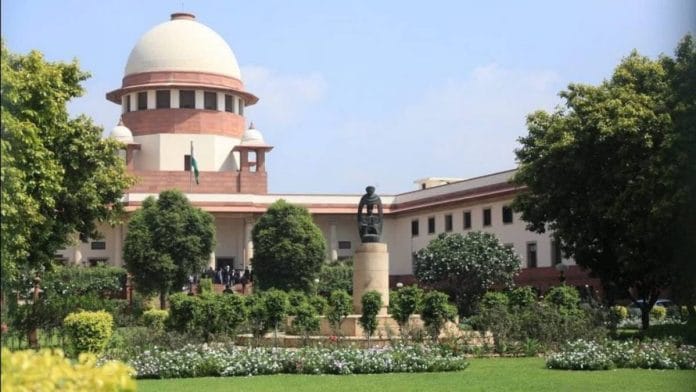
New Delhi: The Supreme Court has upheld a Karnataka High Court decision to award Rs 5-lakh compensation to a Kodagu homestay owner for his illegal arrest in a case arising from the alleged rape of a US citizen at the facility.
On 22 September, the Supreme Court declined to interfere with the high court’s July order and dismissed Karnataka’s special leave petition, saying the court was “not inclined to interfere” with the HC judgment.
The HC’s Rs 5-lakh compensation did not amount to a finding that Vishal was innocent. But It was a remedy for what the high court found to be an unlawful deprivation of his personal liberty.
The court also simultaneously refused to quash the FIR against Palecanda Ponnappa alias Vishal and directed that the investigation continue.
Also read: Why Karnataka HC rejected Christian missionaries’ plea seeking quashing of UAPA case
Why was Vishal’s arrest held illegal
The high court’s finding turned in significant part on the distinction between the allegations against Vishal and those against the principal accused.
The FIR alleged that a male staff member of Devi Villa Homestay had sexually assaulted the US citizen in April. Vishal, the principal operator and managing person of the homestay, was named as Accused No. 2.
Police picked up Vishal on the evening of 18 April. He was produced before a magistrate on 19 April and remained in judicial custody until he was granted bail on 2 May.
Importantly, Vishal was not present at the place when the alleged sexual assault took place, and the allegation of committing the sexual act was not against him.
This became significant when the HC examined whether the rape allegation against the other accused could provide a legal basis for Vishal’s arrest.
The prosecution argued that Vishal and the principal accused were alleged to have acted with common intention under Section 3(5) of the Bharatiya Nyaya Sanhita.
The state said his arrest was necessary to uncover what had happened at the homestay. It also argued that if the investigation found nothing against him, it could ultimately result in a ‘B’ report.
The high court, however, treated Section 3(5) as a provision for attributing liability and not as an independent substantive offence that could, by itself, furnish a basis for arrest.
It examined the offences specifically attributed to Vishal and noted that the relevant offences were non-cognizable. The court, therefore, considered whether there was a lawful basis to arrest him rather than merely investigate his alleged role.
The court also relied on the Supreme Court’s repeated directions on arrest, particularly the principle that the existence of the power to arrest is different from justification for exercising that power.
It cited Arnesh Kumar vs State of Bihar & Another (2014), Mohammed Zubair vs State of NCT of Delhi & Others (2022), which require police officers to apply their mind and establish why arrest is necessary instead of treating it as an automatic consequence of an allegation.
The high court ultimately declared Vishal’s arrest illegal.
The compensation
Vishal had sought compensation of at least Rs 15 lakh, citing the alleged violation of his fundamental rights under Articles 14, 21 and 22 and the loss of liberty, dignity, reputation and business losses arising from his arrest and detention.
The high court did not grant the amount sought. It awarded Rs 5 lakh.
The court treated the compensation as a remedy for the unlawful deprivation of liberty. It relied on Supreme Court decisions including Rudul Sah v State of Bihar (1983) and Nilabati Behera v State of Orissa (1993), which recognise compensation as a public-law remedy for established violations of fundamental rights.
The high court stressed that such compensation was not an act of sympathy or largesse, but followed from its finding that a fundamental right had been violated. It also clarified that the Rs 5-lakh payment would not prevent Vishal from pursuing any additional claim for damages in a civil proceeding.
The final order directed Karnataka to pay the Rs 5 lakh within four weeks. But the FIR was not quashed
The high court did not treat the illegal arrest as a finding that there was no case to investigate.
Vishal had also sought quashing of the FIR against him. The court rejected that request.
Its final order expressly says that the challenge to the FIR failed and that “the investigation should continue”. It also gave Vishal liberty to approach the high court if he was aggrieved by the final report eventually filed by the investigating agency.
Thus, the court separated the question of whether Vishal could lawfully be arrested from the question of whether investigators could examine his possible role in the case.
Karnataka challenged the high court’s findings before the Supreme Court. On 22 September, the Supreme Court declined to interfere, and dismissed the state’s petition.
The Supreme Court did not issue a separate finding that Vishal was innocent, nor did it quash the FIR. What remains is the high court’s operative order: Vishal’s arrest was illegal, the state must pay him Rs 5 lakh for that violation, and the investigation into the FIR can continue.
(Edited by Sugita Katyal)
Also read: Boy sends girl flirty Instagram DM, matter lands in court. Judge says ‘Gen Z’ compliment not a crime