





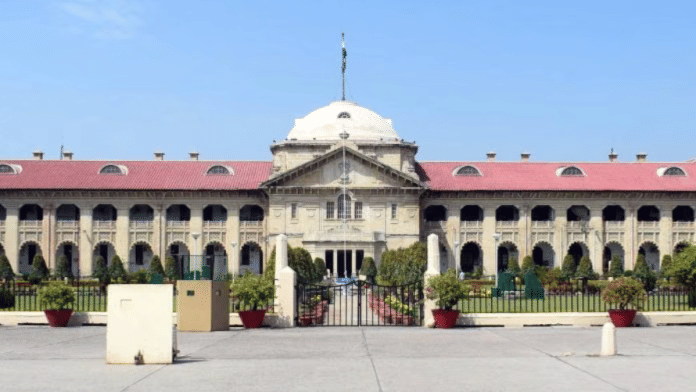


New Delhi: Indian philosopher and political strategist Chanakya may have written the Arthashastra 2,400 years ago. But on Wednesday, the Allahabad High Court cited the 4th-century text in a completely contemporary context to push for police reform and accountability.
Justice Vinod Diwakar turned to the ancient treatise to remind the executive that accountability of public officials is a nearly 2,400-year-old concept as he condemned what he called the “systemic non-adherence and bureaucratic rigidity” obstructing critical police reforms in Uttar Pradesh.
Citing the Arthashastra, the court noted that those in ministerial office must be “examined daily” as “men are by nature fickle-minded and, like horses at work, exhibit constant changes in their temperament”.
The court also said that the ancient treatise mandated fines for neglect of duty, which it said was “as relevant to the governance of public administration today as it was when first articulated”.
The 25-page order stemmed from a mother’s habeas corpus petition seeking the recovery of her 15-year-old daughter, missing since June 2025.
Although the police filed a charge-sheet within 60 days, according to procedure, the court found that the investigation lacked “diligence and objectivity”, as the minor had not been recovered within the mandatory 60-day period and the “real accused” had allegedly not been summoned.
While the girl was eventually found and restored to her parents after Jhansi police formed an SIT in February this year, the court questioned the investigative standards and used the case to address the systemic “bureaucratic resistance” to implementing the Subhash Chandra guidelines for police reforms issued last year.
It characterised the conduct of the Additional Chief Secretary (Home), Sanjay Prasad, as a “calculated attempt to undermine” judicial authority.
The court ordered a certified copy of the judgment be sent to the Secretary of the Department of Personnel and Training (DoPT) so that Prasad’s conduct could be recorded and considered by the Appointment Committee of the Cabinet (ACC) for his future assignments.
Justice Diwakar issued a formal recommendation to the DoPT to evolve a “doctrine of superior responsibility” to hold senior officials criminally accountable for the failures or omissions of their subordinates.
What are the Subhash Chandra guidelines?
The catalyst for the court’s ire was the persistent failure of the state’s Home Department to implement the structural reforms mandated in the 2025 Subhash Chandra v. State of U.P. decision designed to standardise criminal investigations and ensure prosecutorial oversight.
Despite a year having passed since the ruling, the court found that the police hierarchy had largely ignored these guidelines.
The Subhash Chandra guidelines issued by the Allahabad High Court last year required a mindful overhaul of how charge-sheets are prepared.
Key directions included the development of customised training programmes for investigating officers and the mandatory inclusion of 20 specific details in police reports, such as the roles of each accused, scientific evidence, and details of CCTV or CDR data.
Importantly, the guidelines required that draft chargesheets be reviewed by Prosecution Officers before submission to the court to ensure legal sustainability.
‘Pattern of systemic non-adherence’
The court’s rebuke was specifically directed at the “bureaucratic resistance” encountered at the administrative level. The judgment highlighted a “pattern of systemic non-adherence”, noting that even after a year, the Home Department had taken no effective steps to ensure the uniform implementation of the investigative “checklist”.
The court was particularly critical of the conduct of the Additional Chief Secretary (ACS), Home, as it was revealed that the state expressed its intention to challenge the Subhash Chandra ruling before the Supreme Court in February 2026, only after the High Court sought an explanation for the continued non-compliance.
Justice Diwakar described the move as a “deliberate and calculated attempt to undermine the authority” of the court by using a proposed Special Leave Petition (SLP) in the Supreme Court as a shield to postpone scrutiny in the high court.
Challenging the ‘Whitehall ethos’
The judgment delved into the sociological roots of this resistance, critiquing what it described as the “Whitehall ethos” that governs the Indian civil services.
This culture, the court observed, prizes “discretion, secrecy, and anonymity”, which often translates into “unbridled discretion” that undermines the rule of law.
“Bureaucratic rigidity, an excess of rules, abundant resources without corresponding wisdom to utilize… are, collectively, the antithesis of accountability,” the court said, quoting Canadian philosopher Joseph Heath.
It noted “red tapism often serves as a shield against accountability”, allowing officials to evade the obligation to furnish reasons for their decisions.
Suggesting the evolution of a “doctrine of superior responsibility” to the DoPT, Justice Diwakar argued that the time has come to hold senior officers in the hierarchy “criminally accountable for failure to prevent and/or punish acts of commission or omission on the part of their subordinates”.
The court emphasised that superior officers must be held responsible when their failure to oversee subordinates leads to “corruption, fraud, wilful suppression or the failure to implement State Policy”.
(Edited by Sugita Katyal)
Also Read: HC’s multi-kidney swap verdict bridges legislative gap. What it means for organ transplant in India