



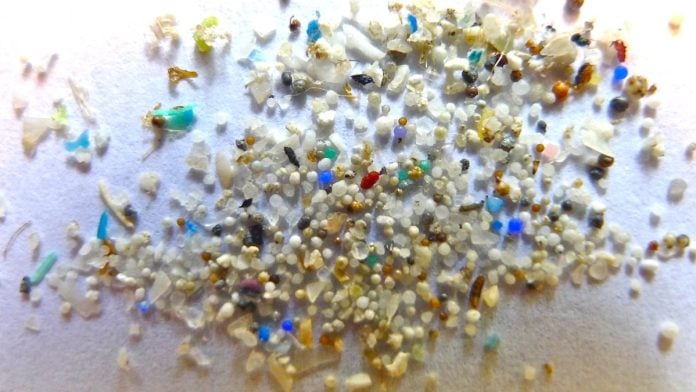
New Delhi: The Madras High Court has refused to revisit its February direction requiring packaged drinking water, sugar and salt sold in plastic packaging to carry warnings that they may contain microplastics or nano plastics. In its earlier order, the court had held that consumers have a right to know what is present in the food they buy.
A bench of Justices N. Sathish Kumar and D. Bharatha Chakravarthy on 28 September dismissed a review petition filed by the Food Safety and Standards Authority of India (FSSAI), along with recall applications filed by the Pet Packaging Association for Clean Environment (PACE) and the Federation of All India Packaged Drinking Water Manufacturers Associations (FPDWMA).
The court made clear that it had not declared packaged drinking water, sugar or salt to be “unsafe food”. The issue before it was narrower—whether consumers should be informed about the presence of micro/nano plastics, while scientific studies on their precise health effects continue.
“If something is present inside, it would be mandatory to disclose it on the label,” the court said, adding that the core principle behind labelling was disclosure of information and truth.
The February order followed material placed before the court by FSSAI showing that microplastics had been detected in commercially available bottled drinking water collected from Rajasthan, Himachal Pradesh, Chandigarh, Haryana, Karnataka and Maharashtra. The court had also noted reports of higher levels of microplastics in sugar and salt packed in plastic or polythene.
The court had then directed that plastic/PET bottles carry, in bold red letters of at least 10-point font, the declaration: “This water may contain Micro/Nano Plastics.” Similar wording was prescribed for sugar and salt.
FSSAI later sought a review, arguing that further studies were required before regulatory action could be taken. PACE and FPDWMA also sought recall of the February order, questioning the basis and timing of the labelling direction.
The bench, however, relied on the framework of the Food Safety and Standards Act, 2006, particularly its provisions dealing with risk analysis and provisional risk-management measures. It noted that the law contemplates action where there are reasonable grounds to suspect a food risk even when scientific uncertainty remains.
The judges also drew attention to the wording used in the Act: “potential” rather than “actual”; “probable” rather than “certain”; and “reasonable grounds to suspect” rather than requiring “adequate proof”. On that basis, the court rejected the argument that the February direction was premature or disproportionate.
The bench also rejected the argument that microplastics could have originated in the water source rather than from the bottle or packaging process. Even if that were so, it said, the consumer should be informed if micro/nano plastics were found in the water inside the bottle.
Also Read: What is ‘Plas-Stick’—the invention which won 3 Indian teens the Earth Prize
‘Barest essential minimum’
The order also records the areas in which scientific studies are examining possible health effects. The court noted that studies have reported possible gastrointestinal, cardiovascular, renal, reproductive and developmental, neurological, endocrine and metabolic effects.
It referred to studies indicating that micro/nano plastics can cross biological barriers and enter the bloodstream, with particles reported in human tissues. The order also noted their detection in placental samples and breast milk. At the same time, the court recognised that further work was required to establish definitive epidemiological proof of the various harmful effects.
The court said the scientific uncertainty did not prevent provisional measures where the statutory conditions for such action were met. It also rejected comparisons with developed countries, pointing to differences in India’s consumption and storage practices, heavy dependence on PET bottled water and the problem of refilling and counterfeiting.
The case also has several major food and consumer companies as respondents. They include Hindustan Unilever Limited, Nestle India Limited, Hatsun Agro Product, Britannia Industries, Parle Agro, Cavinkare, Mondelez India Foods, Procter & Gamble, PepsiCo India and ITC Limited.
The court also dealt with the procedural challenge to FSSAI’s review petition. It noted that while PACE had withdrawn its Supreme Court challenge with liberty to approach the High Court, FSSAI had withdrawn its own Supreme Court petition unconditionally. This raised a maintainability issue, the court said, but it nevertheless proceeded to examine the matter on merits.
Calling the February direction the “barest essential minimum”, the bench said the order was intended only to enable consumers to make an informed choice while FSSAI continued its risk assessment.
The September order does not end that process. The court said the February direction would remain subject to “further hearing of all the parties and continuation of the studies in this regard”. It ultimately dismissed the review and recall petitions, with no order as to costs.
Aditya Edara is an alum of ThePrint School of Journalism, currently interning with ThePrint.
(Edited by Amrtansh Arora)