





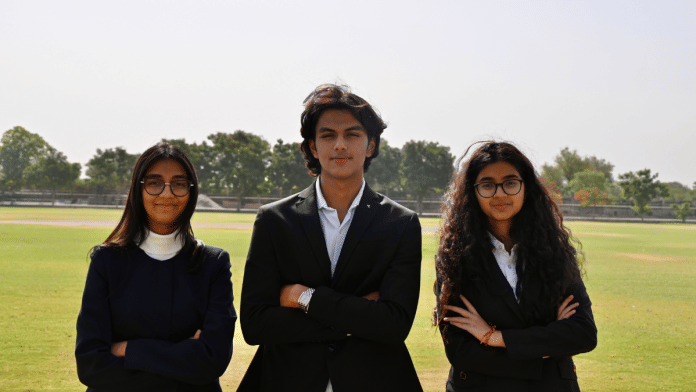

New Delhi: Three Indian teenagers have received the prestigious Earth Prize for their invention, Plas-Stick. The 16-year-olds developed a low-cost method to filter microplastics from water. The invention is also the first-ever Global Winner from India.
Avyana Mehta, Ariana Agarwal and Vivaan Chhawchharia were named Global Winners at the Earth Prize awards ceremony in Geneva on 29 May. The winners were chosen by a public vote of 23,000 people from seven regional finalists.
The winning project was developed in collaboration with IIT Guwahati. According to Tatler Asia, Plas-Stick has already reached more than 8,000 students and teachers.
The teens called their achievement “incredibly special” as they are the first Indian team to receive the award.
“What started as an idea between students has now been recognised among thousands of projects from around the world, which feels both surreal and deeply motivating,” the trio said in a statement.
What is Plas-Stick?
Plas-Stick is a powder made from waste tamarind seeds that binds microplastic particles into visible clumps.
The powder was designed specifically for communities without access to clean water or water filtration systems. It also requires no electricity.
The idea for the powder came to the trio after seeing a child drink water directly from a large plastic container. A UNICEF report from August 2025 says that almost 2.1 billion people around the world still lack access to drinkable water.
Following their win, the Indian teenagers plan to scale the solution and expand it to rural communities across the country.
Peter McGarry, Founder of The Earth Foundation, said that the invention is exactly the kind of invention that the prize was created to elevate.
“By transforming agricultural waste into a practical tool for removing microplastics from drinking water, these young innovators are addressing a growing global challenge with remarkable creativity and purpose,” McGarry added.
The Earth Prize is a Switzerland-based non-profit. It is the largest environmental competition for students aged 13-19. It offers mentorship and a $100,000 funding to develop creative and actionable solutions addressing critical environmental issues.