





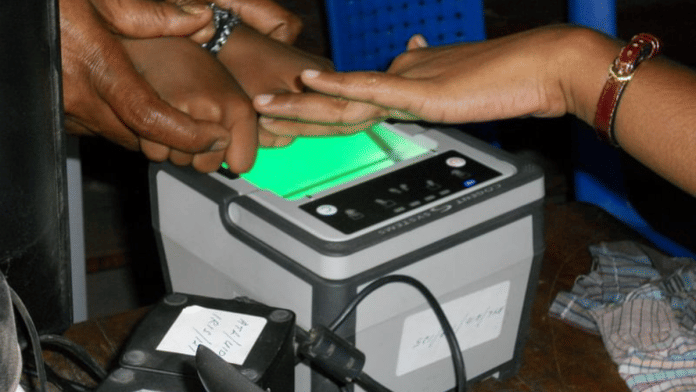


New Delhi: The Supreme Court of India Monday sought the responses of the Election Commission of India (ECI), Central government and various state governments for the implementation of finger and iris biometric identification at polling stations to prevent “bribery, undue influence, personation, duplicate voting and ghost voting”—which the petitioner believes “undermines public confidence”.
A bench of Chief Justice of India (CJI) Surya Kant and Justice Joymalya Bagchi was hearing a writ petition under Article 32 of the Constitution of India filed by Bharatiya Janata Party (BJP) member and Supreme Court lawyer Ashwini Kumar Upadhyay via advocate-on-record Ashwini Kumar Dubey.
Leaving the five states where elections are underway (West Bengal, Tamil Nadu, Kerala, Assam and Puducherry), the petitioner before the bench noted that the ECI has all the powers to implement this. The CJI agreed, going on to say whether such recourse deserves to be followed for next parliamentary elections or state polls needs to be examined.
‘One Citizen, One Vote’
The primary motivation behind this legal action is the persistent threat of fraudulent activities that undermine democratic integrity. The petitioner argues that current identification methods which rely on voter ID cards and manual verification are susceptible to misuse due to outdated photographs and clerical errors.
“The injury to citizens is extremely large as bribery, undue influence, personation, duplicate voting and ghost voting still affects the purity and integrity of the electoral process,” the petition states. By introducing biometrics, the petition claims that “only genuine and duly registered electors are permitted to cast their votes”, effectively ensuring the principle of “One Citizen, One Vote”. This would also ensure that each registered elector casts only a single vote.
The petitioner suggests that the proposed system is both technologically feasible and legally sound, drawing parallels to existing frameworks in India. It proposes that the biometric verification be “implemented on the lines similar to the Aadhaar-Based Identification which has been recognised as a valid proof of identity under Section 23(4) of the Representation of People’s Act, 1950”. It highlights that India already possesses the necessary expertise and infrastructure, as evidenced by the successful use of biometrics in banking, telecommunications, and public distribution systems.
Beyond preventing fraud, the implementation of finger and iris scans is expected to provide a ‘verifiable digital record’ of voter authentication. This real-time verification would create an audit trail to ensure due process is followed at every polling station. Furthermore, the petitioner argues that such a “technological barrier” would deter organised electoral fraud, which could in turn reduce instances of post-poll violence often triggered by allegations of manipulation.
The petition emphasises that electoral reform is a “need of the day”, and a matter of significant constitutional importance. It specifically notes that “implementation of finger and iris biometric identification must be given top priority… particularly in view of the upcoming Assembly elections in bordering states like Assam and West Bengal”.
The petitioner maintains that the Election Commission possesses the “plenary power” under Article 324 of the Constitution to mandate these changes to ensure that the electoral process remains free, fair, and credible.
Noting the benefits of finger and iris biometric authentication, the petitioner says that it will prevent duplicate and fraudulent voting, and linkage with the migrant and floating population as a significant portion of the population is migratory, often leading to inconsistencies in electoral rolls across constituencies.
Detection of ghost and inactive voters, real-time verification and audit trail, reduction of organised electoral malpractices, prevention of proxy voting, enhanced verifiability and auditability of the electoral process, reduction in post-election disputes and violence, alignment with evolving technical standards are among the many benefits that the petitioner put before the court.
(Edited by Nardeep Singh Dahiya)
There are so many illegal aadhar card holders that it really pisses me off. Give life imprisonment to people who create fake aadhar card.