



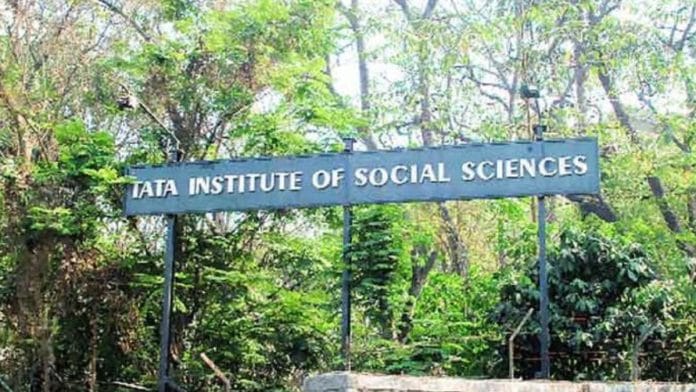
New Delhi: The Bombay High Court has set aside the forced retirement of a Tata Institute of Social Sciences (TISS) professor over his creation of an alumni WhatsApp group, holding that the disciplinary findings against him were “perverse” and the punishment grossly disproportionate.
A division bench of Justices M. S. Karnik and Sandesh D. Patil, in a judgment pronounced on 16 September, allowed Dr Swapan Garain’s petition challenging his suspension and compulsory retirement. The court directed TISS to reinstate him with continuity of service and pay 50 percent of his back wages from the date of termination until his superannuation.
Garain had joined TISS in 1985 and was working as a professor in its School of Social Work. He was suspended in March 2016 and compulsorily retired in September 2017 after disciplinary proceedings over a WhatsApp group called “TISSians Career Impact2”.
TISS alleged that Garain had created the group without its permission and used the institute’s official logo. It claimed the group amounted to a parallel placement service and that Garain was soliciting students and alumni for personal gain, in breach of his service conditions. The institute also alleged misuse of its resources and information and violation of its intellectual property rights.
The High Court examined the WhatsApp communications relied upon during the inquiry and found no material showing that Garain had charged money for placement services or that any funds raised were diverted for his benefit. One message related to a CSR opportunity in Mumbai, while another stated that the group was meant exclusively for TISS alumni and that non-TISS members should be removed.
The bench also noted that TISS had a registered alumni association, TISS Alums Association, which had not complained about the WhatsApp group and was neither a witness nor a party to the proceedings. The court said this made it difficult to understand what prejudice had been caused to the institute.
The court acknowledged that Garain had not obtained permission before creating the group. But it held that the absence of such permission, by itself, could not justify compulsory retirement. The judges also noted that the TISS logo, which had initially been used, was subsequently removed.
“Merely starting a WhatsApp group by an employee without the permission of the organisation itself is not sufficient to end a long-standing career, the bench held. It found the inquiry officer’s conclusions on the alleged parallel placement service unsustainable and the punishment “grossly disproportionate”.
The bench relied on the doctrine of proportionality, observing that the penalty imposed for misconduct must correspond to its gravity. Referring to the Supreme Court’s jurisprudence, it reiterated that judicial review can intervene where disciplinary findings are perverse or suffer from a patent error.
Quashing the suspension, compulsory retirement and the order rejecting Garain’s appeal, the court directed TISS to recompute his retirement benefits and pay the arrears within three months of uploading the judgment. The order also records that Garain had agreed to accept 50 per cent of the back wages.
(Edited by Jeyasri AT)
Also Read : TISS ex-student gets bail in Saibaba tribute case. What court said on Maoist literature & academic freedom