





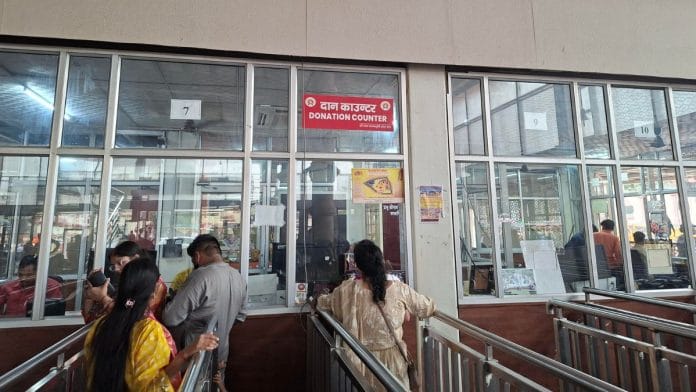


Ayodhya: Standing outside the Ram Temple after offering prayers, Lakshmi Thakur from Raipur in Chhattisgarh sums up the sentiments of many devotees visiting Ayodhya.
“Ab chanda nahi denge. Koi matlab nahi donate karne ka. Isse achha kisi gareeb ko daan de dein. Yahan mandir ki dekhbhaal karne wale hi chanda chura le jaate hain (We will not donate anymore. There is no point in giving money here. It is better to donate to a poor person. The people managing the temple are accused of stealing the donations),” she says.
For years, Lakshmi says, donating money at temples was an inseparable part of her religious journey. But the controversy over the alleged theft and mismanagement of donations at the Ram Temple has changed that, says the 54-year-old who travelled to Ayodhya with her daughter Priyanka.
“I have always believed that whatever is offered to God eventually reaches a noble cause,” she told ThePrint. “But this incident has shaken that belief. We have faith in Lord Ram but not in the temple trust. Instead of putting money into the donation box, we would rather help a poor family or fund someone’s education.”
Lakshmi is far from alone. In Ayodhya, many devotees are now reluctant to donate large sums of money or valuable items to the Ram Temple following alleged financial irregularities involving the Shri Ram Janmabhoomi Teerth Kshetra Trust.
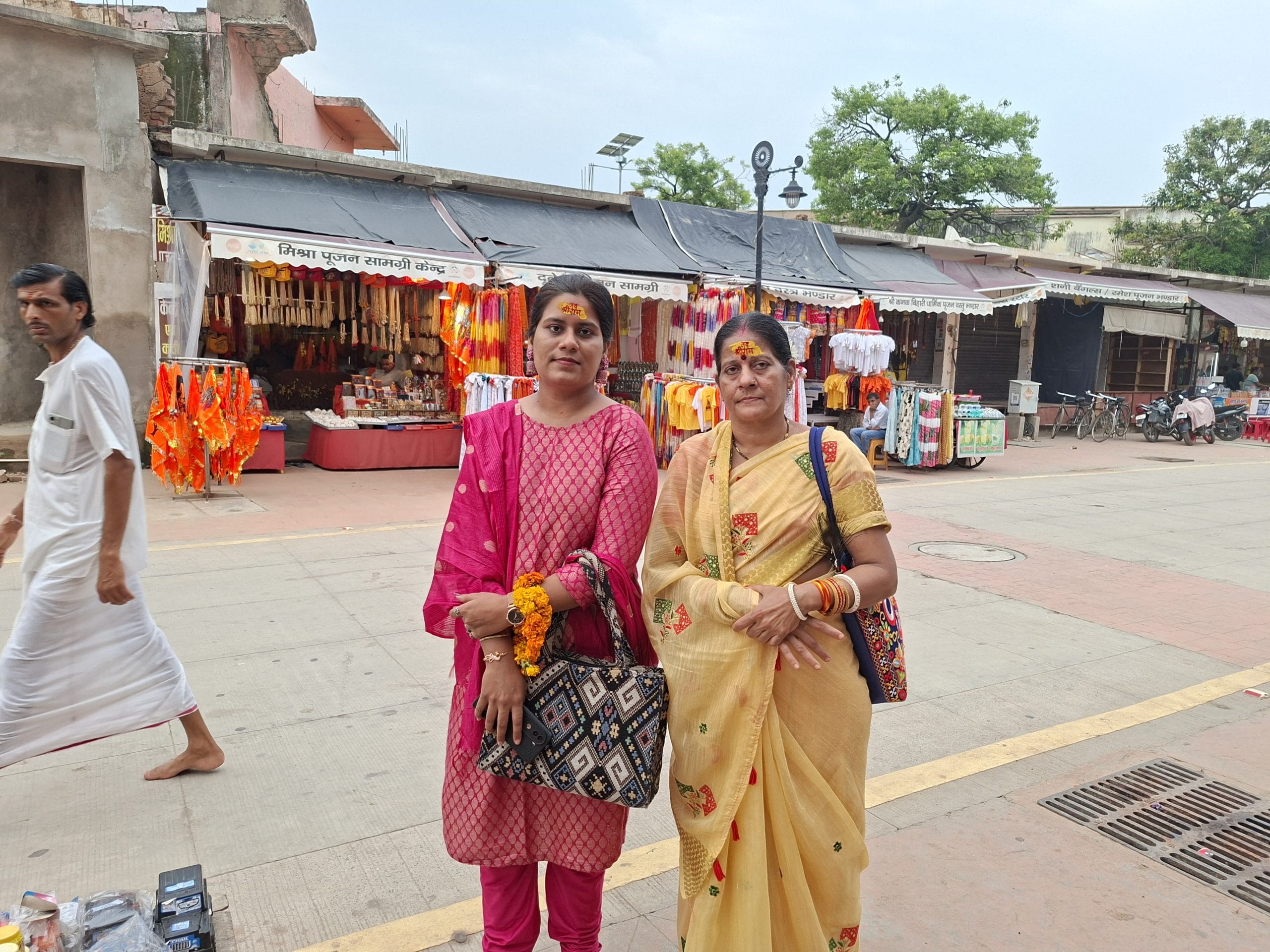
Long queues, once a common sight outside the Ram Temple, have become noticeably shorter, indicating a decline in footfall. Residents and traders say this has hit business in Ayodhya, with sales down because of fewer customers. Hotels, in particular, have been badly affected by the fall in the number of visitors.
After allegations of donation theft surfaced in early June, the state government was quick to set up a three-member Special Investigation Team (SIT) to probe the matter, following a request from the Shri Ram Janmabhoomi Teerth Kshetra Trust.
The SIT hasn’t submitted its final report yet. In the meantime, police have arrested eight temple trust functionaries involved in the donation counting process at the temple.
Shri Ram Janmabhoomi Tirth Kshetra Trust general secretary Champat Rai and trustee Anil Mishra have resigned, but they have not been named in any police FIR, which people ThePrint spoke to feel is a deliberate attempt to shield high-ranking officials.
‘Donation money is not safe’
Several devotees inside the Ram Temple told ThePrint that they will continue visiting the temple but will no longer make substantial donations until the allegations are fully investigated.
Priyanka Thakur, 28, who accompanied her mother from Raipur, says the controversy has travelled well beyond Uttar Pradesh.
“The entire issue is being discussed on social media back home in Chhattisgarh. When people heard we are going to Ayodhya, many advised that ‘zyada paisa mat chadhana’ (don’t donate too much money),” she says.
She believes donating directly to people in need is now a safer option. “If I help educate a child or support a poor family, at least I know where my money is going.”
Similarly, Sandeep Saini, who travelled from Hisar in Haryana with his family, says his trust in Lord Ram remains absolute. However, his trust in the temple administration has weakened.
“When I came in 2024, I donated Rs 5,100. This time I will offer only Rs 51,” says Saini.
“Hamari aastha ko thes pahunchi hai (Our faith has been hurt). We trust Lord Ram but not the trust officials. Until the investigation is completed, we will not make major donations. Our money is not safe,” he adds.
Every day, cash, coins and other valuable offerings from devotees are collected from 40 donation boxes across the Ram Temple premises. On regular days, donations average around Rs 75 lakh, but collections typically double or even triple during festivals and other auspicious occasions.
In 2024-25 alone, the trust estimated the value of offerings at around Rs 153 crore, excluding interest earned from fixed deposits.
According to the Shri Ram Janmabhoomi Teerth Kshetra Trust, between its inception and 31 March this month, devotees contributed Rs 582 crore in offerings. Of this, Rs 391 crore was spent on the trust’s operational expenses.
The trust has not released any figures about the donations it received in the last 1.5 months since the controversy began.
Not all devotees have changed their views. Amit Sharma, who travelled from Ghaziabad, says he sees no reason to reduce his offering. “I do not believe in asking God for accounts. The investigation is going on. If someone has stolen, they will be punished. But that does not mean devotees should stop making offerings. Like my previous visits, I plan to donate Rs 1,100.”
Traders feel the impact
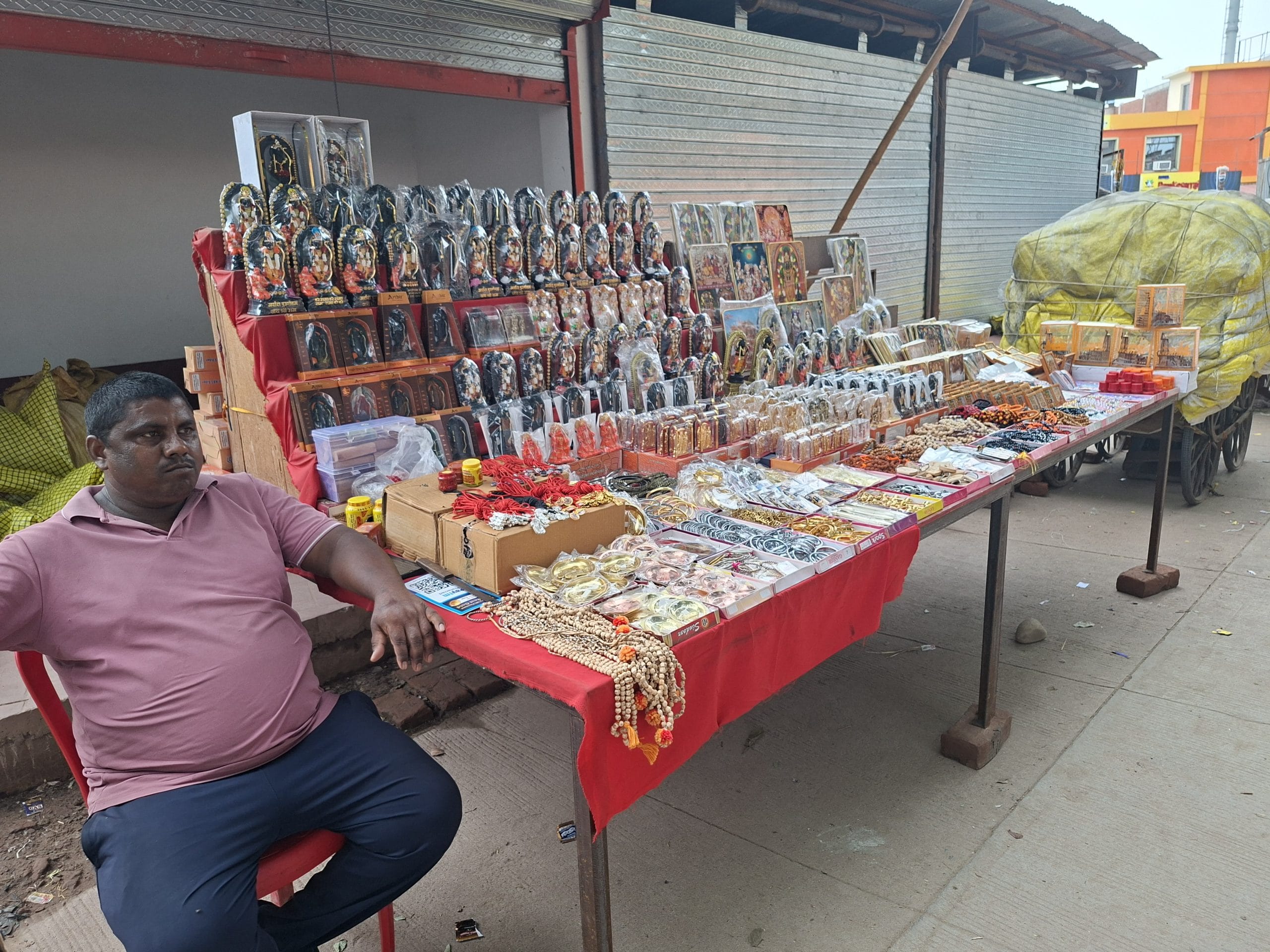
Small businessmen and local vendors in areas near the Ram Temple say business has declined sharply.
Barely a few hundred metres from the Ram Temple, traders in Harishchandra Market say shops have been empty since the controversy erupted.
According to several shopkeepers, business has declined between 50 percent and 70 percent over the past month.
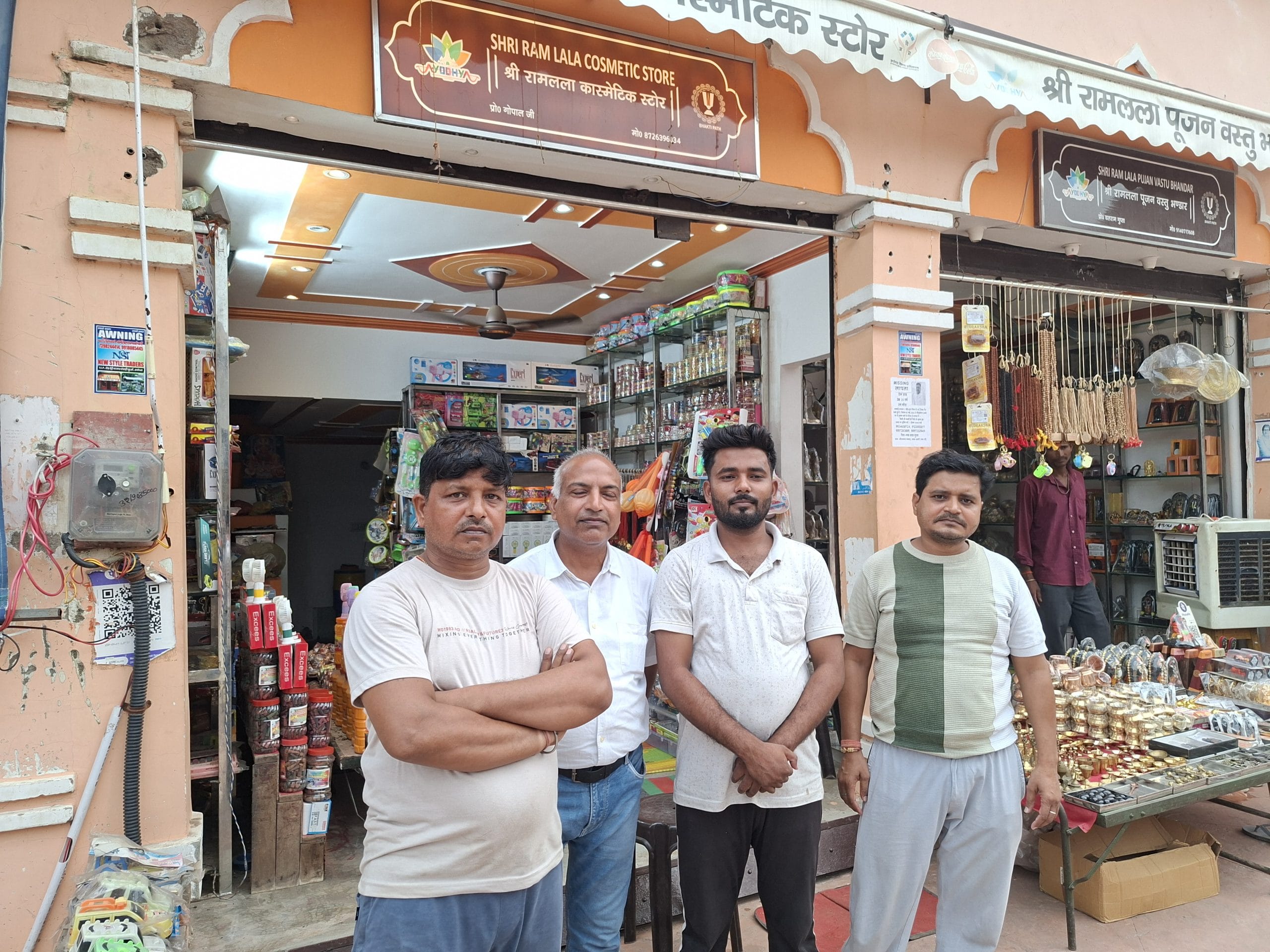
Balram Gupta, who sells puja material, says profits have fallen significantly.
“The donation controversy has affected us badly. Earlier I earned Rs 10,000 to Rs 12,000 on a normal day. Now even Rs 2,000 in sales feels difficult.”
He believes two developments have hurt business simultaneously: One is the donation controversy, and the other is the closure of one of the traditional pedestrian routes leading to the temple.
“This used to be one of the oldest access roads for pilgrims. After it was closed, footfall reduced significantly. We raised our concerns before temple officials, including Champat Rai, but nothing changed,” says Gupta.
Across the lane, brassware shop owner Ashish Kumar says the market has become noticeably quieter.
“’Schools have reopened; so seasonal demand has naturally fallen. But we cannot deny that the donation controversy has also played a role,” he told ThePrint.
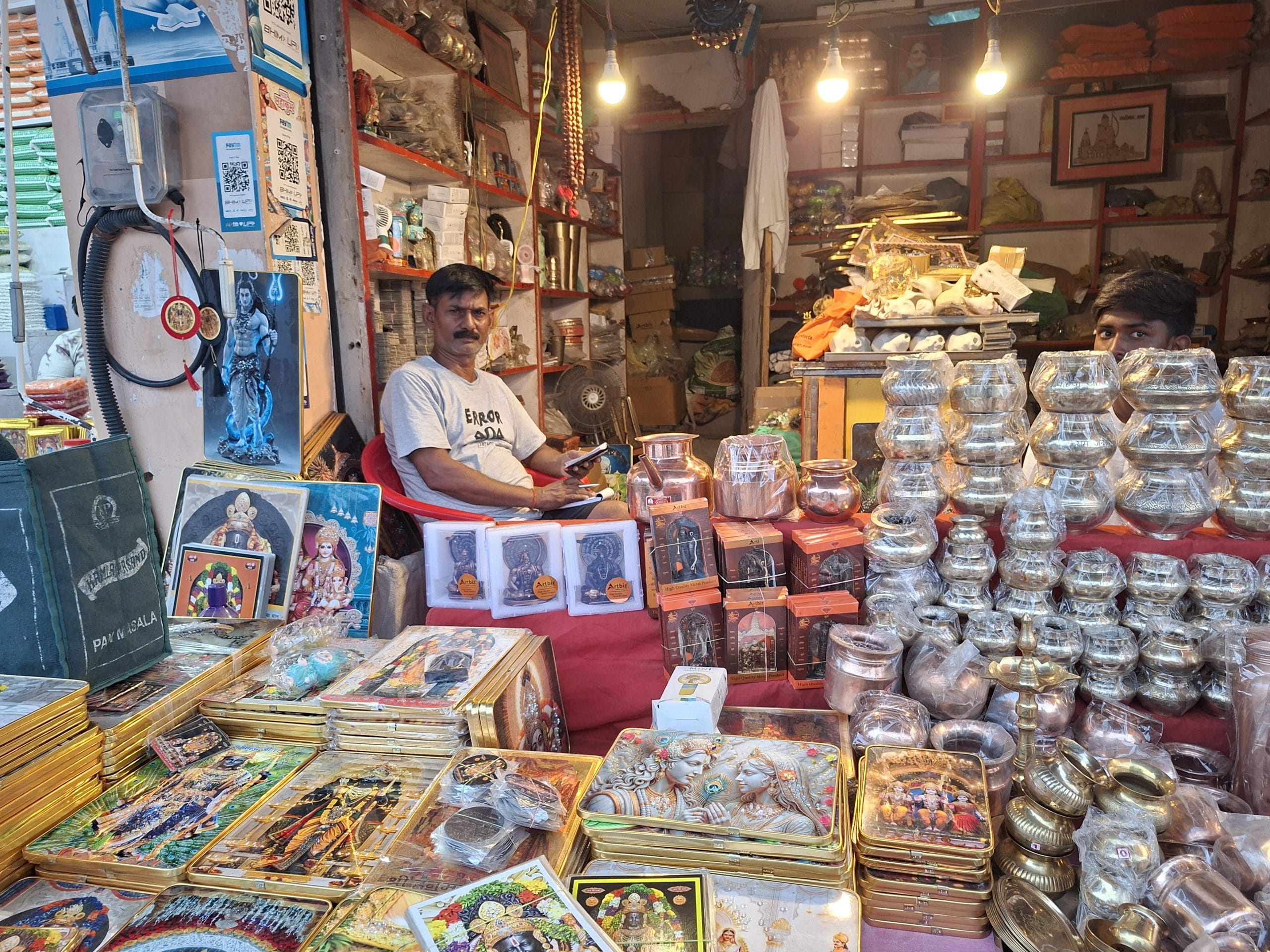
According to him, visitors now ask unusual questions. “Earlier tourists would ask about temple timings or nearby attractions. Now many ask us about the ‘donation theft’. Some even ask who the accused are. We don’t have any answers.”
He says the controversy has dented Ayodhya’s carefully cultivated image. “People especially avoid offering jewellery or expensive items now.”
Similarly, in Rikabganj Market, cloth merchant Rajesh Kumar says outside visitors once formed a large portion of his customer base. “Last July, although crowds had reduced because of the rainy season, someone would always walk into the shop. Now two hours sometimes pass without a single customer.”
According to him, pilgrims from other states often bought clothes and household items in bulk before returning home.
Hotels and guest houses hit
Perhaps nowhere is the impact more visible than among small hotel owners and guest houses near the temple.
Just 300 metres from the temple complex entrance gate, Hari Om Verma, an owner of a 20-room guest house, says occupancy has collapsed.
“My business has fallen nearly 80 percent in the past month,” he says.
Verma invested in the property soon after the Supreme Court’s verdict on the Ram Janmabhoomi dispute in 2019, assuming that tourism would boom in Ayodhya.
“For the first few years, every room remained occupied almost every day,” he says.
“Now, only one or two rooms are occupied on many days. July and August usually see fewer pilgrims because of weather conditions. But even during last year’s monsoon, occupancy never fell this much. The donation controversy has amplified already weak seasonal period,” he added.
The impact is especially visible among Ayodhya’s two- and three-star hotels, which largely depend on domestic pilgrims.
At Om Residency, about two kilometres from the temple, owner Deepak Soni estimates business has declined by more than 70 percent.
“Earlier we used to receive both online and offline bookings. The hotel usually operated at around 90 percent occupancy. Now we struggle to reach even half that.”
Soni avoids directly attributing the slowdown solely to the donation controversy. Instead, he points to changing conversations with guests.
“Earlier visitors asked why the BJP had lost seats in Ayodhya. Now they ask about the donation theft. We have no answers. We do not want to get involved in politics. We simply want to run our business,” he says.
About six kilometres from the temple, Lakshmi Bhavan Hotel owner Surya Prakash Verma says bookings have declined nearly 80 percent over the past month.
He believes multiple factors are responsible.
“There are far more hotels today than there were two years ago,” he says. “The market has become competitive. People have so many options to stay now compared with past years, but the recent controversy has certainly made things worse.”
In contrast, Neeraj Tiwari, manager of the four-star Panchsheel Hotel on the Ayodhya-Lucknow highway, remains optimistic.
Although July has been relatively slow, he says bookings for late August, September and October have begun.
“I see this as part of normal business cycles. As for the donation issue, the investigation is underway. It would not be appropriate to comment until it is complete,” he adds.
Numbers remain elusive
The Shri Ram Janmabhoomi Teerth Kshetra Trust has not issued any official statement on whether donations have fallen. No public figures on devotee arrivals are being released either.
According to Ayodhya Police Control Room data, 87,652 devotees visited the temple on 3 July, down from 94,419 on 21 June. Officials did not provide last year’s figures.
However, a trust functionary, speaking anonymously because he was not authorised to comment publicly, acknowledged that donation behaviour had changed more than overall visitor numbers.
“Normally, between 90,000 and 1.25 lakh devotees visit daily. There has been some reduction in footfall,” the official says. “But the bigger change is that people are avoiding expensive donations. Hardly anyone wants to donate jewellery or valuable items anymore. Weekend crowds continue to remain strong. But weekdays have become noticeably quieter.”
Ripple effect on economy
Dr. A.P. Tiwari, a Lucknow-based economist born in Ayodhya, believes that any downfall in business has a ripple effect on the town’s entire economy.
“Every sector is interconnected. Since 2019, we have heard countless stories about Ayodhya’s economic boom, driven by the Ram Temple and rising tourist footfall. This is perhaps the first time we are hearing widespread accounts of businesses suffering losses,” he told ThePrint.
Tiwari expressed hope that the government would take timely measures to restore public confidence, attract more pilgrims and tourists, and revive business activity in Ayodhya.
“The city’s economy is closely tied to religious tourism. Once confidence returns, the local economy is likely to recover as well,” he added.
‘Slowdown in seasonal, no link to donation row’
But Prakash Sharma, a close aide of Champat Rai and a functionary associated with the Vishva Hindu Parishad (VHP), dismissed claims that the donation controversy had hurt Ayodhya’s economy, describing them as a false narrative of opposition parties.
He added that the investigation into the allegations is still underway and cautioned against drawing premature conclusions.
“It is simply not true that business has declined because of the controversy. This is the monsoon season, when pilgrim arrivals naturally fall as people avoid travelling,” Sharma told ThePrint.
“The slowdown is seasonal and has nothing to do with the Ram Temple donation row.”
(Edited by Sugita Katyal)
As an agnostic, will take this one step further. Will communicate with the Lord from the privacy of my home, in a format that works well for me. Will restrict my donations to helping deserving people, radiating outwards from our loyal staff and their families.