



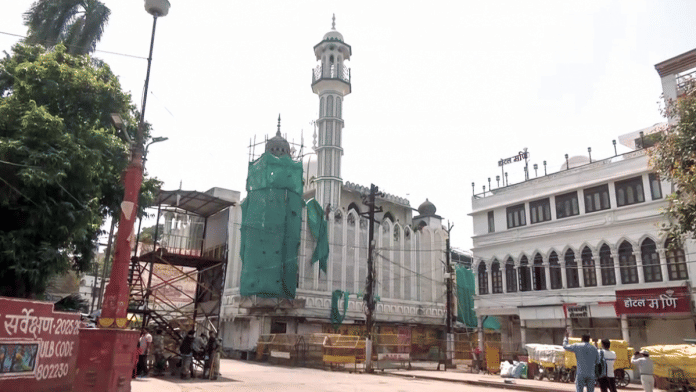
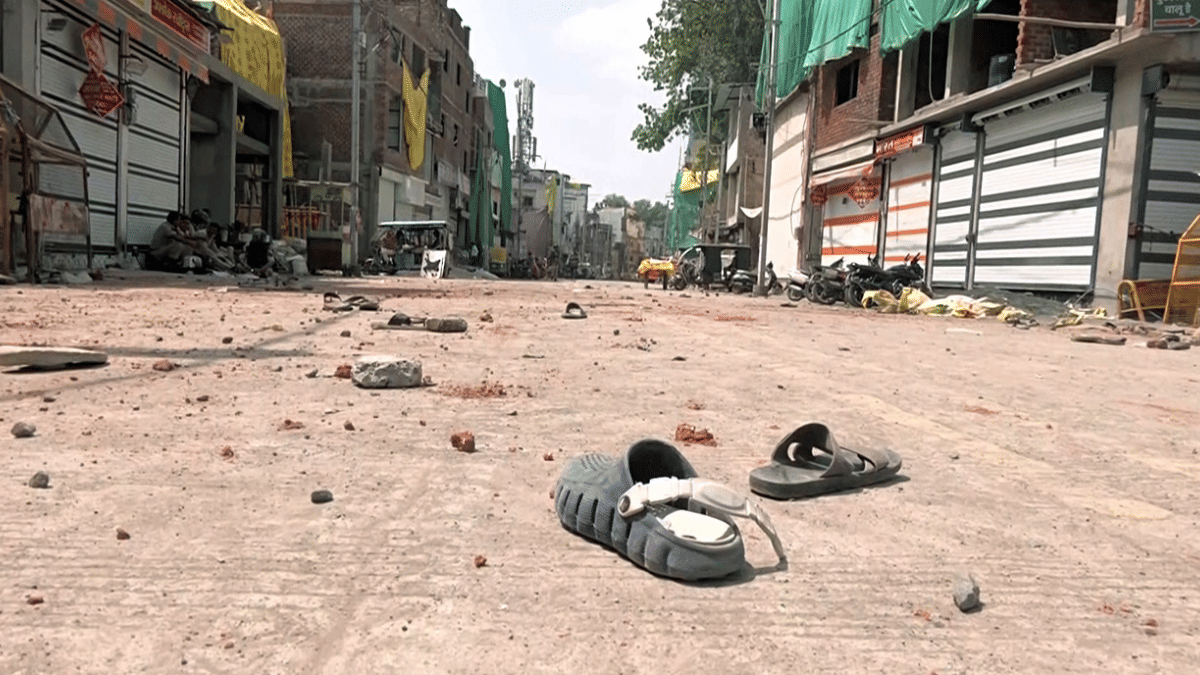
New Delhi: A proposed demolition of a part of Ujjain’s historic Shahi Masjid for a road widening exercise led to tension in the area on Monday, with protesters resorting to stone-pelting, and police using tear gas and lathicharge to disperse the crowd.
The Ujjain Municipal Corporation had issued a notice to the Shahi Masjid committee on 14 August—followed by multiple notices—saying the part of the mosque needs to be removed as it was obstructing the road-widening project being undertaken in view of the Simhastha Kumbh Mela 2028.
On 2 September, the committee moved the Madhya Pradesh High Court, urging it to declare the notices arbitrary, illegal, unconstitutional, and void ab initio. One of the petitioners’ main arguments was that the structure was being treated differently because it was a mosque.
On 9 September, a single judge bench of Justice Sandeep N. Bhatt dismissed the petition, calling it “meritless”, and clearing the way for the municipal corporation to proceed with the road-widening exercise.
On Sunday evening, the police put barricading around the area and deployed personnel. Tension started building up as community members began gathering near the mosque to protest against any demolition.
Some people were arrested and 15 others detained on Monday, while a case has been registered against seven persons, including some social media influencers who shared inflammatory statements and incited people.
On Monday morning, the Shahi Masjid committee challenged the single-judge bench order before a division bench of the Madhya Pradesh High Court. The division bench of Justice Subodh Abhyankar and Justice Jai Kumar Pillai dismissed their appeal, and upheld the single-judge bench order.
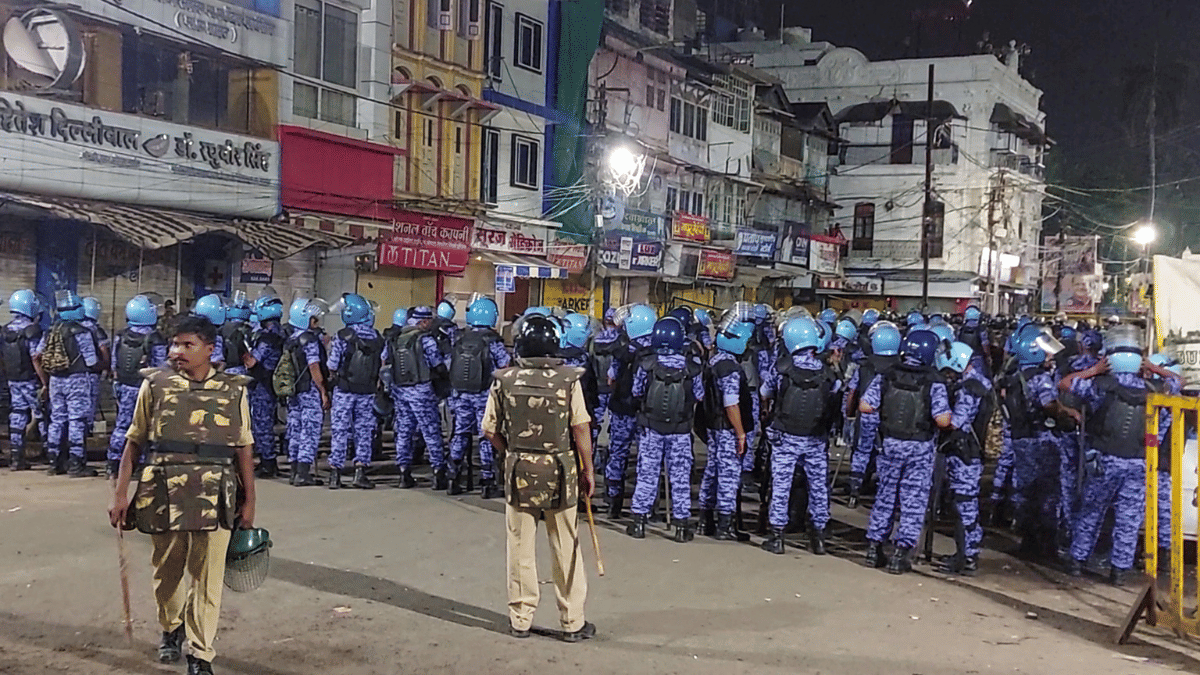
Ujjain Superintendent of Police Pradeep Sharma told PTI certain “troublemakers” attempted to disrupt peace by pelting stones, and “they were immediately dealt with by a heavy police force using lathi-charges and tear gas”.
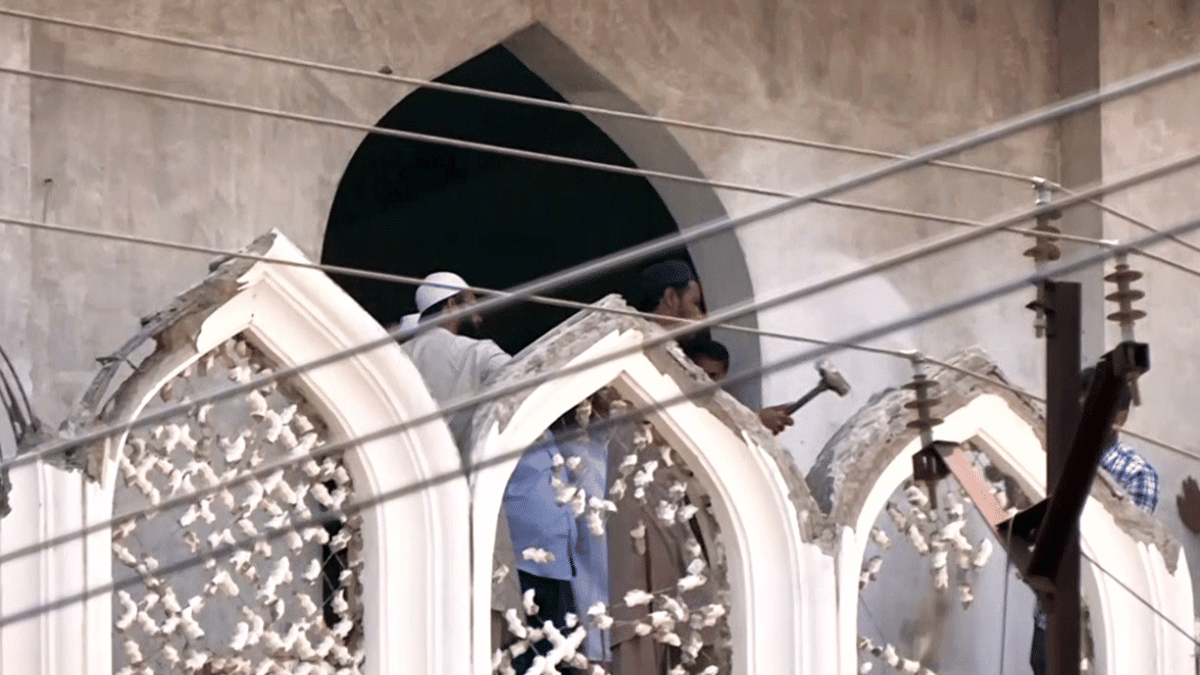
“Various communities and organisations have been consistently cooperating with the road-widening project. Today, the mosque committee itself is voluntarily demolishing the section of the Shahi Masjid at Chhatri Chowk that falls within the widening zone,” he said.
He said certain “troublemakers” attempted to disrupt the process by pelting stones, and “they were immediately dealt with by a heavy police force using lathi-charges and tear gas”.
As the tension escalated on the streets near the Chhatri Chowk, which houses the mosque, the Ujjain City Qazi Khaliqur Rahman urged people not to create tension over the issue.
Ujjain District Magistrate Raushan said, “Extensive development work is underway for ‘Simhastha 2028’, and a truly exemplary level of cooperation is being witnessed from all quarters; be it individuals, religious groups or the community at large”.
The MC notices and 9 September order
The Ujjain Municipal Corporation issued its first notice to the committee on 14 August, followed by further notices on 25 and 27 August. A final notice was issued on 1 September for removing the structure.
The mosque authorities challenged the notices before the Madhya Pradesh High Court, arguing that the proposed removal would affect part of the Jamat Khana or prayer hall, a 120-foot minaret and the Mazhar Chouk Shahi.
They invoked Article 14 (right to equality), Article 25 (the right to freely profess, practise and propagate religion), and Article 26 (freedom to manage religious affairs) of the Constitution, besides Article 300A (right to property).
The petitioners also questioned the procedure followed by the municipal corporation. They argued that the statutory requirements for removal had not been properly followed. and that the Madhya Pradesh Waqf Board should have been given the notice, since the mosque was registered as a Waqf property.
The Corporation disputed these claims, and said representatives of the mosque had been given opportunities to respond. Replies were submitted on 18 and 21 August, followed by the communication on 2 September, according to the record considered by the High Court.
On 9 September, Justice Sandeep N. Bhatt dismissed two writ petitions in a 27-page order.
The court held that the corporation had followed the applicable procedure and that the affected parties had been given an opportunity to raise objections.
The court found the action taken by the municipal corporation in this particular case was not arbitrary, discriminatory or contrary to law as argued by the petitioners.
What the HC considered
On the petitioners’ arguments that the structure was being treated differently because it was a mosque, the corporation said the exercise formed part of the Ujjain Development Plan, 2035, and that several other religious structures have been removed.
The high court recorded the corporation’s argument that portions of 10 temples and one mosque had already been removed along the same road, while action had been taken against around 80 religious places across Ujjain.
That became important when the court considered the Article 14 challenge.
Justice Bhatt found that the material before the court did not establish that the mosque had been singled out.
The court also considered the petitioners’ argument that the road could instead be widened by removing structures on the opposite side. “Looking at the situation of the property and the expansion required for the existing road, such contentions are not found to be genuine and are required to be rejected, as there is no scope for opting for such an alternative method under the facts of the present case,” the judge observed.
Another issue was the protection available to religious structures under Articles 25 and 26. The petitioners argued that removal of the prayer hall and other portions would interfere with their right to practise and manage their religion.
The court referred to earlier decisions dealing with religious structures and acquisition. It referred to the distinction between the right to practise religion and an absolute right to practise it at a particular location.
It also considered the Gujarat High Court’s decision in the 1998 Gulam Kadar Ahmadbhai Menon v Surat Municipal Corporation case, which dealt with the competing claims of religious structures and public projects.
The court did not hold that religious places have no protection under Article 25. It held that, in the circumstances of this case, the constitutional right to practise religion did not bar the corporation from carrying out the road-widening exercise.
The 9 September order also referred to the Supreme Court’s decision in the 2024 Re: Manoj Tiberwal Akash, which laid down safeguards for road-widening and removal of structures. These include identifying the existing road width, carrying out demarcation, issuing notice, considering objections and following the applicable legal process.
The High Court found that the required process had been followed here.
Why the road matters before Kumbh Mela
The road-widening project has been presented by the Ujjain administration as part of preparations for Simhastha 2028, the major religious congregation held in the city every 12 years. It said the widening was necessary to manage the movement of devotees during Simhastha.
The court took note of that argument. The court also noted the mosque’s location almost opposite the Mahakaleshwar Temple and near the Kshipra River. The court found the Corporation’s action to be in the larger public interest.
The court also noted the mosque’s location almost opposite the Mahakaleshwar Temple and near the Kshipra River.
The government has also been widening other stretches and removing structures falling on proposed alignments. On Sunday, Chief Minister Mohan Yadav personally began the partial demolition of his ancestral house in Ujjain as part of the larger road-widening exercise.
What Imam said
Imam Mohammad Ibrahim told the media that the mosque should be excluded from the exercise and claimed that the structure dates back to 1390.
Community representatives have also said that land or buildings opposite the mosque could be considered instead. These are claims advanced by the mosque side and were not adjudicated as historical findings by the September 9 order.
The mosque’s history is nevertheless part of the dispute’s local significance. Community representatives describe it as more than six centuries old, while the court’s September 9 order dealt primarily with the legality of the municipal action rather than determining its historical prominence.
(Edited by Ajeet Tiwari)
Also read: Rare courage to raze illegal mosques, temples for infrastructure—first Gujarat, now Faridabad