



New Delhi: Working on intelligence inputs deemed reliable, the Army in December 2023 launched an extensive combing operation in a village near Dera Ki Gali in Jammu and Kashmir’s Poonch district. On their target were four Lashkar-e-Taiba (LeT) terrorists who had only recently infiltrated into India from across the border.
A dense forested area between Rajouri district and Poonch served the terrorists well as they continued to evade security forces descending from the Jammu division. It was here that they laid an ambush for Army personnel in December 2023. Four Army jawans were killed in the intense gunfight that followed, but the terrorists slipped out of reach.
Over the next few months and years, the same LeT module attacked multiple convoys of security forces. And then came the big attack. On 22 April last year, a member of this ‘Pir Panjal’ module was among the terrorists who singled out by religion and shot dead at least 26 civilians at point blank range in Pahalgam’s Baisaran meadows.
A little over a year later, this group of four LeT operatives has now been wiped out.
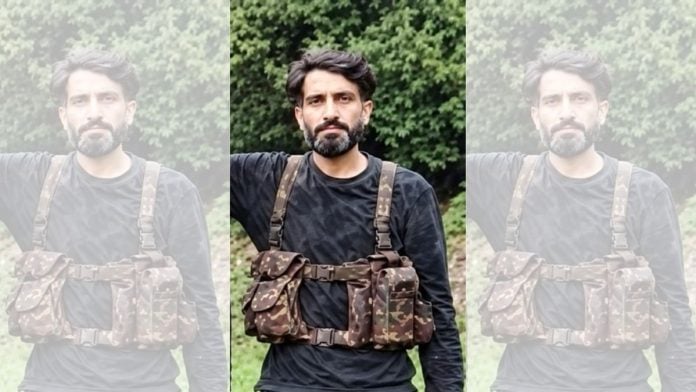
The last of the four, Mohammed Asif alias Hashim Musa, was killed Tuesday in an encounter with security forces in a densely forested region in central Kashmir’s Budgam district. Yasir, also a member of this group, was killed in another part of Budgam earlier in September.
Security forces had neutralised the third member, Suleman alias Faizal Jatt, in an encounter on the outskirts of Srinagar last July. Suleman was one of the three terrorists identified by the National Investigation Agency (NIA) in its chargesheet in the Pahalgam probe.
Confirming Musa’s killing, a spokesperson of the Ministry of Home Affairs (MHA) said in a statement Wednesday: “Neutralisation of Musa by Indian security forces is a serious blow to LeT ecosystem in the UT of J&K. With Musa’s killing, the entire group of four senior LeT Commanders operating in the UT since 2022, and responsible for sensational attacks.”
The MHA had attributed these many of these attacks to The Resistance Front (TRF), an offshoot of Lashkar-e-Taiba headed by Pakistan-based Sajid Jutt.
Also Read: Why Pir Panjal region is becoming a militant hotspot— porous LoC, routes to Kashmir, ‘local support’
Photographs, and a cold trail
Indian intelligence agencies traced Hashim Musa’s origins to a family in Pakistan-occupied Jammu and Kashmir (PoJK). His father, it is learnt, served in the Pakistan Army.
Musa is suspected to have infiltrated into India via the Samba-Kathua route in Jammu in 2023 as part of a four-member group of LeT operatives. By July 2024, all four terrorists had moved north of the Pir Panjal range. They subsequently split into two groups and carried out a string of attacks against vital and security installations.
Musa came into sharper focus after his photographs surfaced during forensic analysis of a phone recovered in Operation Mahadev, which was carried out by security forces in Dachigam forest on the outskirts of Srinagar in 2025.
The photographs allegedly showed Musa with the three other LeT operatives who infiltrated into India in 2023 along with him: Suleman, Yasir and Junaid Ramzan Bhat.
Junaid was among the terrorists caught on CCTV attacking a workers’ camp at a construction site in Gagangir in Ganderbal in October 2024. Seven civilians were killed in the attack.
Junaid was neutralised in an encounter with security forces on the outskirts of Srinagar in December 2024.
Terror in the Pir Panjal
Having infiltrated into India in the Jammu division in 2023, the four LeT operatives then travelled through the forest ranges of Pir Panjal in the Himalayas to reach South Kashmir.
They kept changing their hideouts between the two administrative divisions of the Union Territory, living in tents and surviving on the odd chapati from local overground workers (OGWs), it is learnt.
Musa’s name first cropped up in intelligence inputs after the ambush on an Army convoy in Halan area of Kulgam in South Kashmir in August 2023.
“At the time, the strategy of laying ambush in such a manner was not a common phenomenon that forces would confront during counter-terrorism operations, and it posed a significant challenge, causing loss of many lives,” an officer in the Jammu and Kashmir Police told ThePrint, requesting anonymity.
This pattern was also seen in the Dera ki Gali ambush in December 2023.
Musa and Yasir’s involvement was also recorded in another ambush on a convoy of the Indian Air Force (IAF) in Shah Sitar area of Poonch district in May 2024.
Intelligence agencies subsequently linked Musa and Yasir to the October 2024 attack on an Army vehicle at Bota Pathri. Three Army jawans and two civilian porters were killed in the attack.
According to the MHA, the same LeT module had opened fire at a bus carrying pilgrims at Kanda in Reasi district in June 2024. Nine pilgrims returning from Shiv Khori temple in Jammu were killed in the attack.
A source in the defence and security establishment said that the four terrorists were trained “specifically” to survive and move around in the jungles of Pir Panjal.
“It took some time, but the Pir Panjal range has not fallen, and the forces have hunted them down in the same forested regions they earlier exploited to escape quickly and move between districts,” the source said.
Musa was earlier this month trapped during an exchange of gunfire with security forces in Budgam, but slipped away from the cordon, the source said, adding, “His luck finally ran out, and the persistent operations of the forces have paid dividends.”
(Edited by Amrtansh Arora)
Also Read: New terror tactics — lethal Kokernag ambush illustrates jihadist strategy aimed at tying down troops