





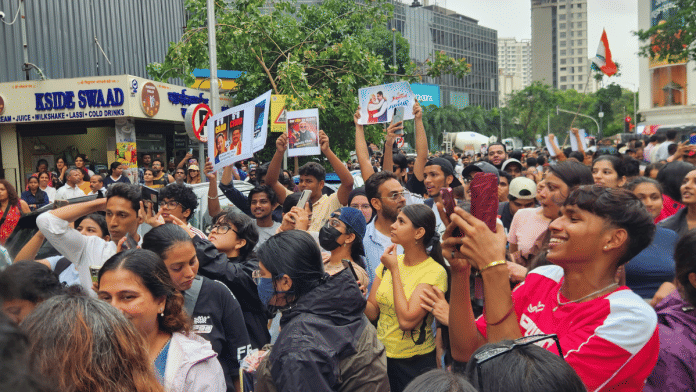


Mumbai: It began with a handful of students exchanging phone numbers at Azad Maidan. Within days, it had turned into a faceless, leaderless movement powered by WhatsApp groups, Instagram updates and live locations, helping thousands of Mumbai’s youth outmanoeuvre police detentions, gather at Shivaji Park and keep the NEET paper leak protests alive without a political banner.
In a show of solidarity with protesters at Jantar Mantar in Delhi, protests in Mumbai began last Thursday at Azad Maidan where about a thousand Mumbaikars gathered. It was followed by more than double that number at the iconic Shivaji Park in central Mumbai Sunday, after a call given by Shiv Sena UBT.
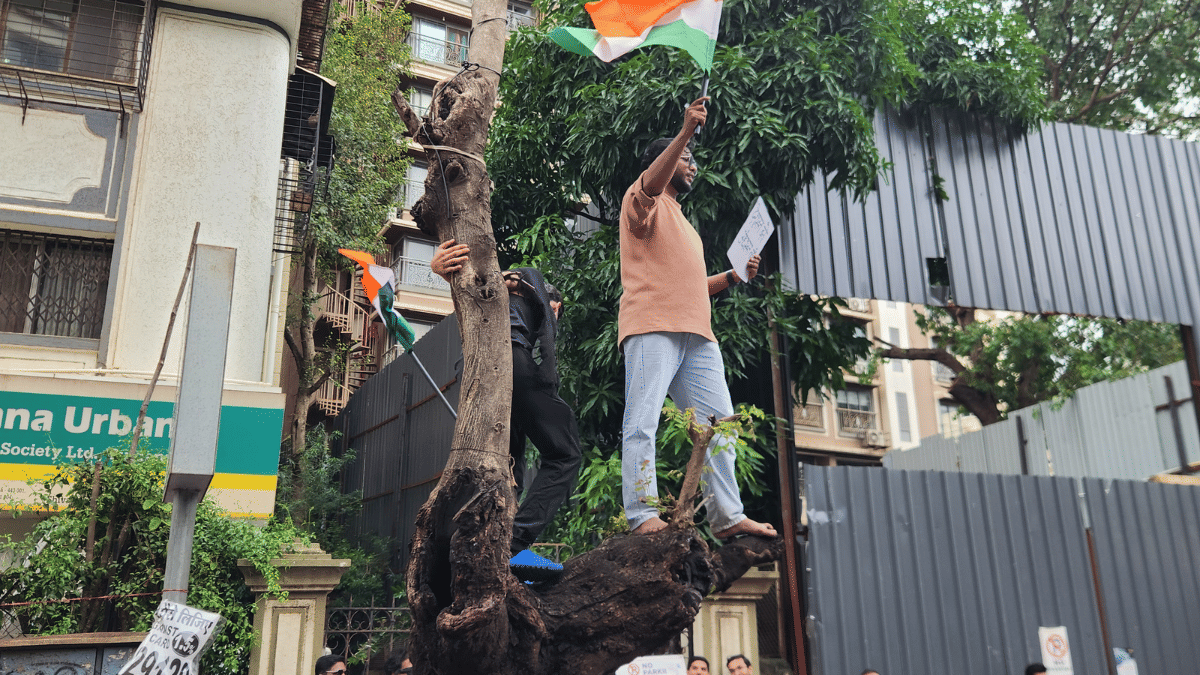
However, post that, the protests continued without a political banner, with Friday seeing a massive turnout. People came with posters and banners and national flag, and at around 5 pm, all of them sang the national anthem in one voice.
“The treatment that students got at Jantar Mantar triggered me so much that I had to come for the protest. We are not here to support any political party or gathered here under any political banner,” said Samidha Walnaje, a student who was attending the protest for the second time in a week.
Anothet student Dhriti Dua said that she had to convince her parents to let her join the protest. “People might say this has not happened to us so why attend the protest. But should we have waited to let something happen to us as well? Whatever has happened is not right. So, I had to come here,” Dua said.
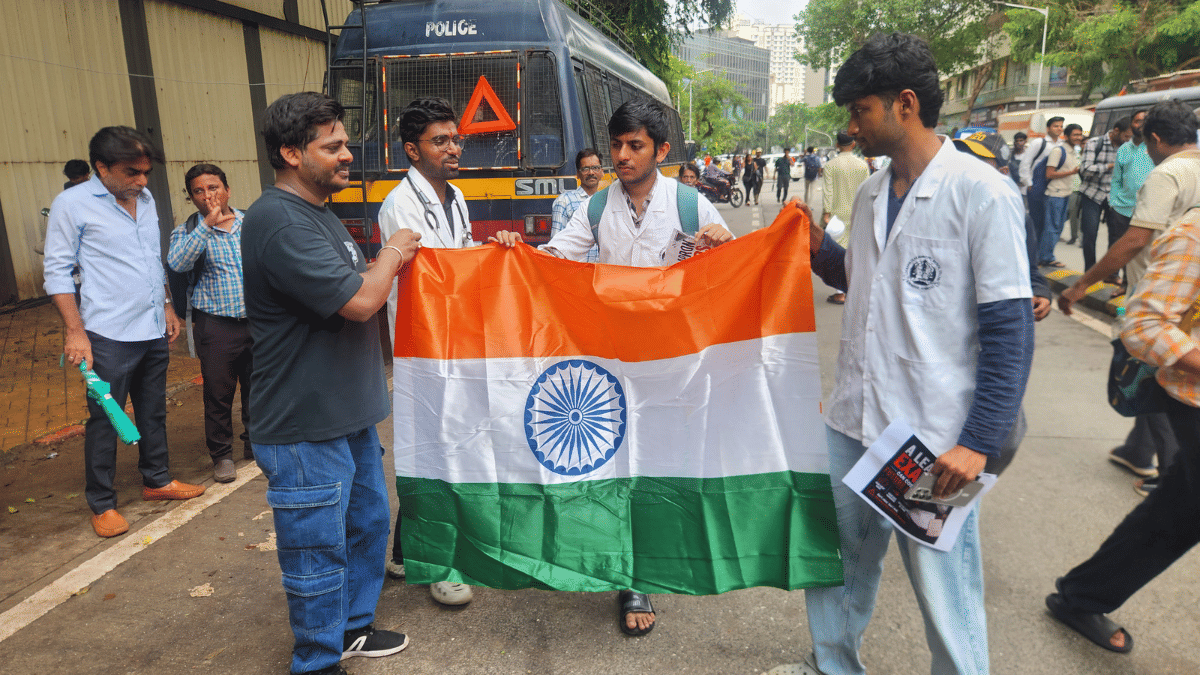
The Mumbai protesters are a mix of students, young employees and parents who accompanied their children to the protest.
Over the last one week, nearly 1,000 people were detained by the Mumbai police. Notices were sent to them, FIRs were slapped against known and unknown people across the city. But that did not stop people from gathering every day.
“I was detained on the 22nd of July. But I have been coming here every day. Look at the atmosphere around. The police brutality that happened at Jantar Mantar really hurt me. At least here, I wasn’t beaten up but I was detained for few hours. But I am not scared. People are realising what is happening. I am not a Gen Z but still I am here to show support,” said Advait Madkaikar who is a working professional.
How Mumbai is communicating
Purva K first joined the protest a week ago at Azad Maidan. She was there with just a few friends. She met few more at Azad Maidan and they exchanged numbers.
“When I got home that night I got added to a Whatsapp group where there were just six people so we kept the group. But in a couple of days, the group had over 200 members,” Purva said.
“Then more people were added after Sunday’s protest and 3 more Whatsapp groups were formed and each of these groups now have over 500-odd members. I am handling these groups and communicating about protests and whereabouts on those groups,” she added.
Protesters have also been alerting people about detentions and police action. They advise fellow protesters to not go out in small numbers and instead share live locations of big groups, which smaller groups can join. “That way, the police wouldn’t take action and we protested as well,” Purva said.
Another organiser Yashraj Subhash said that the form of communication shifted to social media after a while.
“We have been getting news update on social media. And we have been informing people about it on the groups. There are multiple groups that are created, including one CJP Mumbai official. On an average there are 500 people in every group. We are making sure that they avoid detention and hence we all don’t gather at the time of the protest but a little later,” Subhash said.
He explained that they advise protesters to not take out banners and posters on trains or any public vehicle and wait around 200-300 metres from the venue of the protest.
“if the police sees 3-4 people in a group, they are more likely to detain them. But we arrive around 20-25 minutes later than the scheduled protest time and arrive in big groups. That way, the crowd has already assembled at the venue and we avoid being caught,” Yashraj Subhash said.
The protest on 22 July became one of the biggest. Mumbai police detained many people but half an hour after the protest began multiple groups came together and joined forces.
Rhiya Ahir, a young girl, stood in front of the Mumbai police van that was carrying protesters. With just one hand she attempted to stop the van for a few minutes and the police eventually released all those who were detained. The photo and video went viral, and was shared by many celebrities.
Protests to continue
Shiv Sena UBT leader Aaditya Thackeray and party president Uddhav Thackeray joined the Friday protest, along with Amit Thackeray and his mother Sharmila Thackeray.
On Sunday, a joint protest has been called by Shiv Sena UBT and MNS from Shivaji Park to Siddhivinayak temple. However, the political parties have asked people to gather without any political banners.
“Yes, we will come again on Sunday. But not because of any political party. Because we have been raising our voices and we should continue doing it,” said Dhriti Dua.
(Edited by Viny Mishra)
Also read: CJP protest spinoff: Uddhav Thackeray’s Shiv Sena goes for youth vote to regain lost ground