



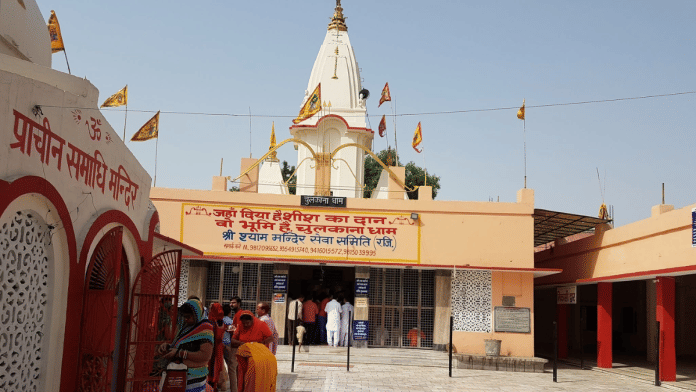
Gurugram: The Haryana government is preparing to take over the management of the Khatu Shyam temple in Panipat, with a proposed legislation likely to be tabled in the Assembly session beginning Thursday.
The Haryana Baba Shree Khatu Shyam Chulkana Dham Shrine Bill, 2026 proposes creating a board, headed by the chief minister, to oversee the management of the shrine located at Chulkana village near Samalkha.
Once the Bill becomes a law, all the rights of ‘pujaris (priests)’ will be cancelled. A government-appointed tribunal will hear the priests and the shrine board, and recommend payouts based on the income the priests had been drawing. A pujari can instead give up compensation altogether and apply for a job under the new board, subject to a selection process.
The Statement of Objects and Reasons frames the takeover as necessary for “better management, administration and governance” of the shrine’s land, buildings and endowments, and for the “health, safety and convenience” of the pilgrims.
Until now, the shrine has been run by Shri Shyam Mandir Sewa Samiti, a registered body that resisted the government’s takeover plan in the Punjab and Haryana High Court.
Chulkana Dham has grown into a major draw for devotees from Haryana and neighbouring states, worshipping Baba Shyam—Barbarika of the Mahabharata and revered as the deity of Kaliyuga. Chulkana, according to a lore, is where Barbarika offered his head to Lord Krishna as “daan (offering)” before the Maharashtra war. Khatu in Rajasthan is where his worship later took root.
A senior official told The Print that the Centre advised Haryana to legislate rather than ordain, which is how the Bill came about.
Section 4 of the Bill is explicit about where power will rest: the Chief Minister as chairperson, Urban Local Bodies Minister as vice-chairperson, the department’s Administrative Secretary as an ex-officio member, and the Deputy Commissioner of Panipat as ex-officio member-secretary. There will be seven nominated members, all handpicked by the state government.
While two each are for their standing in religion or culture and for expertise in administration, law or finance, there will be two women with religious, cultural or social work background. The seventh member will be “an eminent Hindu of the State of Haryana”.
The Shri Shyam Mandir Sewa Samiti, the body that has run the temple until now and fought the government in the Punjab and Haryana High Court over the takeover, gets one of the seats.
Every member must be Hindu; the Bill disqualifies anyone convicted of a morally turpitudinous offence, found guilty of corruption in the shrine’s affairs, or otherwise judged by the government to have acted against the shrine’s interest.
And if the government decides the board itself isn’t performing, Section 9 permits it to dissolve and reconstitute the board, running the shrine directly, through its own officers, for up to three months while it does so.
Section 3 vests both the Chulkana Dham shrine and its shrine fund in the board from the day the Act commences. The board will need government sanction for any sale or transfer of shrine land or jewellery, and government approval for any borrowing or lending, keeping financial control layered under the state even after the board is formally running things.
The board’s mandate under Section 18 runs wide—from arranging worship and pilgrim facilities to funding schools, medical relief and infrastructure around the shrine.
The road to the Bill has run through more than a year of resistance. The Haryana Cabinet first cleared a shrine board in January 2025, only for the Sewa Samiti to take the matter to the High Court, which restrained the government from taking a final decision while the case was pending.
In May, with the litigation resolved through mutual compromise after the government agreed to include a member from the existing management committee, the Cabinet moved to bring an ordinance instead, a route that needed the Centre’s clearance, since religious institutions fall under the Concurrent List.
(Edited by Tony Rai)