





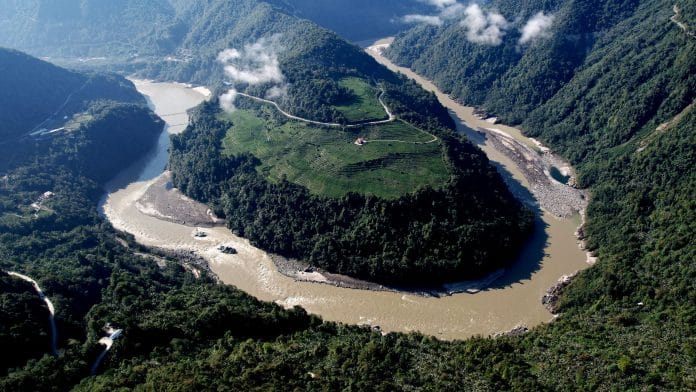


India is pressing China to resume sharing water-flow data as concerns mount over Beijing’s construction of the world’s largest dam on the Yarlung Tsangpo, a river that flows through India into Bangladesh.
New Delhi reiterated the need for an early meeting of the Expert Level Mechanism on trans-border rivers and stressed the importance of sharing details of upstream river projects, according to a statement from the Ministry of External Affairs on Friday.
India raised the issue during the border talks with Chinese officials in New Delhi under the Working Mechanism for Consultation and Coordination on India-China Border Affairs, a diplomatic-military dialogue on managing the boundary dispute. The two sides also reviewed efforts to stabilize relations and address longstanding differences along the border.
China is constructing the world’s largest hydroelectric dam in the mountainous region of Tibet at an estimated cost of around 1.2 trillion yuan ($178 billion). The project is likely to affect the local environment and downstream countries, including India, Bloomberg News reported.
The Yarlung Tsangpo flows through India into Bangladesh, supplying water to millions of people. The dam is likely to take about a decade to complete. The Indian government told lawmakers last August that China had not shared hydrological data on the river, known as the Brahmaputra in India, since June 2023.
Separately, the two countries agreed to maintain peace and tranquility along the disputed border, the ministry said in the statement, adding that they would continue using “existing diplomatic and military channels” to communicate and “avoid misunderstanding and miscalculations” along the boundary.
The Asian neighbors share a 3,488-kilometer-long unmarked border, which has led to military standoffs and tensions in recent years.
Ties between the nuclear-armed neighbors are gradually recovering after a five-year freeze following a June 2020 border clash that killed soldiers. Prime Minister Narendra Modi met Chinese President Xi Jinping in Tianjin last August, signaling a thaw in ties.
Disclaimer: This report is auto generated from the Bloomberg news service. ThePrint holds no responsibility for its content.