



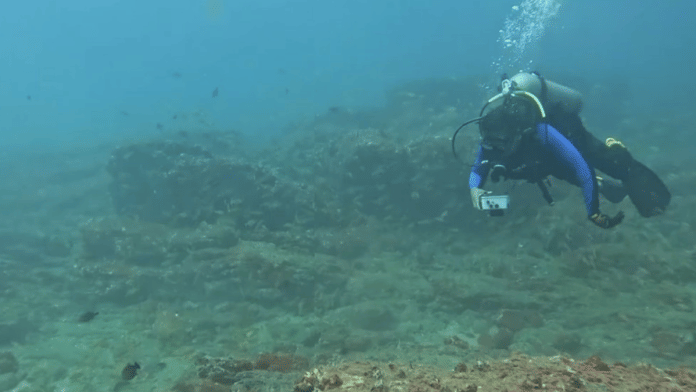

Thiruvananthapuram: In 2013, the Kerala State Biodiversity Board (KSBB) asked marine researcher Robert Panipilla to help document marine life along Thiruvananthapuram district’s coastline as part of the preparation of India’s first Marine Biodiversity Register.
Born in a fishing hamlet, Panipilla assembled a four-member team, including Thiruvananthapuram’s first woman scuba diver, Aneesha Ani Benedict, and spent two years surveying the coast from Kanyakumari to Kollam.
Working with nearly 70 local fisherfolk, the team documented marine species and underwater habitats through diving, visits to landing centres and community knowledge.
But when KSBB published its register in 2017, Panipilla said that neither he nor his team were credited for collecting the data. He adds the fisherfolk whose knowledge formed the backbone of their data were also not acknowledged.
The experience then prompted Panipilla to launch a separate community-based project to record the region’s marine biodiversity.
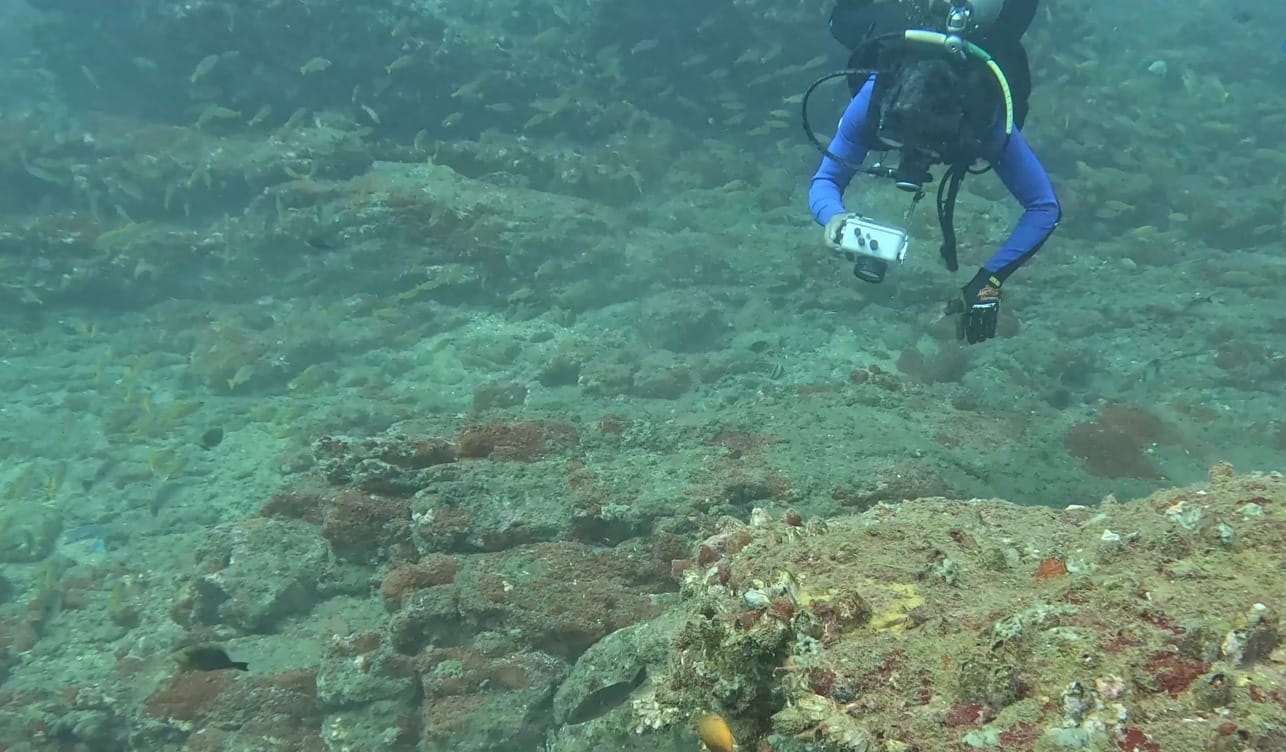
Almost a decade later, 66-year-old Panipilla and his team at Friends of Marine Life (FML), a civic group he founded, published the Community Marine Biodiversity Online Register (CMBOR) on 8 June with the help of the same fishing communities.
The register, published on World Ocean Day in Thiruvananthapuram in the presence of Kerala minister C.P. John, documents around 2,000 species across 50 marine habitats off the Thiruvananthapuram coast.
The objective, Panipilla said, is simple: to make the information publicly accessible, ensure proper attribution to the communities that generated it, and create a much-needed record of Kerala’s marine ecosystems.
“It is about memory. It is about ensuring that biodiversity is not forgotten simply because it was never documented, and that the people whose knowledge made that documentation possible are not forgotten either,” Panipilla said.
The initiative, Panipilla added, comes after KSBB published its register in 2017, but many of the species documented by the team were omitted because they lacked formal taxonomic identification. He claimed the team wasn’t invited to the launch and wasn’t given a copy of the published register, forcing Panipilla to obtain one through an RTI application.
Dr. Oommen V. Oommen, former KSBB chairman and a member of the team that prepared the initial register, said FML would probably have been acknowledged in the document, though not necessarily the individual fisherfolk, a claim disputed by Panipilla.
Responding to the allegation that several documented species were omitted from the register, Oommen said the exclusions may have been due to identification uncertainties.
“Probably because the identification was not 100 percent confirmed. We would not include species if there was a possibility of confusion or if it could result in an incorrect list. If they were not included, that could be the reason,” Oommen said.
He added that while it was encouraging that FML, which he described as more competent and established, had prepared the new register, it might have been more accessible if it had been published through the State Biodiversity Board.
Panipilla said the next step is to expand the database beyond Thiruvananthapuram, with the long-term goal of creating a community-led marine biodiversity archive for Kerala’s entire coastline.
Vipin Das, a member of the Coastal Students Cultural Forum, an NGO that aims to empower youngsters from coastal communities through higher education and which deployed volunteers for the initiative, said the effort is about a new mode of knowledge production itself. “We are creating a new methodology. We are people who belong to this ecosystem and whose lives are tied to it. When knowledge is produced from within the community, it is not just research for a degree or a career. It comes from lived experience and responsibility towards the ecosystem. This is a new way of producing knowledge.”
Also Read: Tamil Nadu had rhinos 3,600 yrs ago. New study shows wildlife diversity, trade links with coast
The community
The Community Marine Biodiversity Online Register covers the richness of underwater life in all its detail.
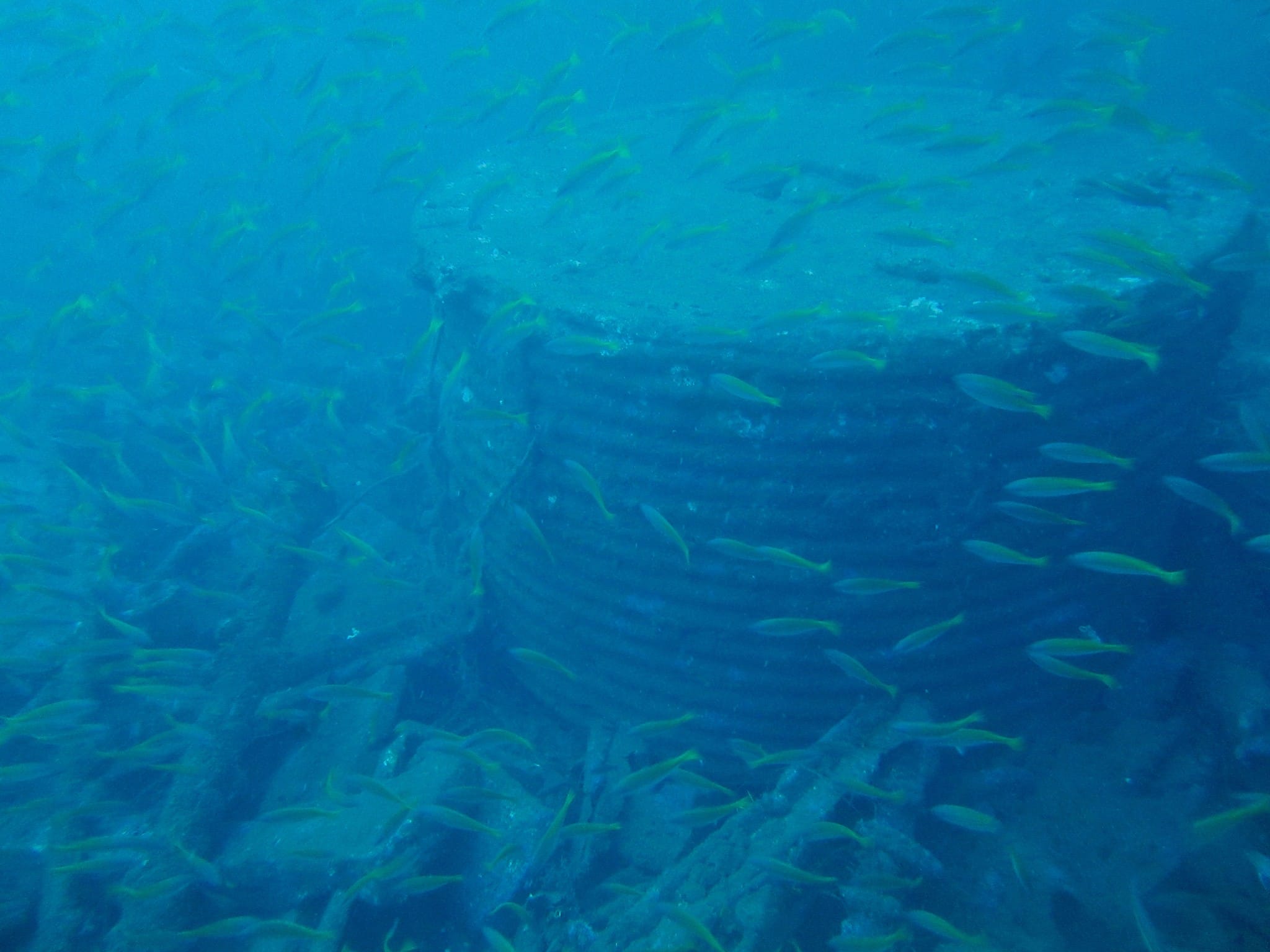
The website documents organisms such as seaweeds, reef fish, crabs and lesser-known marine creatures, along with 50 habitats, including artificial reefs, nearshore habitats and even accidental reefs and sunken ships.
It also traces how coastal ecosystems have changed over time, including before and after Cyclone Ockhi and the dredging carried out for the Vizhinjam International Seaport project.
Vipin Das said many fishers believe these events altered marine habitats and made long-established patterns of fish movement and weather prediction less reliable, challenging generations of local ecological knowledge.
Some entries carry scientific names, verified with the help of institutions such as the Department of Aquatic Biology and Fisheries at the University of Kerala and the National Institute of Oceanography.
Others are listed only by their local names. Panipilla said that is a deliberate choice because species should not be excluded simply because a formal scientific identification is unavailable. “One of the most important things we learned through this process is that conservation cannot succeed if it remains confined to institutions,” he said.
Documenting the area’s marine life wasn’t easy.
Panipilla’s work relied on a network of collaborators: fishers who shared generations of knowledge about the sea, some of whom were also trained to dive and accompanied him into the ocean.
They included Scuba Cochin, a Kochi-based diving team that provided divers; the South Indian Federation of Fishermen Societies (SIFFS), which provided financial support at times; and Aazhi Archives, a Kochi-based collective of artists, writers and scholars that helped develop the website.
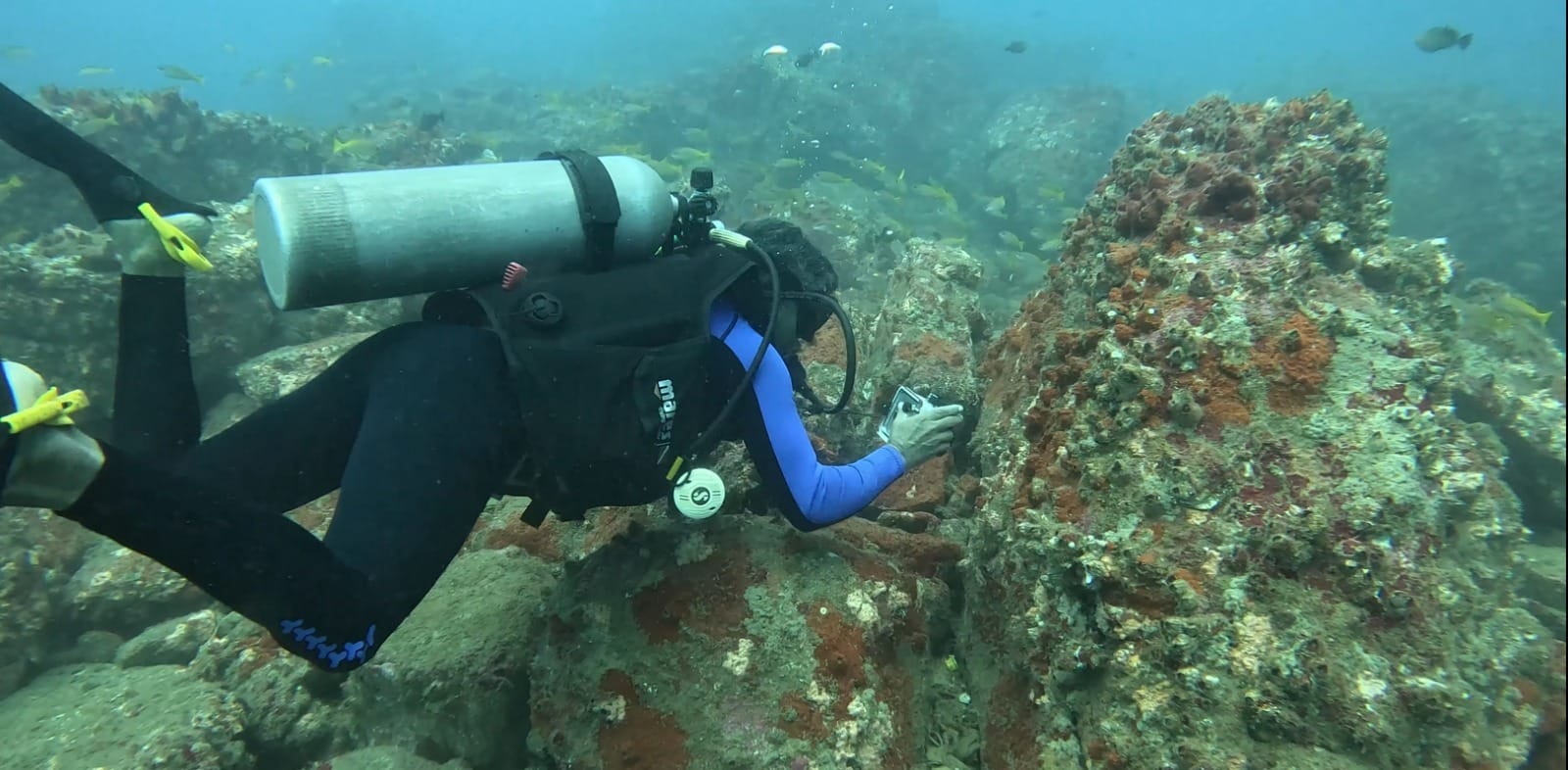
The project took seven years from 2017 to 2024, with the final two years devoted to compiling and verifying the data for publication. Panipilla said he doesn’t remember the cost of the project.
To keep the work going, he spent three years in the US running a gas station. To devote himself full-time to the initiative, he had also given up his landscaping business before beginning the project.
Personal journey
Born into a fishing family in the coastal village of Valiyathura, Panipilla’s own journey runs parallel to that of the register and the formation of FML.
After completing his schooling, he worked for an NGO in the 1980s that focused on the educational and social upliftment of coastal communities through several initiatives. The organisation was later discontinued after the founder’s death.
Some of its former members, under Panipilla’s leadership, later formed FML in 2010.
Registered as a charitable society to attend formal events, Panipilla said he did not want FML to function as an NGO. Today, it has a dedicated seven-member executive committee, along with around a dozen well-wishers, including scholars, who collaborate with the group whenever needed.
While Panipilla and trained divers documented the species, the team also included equally important contributors. Ammu Cecil, 58, who was part of the effort, said she and her teammates, at times accompanied by students, travelled across the Thiruvananthapuram coast. Divided into groups, they interviewed dozens of senior fisherfolk to document their knowledge of the sea, which later became the backbone of the register.
That was not all. Their research also led to three books by Panipilla on coastal life, including Kadalarivukalum Neranubhavangalum and Eyes on Their Fingertips, documenting the lives and knowledge systems of the community. Along with documentation, the organisation also highlights environmental and other issues faced by coastal communities.
“Even before I became a diver, I knew that my forefathers understood seabed morphology. But if I tell this to the scientific world, they are not willing to study what we have found. For me, this initiative was about creating documentation that proves fishers’ knowledge of the marine ecosystem is real,” said Panipilla.
(Edited by Sugita Katyal)
Also Read: India 176 of 180 in 1st-ever Nature Conservation Index, marine conservation affects rank