








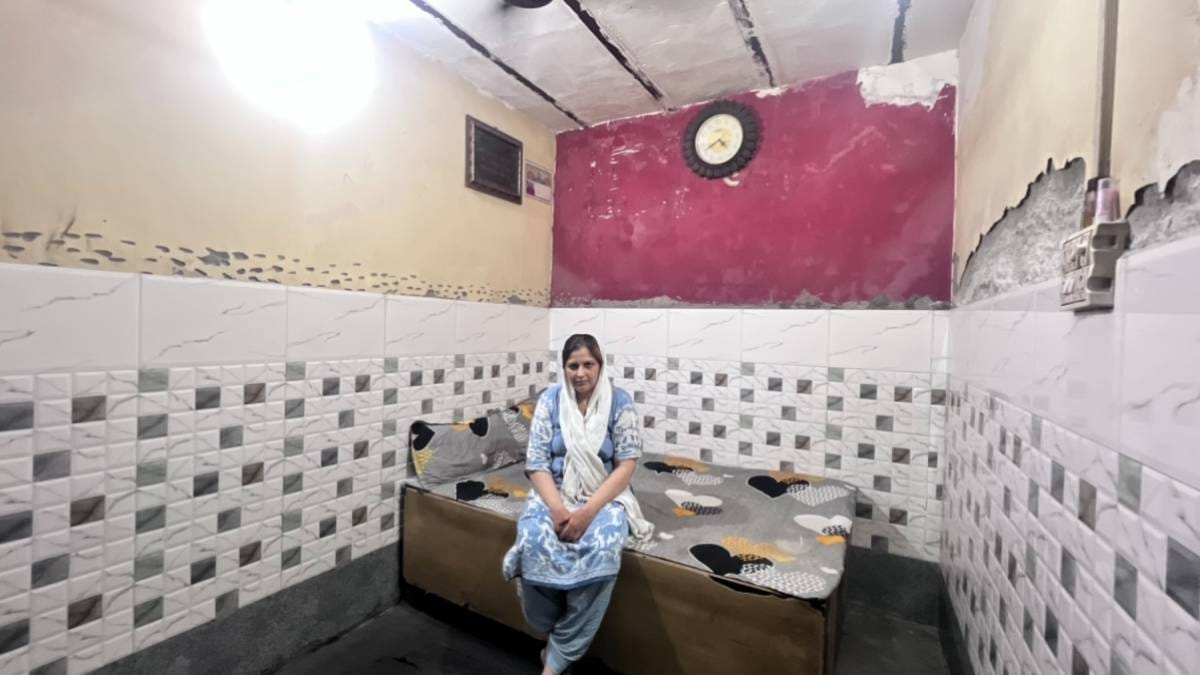
New Delhi: In a narrow, low-ceilinged room in East Delhi’s Sunder Nagri slum area, two bright bulbs illuminate the space. There is no ventilation. A ceiling fan turns overhead, surrounded by cracked plaster, as the temperature outside hovers around 41ºC.
The room functions as a living room, bedroom and workspace all at once, with a sofa against one wall and a small study table squeezed into a corner. In this box-shaped, three-storey house with one room on each floor, lives 25-year-old Pooja, who goes by her first name, with eight other family members.
“Can you feel the heat?” she asked. “For the past two days, my father has been missing work because he fell sick.”
Her father, a mason, cycles long distances for work. “He once lost consciousness on the way,” Pooja said. “He didn’t buy medicines because they cost money. He took a day’s leave and returned to work the next day.”
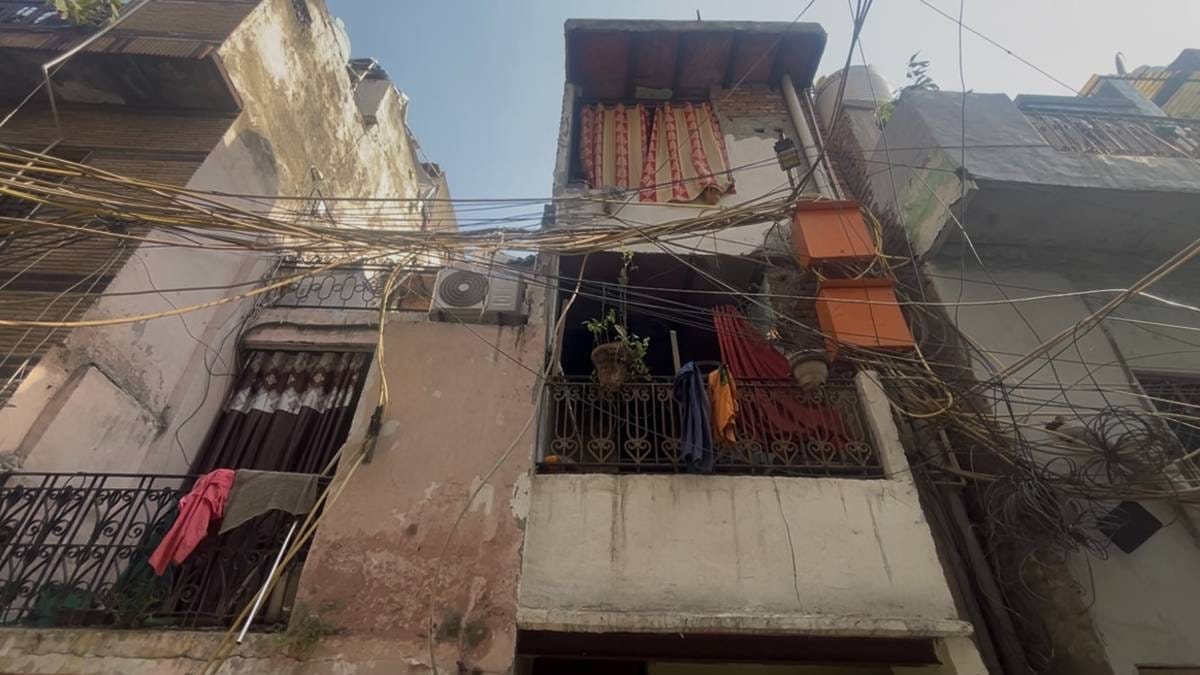
According to the Delhi Statistical Handbook 2023, Pooja’s family is among the 32.2 percent of Delhi residents living in single-room dwellings. Across the capital’s informal settlements, overcrowded homes, poor ventilation and dense construction trap heat, making indoor temperatures far more oppressive than official weather readings suggest.
“In Delhi, there are only five stations where the India Meteorological Department records weather parameters, and most are located inside government campuses,” said Sunil Dahiya, founder of environmental research organisation EnviroCatalysts. “These places are greener and cooler than the neighbourhoods where the most vulnerable populations live.”
As a result, he said, official measurements fail to capture conditions inside cramped homes with tin roofs, where cooking, sleeping and daily activities take place in the same room.
To document these lived experiences, Greenpeace India, a non-governmental organisation that works on environmental issues, has started a small but unusual experiment. Since May, around 50 households across Delhi, including about 20 in Sunder Nagri, have been recording weekly accounts of how heat affects their daily lives.
Using nine open-ended prompts, participants write about how extreme heat influences their health, work, sleep and household routines. Organisers say the diaries aim to build first-person evidence that is largely absent from India’s heat policy, which relies mainly on weather station data and hospital records.
The entries reveal how heat reshapes everyday life. For instance, 16-year-old Nasreen wrote that her father’s factory wages were cut after he missed work repeatedly because of the heat, leaving the family worried about affording Eid celebrations.
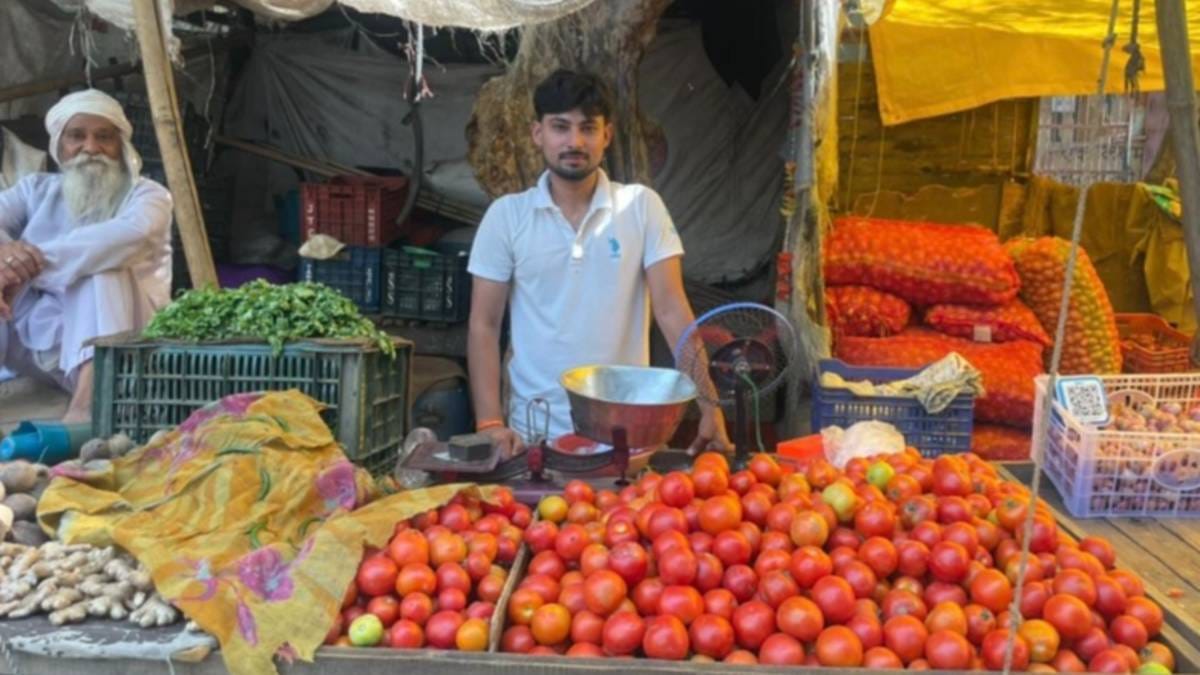
Twenty-two-year-old Raja, who runs a vegetable cart in Sunder Nagri, wrote that tomatoes spoiled faster in the heat, forcing him to buy smaller quantities at higher prices, while his grandmother could no longer sit beside him at the stall and his mother avoided stepping outdoors during the hottest hours.
“This evidence can become the foundation for community-led accountability, ensuring Heat Action Plans respond to the realities people face every day, not just what official data can measure,” said Avinash Chanchal, deputy programme director at Greenpeace South Asia.
Also Read: 50% of Delhi residents extremely vulnerable to heat, action plan falling short, says CSE
What the diaries reveal
A few lanes away, Reshma lives with her husband and two daughters in a small room with only a ceiling fan for relief.
“When the fan starts circulating hot air, I sit near the doorway and try to breathe,” she said. “At night, we have to shut the door, and the suffocation comes back.”
Every summer, her blood pressure worsens. She takes sleeping pills because the heat keeps her awake. “I keep getting up to drink water, but I still can’t sleep.”
Her daughters began documenting these struggles in their weekly diary.

Aakiz Farooq, Climate and Energy Campaigner at Greenpeace India, said similar experiences recur across most diaries collected in Sunder Nagri. Persistent headaches, sleeplessness, dehydration, stomach ailments and fatigue appear repeatedly. Some families describe children struggling to study after returning from school because their homes remain hotter than the outdoors.
Doctors say these accounts reflect what they see every summer.
“The majority of patients present with heat exhaustion or heatstroke, often along with dehydration, heat cramps and chronic fatigue,” said Dr Atul Kakar, chairman of Internal Medicine at Sir Ganga Ram Hospital in New Delhi.
“Patients complain of severe thirst, dry mouth, reduced urine output and extreme exhaustion,” he added.
In severe cases, body temperature rises beyond 40ºC, causing confusion, rapid heartbeat and heatstroke, a medical emergency requiring immediate treatment.
Dr Kakar said prolonged exposure to extreme heat can also increase stress hormones, worsen cardiovascular and kidney problems, aggravate anxiety and depression, impair sleep and reduce cognitive function.
For families living in single rooms, domestic routines often intensify these health risks. Pooja’s mother returns home from her hospital job around 11 pm. Only then does the family begin cooking. “We sleep in the same room we cook in,” Pooja said. “The room gets even hotter before we finally go to bed.”
Neighbourhood-level data matters
Heat monitoring in India is largely based on data from weather stations operated by the India Meteorological Department and the Central Pollution Control Board (CPCB).
While these stations provide reliable readings for their immediate surroundings, they are too sparsely distributed to capture the significant temperature differences that can exist within the same neighbourhood, such as between a green park and a busy road, or between an informal settlement and a nearby commercial district.
To address this gap, EnviroCatalysts has developed a public climate vulnerability dashboard that maps ward-level heat conditions across Delhi using satellite data.
The findings show striking differences. Delhi’s average land surface temperature in March rose from 29.1°C in 2015 to 32°C in 2026. But in Sunder Nagri, it increased from 36.34°C to 44.48°C, while Harsh Vihar recorded the highest rise of more than 9°C.
“The difference largely comes down to green cover and built surfaces,” said Dahiya. “Areas that lost trees, parks or water bodies have heated much faster.”
He argues that such ward-level data should guide where cooling centres, shaded bus stops, drinking water facilities and tree plantation efforts are prioritised, instead of relying on city-wide averages.
This kind of granular, location-specific qualitative data is what residents in Sunder Nagri are attempting to record in writing, through their own daily observations.
The methodology is deliberately open-ended, Farooq said. “We don’t expect data or one-line answers. Just stories,” he said.
Farooq said Greenpeace India plans to publish the diaries as a public archive, organised by individual profiles and themes including health, income, sleep and mobility. It also intends to take the physical notebooks, as formal evidence, to the National Disaster Management Authority, the Ministry of Forest and Climate Change, and the Human Rights Commission.
“Heat is a human rights issue,” Farooq said. “It’s affecting people right now. The personal stories are missing, and people should be able to write their own evidence.”
(Edited by Nardeep Singh Dahiya)
Also Read: India’s heatwaves have entered a dangerous new phase. The warning sign comes after sunset