



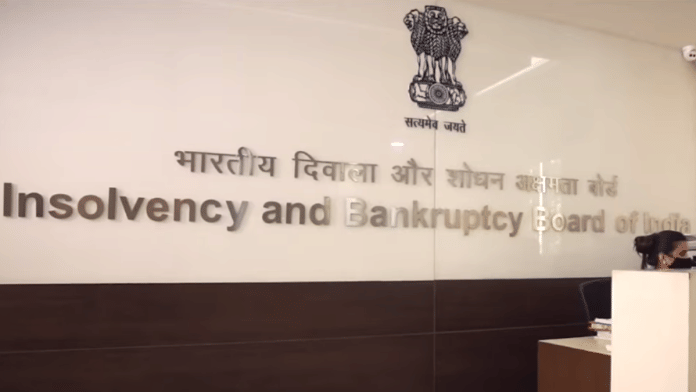
New Delhi: The Insolvency and Bankruptcy Board of India (IBBI) has launched a crackdown on the misuse of the board’s regulatory framework, releasing a discussion paper aimed at curbing “fraudulent or malicious” initiations of the Corporate Insolvency Resolution Process (CIRP).
The move comes on the heels of the high profile arrest of Insolvency Professional (IP) Jitesh Gupta by the Directorate of Enforcement (ED) on 12 August, highlighting the critical role IPs play, and sometimes compromise the integrity of the process.
IBBI, responsible for implementing and overseeing the country’s insolvency and bankruptcy framework, based this on feedback from law enforcement and regulatory agencies. They noted that the process is being used to settle debts outside ordinary recovery channels, mitigate tax liabilities, and avoid regulatory scrutiny during company mergers or closures.
Furthermore, the board identified that some entities use the code to ‘ring-fence’ assets or mitigate the impact of anticipated investigations and penalties under other statutes. Crucially, the IBBI observed that despite the presence of “discernible indicators of abuse”, many IPs have failed to consistently examine or escalate these red flags to the adjudicating authority, thereby delaying necessary legal recourse under Section 65 of the IBC.
The IBBI emphasised that IPs have a “non-delegable duty” to act with integrity and diligence. Under the proposed framework, if an IP forms an opinion that a process was initiated maliciously, they must file an application under Section 60(5) read with Section 65 of the code to seek penalties and directions from the adjudicating authority.
The IBBI has invited public comments on these proposals until 24 August 2026—providing an illustrative, non-exhaustive list of “red flags” or indicators that should alert an IP to the potential for a fraudulent or malicious initiation of the CIRP. These include financial and operational anomalies: Corporate debtors possessing no or negligible operations, revenue, or tangible assets, while maintaining a persistently negative net worth.
Substantial loans, advances, or investments involving related or group entities that occur despite a lack of operations, or instances where these are written off without adequate justification are included. Plus, qualified audit opinions or “emphasis of matter” regarding the recoverability of loans and investments, or weaknesses in internal controls related to related-party exposures are added.
Legal and regulatory concerns include the corporate debtor or its group being linked to ongoing proceedings or orders from other regulators or enforcement agencies concerning fraudulent disbursement or diversion of funds. There are also concerns over valuers or auditors being unable to verify assets due to a lack of cooperation or missing documentation.
CIRP being initiated by—or debt being assigned shortly before initiation—to a single creditor who then dominates the Committee of Creditors (CoC) is flagged as a concern. Subsequently, a cluster of corporate debtors sharing common promoters, directors, or addresses being taken into CIRP within a similar timeframe with overlapping CoC compositions is also noted as a concern by IBBI.
The case of Jitesh Gupta
IP arrests have so far been rare but are now increasing. The arrest of IP Jitesh Gupta on 12 August 2026 serves as a stark illustration of the irregularities identified by the IBBI. Gupta was remanded to ED custody in connection with a money laundering investigation involving M/s Best Foods Ltd. and its promoter, Dinesh Gupta.
The allegations against Gupta mirror several “red flags” outlined in the IBBI’s new guidance. According to the ED, Gupta acted as the IRP/RP for companies controlled by Dinesh Gupta that were allegedly used to hold ‘Proceeds of Crime’. Most notably, Gupta is accused of re-admitting claims into the CoC that he had previously rejected as “spurious and fraudulent”.
He also allegedly admitted a related-party claim of approximately Rs 35 crore despite being aware of suspicious inter-company fund flows identified in a forensic audit.
Red flags and the ‘non-delegable’ duty of IPs
In response to such lapses, the IBBI’s proposed circular sets out an illustrative list of indicators that should alert an IP to potential fraud. These include corporate debtors with negligible operations or tangible assets but persistently negative net worth; also, substantial loans to or from related/group entities without adequate basis.
The case against Jitesh Gupta aligns with these concerns, as he allegedly recommended a “non-genuine” buyer acting on the directions of the promoter and facilitated a resolution plan backed by the promoter’s own funds. Investigating agencies also found that Gupta received roughly Rs 40.75 lakh from persons connected to the promoter, with many payments preceded by cash deposits not supported by any contemporaneous agreements, invoices, or professional engagement documents, which is a direct violation of the diligence and transparency required of an IP.
Under Sections 18 and 25 of the Code, an IP has a duty to collect all information regarding assets and form an opinion on avoidance transactions. Instead of using his “unique position” to identify the misuse of the CIRP framework, Gupta was found to have active knowledge of fictitious trading and suppressed sales (as per the 2018 Forensic Audit) but failed to take the necessary regulatory recourse under Section 60(5) or Section 65 to protect the integrity of the process.
(Edited by Viny Mishra)