



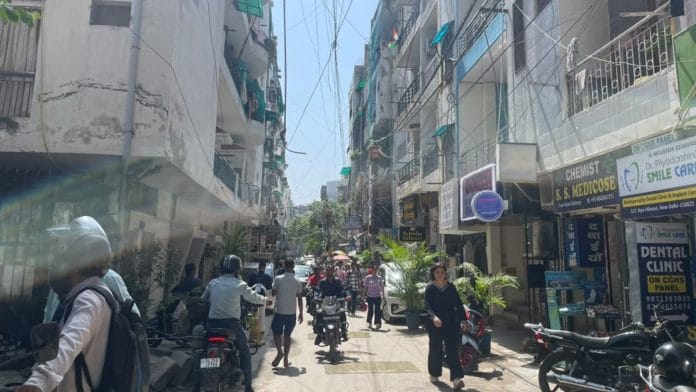

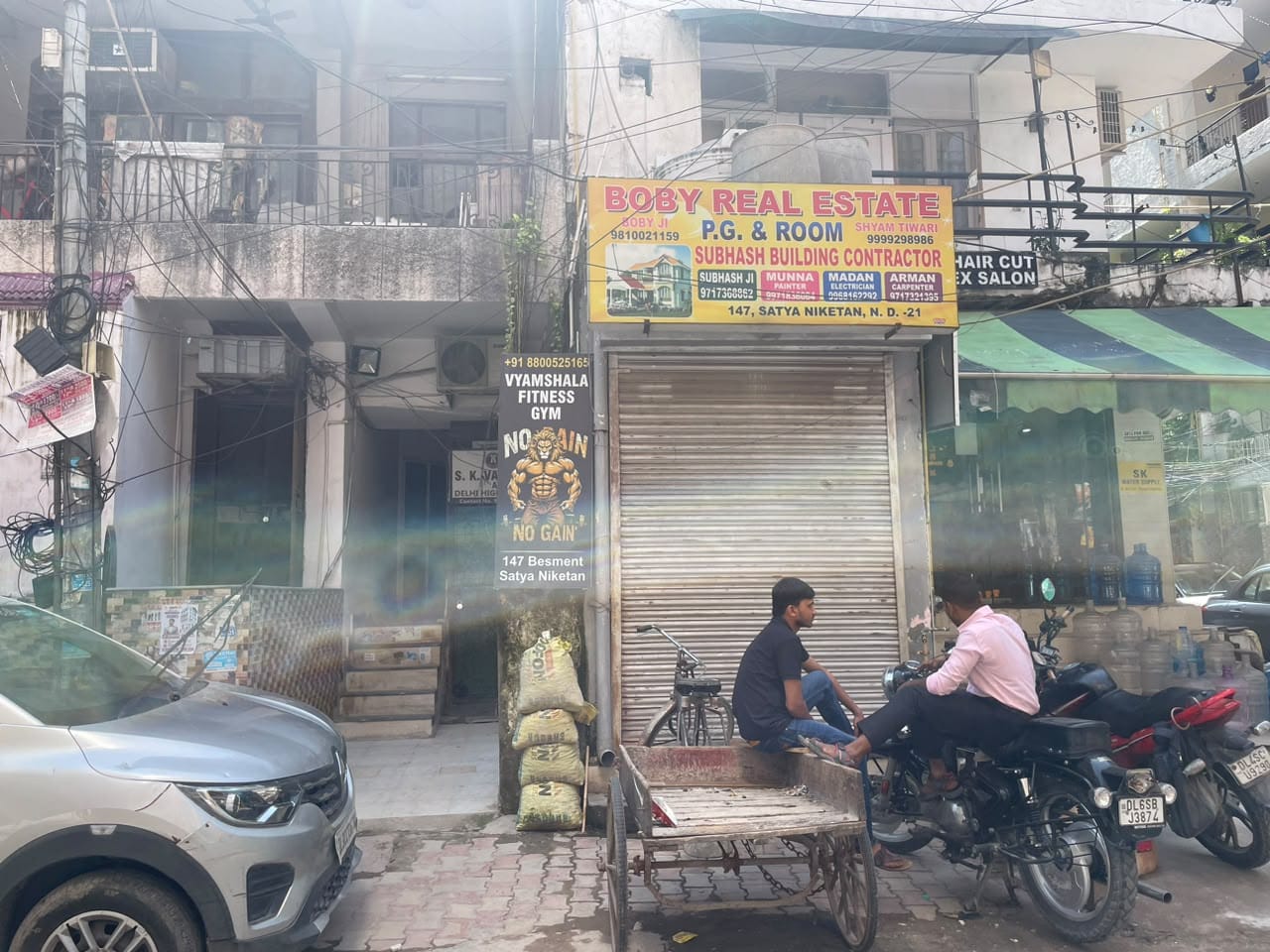
New Delhi: Paying guest accommodation (PG) is what the dingy alleys of southwest Delhi’s Satya Niketan are all about, advertisements for which jostle each other for every inch of suitable space. They’re everywhere, new posters pasted over older ones in an uncanny echo of the haphazard nature of buildings in the area.
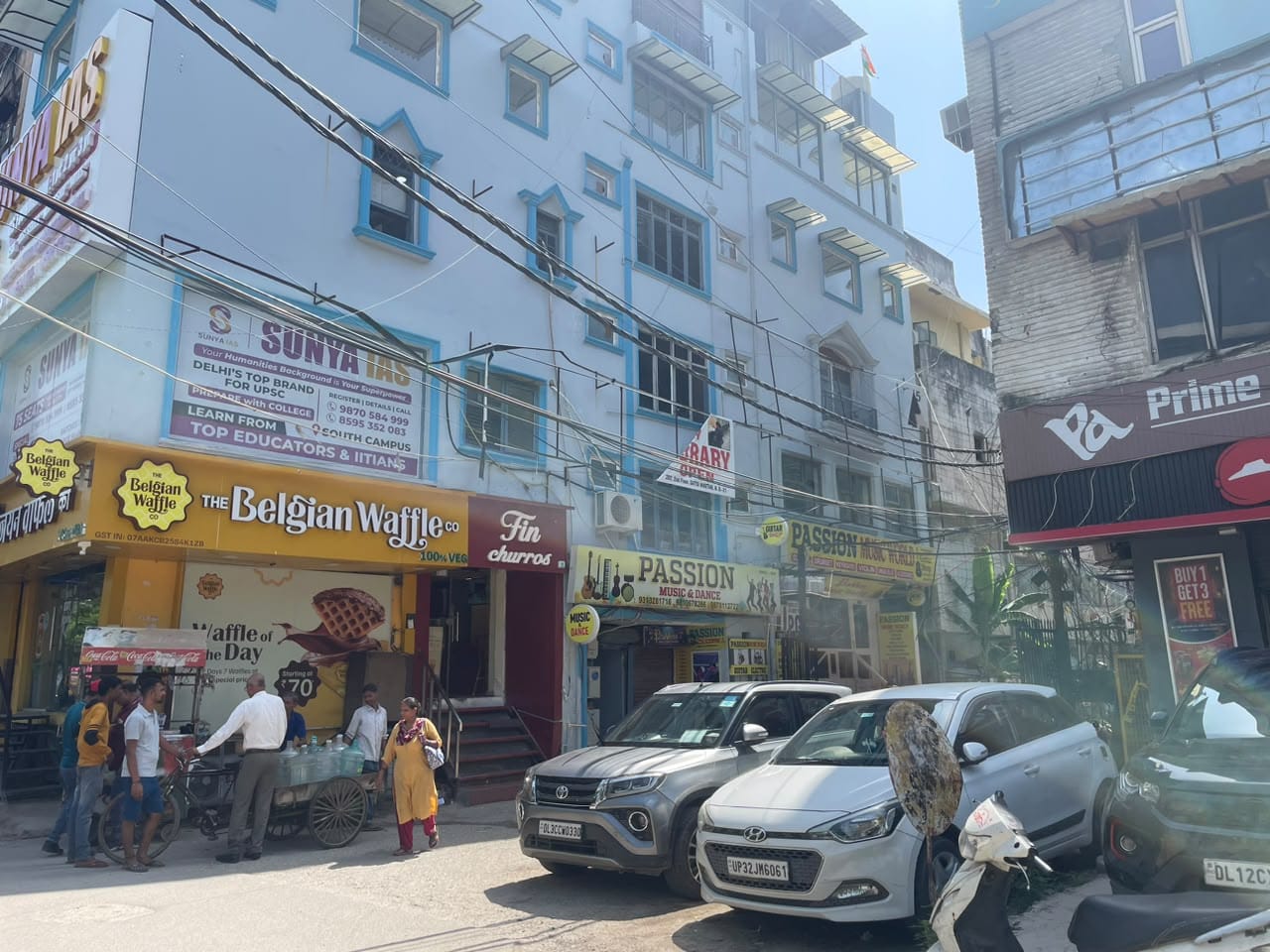
Among the 299 houses here, most have a glitzy eatery, tea-stall or e-services outlet on the ground floor, catering to students of Delhi University’s (DU) nearby South Campus. The roads are narrow in the maze-like locality, strategically bounded by Ring Road, San Martin Marg and Nanakpura, and a stone’s throw away from upscale neighbourhoods like Anand Niketan and Chanakyapuri.
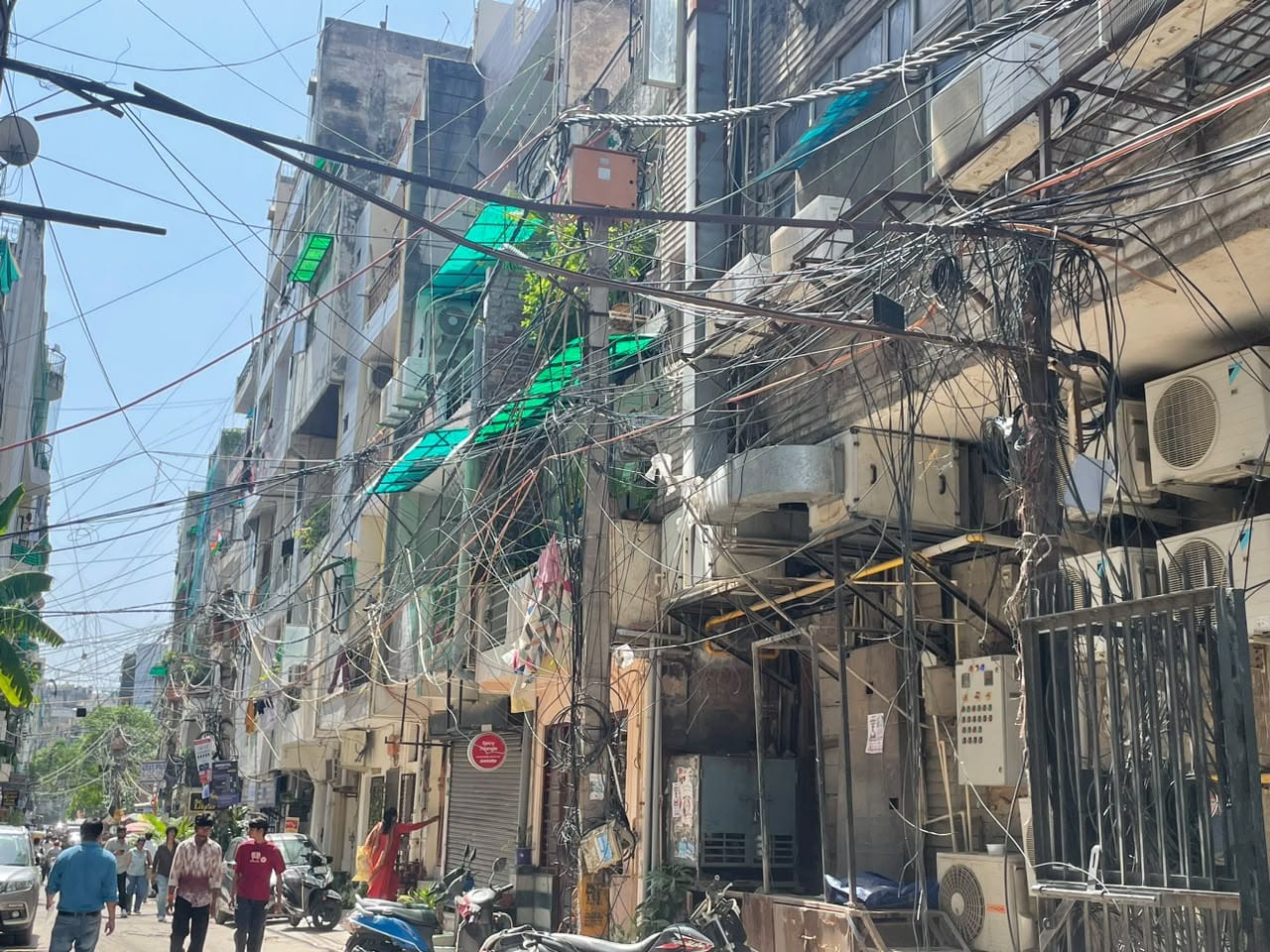
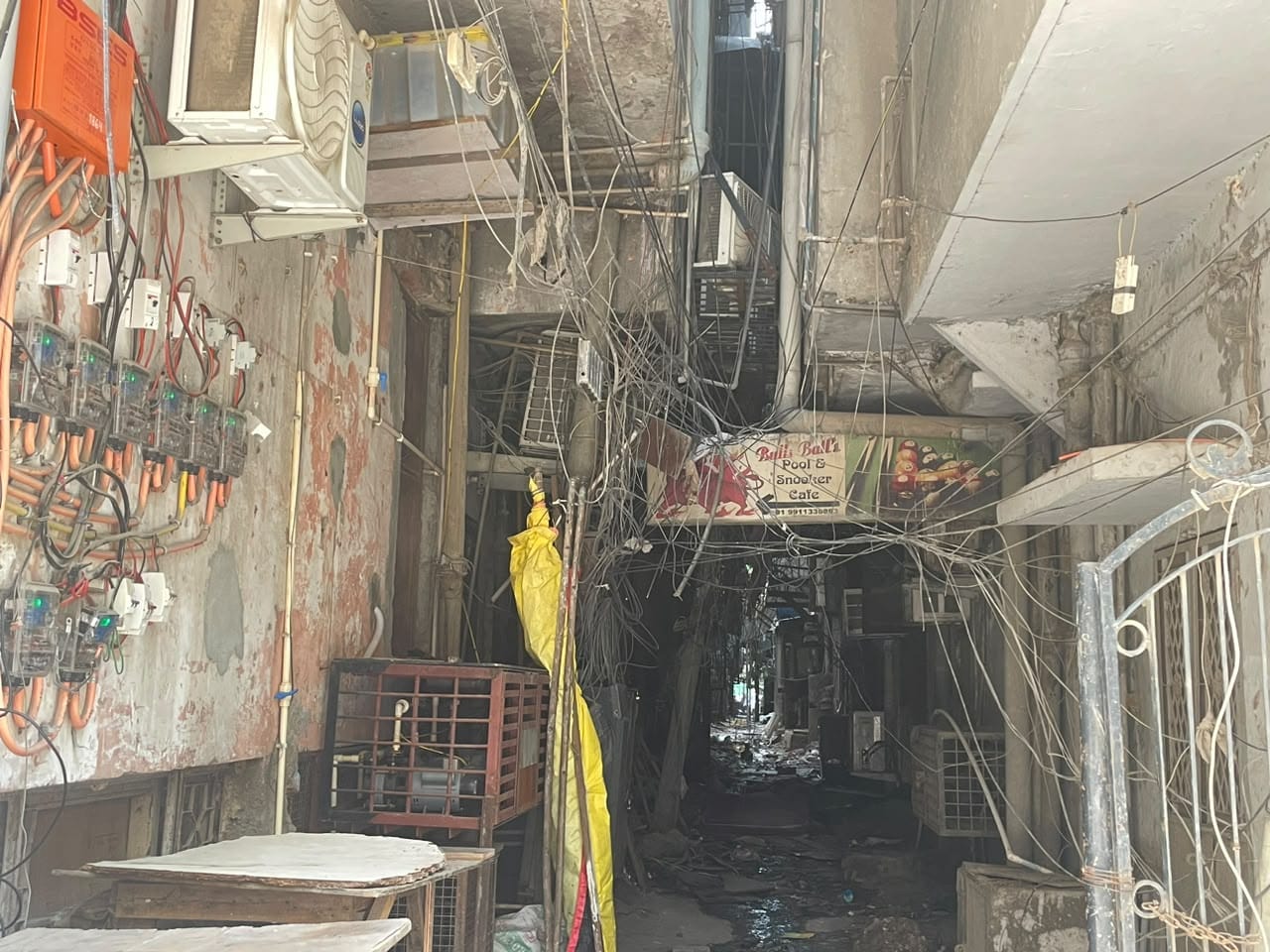
As Benito Juarez Marg shrinks into the bylanes of Satya Niketan, air-conditioning units pepper the high walls overlooking bumpy roads with sewage overflows at regular intervals; low-hanging wires complete a hellish picture. The ubiquity of young people, posters of coaching centres and the near-constant whiff of tea and samosa gives one the impression that the neighbourhood was designed for students.
But it is not. From an urban village to a student housing hub, Satya Niketan’s transformation mirrors that of several such rural enclaves in Delhi that are now unauthorised colonies. Satya Niketan’s story is more specific: a warren-like cluster of modest 40-square-metre homes morphed into one of Delhi’s most lucrative student economies, without the civic infrastructure ever being redesigned to support that change.
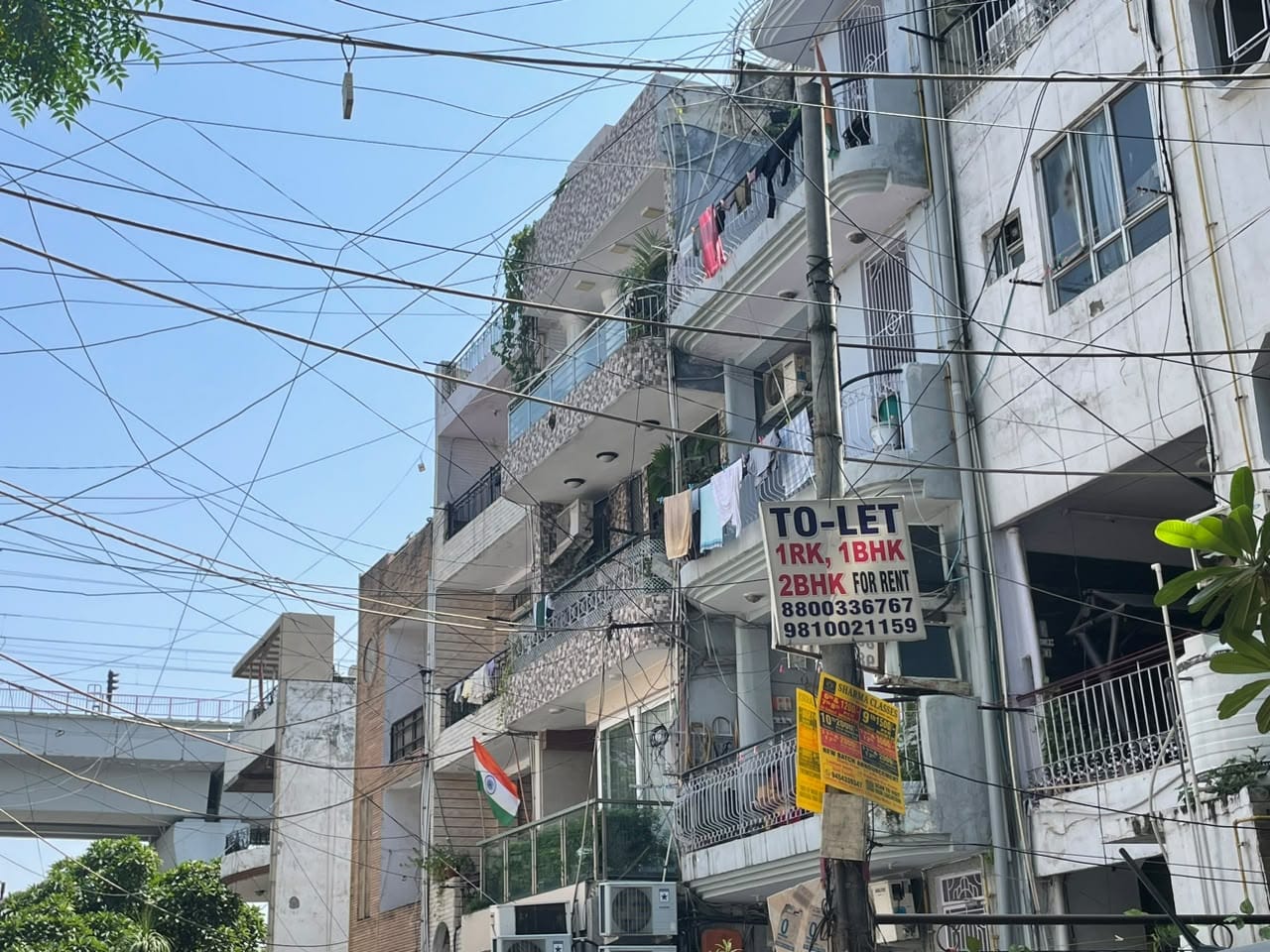
Homes went vertical. Floors were added, rooms multiplied and houses turned into PG accommodation as demand surged from students studying at DU’s South Campus. The students brought cafes, restaurants and commerce with them, making Satya Niketan a locality of students.
The physical infrastructure lagged, and on Sunday afternoon, the consequences of that unchecked transformation exacted a cost measured in lives. A six-storey building housing ‘Hostel Daze’, a PG setup in Satya Niketan, collapsed, leaving at least seven people dead and several others injured.
In a way, this is a simple demand-and-supply equation. Sri Venkateswara College, Motilal Nehru College are walking distance from this area, and the need for housing is pressing. What Delhi University did not provide, Satya Niketan did. As per DU’s website, only three colleges in its south campus—Maitreyi College, Sri Venkateswara College and Lady Shri Ram College have hostel facilities. For 24,703 undergraduate seats, the three colleges have a total of 225 hostel seats available.
Result: plot sizes in Satya Niketan remained the same, but the population per house exploded.
Also Read: Satya Niketan was not an accident. Delhi has a student housing problem
From ‘chulha tax’ to one-storey houses
“Much like most of Delhi’s urban villages, before the tall buildings came up, the locality was dotted with fields and shanties of farmers,” said A.K. Jain, former Commissioner (Planning) of the Delhi Development Authority said.
As a “gesture of sympathy” towards the destitute, the British allotted each family with 40 square yards and charged them an anna a month as ‘Chulha Tax’, he added. “The idea was to let these families build a small kitchen so as to not starve to death,” he added. The Chulha Tax continued till 1957, after which it was replaced with a lease system for those living in the Arakpur Bagh Mochi village.
In the 1960s, when the government began constructing Anand Niketan for senior government officials, “squatters” around Anand Niketan and those living around Gurudwara Moti Bagh Sahib were relocated to the Jhuggi Jhopri Colony (JJ Colony) area now known as Satya Niketan, Jain told ThePrint. “Around the same time, the government felt that it was derogatory to allow the name Arakpur Bagh Mochi continue as it loosely translated to a colony for cobblers, so it was renamed Satya Niketan,” he said.
By 1968, the Delhi Development Authority (DDA) had laid out a plan for Satya Niketan where single-storey houses would be built on a 40-square-yard floor plan, said Jain. “Taking into account the need for expanding families, the families were allowed to build another floor, but no more since it was near the airport as well,” he added.
Even before the government allotted land parcels around the neighbourhood for the construction of Delhi University colleges, the location of this humble neighbourhood had drawn attention. “Property dealers would flock in numbers to these neighbourhoods, offering full cash payments for the land plots. Many would buy two adjacent houses and then sell it as an 80-square-yard house,” Jain said.
Despite their being on lease, the allottees would sell these land parcels on the basis of a general power of attorney, and move to cheaper housing on the outskirts of the city, a source said.
On the heels of this came the Government of India’s allotment of land parcels for the construction of several Delhi University colleges in the neighbourhood in 1967. Institutions like Sri Venkateshwara College, Atma Ram Santan Dharma College and Jesus and Mary College were among those built in the vicinity, creating a demand for housing and recreational spots for college students.
In the 1980s, the housing block was handed over to the Municipal Corporation of Delhi.
Satya Niketan of the 1970s
Vijay Sharma (59) arrived in Satya Niketan as a 10-year-old. He recalls only single-storey houses. “Two trucks from opposite ends of the roads could simultaneously ply in the neighbourhood’s lanes. The sky was visible without being obstructed by bundles of electric wires and PGs were no one’s concerns,” he said.
Sharma’s family, like many in the area, had bought the house from an allottee and had later constructed a second floor as per rules. At 18, when Sharma stepped inside the DU’s Moti Lal Nehru College in South Campus, the college had ample rooms for every batch. “Most of my classmates were from Delhi, but even those who came from other states would easily find accommodation in the college campus. The need for a PG did not arise in those years,” he added.
As the colleges increased their intake capacity, and did not pay heed to the need for accommodation for outstation students, the need for PGs grew. “First, older couples who lived alone started renting out a room or two to the students. They would get two single beds or mattresses and two tables, and rent it out,” he said.
With every passing year, as the student to hostel accommodation ratio grew more and more skewed, PGs began to mushroom in the area. “First the houses expanded in breadth and height, then cramped rooms were carved out in additional floors and rented out to students,” said Jeetaram Choudhary (68), a resident of Moti Bagh village.
In the 1990s and early 2000s, the owners would rent out floors of their houses directly to students. Later, house owners living around the Satya Niketan market began renting out their entire houses and moving to less congested neighborhoods, he added.
Interrupting Choudhary, Prem (66) said that it was not until the last decade that private third party players entered the area and began leasing properties for operating PGs. “Now one can hardly find houses in the area that have both landlord and tenants staying in the same buildings. They are full of operators akin to Hostel Daze, who take properties on lease and rent it to students bed-wise.
Each room will have two to three beds, with no windows or ventilation,” he said. A resident of the area, Prem also operates a pest control business. “I have been to every one of these buildings for pest control treatment and words fail me if I have to begin to explain the condition of the properties due to termites and fungal growth. Most of these PG operators ask me to assess the situation then on hearing the cost of complete overhaul they just go on without treatment,” he added.
Pointing at a narrow alley, Prem told ThePrint how even that has escaped encroachment. “These alleys are not left vacant by choice, but only because drainage pipes pass through it and in case of blockage, it would need digging,” he added.
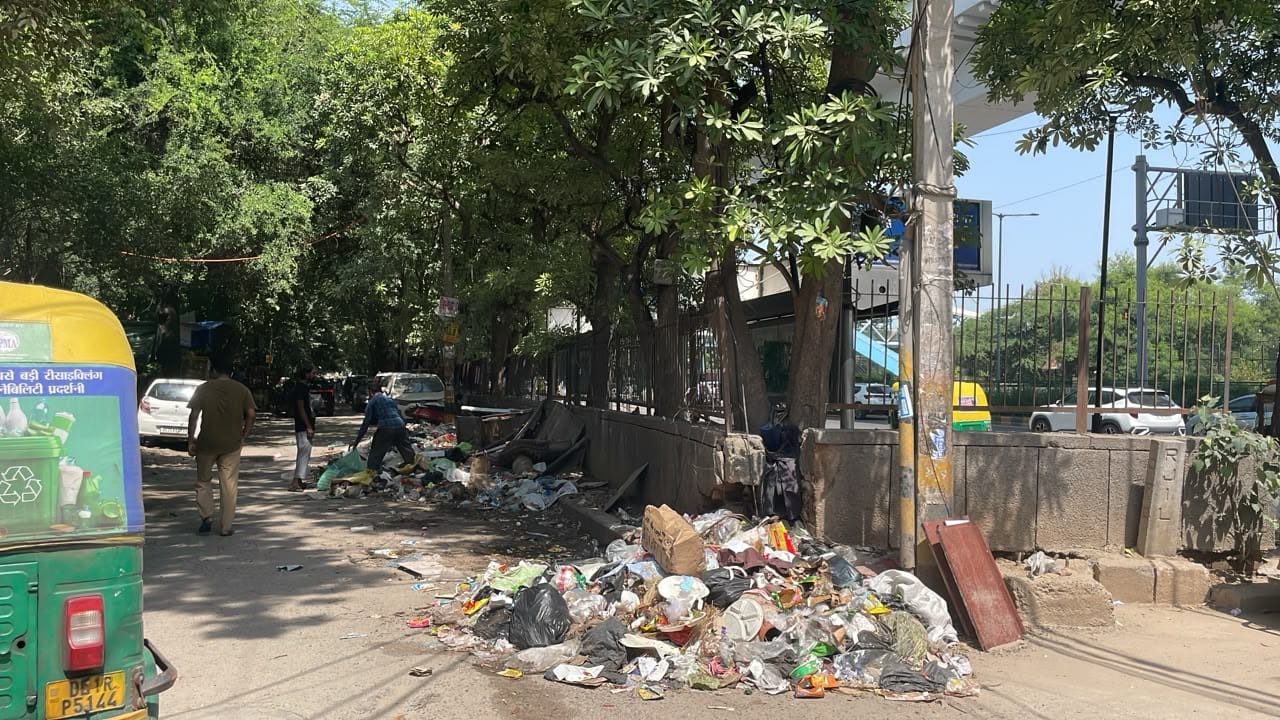
Sharma’s childhood images of Satya Niketan don’t exist now, he said. “Due to its strategic location, we never faced issues of waterlogging, electricity or drinking water issues, now there are two sewer lines, but a few minutes of rainfall can flood these roads,” he said. Satya Niketan is bursting at the seams. “We now have frequent power outages, immense drinking water shortage and sanitation issues,” he added.
Encroachment has added to the list of woes. Jeetram told ThePrint that even on the day, Hostel Daze collapsed, disaster relief and fire service personnel had to walk up to the spot, without their vehicles. “Either the houses have expanded porch or have several vehicles parked, if not that, then some random tea stalls with stools and other structures,” he added.
(Edited by Nardeep Singh Dahiya)