



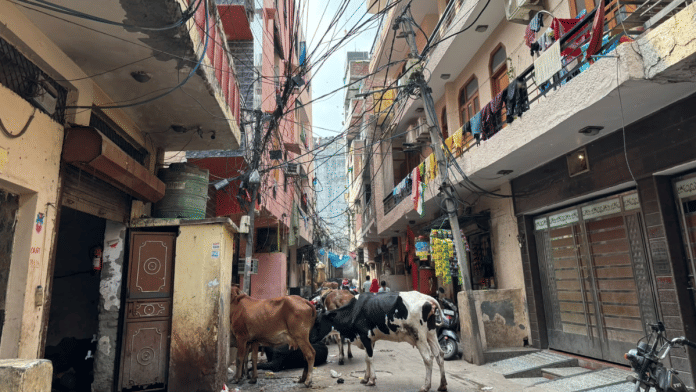

New Delhi: Drenched in sweat and running on no sleep after spending the night pulling students out of debris in Delhi’s Satya Niketan, and then marching in protest, Rishabh Sauravkar, 18, has only one question: “What if it was me?”
It has been barely two months since he moved from Kolkata to study political science at Ram Lal Anand College, but he has already had to face the reality of living in Delhi University’s student neighbourhoods.
Unable to get a seat in the college hostel, Rishabh had to turn to paying guest (PG) accommodation.
Rishabh’s concerns reflect a shared reality for thousands of Delhi University (DU) students who travel from across the country for higher education: a shortage of campus hostel accommodation which pushes them to cramped, expensive PG accommodation or rented flats without basic safety measures.
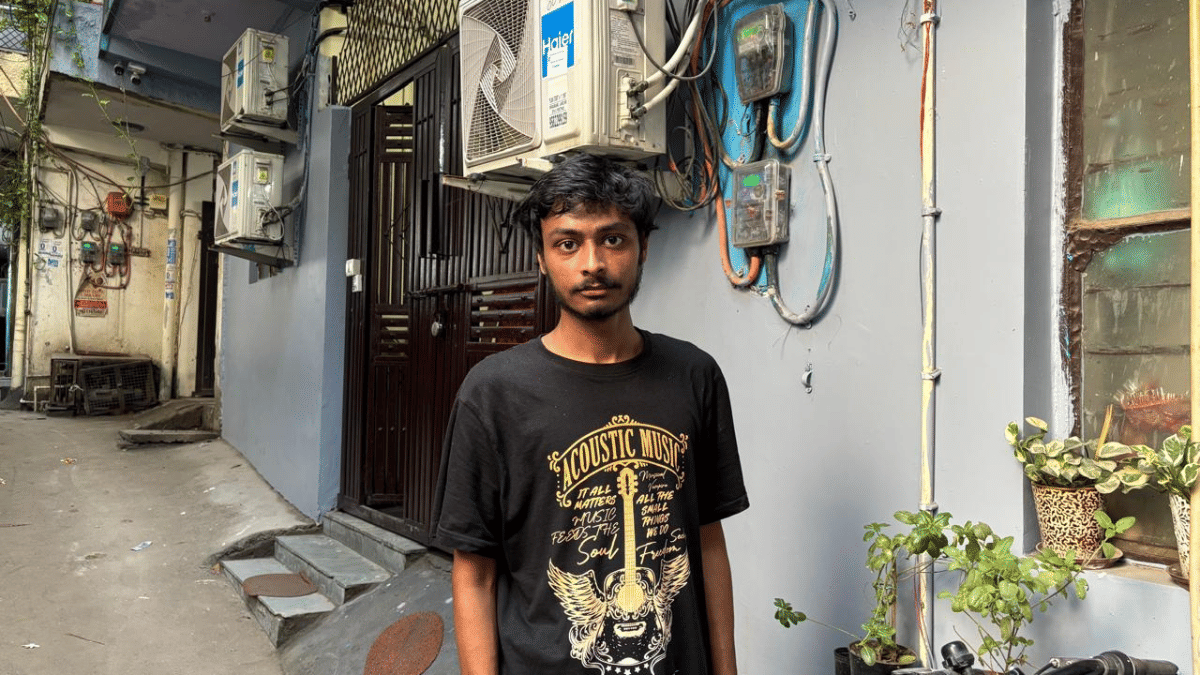
Sunday’s building collapse at a Satya Niketan PG, which claimed seven lives, brought these issues into focus again as it exposed how students remain caught between PG owners, brokers and homeowners in DU’s commercialised residential hubs.
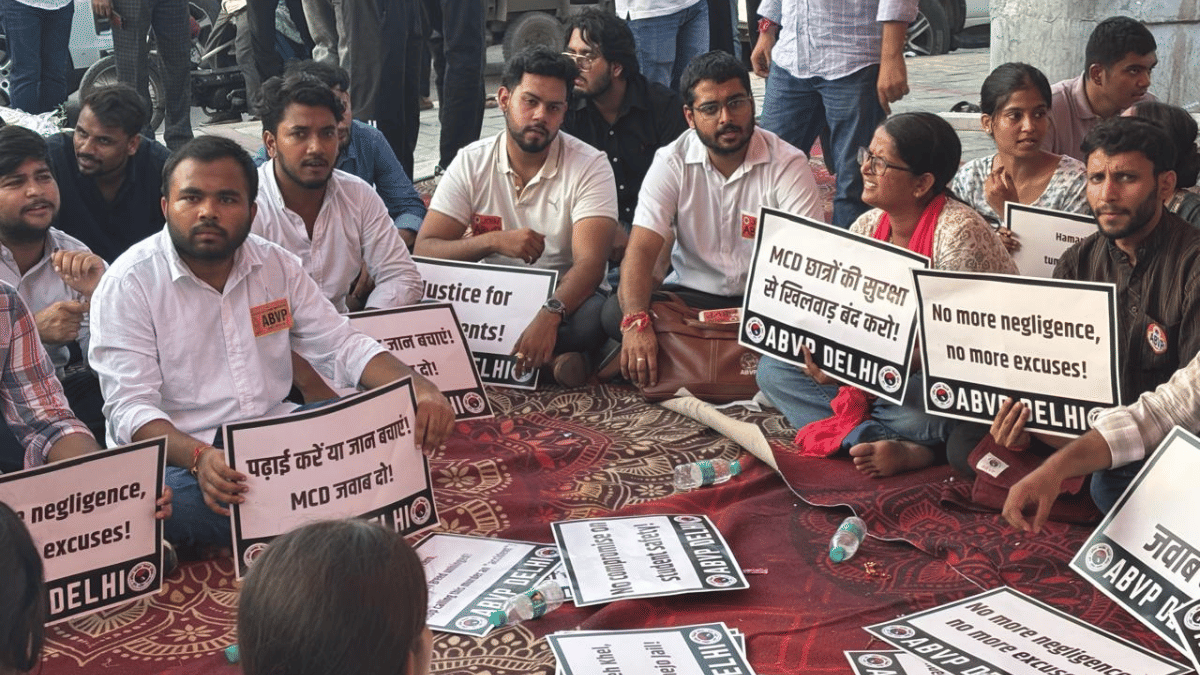
By Monday noon, this frustration had spilled onto the streets. Student organisations All India Students’ Association (AISA), National Students’ Union of India (NSUI) and Akhil Bharatiya Vidyarthi Parishad (ABVP) staged separate protests across South Campus, demanding strict regulation of PGs, safety audits and legal accountability for landlords.
The protests come just weeks before Delhi University Students Union (DUSU) elections in September, with student housing likely to become an agenda in party manifestos.
NSUI’s probable DUSU candidate Deepanshu Shokeen told ThePrint: “This has been going on for years now. It has been discussed and raised multiple times. However, it only got triggered by what happened in Satya Niketan.”
He said providing safe and secure housing for students was a key issue for the DUSU elections this time. “Our goal is to ensure students don’t return home, and their studies are not hampered. Why is the college administration saying they don’t have funds? They have funds to host events?”
Delhi University Vice-Chancellor Yogesh Singh, in a statement Monday, urged all principals to take steps to ensure such a tragic incident does not recur.
“He emphasised that the university and the colleges must make every possible effort to achieve this. He requested the principals to review the residential facilities available for students in their respective colleges,” the statement read.
He also urged them to speed up the completion of under-construction hostel projects so that the facilities are available to students as soon as possible. He also asked the principals to explore the feasibility of constructing new hostels in their colleges and to prepare plans promptly if such possibilities exist.
“The aim should be to provide residential facilities to the maximum number of students. He said that the University of Delhi is always ready to provide all possible assistance,” the statement added.
Also Read: Collapsed building in Satya Niketan housed 75-bed PG; ‘ground floor was under repair’
The struggle to find a room
Rishabh says students who come from far away rely on recommendations. He was told PGs are an affordable option, so he decided to find one.
“Finding a decent room has been a struggle from day one. After several days, I found a single bed in a shared room, and it costs Rs 16,000, while a cheaper one is for Rs 8,000,” he said.
But even the Rs 16,000 room doesn’t guarantee safety.
“The flats are boxed adjacent to each other. There is no space. If one of them collapses, the other one will fall. There are no fire safety measures, no emergency exits, and so many students on every floor…Our concerns don’t change. Only our rooms do,” says Rishabh.
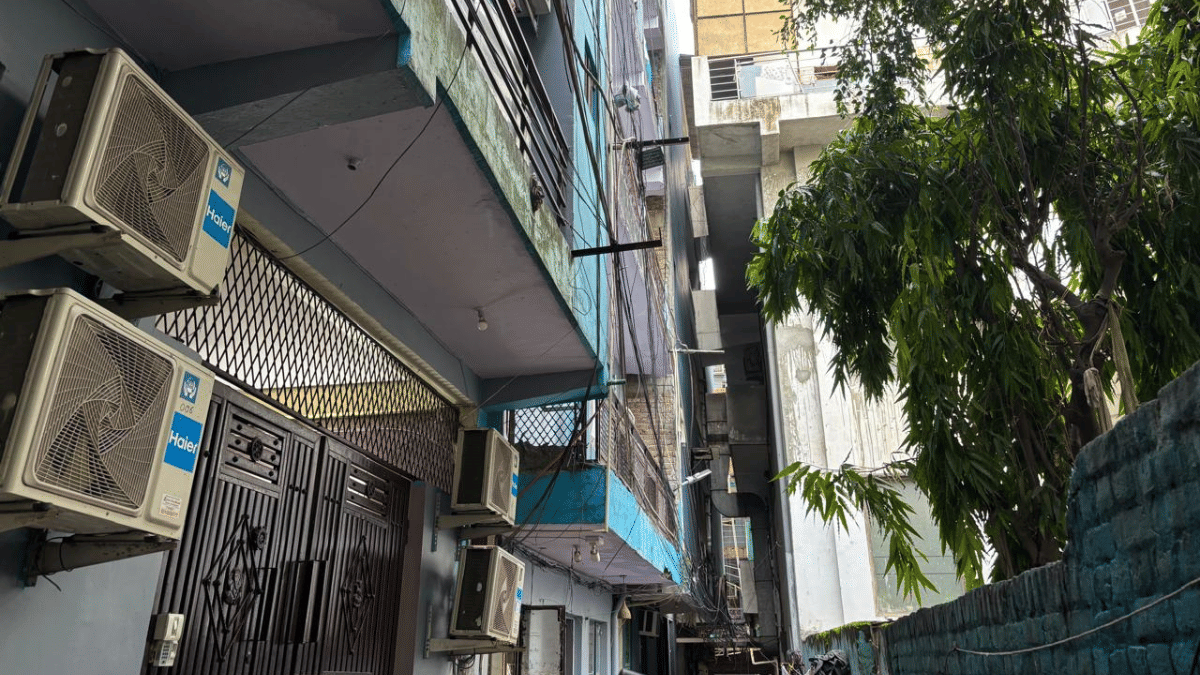
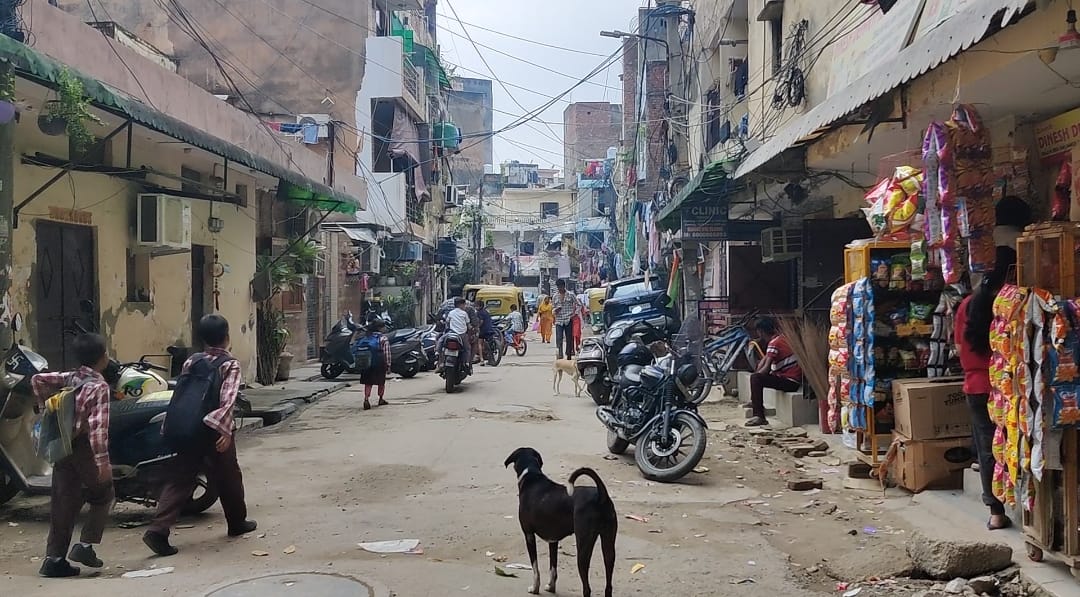
Students living in these dark, suffocating alleys choose these rooms because of their close proximity to college rather than comfort or safety. Danger seems to lurk at every corner: sometimes, it is a falling AC unit, sometimes a dilapidated building.
Satya Niketan is packed with four- to five-storey PGs in every lane. There is barely any natural sunlight in the rooms.
Satya Niketan colony, popularly known as ‘Satya’ among DU students, is located near Sardar Patel Marg and Chanakyapuri. Once a quiet neighbourhood offering accommodation to South Campus students, it has over the years become a hub for commercial and residential buildings as the student population grew and demand for accommodation also increased.
In the narrow lanes where PGs are located, there is no space for a JCB or a fire engine. Even an ambulance must stop at the main road, leaving stretchers as the only option in an emergency, Rishabh rues.
“Landlords have illegally built four and five storeys onto buildings meant for two, offering single-route exits and zero fire safety equipment. One gas explosion, and the entire area will suffer. This is the fear we have been living with, and will live with,” he adds.
DU’s ultimate problem
The lack of university housing leaves students with few alternatives. Colleges like Ramjas and Hindu have hostels that are either closed or under reconstruction, pushing many students onto the private market.
The delay at Hindu College is part of a wider problem. Even last year, it was a burning topic during the DUSU elections covered by ThePrint. “It took six years to build the Burj Khalifa, but Hindu College’s hostel has been under construction for as many years now,” a probable candidate had remarked last September at a mahapanchayat of AISA and the Students’ Federation of India (SFI).
Teachers and students have flagged concerns for years. But with the Four Year Undergraduate Programme (FYUP) keeping students on campus for an extra year without new classrooms, staff, or hostels, the strain is growing.
“It’s a nexus between the PG mafia and brokers, but DU is also complicit. If the university doesn’t provide hostels, where are students supposed to go?” asks Sachin.
Former Delhi University Teachers’ Union Association (DUTA) vice-president Sudhanshu Kumar tells ThePrint that the problem was that many hostels are shut for repairs and the capacity of those that are running is limited. “The colleges that have hostels are under reconstruction. What is the point then? The number of students has increased over time.”
Yet while existing facilities are neglected, new departments and blocks are still coming up. These are financed not through grants but loans taken by colleges from the Higher Education Financial Agency (HEFA), a joint venture between the Ministry of Education and Canara Bank to finance capital projects in higher education.
According to the Minutes of the 92nd Annual Meeting of the University Court held 21 March 2025, the Ministry of Finance approved Rs 938.33 crore from HEFA for seven projects. HEFA has already sanctioned Rs 576.33 crore for five projects. The work has already started, and three projects have been inaugurated. These projects include not just housing but other campus infrastructure as well.
HEFA data shows it has funded 32 institutions under the central university category. The sanctioned amount was Rs 6,773.58 crore, while the disbursed amount is Rs 3,353.74 crore.
Former Delhi mayor and DU proctor Rajni Abbi tells ThePrint that the South Campus colleges were made later on and did not have much space for hostels. “Either the government gives the money, and we build hostels. The fee is already subsidised, and if there is an increase of Rs 5-10, there is a protest. Only if we get funds can we do something.”
The pattern has changed over the years, she adds. “Many students are coming from outside Delhi. They need a place to stay. Private PGs then play an important role in providing accommodation. Even though they don’t assure good food, stay or safety, the students have to live there.”
Dean of Colleges Balram Pani tells ThePrint that DU has a strength of around 1 lakh students and around 22-23 hostels. “Hostel facilities cannot be provided to all. There are colleges that have hostels, but many colleges don’t even have land or space for hostels. For colleges that have spaces, we have informed them to send us proposals, so we can try and build hostels.”
Also Read: Satya Niketan PG collapse: Photo in hand, DU students scramble to find their friends at AIIMS
Hostels shut, private PG mafias in
Less than 20 km away is Delhi University’s North Campus. Its walls are always covered with posters and its streets bustling with students. The main campus area—around colleges like Hindu, Shri Ram College of Commerce, Ramjas—has wide tree-lined roads, iconic colonial-era buildings and massive lawns.
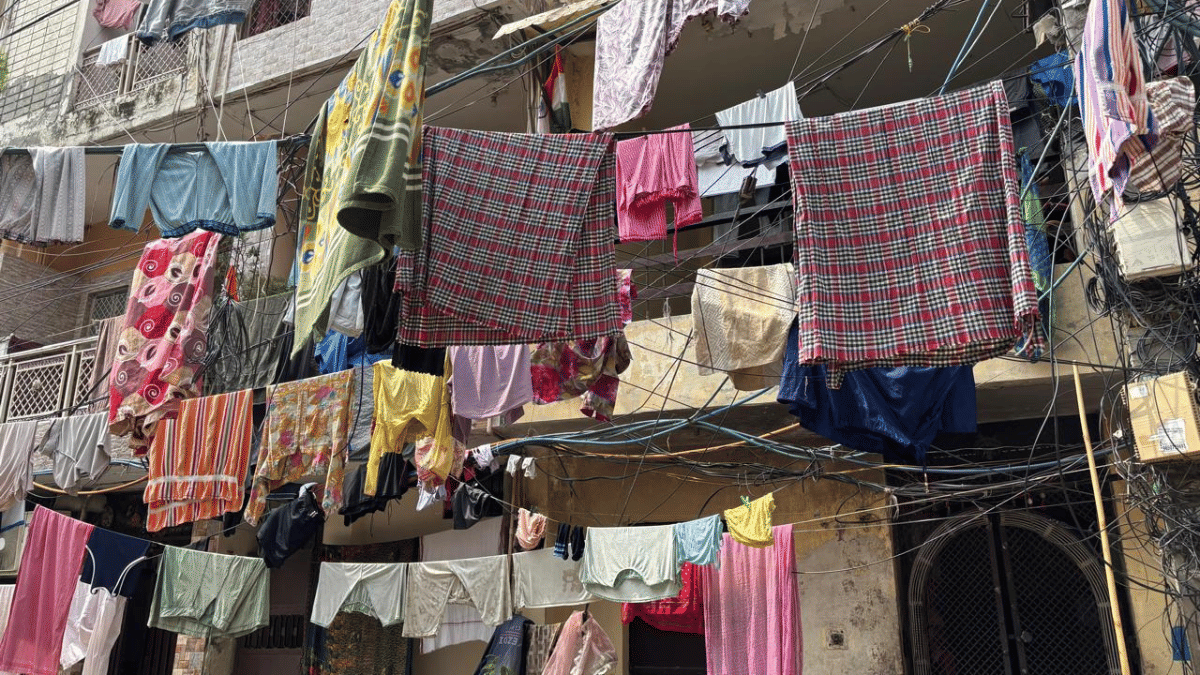
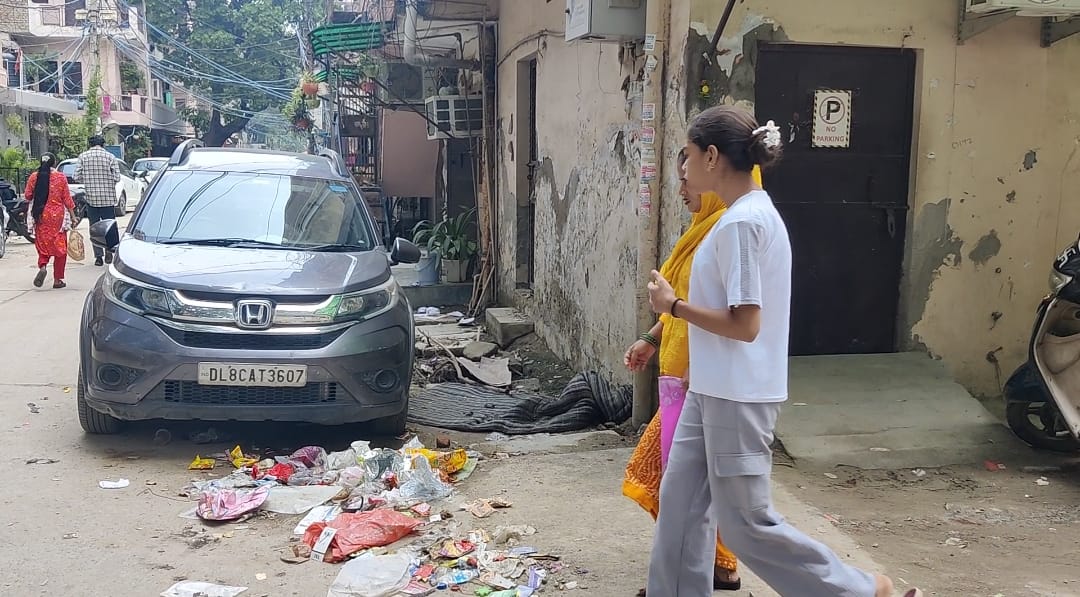
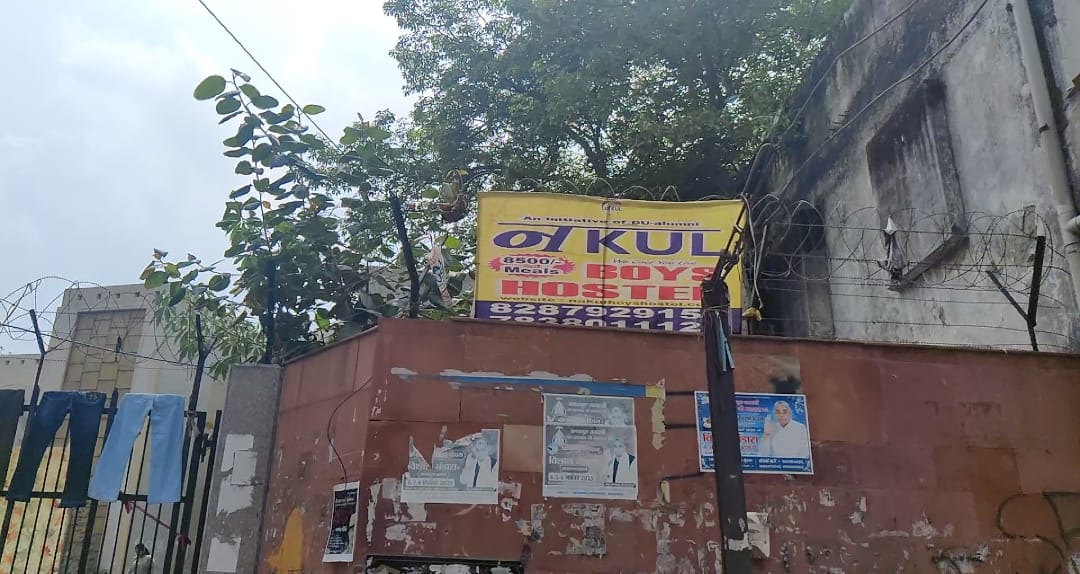
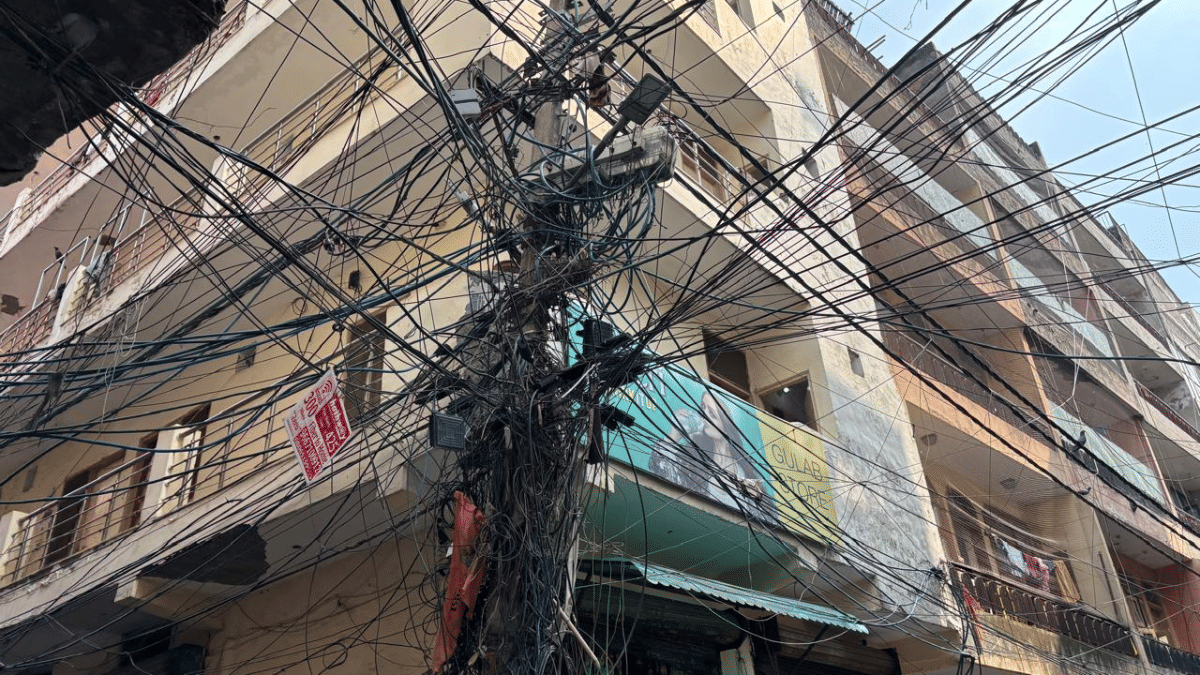
But beyond this lie DU’s cheap student neighbourhoods. Kamla Nagar, Vijay Nagar and Hudson Lane are dense neighbourhoods marked by electric wires, open garbage spots and poor drainage. Residential buildings have been turned into PGs, converting the neighbourhood into a hub for student housing.
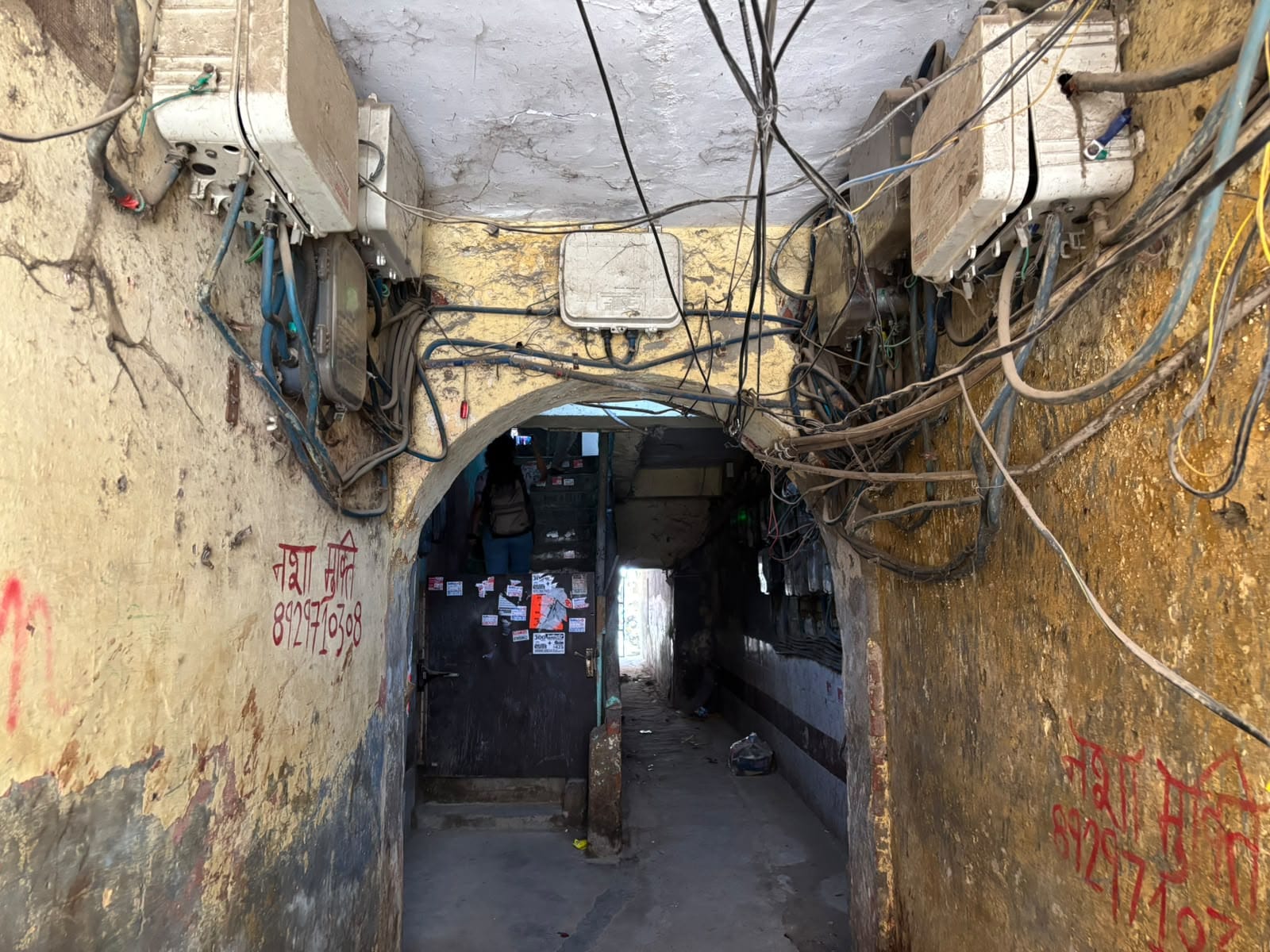
In one such building, Subhash Arya, a Hindi Honours student from Bihar’s Aurangabad, managed to find a room for himself. The small square room has two beds divided by a cupboard, no AC and a small balcony. This PG is almost six storeys, with four rooms on each floor.
When Subhash cleared the Common University Entrance Test (CUET), he thought he would get a hostel room at Hindu College. But the hostel has been under construction since the demolition of the old building.
“When I came here, I got to know that the hostel is under construction. I was forced to take a PG in Vijay Nagar. It cost me Rs 12,000. Where I come from in Bihar, most students don’t have access to education. The living conditions in PGs and flats around North Campus are poor. The rooms have no sunlight, broken tiles and paan-stained rooms,” says Subhash.
Subhash comes from a town where most discussions revolve around issues like non-functional handpumps, broken roads, and patchy electricity.
Now, years later, as a student at Hindu College, Subhash is in a different setting, but most of the concerns around him are the same. Hostels promised to students remain shut and ceilings drip during the monsoon. Students talk about broken toilets and flooded roads.
According to ABVP’s probable DUSU candidate Ishu Maurya, the lack of hostel facilities goes beyond DUSU elections. “This is an issue that shouldn’t be only discussed now. We have to talk about this at all times. Why do students not get hostel facilities?”
He says landlords and PG owners charge around Rs 30,000-40,000 for rooms without basic facilities or fire safety measures. “Most of the buildings are old and dilapidated. The rooms are small and difficult to live in. Our goal is to ensure students get access to hostel facilities, and that the Rent Control Act is enforced so that rent can be capped. We also want PGs to undergo safety audits routinely. This has to be enforced.”
A demand for Rent Control Act
For many students, moving out of private PGs and renting a flat seems like a cheaper option.
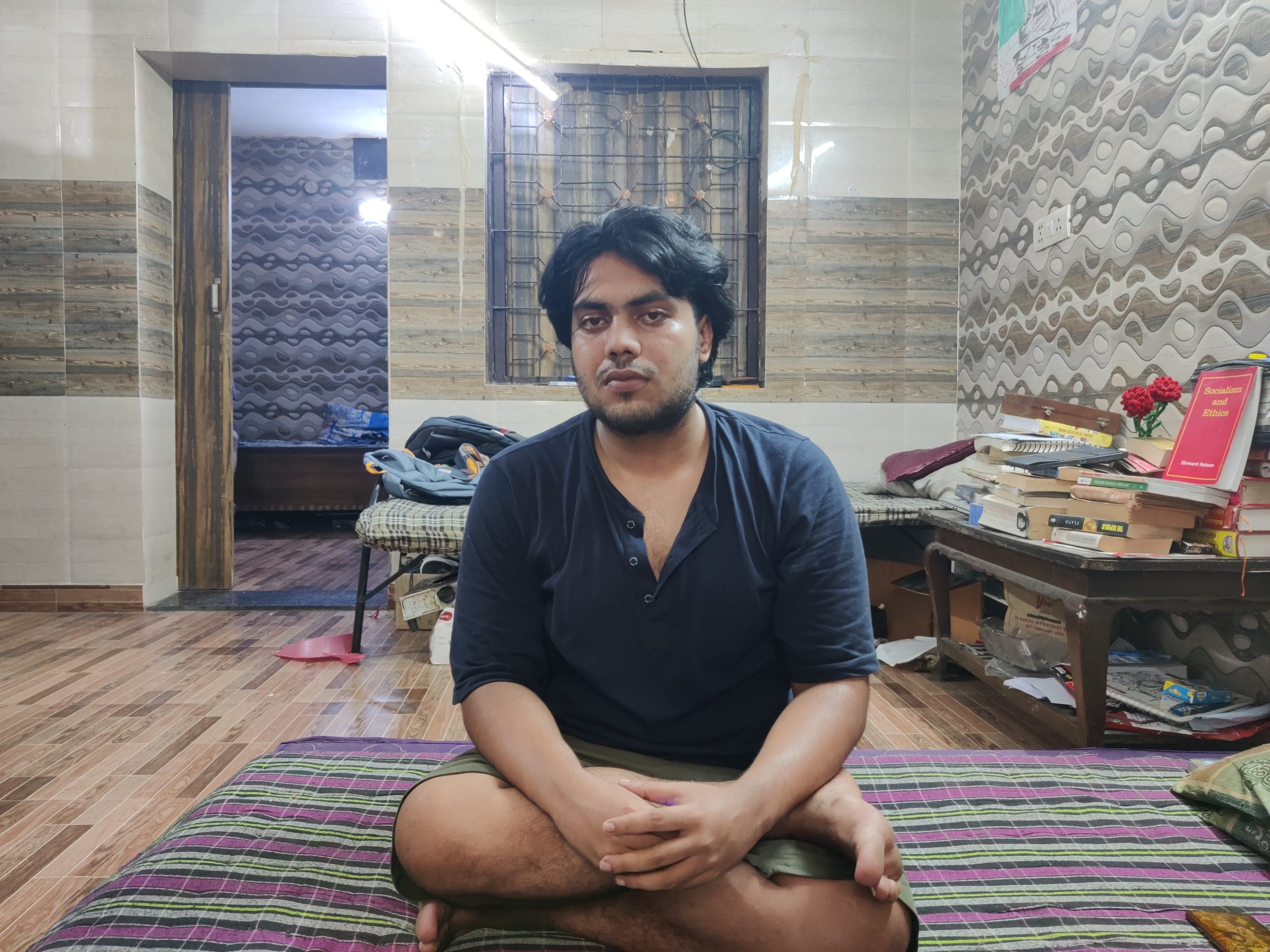
But Sachin Kant Jha, a student of Ramjas College, said that private rentals come with their own problems. A third-year History Honours student from Ramgarh, Jharkhand, Sachin came to DU three years ago because options back home were almost non-existent.
“Delhi is famous for liberal arts. If Bihar or Jharkhand had good colleges, we wouldn’t have to leave home,” he said.
His experience in Delhi, however, has been “bittersweet”.
To avoid expensive PGs, Sachin and two friends rented a flat in North Campus’s Vijay Nagar for Rs 16,000 a month, splitting the cost among themselves.
The flat came with no air conditioning and no beds, just a bare floor. Rents increase closer to the main college campus, forcing students into older, poorly maintained properties further away.
“You have no choice but to go through brokers who charge heavy fees just to show you a basic room with a functional bathroom,” Sachin said.
The living conditions in these rented flats are often dangerous. Sachin’s room sits on the ground floor, where he had to place a massive tile block at the entrance to block dirty drain water from flowing inside during the monsoon.
Over the past three weeks, he has spent hours sweeping out flooded rainwater mixed with sewage while dealing with rats. He and his flatmates sleep on thin mattresses laid directly on the floor.
“There is no hygiene, and the lanes are completely congested,” Sachin said. “We have come so far to study; are we just going to end up crushed under rubble?”
(Edited by Sugita Katyal)