


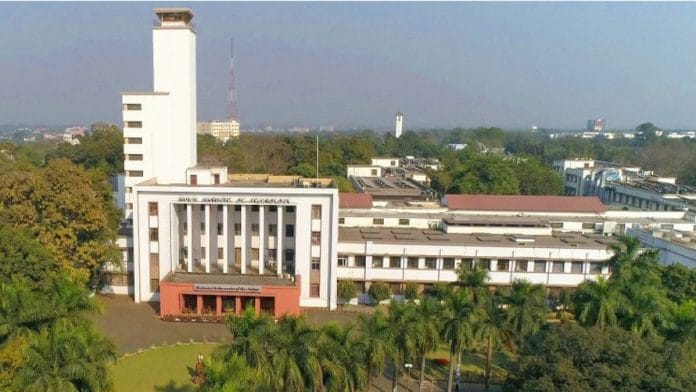
New Delhi: The Indian Institute of Technology (IIT) Kharagpur has become the first IIT in the country to offer postgraduate medical degree programmes, marking the entry of the premier technology institutes into specialised medical education. The institute will offer six MD programmes starting in the 2026–27 academic session.
The Institute has received approval from the National Medical Commission (NMC) for which it applied in March. Admissions will be conducted through the NEET-PG 2026 online counselling process.
The institute will introduce six Doctor of Medicine (MD) programmes at its Dr B.C. Roy Multi-Speciality Medical Research Centre for the 2026–27 academic session, with a total of 12 seats — two each in General Medicine, Radiology, Physiology, Pathology, Community Medicine and Biochemistry.
IIT Kharagpur Director Prof. Suman Chakraborty described the launch as a historic step towards shaping the future of medical education.
“Our vision is not simply to train specialist doctors, but to create an ecosystem where clinical excellence meets engineering ingenuity, artificial intelligence and translational research. We want our medical graduates to be not only outstanding clinicians, but also innovators capable of addressing some of humanity’s most pressing healthcare challenges,” the Director said in a statement.
He added that the institute aimed to nurture doctors who could combine clinical understanding with scientific discovery and technological innovation.
Beyond conventional medical education
According to an institute statement, medical education and technological research have traditionally evolved along separate institutional pathways. IIT Kharagpur’s new postgraduate medical programmes aim to bridge this gap by bringing the two fields together.
The institute said its Dr B.C. Roy Multi-Speciality Medical Research Centre would provide a research-driven medical education ecosystem, allowing students to engage with its technological and scientific research.
“Students will have the potential to engage with research and innovation spanning AI-assisted clinical decision-making, next-generation medical imaging, computational pathology, biomedical devices, molecular diagnostics, precision medicine, population health and affordable healthcare technologies,” the statement said.
The institute said its existing strengths in microfluidics, bioengineering, healthcare diagnostics, artificial intelligence and computational sciences would support this initiative, with the broader aim of developing medical specialists who combine clinical expertise with scientific research and technological innovation.
Expansion of other IITs
IIT Kharagpur is not the only technology institute moving into medical education and healthcare research. Several other IITs have set up programmes that bring together medicine, engineering and biomedical sciences, although their offerings differ from the clinical MD courses being introduced at Kharagpur.
IIT Madras established its Department of Medical Sciences and Technology in May 2023. It offers a four-year BS programme in Medical Sciences and Engineering, which combines subjects such as human anatomy and physiology with engineering, mathematical modelling and artificial intelligence. The programme also includes hospital internships and aims to train students to work at the intersection of medicine and technology.
IIT Jodhpur, in collaboration with AIIMS Jodhpur, offers postgraduate and PhD programmes in Medical Technologies. The courses are designed for both medical and engineering graduates, with a focus on developing healthcare technologies, medical devices and diagnostic tools.
Besides, IIT Delhi’s Centre for Biomedical Engineering offers an MS (Research) programme in Healthcare Technology for doctors and other clinical professionals. The programme combines medical knowledge with engineering research in areas such as medical imaging, biomaterials, bioelectronics and rehabilitation engineering.
Unlike these initiatives, IIT Kharagpur’s new programmes are clinical MD degrees in six medical specialisations, making its move distinct within the IIT system.
(Edited by Anupama Yadav)