


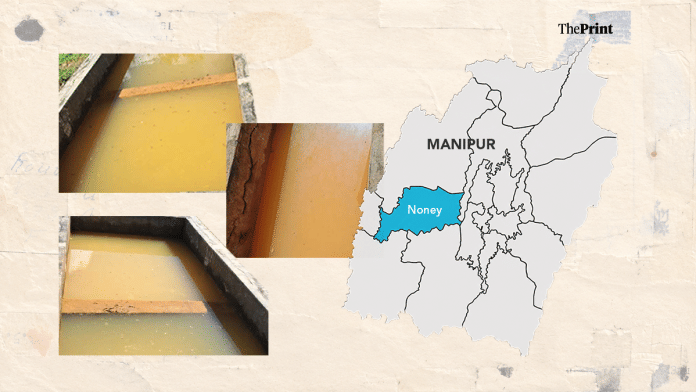
New Delhi: For the residents of Shangji village in Manipur’s Noney district, shortage of clean drinking water is a struggle that returns every summer. For Lt Col Dangmei, who grew up witnessing this hardship, it has now become a personal mission.
An officer with the Army’s elite 10 Para, Lt Col Dangmei is spearheading an initiative called ‘Drop of Hope’ to bring clean and reliable drinking water to his village, which has around 70 households.
The village currently depends on rainwater and seasonal water sources that dry up completely during the dry months, from January to June. This leaves residents, including children, without a dependable source of safe drinking water for nearly half the year.
Families, especially women and girls, are forced to walk long distances to fetch water from distant sources. Dependence on unprotected water sources also exposes residents to the risk of waterborne diseases.
Having experienced these difficulties while growing up, Lt Col Dangmei decided to do something about them when he returned home during his study leave.
What began as a personal resolve has since evolved into a community-driven project, with some fellow officers and colleagues from various Army and Assam Rifles units pitching in.
The project is now around 80 percent complete, with the aim of finishing the work by December this year.
The proposed infrastructure includes construction of a new access road to the water source, installation of a diesel generator (DG) set or solar power system, multistage centrifugal pumps, concrete storage tanks and a pipeline network to supply water to households.
The project is estimated to cost approximately Rs 16 lakh, excluding labour charges. The officers involved are mobilising contributions from within the Army fraternity to meet the cost but funds are falling short.
People aware of the project explained that the remoteness of Noney district has significantly increased the expense of transporting construction materials and equipment. The prevailing security situation in Manipur has further pushed up contractor availability, insurance and logistics costs. There are development challenges and gaps in access to basic services in the region.
According to the project report, the ‘Drop of Hope’ initiative proposes installing a minimum 30 KVA DG set or a solar power system to operate multistage centrifugal submersible pumps. These will overcome a total dynamic head of approximately 200 metres, across a lateral distance of 1,200 metres between the water source and the central distribution tank.
The project will involve constructing a concrete intake and storage tank at the source, laying at least 1,200 metres of 40/50 mm GI pipeline and building a main concrete distribution tank with a minimum capacity of 30,000 litres.
It will also include procurement and installation of 1,200 metres of AB cable, repairs to existing water tanks and the laying of household pipelines with individual tap connections.
Importantly, the project is designed to be community-owned and sustainable beyond its construction phase.
The Village Water and Sanitation Committee (VWSC) will own and operate the submersible pump system and the DG set or solar power installation.
Households will contribute towards a monthly electricity and maintenance fund, while two to three committee members will be trained in pump operation, basic maintenance and troubleshooting.
Also Read: Hyderabad in the grips of severe drinking water crisis—8,000 tankers a day, supply once in 3 days