



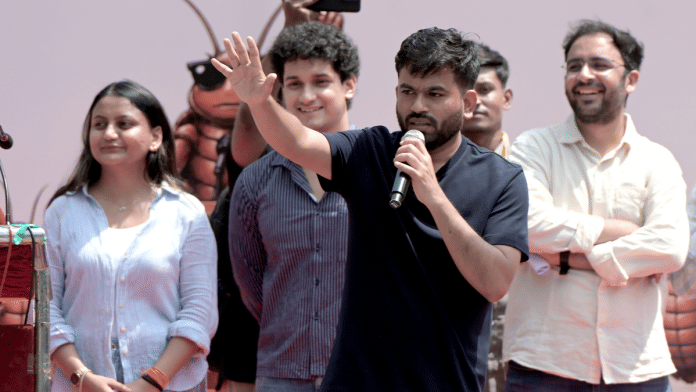
New Delhi: For nearly two months, the Cockroach Janta Party (CJP) has dominated political discourse across the nation. What began as a satirical online response to a remark by Chief Justice of India Surya Kant snowballed into a nationwide movement, drawing lakhs of students, job aspirants and young professionals on to the streets.
The protests quickly expanded beyond student circles, with several critics of the Bharatiya Janata Party-led government joining demonstrations to demand accountability and the resignation of the education minister.
They were driven by a generation frustrated with unemployment, examination scandals and governance, but the movement itself was shaped by a relatively small group of individuals who emerged as its public faces.
Unlike traditional political parties, the CJP has repeatedly maintained that it is led by a collective core team rather than a single supreme leader. At the forefront of the movement are founder Abhijeet Dipke, spokesperson Saurav Das, policy strategist Ashutosh Ranka and lawyer Ratna Singh—each with a different skill-set. Around them is a wider team of organisers, policy professionals, farmer leaders and student representatives who have helped transform an online campaign into one of the country’s most closely watched protest movements.
Abhijeet Dipke: the platform
Abhijeet Dipke came as a directionless storm. He was never meant to be the story; he was merely the platform. At a time when disillusionment among India’s youth had reached boiling point, Dipke did not create the anger—he recognised it, packaged it and gave it a face. The communications strategist mobilised widespread frustration over unemployment, examination scandals and governance by wrapping it in the symbolism of B.R. Ambedkar, constitutional values and Internet-first political messaging. What began as satire soon evolved into a nationwide movement.
Born in Chhatrapati Sambhajinagar (formerly Aurangabad), Maharashtra, into a Dalit family, Dipke has often credited Ambedkar’s writings with shaping his political outlook. He studied journalism at Tilak Maharashtra Vidyapeeth in Pune before moving to the US in 2023 to pursue a Master’s degree in Public Relations at Boston University, where he developed an understanding of political branding, public messaging and digital communication.
Before founding the movement, Dipke worked in political communications and was associated with the Aam Aadmi Party (AAP) social media team between 2020 and 2023, gaining experience in online campaigning and youth outreach.
Dipke’s greatest strength is in communication rather than command. He understood how to transform scattered public resentment into a disciplined campaign, using constitutional imagery, carefully crafted slogans and social media to unite thousands of young Indians behind a common cause.
But as the movement expanded beyond digital activism into a month-long nationwide agitation, the limitations of that model became increasingly apparent. Internal disagreements surfaced, factions emerged and cracks within the CJP became impossible to ignore. A movement built on collective outrage now demanded collective organisation, exposing Dipke’s struggles as an administrator and leader even as his abilities as a communicator remained largely unquestioned.
The Sansad Chalo March— the day the CJP got the most attention– was largely scattered and protesters had no guidance. The 30-year-old was also questioned when he along with his other CJP colleagues did not join climate activist Sonam Wangchuk in a hunger strike.
Dipke, however, relied on narrative. He instinctively understood that symbols often travel further than speeches. The Constitution became a political prop as much as a guiding document, Ambedkar’s image became the movement’s moral anchor, and social media its primary battleground.
Yet the qualities that made Dipke central to the CJP’s rise also made him vulnerable during its most turbulent phase. As the movement grew, disagreements emerged over its future. Public disputes, organisational changes and the departure of key figures exposed the challenges of managing a movement that had outgrown its original structure. The CJP continued to describe itself as a collectively led organisation, but Dipke remained its most recognisable face—and was often the first to be blamed when things went wrong.
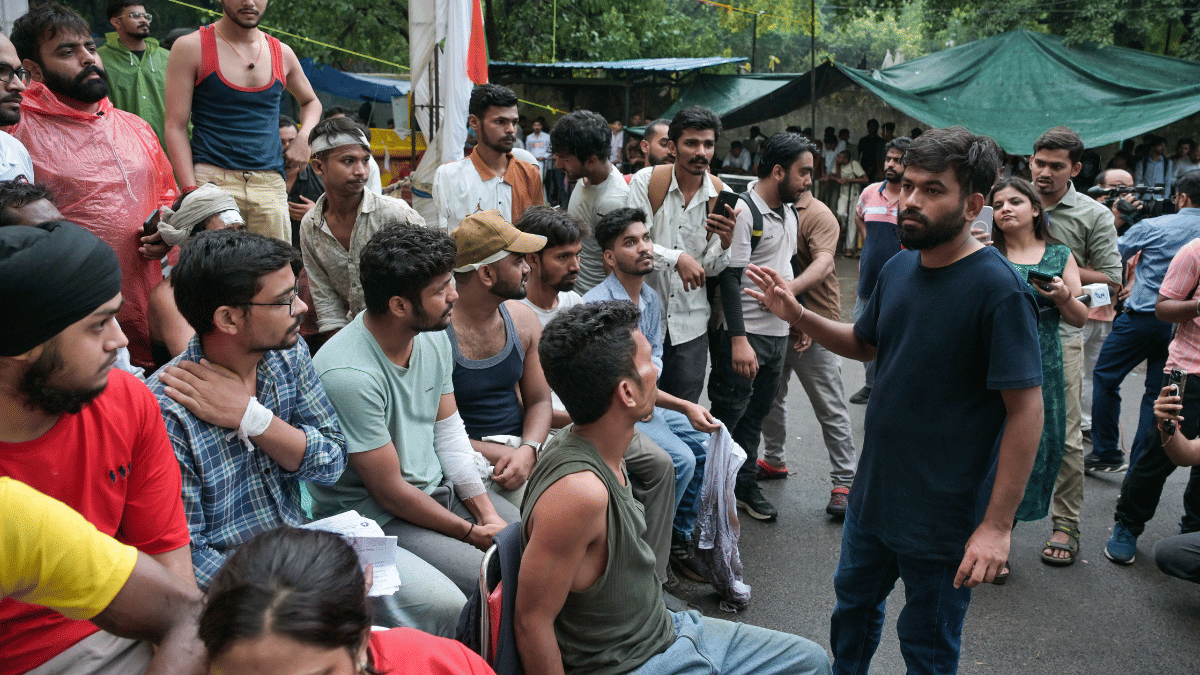
His association with the AAP invited scrutiny. Political opponents questioned whether the CJP represented a genuinely independent youth movement, or whether it reflected lessons learnt within an established political organisation. Dipke never denied his earlier role in political communications, stating instead that his experience taught him how to organise campaigns in the digital age. Congress sources say the party kept away because they didn’t know if it would turn into AAP 2.0.
For all the criticism surrounding his leadership, even critics concede that Dipke has altered the vocabulary of youth politics. He demonstrated how humour, satire and constitutional symbolism could transform an online campaign into a nationwide movement for the first time. In the end, Abhijeet Dipke was never the movement itself. He was the platform on which it stood—a communicator who channelled a generation’s anger into a common language.
Whether the CJP evolves into a lasting political force or remains just a moment of generational dissent, its emergence cannot be separated from Dipke’s ability to recognise public sentiment before the political establishment did.
Also Read: Photos of women from CJP protests morphed, circulated. They’re facing arrest calls
Saurav Das: the communicator
If Abhijeet Dipke built the movement’s emotional appeal, Saurav Das, the young CJP spokesman, built its public case. A journalist before he became a protest leader, Das understood how newsrooms functioned, how narratives were shaped and, more importantly, how to keep a movement in the headlines.
Born and raised in New Delhi, Das studied journalism and mass communication before beginning his career as an investigative journalist. His work appeared in publications, including The Caravan, The Hindu, The Wire, Article 14, Al Jazeera and New Lines Magazine, placing him within Delhi’s network of journalists, activists and public-interest litigators.
Das has used litigation to pursue access to information. During the COVID-19 pandemic, he approached the courts over delays in Right to Information appeals, contributing to efforts that led to faster disposal of pending cases by the Central Information Commission.
He is also the co-founder of Climate Action Front, an initiative working on climate governance, sustainability and environmental policy. Alongside journalism, he has been writing his debut book, Complicit Silence: The Court’s Role in India’s Quiet Suffering, which examines the judiciary’s role in contemporary India through case studies of people seeking justice.
Das never seemed keen to separate his journalism from his politics. His admiration for Arvind Kejriwal and several AAP leaders was well known, leading many to believe his political leanings were closer to the Aam Aadmi Party than he publicly admitted. By the time he joined the CJP, that perception was already firmly attached to his public image, and he did little to separate the two.
Within CJP, Das quickly became the movement’s principal negotiator. Alongside Ashutosh Ranka, he led multiple rounds of talks with Union Ministers J.P. Nadda and Jitendra Singh, presenting the CJP’s demands and emerging after each meeting to brief supporters and the media.
Das’s carefully cultivated image took a hit after the protests ended. Viral videos showing him, along with other CJP leaders, dancing at what critics dubbed a ‘resignation party’ following education minister Dharmendra Pradhan’s resignation triggered backlash, particularly as reports of arrests and police action against protesters continued to emerge from several states.
Das defended the celebrations as “the language of Gen Z”, arguing that young people expressed political victories differently.
Ashutosh Ranka: the policy man
Ashutosh Ranka was never the loudest voice in the CJP, nor was he its biggest crowd-puller. He was the movement’s policy man—the one expected to give direction to the anger. While Abhijeet Dipke mastered mobilisation and Saurav Das controlled the narrative, Ranka brought something neither of them possessed: a deep understanding of governance, public policy and the machinery of the state.
Born and raised in Jaipur, Rajasthan, Ranka’s journey to the CJP was unlike that of most protest leaders. He studied Materials Science and Engineering at IIT Kanpur, where he was elected president of the Students’ Gymkhana, an early indication of his interest in public life. After graduating, he joined McKinsey & Company, working in Mumbai and London before pursuing a Master’s in Public Administration at the London School of Economics. He later worked with Gavi, the Vaccine Alliance, before gradually leaving behind the corporate and international policy world for Indian public life.
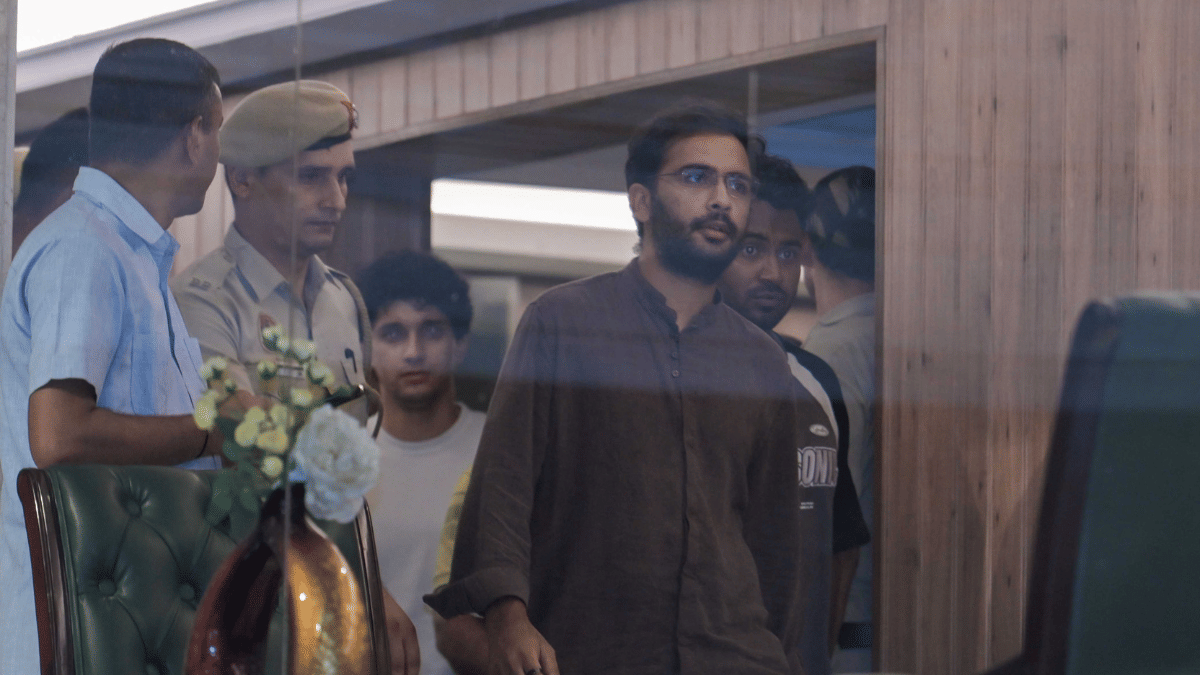
Before the CJP, Ranka worked with the AAP during the Delhi elections, gaining first-hand experience of election strategy, governance and grassroots campaigning. Returning to Rajasthan, he launched Parivartan, a citizen-led platform focused on education, governance and environmental issues, while also becoming associated with campaigns surrounding the NEET (National Eligibility-cum-Entrance Test) paper leak and student rights.
By the time the CJP emerged, he had already built a reputation as someone who preferred policy papers to political speeches. Inside the CJP, Ranka became the movement’s principal strategist; he and Das held meetings with the two Union Ministers, helping present the organisation’s demands and shape its negotiating position.
Yet his background also attracted criticism. A movement that presented itself as an outsider challenge to the political establishment now had a senior leader with experience in an established political party and elite policy circles. Critics questioned whether the CJP was truly a grassroots youth movement or one shaped by experienced political insiders.
Supporters, however, argued that this experience was precisely what made Ranka valuable, giving the movement someone who understood how governments worked and how to negotiate with them.
Ratna Singh: the lawyer
When the CJP began facing arrests, First Information Reports and an increasingly complex legal battle with the state, Ratna Singh emerged as one of its most important voices. Unlike many of the movement’s leaders, who came from student activism or public policy, Singh’s journey to the CJP was shaped by years spent understanding India’s legal system from both inside and outside the courtroom.
A law graduate from the University School of Law and Legal Studies at Guru Gobind Singh Indraprastha University, Singh began her career in legal journalism. She first worked with Bar & Bench, reporting on the Supreme Court, High Courts and some of the country’s most significant constitutional developments. She later joined Scroll.in as Legal Correspondent, where her reporting focused on judicial accountability, civil liberties, criminal justice and constitutional law.
After nearly five years in journalism, Singh decided to leave the newsroom and pursue litigation. Announcing the transition, she wrote that she wanted to finally put her law degree to use after years of reporting on the legal system from the outside.
That experience proved invaluable when the CJP protests began attracting legal scrutiny. As the organisation confronted police action and a growing number of court cases, Singh became one of the movement’s principal legal strategists and public defenders. She explained the constitutional basis of the CJP’s demands, coordinated legal responses to arrests and FIRs, and represented the movement’s position in conversations with the media. While others focused on mobilising protesters or shaping policy, Singh ensured that the organisation’s campaign remained firmly rooted in constitutional rights and due process.
Though she joined the CJP after several of its founding leaders, Singh quickly became indispensable to the movement. Her ability to bridge journalism, law and constitutional advocacy gave the CJP credibility at a time when its biggest battles were being fought as much in courtrooms as on the streets. If Dipke was the movement’s organiser and Ranka its policy architect, Ratna Singh became its constitutional conscience.
Deepak Baliyan: the farmer’s voice
Unlike many CJP leaders who came from journalism, law or public policy, Deepak Baliyan’s roots lie in grassroots mobilisation. A native of Mankheda village in Kathumar tehsil of Rajasthan’s Alwar district, he comes from a farming family and spent nearly seven to eight years working with kisan organisations, focusing on farmers’ rights and rural issues before joining CJP. His long association with agrarian movements gave him experience in organising protests and mobilising communities. His father and grandfather are both farmers.
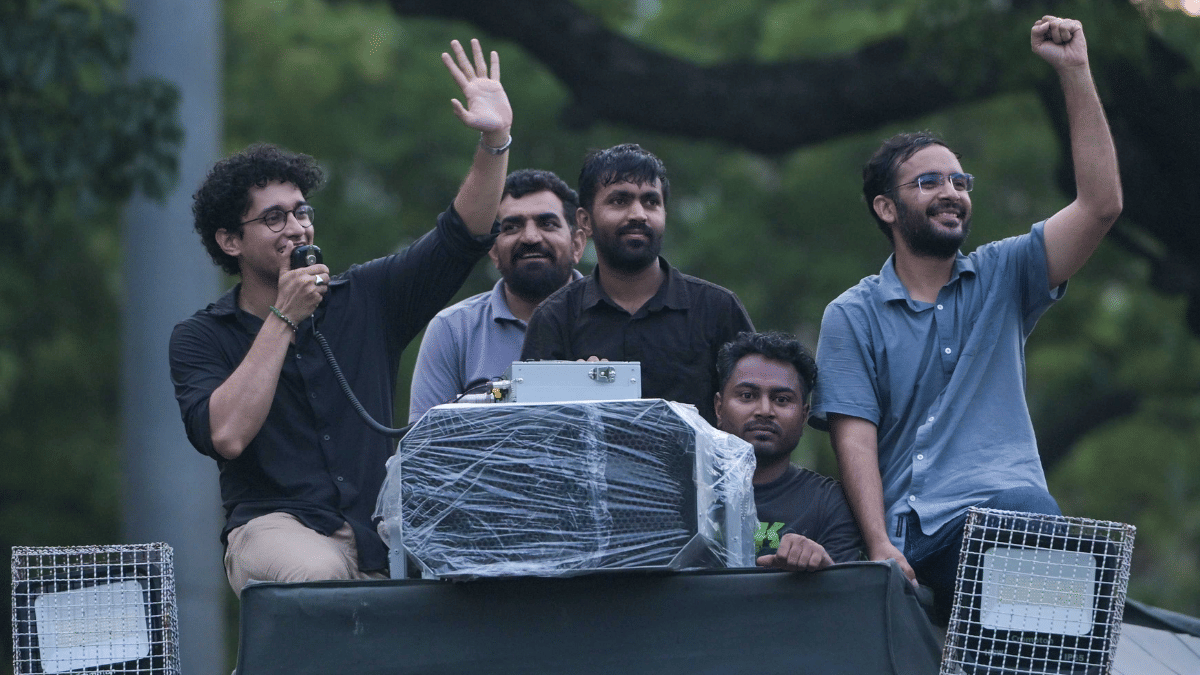
Baliyan completed his schooling in Kathumar before pursuing a Master’s degree in Political Science from Maharaja Surajmal Brij University, Bharatpur. His academic background in political science complemented his years of fieldwork, shaping his understanding of governance and public policy.
He was introduced to the CJP through social activist Ashutosh Ranka and became one of the organisation’s early organisers in Rajasthan. During the movement, he served as the in-charge of the 15 June Jaipur protest, coordinating volunteers, managing logistics and helping expand the CJP’s presence in the state. His organisational work during the protests established him as one of the movement’s key grassroots leaders.
As one of the CJP’s spokespersons, Baliyan has consistently highlighted the concerns of farmers, students and rural youth, arguing that issues such as examination paper leaks, unemployment and agrarian distress are interconnected. His presence in the leadership reflected the CJP effort to bring together activists from diverse backgrounds, including those with years of experience in grassroots social movements.
(Edited by Nardeep Singh Dahiya)
Also Read: CJP under fire over ‘resignation party’, Saurav Das says that’s the ‘language of Gen Z’
Abhijit is unemployable. Fees and living expenses per year at Boston University is 92000 USD. Leaving aside as to how he afforded 184000 USD for his masters degree, I wonder what exactly is its contributive value to a society or country.
And, the blogger conveniently skipped on the burger moocher from this list. Why do you backstab him?
Thank you for the detailed article. Now it is clear that CJP is a proxy of AAP. All of them were anti-BJP, ultra-left leaning adults waiting for a situation to create anarchy in the country. Their work at nazi-left journals indicates their idelogies. They never had problem working with corrupt Kejriwal, who will go to jail at some point of time.