





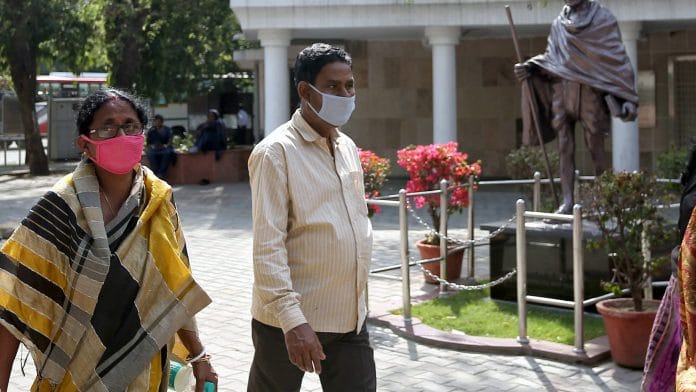

New Delhi: As H1N1 cases rise across Delhi and other parts of India, Indian Council of Medical Research (ICMR) Director General Rajiv Bahl said on Tuesday during a press conference that there is no cause for panic, stressing that the virus currently circulating is not a new strain and that the rise is part of seasonal influenza activity.
Bahl said H1N1, which caused the 2009 pandemic, has since become an endemic seasonal influenza virus and continues to circulate among people every year. The virus undergoes small genetic changes, known as antigenic drift, which means people can be infected again even if they have had H1N1 or another influenza infection in the past.
“There is a lot of circulating H1N1, which is Influenza A. It is not a new strain. It is not a new virus that will cause anything very different,” Dr Bahl said.
He added that the important issue was not simply the increase in the number of influenza cases, but whether the virus was causing unusually severe disease, higher hospitalisation or more deaths. Most infections are mild and do not require hospitalisation, he said.
His comments come against the backdrop of Delhi reporting a sharp increase in influenza cases. Delhi Health Minister Pankaj Kumar Singh said on Tuesday that Chief Minister Rekha Gupta has called for an emergency review meeting amid the rise in influenza cases. Singh said Delhi has reported around 3,000 influenza cases this year, which included 2,308 H1N1 infections.
Doctors across Delhi-NCR, Mumbai and Bengaluru have also reported crowded outpatient departments, with some severe infections among vulnerable and unvaccinated patients.
Dr Bahl said the current situation should not be compared with the 2009 pandemic, when H1N1 was a newly emerging virus. The virus has now been in circulation for more than 15 years and has become a part of the seasonal influenza viruses that people are exposed to regularly.
The virus currently circulating in India is similar to the A/Missouri/11/2025 (H1N1) pdm09-like virus. ICMR had earlier said it does not have characteristics suggesting the emergence of a new pandemic strain. The available influenza vaccine is also expected to protect against the circulating strain.
H1N1 dominates as ICMR tracks viruses across 73 sites
According to Dr Bahl, India has a sentinel surveillance network covering 73 hospitals and laboratories that tracks respiratory viruses and monitors changes in influenza activity and severity. Each site tests 25 samples every week, including 15 from patients with severe acute respiratory infection (SARI) and 10 from those with influenza-like illness (ILI).
The country also has a broader network of 167 Virus Research and Diagnostic Laboratories, or VRDLs, which process samples referred for testing.
“Surveillance data shows H1N1 is currently the dominant influenza A virus. H3N2 accounts for only around 2-3 percent of influenza infections, while Influenza B of the Victoria lineage is also circulating. SARS-CoV-2 also continues to be detected, but its circulation is declining,” the ICMR DG said.
The surveillance system also tests for other respiratory viruses, including human metapneumovirus, adenovirus and parainfluenza viruses 1 to 4. This allows ICMR to track which viruses are circulating rather than assuming every influenza-like illness is caused by H1N1.
‘Severity, not absolute number of cases, is what matters’
The ICMR DG said influenza cases can rise or fall from year to year because of the virus’s natural evolution, but the key public health concern is whether the illness is becoming more severe or causing more deaths.
“We get concerned when the disease is very severe, when the mortality is high, when the morbidity is very high,” Dr Bahl said.
He added that most cases being reported are mild and self-limiting, although young children, adults over 65, pregnant women, immunocompromised people and those with underlying health conditions remained at greater risk of complications such as pneumonia.
Dr Bahl also cautioned against taking antivirals without medical advice. “Antibiotics have no role” in uncomplicated viral flu, while antivirals are generally used in severe or high-risk cases.
People with symptoms should rest at home, avoid close contact with others, wash their hands regularly and cover their coughs and sneezes, he said. Those with breathing difficulty, chest pain or severe respiratory symptoms should seek medical care.
He also added that even masks are not needed.
“We are not asking people to wear masks because the infection spreads through respiratory droplets, which do not travel very far. They travel about two metres at most,” he said.
Flu vaccine not recommended for everyone
Dr Bahl said that the current trend shows the number of cases increasing, but it is not possible to predict exactly when infections would peak. Flu activity could rise for a few more weeks before declining, he said.
The ICMR, he said, is also not recommending influenza vaccination for everyone under a national programme. But people at higher risk, particularly older adults, pregnant women and immunocompromised people, can consult their doctors about getting vaccinated, he said.
The Northern Hemisphere vaccine is preferred because it better matches the viruses currently circulating, Dr Bahl said. However, he stressed that this did not amount to a recommendation for universal flu vaccination.
(Edited by Nivedita Patil)