





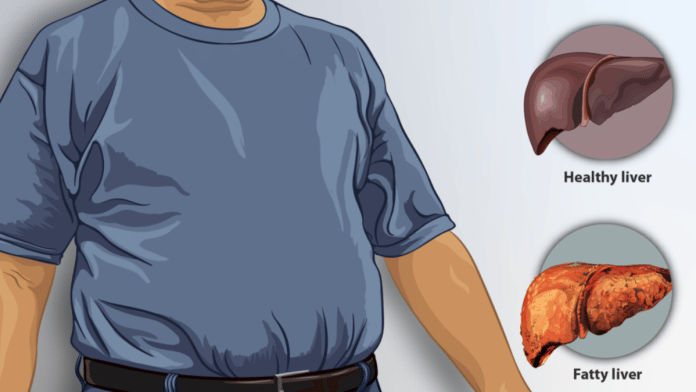


New Delhi: Even as vaccination and better medicines have reduced the burden of hepatitis B and C over the past decade, doctors at the All India Institute of Medical Sciences (AIIMS) New Delhi Tuesday said that fatty liver disease and alcohol-related damage are overtaking viral hepatitis as the biggest drivers of cirrhosis and liver cancer in the country.
At a press conference on the World Hepatitis Day, observed every year on 28 July, AIIMS gastroenterologists said that changing lifestyles are creating a new epidemic of liver disease in India.Hepatitis is inflammation of the liver and can be caused by viruses, alcohol, certain medicines or autoimmune diseases. Hepatitis A and E usually cause short-term illness, while Hepatitis B and C can lead to chronic liver disease, cirrhosis and liver cancer. Hepatitis D occurs only in people with Hepatitis B.
Fatty liver disease is caused by excess fat in the vital organ. When this fat triggers inflammation, it causes a form of hepatitis known as steatohepatitis, which can also progress to cirrhosis and liver cancer if left untreated.
“The pattern of liver disease in India is changing. Hepatitis B and C are declining because of vaccination and better treatment, alcohol-related liver disease and fatty liver are increasing rapidly due to unhealthy lifestyles,” said Dr Pramod Garg, Head of the Department of Gastroenterology at AIIMS New Delhi.
“The good news is that fatty liver is largely preventable and, if detected early, can often be reversed.”
He added that fatty liver disease—officially known as Metabolic dysfunction-Associated Steatotic Liver Disease (MASLD)—is becoming increasingly common because of obesity, diabetes and sedentary lifestyles.
“This disease is preventable and treatable. If detected early, it can even be reversed.”
AIIMS doctors said that nearly 38 percent of Indians, including about 35 percent of children, have fatty liver disease.
According to the World Health Organisation (WHO), around 304 million people globally are living with chronic hepatitis B or C infection, causing nearly 1.3 million deaths every year. India accounts for about 12 percent of the world’s viral hepatitis burden, with an estimated 40 million people living with chronic hepatitis B and another 6 to 12 million with chronic hepatitis C.
According to Dr Shalimar, Professor, Department of Gastroenterology at AIIMS, advances in treatment are changing the outlook for viral hepatitis.
“Regarding the Hepatitis B virus, a vaccine is available in our national programme. The first dose is given within 12 to 24 hours of birth. If the next two doses are given at one month and six months, protection against Hepatitis B is over 95 percent. Therefore, if all three doses are administered, you can be assured that you will not get Hepatitis B infection,” he said.
He also pointed to a recent international Phase III clinical trial of bepirovirsen, an investigational drug co-developed by UK-based GSK and US-based Ionis Pharmaceuticals, which showed that about one in five patients achieved what doctors call a “functional cure” for Hepatitis B.
“We hope this medicine reaches India soon,” Shalimar said.
He also credited India’s Universal Immunisation Programme, under which newborns receive the hepatitis B vaccine free of cost, for reducing new infections.
Behind changing disease burden
Despite these gains, Dr Shalimar said the country’s liver disease burden is increasingly being driven by unhealthy lifestyles.
“Physical activity has reduced, people are eating more ultra-processed foods, and alcohol consumption has increased. These are the biggest reasons why liver disease is changing in India.”
He advised the people to exercise for 30 to 45 minutes every day, reduce sugar and refined carbohydrates, avoid packaged ultra-processed foods and limit alcohol consumption.
He also noted that women are biologically more susceptible to alcohol-related liver injury because they metabolise alcohol differently and develop liver damage at lower levels of consumption than men.
In India, alcohol remains the leading cause of liver cirrhosis, accounting for about 43 percent of cases, followed by viral hepatitis (18 percent) and non-alcoholic fatty liver disease (14 percent). The share of cirrhosis linked to alcohol and fatty liver is steadily rising, with recent studies also showing an increase in liver cancer cases caused by fatty liver disease.
Many patients unaware of liver disease
One of the biggest challenges is that chronic hepatitis and fatty liver disease often remain symptom-free until advanced stages. “In chronic hepatitis, there are often no symptoms. Many patients are diagnosed only after routine blood tests show elevated liver enzymes,” Dr Shalimar said.
He advised screening for people at higher risk, including healthcare workers, people who inject drugs, those with multiple sexual partners, recipients of blood transfusions, pregnant women and family members of hepatitis B patients.
Using a simple analogy, Dr Govind Makharia, Professor of Gastroenterology, explained why fatty liver is becoming so common. “The liver is like a bank. If you keep depositing calories but never spend them, fat will continue to accumulate.”
Excess sugar and refined carbohydrates are major contributors to fatty liver, Dr Garg said, advising the people to choose whole fruits over fruit juices, increase fibre intake and eat more pulses, cereals, vegetables, milk, curd, and nuts.
“Most people can meet their protein requirements through a balanced vegetarian diet. There is usually no need to depend on protein supplements.”
Dr Makharia, meanwhile, challenged the long-held belief that cirrhosis is irreversible. “Earlier we believed cirrhosis was an end-stage disease that could not be changed. Today we know that if we treat the underlying cause—whether it is hepatitis C, alcohol use, fatty liver or autoimmune disease—the liver can recover to a significant extent,” he said.
(Edited by Tony Rai)