



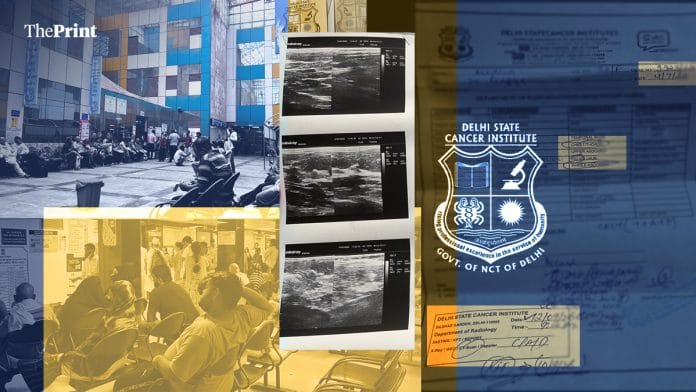
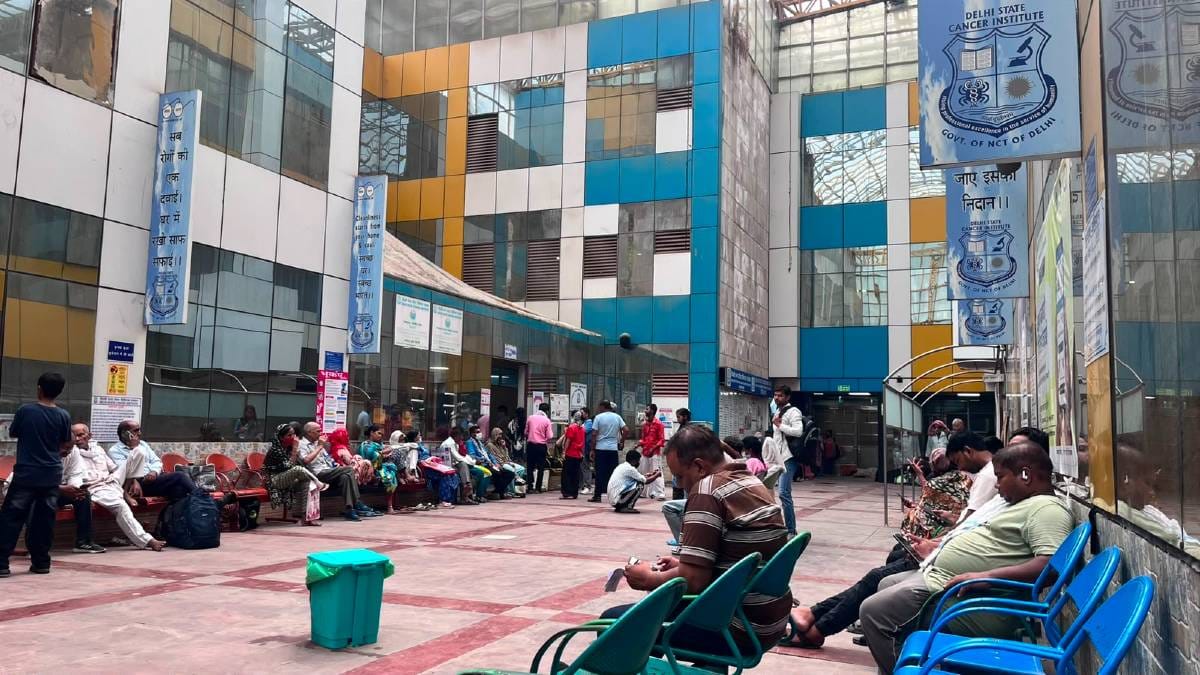
New Delhi: Mohammad Manovar, a daily-wage labourer, travels nearly 1,300 km from Bihar’s Katihar district every three months with his 53-year-old mother, Madina, to Delhi State Cancer Institute (DSCI)—the national capital’s only government-funded dedicated cancer hospital.
Sitting in the courtyard with his ailing mother, the 37-year-old patiently waits for the turn of Madina, who is being treated for breast cancer.
For Manovar, the journey and the long waits are a necessity rather than a choice.
“There is no treatment in Bihar,” he told ThePrint.
Like thousands of other patients, the family relies on the institute because private cancer care is beyond their financial reach. But nine months after Madina first arrived at DSCI, their struggle has become as much about waiting for diagnostic tests as fighting cancer itself.
Madina’s medical records show that on 4 July, doctors advised an ultrasound of both breasts and a contrast-enhanced CT (CECT) scan of the chest, abdomen and pelvis to assess whether the disease had spread. The ultrasound appointment was scheduled for 27 August (almost two months after the tests were prescribed), while the CT scan was fixed for 12 September (over two months later).
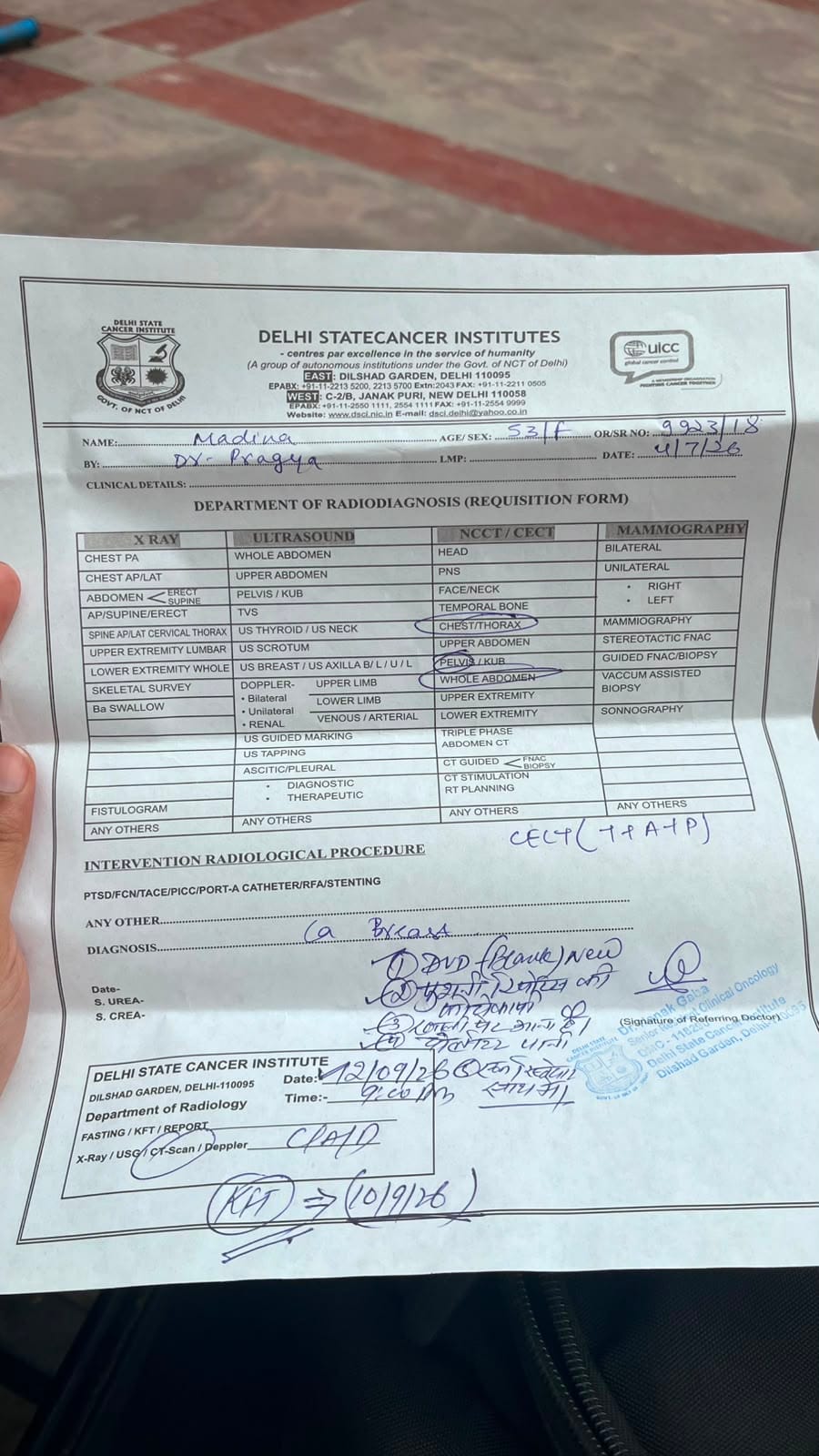
Unable to wait that long, the family had to pay Rs 1,100 for the ultrasound at a private diagnostic centre. But they could not afford the CT scan which might cost around Rs 8,000-12,000 in a private setup.
Madina’s case is not an exception.
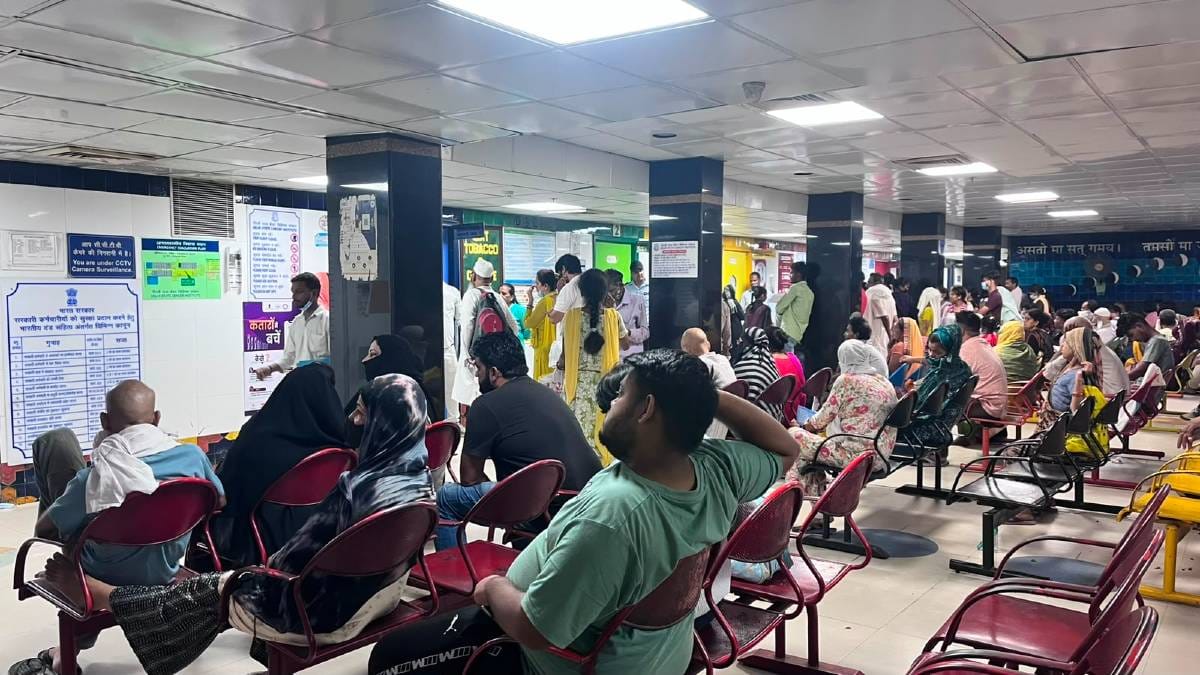
A nursing attendant at the institute told ThePrint that long waiting periods for diagnostic tests at DSCI stem from a combination of non-functional equipment, staff shortages and overwhelming patient load.
CT scan dates are currently being given for September, ultrasound for about a month later, while some radiotherapy sessions are being scheduled for January and February next year.
“There are only three radiotherapy machines at the hospital, of which only one is working,” the attendant said.
The delays have forced many patients to seek expensive tests in private hospitals.
Several patients face the same ordeal. One is Mohd Akram, whose 62-year-old father, Mohd Ismail, is undergoing treatment at DSCI for lung cancer.
After Ismail completed eight cycles of chemotherapy, doctors advised a whole-body PET-CT scan to check how the disease was responding to treatment.
“We got the appointment for a month later, so we got it done from a private centre and paid around Rs 10,000 for it,” Akram said.
The report showed that the primary tumour in Ismail’s left lung had grown larger, new nodules had appeared in both lungs and the disease had spread to the brain, lymph nodes, and multiple bones.
Akram sat with the report, waiting for his father’s turn in the long queue at DSCI.
Also Read: 83% Indians with cancer face ‘catastrophic’ non-medical costs, 75% travel over 500 km for treatment
Rs 15-cr PET-CT machine sits idle
The Delhi High Court has taken serious note of a PET cyclotron machine lying non-functional for years at DSCI. The machine, used to produce radioactive tracers for PET scans, costs Rs 15.42 crore.
In an order issued last week, the court called it a “gross waste of public resources” and directed all Delhi government hospitals to audit expensive medical equipment lying unused.
The observations came during the hearing of a long-running case on healthcare infrastructure in Delhi government hospitals.
Appearing before the court on 3 July, Dr Pragya Shukla, head of the department of clinical oncology at DSCI, told the bench that the PET cyclotron machine has remained non-operational because the Delhi government did not have a trained specialist to run the equipment after it was procured in 2017.
According to the court order, a specialist doctor from Safdarjung Hospital joined DSCI only in February this year. However, the machine is still not functional as regulatory approvals are pending.
The division bench of Justices Prathiba M. Singh and Manmeet Pritam Singh Arora observed that despite substantial public expenditure, the equipment had remained unused for several years.
‘Poor patients have nowhere else to go’
In January this year, advocate Ashok Agarwal, assisting the court as amicus curiae, submitted a representation to the Delhi Chief Secretary alleging systemic failures at DSCI.
He said the institute was functioning with 491 vacancies against a sanctioned strength of 814 posts, and there were shortages of doctors, specialists, technicians, nursing and administrative staff.
The representation also flagged the non-availability or irregular functioning of key services such as PET-CT scans, biopsies, specialised blood investigations and 2D echocardiography, shortages of life-saving medicines, and long waiting periods for radiotherapy and chemotherapy.
It further pointed to administrative lapses, including vacant posts of store in-charge and purchase officer, with personnel from unrelated departments handling these responsibilities.
“The cumulative effect of these deficiencies has rendered critical cancer care services ineffective and has disproportionately impacted economically weaker patients who rely entirely on government healthcare facilities,” Agarwal wrote.
Agarwal said government hospitals remain the only source of affordable care for a large section of the population. “If they are not adequately staffed and equipped, poor patients have nowhere else to go,” he told ThePrint.
ThePrint has reached out to incumbent DSCI Director Dr Savita Arora over email seeking the institute’s response to the Delhi High Court’s observations, the reasons for delays in making the PET cyclotron machine operational, and the long waiting periods for diagnostic tests and radiotherapy reported by patients. This report will be updated when a response is received.
ThePrint also visited Dr Arora’s office to seek her comments in person, but she was unavailable.
Also Read: Cancer therapy may soon skip the lab step — and cut costs
‘Centre of excellence’ under scrutiny
The Delhi State Cancer Institute was established with the ambition of becoming the Delhi government’s flagship cancer-care centre.
Created as an autonomous institute under a Delhi Cabinet decision on 5 April, 2006, DSCI was envisioned as a Centre of Excellence that would provide comprehensive cancer treatment, advanced diagnostics, research, training and community outreach, particularly for patients who cannot afford private care.
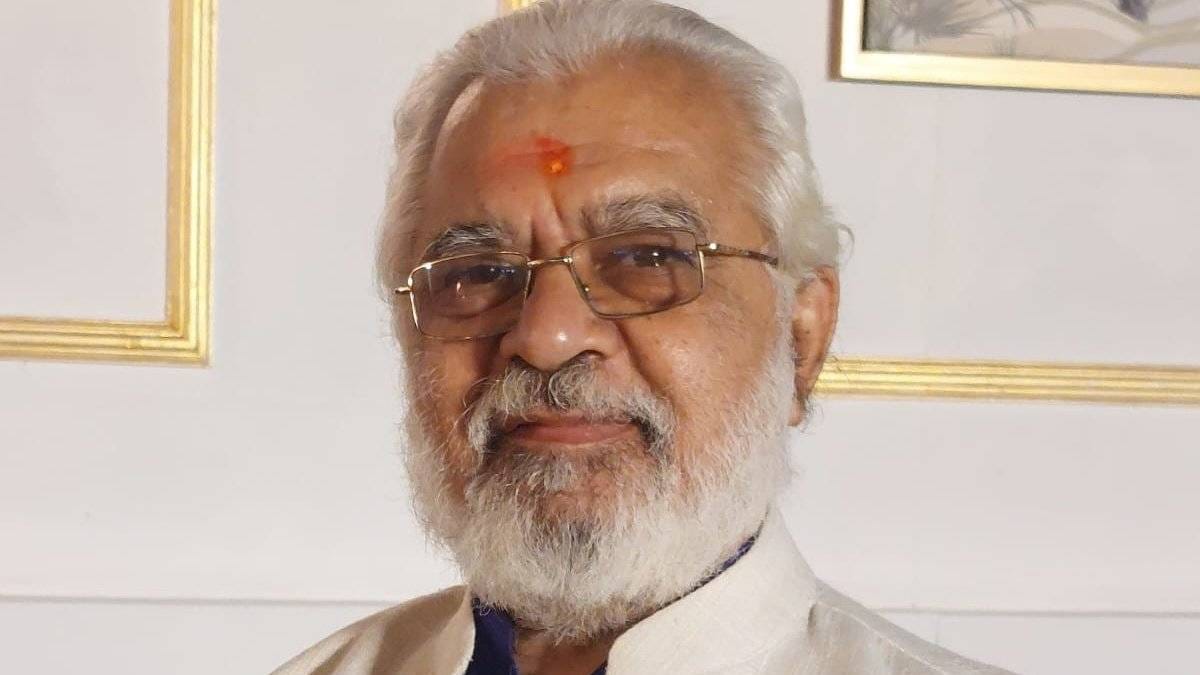
Prof. R.K. Grover was brought in from Maulana Azad Medical College (MAMC) and appointed the institute’s founding director.
DSCI expanded rapidly during its early years.
A senior official who has previously worked at the institute said the DSCI introduced several advanced technologies, including robotic surgery, modern radiotherapy systems, nuclear medicine services and sophisticated imaging facilities—many of them among the first in the country.
According to the official, the institute’s outpatient attendance increased from around 100 patients a day in 2006 to more than 1,500 daily by 2018. All the services functioned round the clock with zero downtime and zero waiting period.
During this period, DSCI also partnered with the University of Texas MD Anderson Cancer Center for faculty training and became one of the first government institutions to introduce HPV vaccination for cervical cancer prevention in 2016—years before the Centre announced its nationwide rollout.
“We never turned cancer patients away. The vision was to create a network of Delhi State Cancer Institutes so patients would not have to travel long distances repeatedly for treatment and lifelong follow-up,” the official said.
According to the official, the institute’s infrastructure and services steadily deteriorated in subsequent years, with several advanced facilities becoming non-functional.
(Edited by Nida Fatima Siddiqui)
What r health minister of AAP and now BJP doing about it?
The government hospitals across Indiar facing problem in appointing specialist doctors and technicians in operating costly advanced diagnostic and treatment machines.