



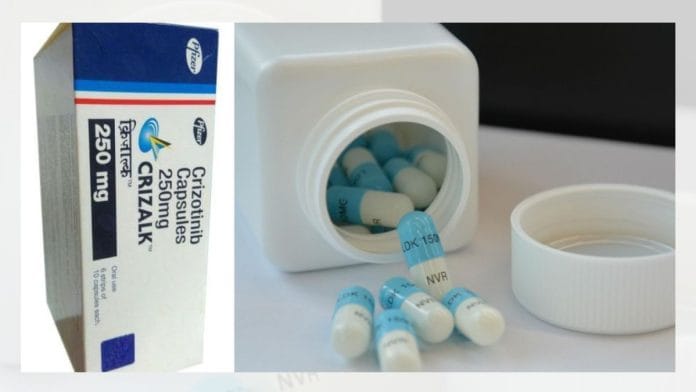
New Delhi: With an aim to bring down the cost of cancer treatment, the Centre has decided to cap trade margins at 30 percent of the maximum retail price (MRP) for non-scheduled cancer medicines. The cap is expected to cover about 110 drugs, including 35 patented ones.
“The measure is expected to reduce medicine prices by up to 70 percent and help cancer patients save Rs 2,500 crore annually, significantly reducing the amount they pay from their own pockets,” the Department of Pharmaceuticals of the Ministry of Chemicals and Fertilisers said in a statement Thursday.
For cancer patients and their families, this could mean lower bills for some expensive medicines. Those who need costly drugs over several months may save considerably if prices fall. But the actual relief will depend on which medicines make the final list and how much their prices come down after the cap takes effect.
The decision comes days after the Supreme Court questioned steep mark-ups on medicines. On 29 September, a bench of Justices Vikram Nath and Sandeep Mehta asked how a cancer drug bought by a retailer for around Rs 2,700 could carry an MRP of nearly Rs. 27,000.
The court described the gap as akin to “broad daylight dacoity with patients” and asked the Centre why the 16 percent retailer margin used for scheduled medicines should not apply more widely.
The new measure expands a similar intervention introduced in 2019, when the National Pharmaceutical Pricing Authority (NPPA) capped trade margins at 30 percent for 42 non-scheduled cancer medicines.
Non-scheduled medicines are those that do not fall under the government’s list of essential medicines for which the NPPA fixes ceiling prices. Unlike scheduled medicines, their initial prices are not set through the same ceiling-price mechanism, although annual price increases are restricted to 10 percent.
Examples of cancer drugs that could fall in this category include ribociclib, used to treat certain types of breast cancer, and pembrolizumab, an immunotherapy drug. However, whether these medicines are covered by the new cap will depend on the final list.
The new list is being decided by an expert committee under the Directorate General of Health Services. The NPPA will issue a notification once the list is ready. The measure will cover branded and generic medicines, both domestic and imported, including patented and non-patented drugs.
The government said its analysis found average price mark-ups of around 170 percent on non-scheduled cancer medicines. In some cases, these exceeded 700 percent.
What is a trade margin and what 30 percent cap means
A trade margin is the difference between the price at which a distributor buys a medicine from a manufacturer and the price at which it sells it further along the supply chain. The MRP is the maximum price a retailer can charge a patient.
The new cap aims to limit the margins added between the manufacturer and the patient. This could bring down the final price of medicines that currently carry high mark-ups.
India’s drug-pricing system divides medicines into scheduled and non-scheduled categories. Scheduled medicines are listed in Schedule I of the Drugs (Prices Control) Order, 2013, based on the National List of Essential Medicines. The NPPA fixes their ceiling prices using market-price data and a permitted retailer margin of 16 percent.
Non-scheduled medicines do not automatically have government-fixed ceiling prices. Manufacturers can set their initial MRPs, although they cannot increase them by more than 10 percent in a 12-month period.
A trade-margin cap limits the margins added along the supply chain, but it does not directly control the price a manufacturer sets at the outset. Even after distributors and retailers reduce their margins, an expensive medicine may remain beyond the reach of many patients.
For example, a pharmaceutical company sells a cancer drug to a distributor for Rs 10,000. The distributor and retailer add their margins, and the medicine eventually reaches the patient at an MRP of Rs 20,000.
If the government caps trade margins at 30 percent of MRP, the highest MRP possible on a Rs 10,000 first-sale price falls to roughly Rs 14,300, so the price may drop. However, the cap cannot prevent the manufacturer itself from raising the starting price to Rs 15,000. The cap would then allow an MRP of about Rs 21,400, higher than the original Rs 20,000. Even with the trade-margin cap, the final price could remain high.
Will this make every cancer drug affordable?
According to K. M. Gopakumar, co-convenor of the Working Group on Access to Medicines and Treatments, the cap may not make many expensive cancer medicines affordable, particularly patented drugs.
He cited ribociclib, used to treat certain types of breast cancer, saying its monthly cost rose from Rs 58,000 in 2022 to Rs 78,000 in 2025, despite the earlier margin cap. They also cited pembrolizumab, sold under the brand name Keytruda, which they said costs around Rs 1.95 lakh per vial.
“A margin cap cannot bring prices like these within reach of ordinary patients,” he said.
The concern, he emphasised, is that the cap does not control the price set by the manufacturer. If that starting price is high, restricting the margins charged by distributors and retailers may not make much difference to affordability.
He called for greater use of safeguards under the Patents Act, including government-use provisions under Section 100 and compulsory licences. Subject to statutory conditions, these provisions can allow patented medicines to be used or produced without the patent holder’s consent. He argued that such measures could encourage generic competition and help address the high prices of patented treatments.
The All India Organisation of Chemists & Druggists (AIOCD), which represents chemists and distributors, welcomed the move but said manufacturers determine and print the MRP.
AIOCD general secretary Rajiv Singhal said the organisation had repeatedly sought a transparent mechanism for fixing MRPs. They also called for the implementation of what they described as the 42 percent criterion over the price to retailer, wherever appropriate.
“Genuine chemists and distributors should not be held responsible for an MRP determined upstream in the supply chain,” the organisation said.
The cap could bring meaningful relief to patients buying medicines with unusually high trade margins. But it is not a guarantee that all cancer drugs will become affordable.
For expensive patented treatments, much will depend on whether the reduction in trade margins is enough to bring down the final price or whether further action is needed to address the price set by manufacturers.