





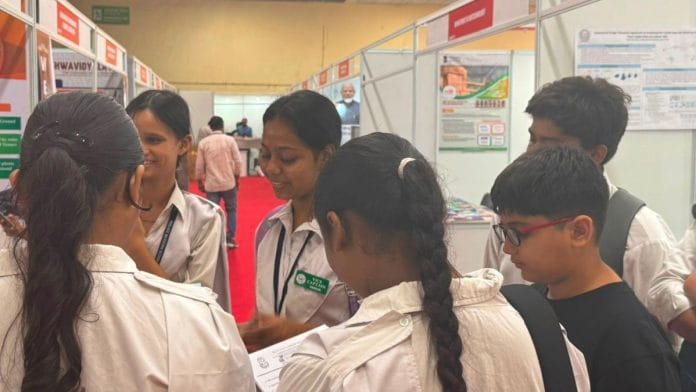


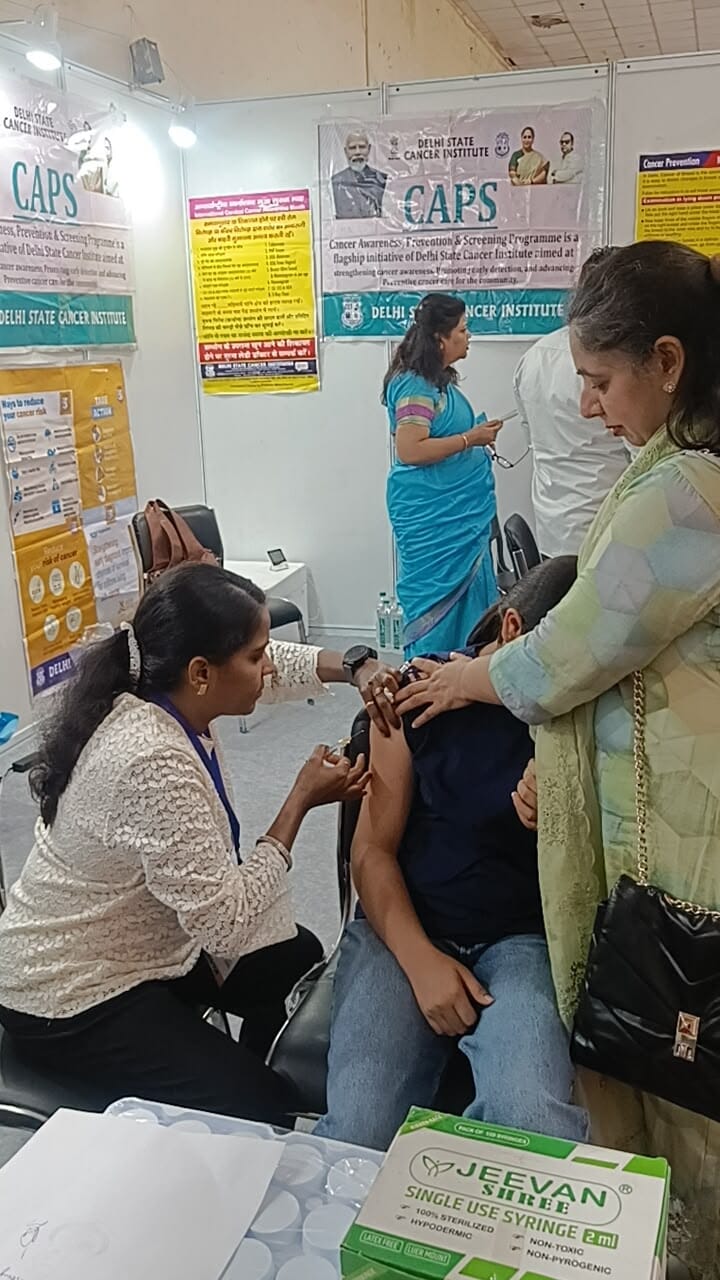
New Delhi: As a nurse swabbed a young girl’s arm and gently administered the Human Papillomavirus (HPV) vaccine, her mother stood beside her, a hand resting reassuringly on her daughter’s shoulder. Around them, doctors answered a steady stream of questions from parents—most not about the injection itself, but about whether it could affect fertility, delay puberty or cause serious side-effects.
Among them was Ghaziabad-based Shelly Dhingra, a healthcare professional who decided not to get her own 13-year-old daughter vaccinated. Her daughter, Kavya, had recently started menstruating.
“She has just got her periods, so I want to avoid any immediate issues in her menstrual health due to the vaccine,” she said. She added that she has heard about side-effects of the vaccine, including mild fever, arm soreness, headache, and dizziness.
By the end of the three-day camp Monday, only 34 of the 200 girls the Delhi State Cancer Institute (DSCI) aimed to vaccinate had received the shot.
For doctors at DSCI, however, the numbers reflect more than a low turnout. They highlight the challenge of converting awareness into acceptance, with hesitation, myths and misinformation about infertility and side-effects continuing to influence parents’ decisions.
The free vaccination drive was organised as part of DSCI’s flagship Cancer Awareness, Prevention and Screening (CAPS) initiative during the Delhi Government Achievements & Schemes Expo 2026 at Bharat Mandapam from 25 to 27 July in New Delhi.
The camp is part of the Centre’s broader effort to expand HPV vaccination across the country. Prime Minister Narendra Modi launched the nationwide programme from Ajmer earlier this year, with the aim of providing free HPV vaccination to around 1.2 crore girls annually through government health facilities.
Human Papillomavirus (HPV) is a common virus spread through sexual contact. Persistent infection with certain high-risk types, particularly HPV-16 and HPV-18, causes nearly all cases of cervical cancer.
According to the Union Health Ministry, cervical cancer is the second most common cancer among Indian women, with more than 1.2 lakh new cases and nearly 80,000 deaths every year. As of 15 July 2026, more than 52.1 lakh girls had been vaccinated in India.
Also Read: HC’s multi-kidney swap verdict bridges legislative gap. What it means for organ transplant in India
‘Every second parent asks about infertility’
Since the vaccine works best before exposure to the virus, the World Health Organization recommends vaccinating girls in early adolescence. More than 500 million HPV vaccine doses have been administered worldwide since 2006. HPV vaccines are part of national immunisation programmes in 160 countries.
In India, the government’s programme uses US drugmaker Merck’s Gardasil vaccine, administered as a single dose to girls aged 14 years. The vaccine protects against four HPV types—6, 11, 16 and 18. While HPV-16 and HPV-18 cause around 70–80 percent of cervical cancer cases, HPV-6 and HPV-11 are responsible for most cases of genital warts.
Alongside the rollout, the health ministry has been running awareness campaigns through radio, posters and digital platforms to counter misinformation surrounding the vaccine.
According to Dr Shukla, the parent’s fears and hesitation still remain the biggest challenges in rolling out the campaign on the ground. “Every second parent who comes to us asks whether this vaccine will affect their daughter’s ability to have children later. That is the most common concern we hear,” she told ThePrint.
She added that there is no scientific evidence linking the HPV vaccine with infertility. But many parents have heard these claims repeatedly through social media or word of mouth, so they understandably want reassurance before making a decision. Dr Shukla said concerns about fever and other temporary side-effects were also common.
“Three days at an exhibition are rarely enough to undo myths that have circulated for years. Awareness is growing, but trust takes longer to build,” she said, suggesting that sustained counselling through schools could help parents make informed decisions before vaccination camps are organised.
Awareness growing slowly
While Dhingra chose to wait, not every parent who visited the stall arrived with doubts. Sandhya Khosla, a lawyer practising at the Delhi High Court, had received the HPV vaccine herself nearly a decade ago after it was recommended by her gynaecologist at a private clinic in Delhi’s Lajpat Nagar, years before India introduced a public vaccination programme.
After hearing about the DSCI camp from a friend, she brought her 11-year-old daughter, Umaira, to the camp and got her vaccinated. “I already knew about the benefits of this vaccination from my own experience, so I made sure my daughter also receives a shot on time,” she said, adding that she has had neither short- nor long-term side-effects of the vaccination.
Doctors at the camp said there is no scientific evidence that the HPV vaccine affects fertility or menstrual health, but concerns around infertility, puberty, menstrual cycles and temporary side-effects were among the most common questions raised during the three-day camp.
Besides offering free HPV vaccination for eligible girls aged 9 to 14, the camp screened for oral, cervical and prostate cancers. “We had 30 oral cancer screenings, 22 cervical cancer screenings, 20 prostate cancer screenings in these three days,” said Dr Akanksha Sinha, senior resident in DSCI’s preventive oncology department.
According to Dr Sinha, the camp revived more than 300 queries about HPV vaccination. “Just like the polio vaccine, awareness of the HPV vaccine will also improve slowly,” she said.
(Edited by Nardeep Singh Dahiya)
Also Read: How close is India to the ‘Zero by 30’ rabies goal?