



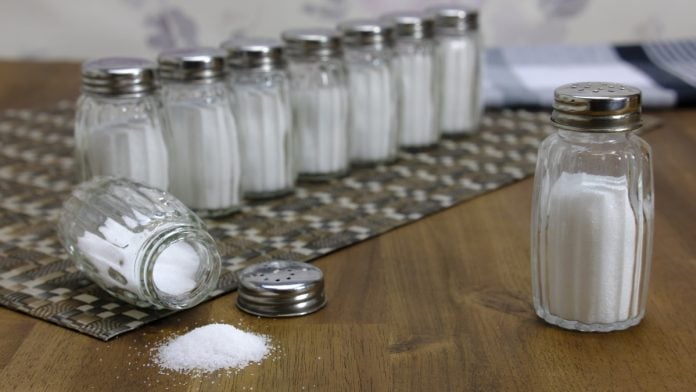
New Delhi: Four decades after India launched the Universal Salt Iodisation (USI) programme, goitre among schoolchildren has fallen sharply, a new nationwide study has found. However, the study also recorded a significant rise in thyroid autoimmunity, a condition in which the immune system mistakenly attacks the thyroid gland.
Published recently in The Lancet Regional Health, Southeast Asia, the study screened 8,903 children aged 10 to 18 across eight regions of India between January 2024 and December 2025. It found that goitre prevalence had fallen from 23.5 percent in 2003 to 17.6 percent in 2012 and 10.3 percent in the latest survey.
Goitre is an enlargement of the thyroid, a small, butterfly-shaped gland in the neck that produces hormones essential for growth, brain development and regulation of the body’s metabolism.
Iodine is an essential nutrient that the thyroid uses to make these hormones. When the body does not get enough iodine, the thyroid has to work harder to produce them and can gradually enlarge, causing goitre. Severe iodine deficiency can also impair brain development, particularly in children and during pregnancy.
This was the rationale for India’s move towards universal salt iodisation in the 1980s—adding a small, controlled amount of iodine to salt so people could obtain the nutrient through their everyday diet. In 1984, the government took a major policy decision to iodise all edible salt in India, with the initiative beginning in phases from 1986. In 1992, it was expanded and renamed the National Iodine Deficiency Disorders Control Programme to cover iodine-deficiency disorders more broadly.
India now produces about 65 lakh metric tonnes of iodised salt annually, enough to meet the country’s needs. Non-iodised common salt is not permitted for direct human consumption under food-safety regulations.
The new study is the first nationwide assessment of iodine nutrition and thyroid health among Indian schoolchildren in more than a decade, according to the authors.
Dr Raman Kumar Marwaha, founder and president of SEHEAC (Society of Endocrine Health Care for Elderly, Adolescents, and Children), New Delhi, and one of the study’s authors, has studied the impact of salt iodisation in India over several decades. He said the reduction in both the prevalence and size of goitres marked a clear change from earlier surveys.
“In the first decade, we recorded about 8 to 10 percent Grade 2 goitre and 90 percent Grade 2 goitre among the participants,” he told ThePrint, referring to earlier nationwide surveys. “Now, in the fourth decade, we hardly saw Grade 2 goitre.”
Grade 2 goitre is an enlargement visible when looking at the neck, while Grade 1 is generally detected only during examination.
“That cosmetic thing which was there earlier that you used to see—big glands—dramatically disappeared,” Marwaha said.
Goitre prevalence varied considerably across the eight study centres, from 7.3 percent in Pune to 12.8 percent in Pondicherry, pointing to regional differences that a single national figure cannot capture.
Also Read: Stop counting protein grams. Look at the whole plate, says physicians forum
How salt iodisation changed the picture
Efforts to tackle iodine deficiency in India began in the 1960s in areas where goitre was particularly common. Marwaha said early work showed that iodine supplementation in deficient regions could dramatically reduce goitre.
After researchers found that iodine deficiency and goitre were not confined to the sub-Himalayan belt but were present across the country, the government introduced the Universal Salt Iodisation programme in 1986.
The aim was to ensure that most people consumed enough iodine through an everyday food item—salt.
Marwaha said the first nationwide assessment he was involved in, conducted around the turn of the century and involving nearly 40,000 schoolchildren across about 23 cities, found goitre in about 23 percent of children. Researchers also found very high urinary iodine levels, suggesting that some children were consuming more iodine than required.
One reason, he said, was that manufacturers deliberately over-iodised salt to offset losses from factors suchs as porous packaging, exposure to sunlight and moisture during transport, open storage at shops and cooking.
“The normal daily requirement is 100 micrograms. So we used to add 30 ppm— 300 micrograms—to cater for the losses,” Marwaha said.
The latest survey suggests that iodine intake is now adequate at the population level. The median urinary iodine concentration was 133.2 micrograms per litre, within the World Health Organization’s range for sufficient iodine intake. Further, more than 90 percent of households reported using iodised salt, while 89 percent of salt samples contained iodine above the required 15 parts per million threshold.
Marwaha said better regulation of salt manufacturers and improved supply chains may also have helped bring iodine levels closer to the desired range.
“When we evaluated this time, the intake of iodine in the salt was now well within normal limits,” he said.
Autoimmunity rises even as goitre falls
The study, however, found another trend.
Subclinical hypothyroidism, a condition in which thyroid-stimulating hormone is elevated but there may be few or no symptoms, was found in 13 percent of children. Anti-thyroid peroxidase (anti-TPO) antibodies, which can indicate thyroid autoimmunity, were present in 10.4 percent of children.
In the adjusted analysis, girls were about twice as likely as boys to test positive for TPO antibodies. Children with goitre were also more than twice as likely to be TPO-positive.
Autoimmunity occurs when the immune system begins reacting against the body’s own tissues. In thyroid autoimmunity, antibodies can target proteins or enzymes associated with the thyroid.
Marwaha said one possible mechanism involves excessive iodine exposure. When thyroid cells are damaged, thyroid proteins such as thyroglobulin and thyroid peroxidase can become exposed to the immune system, potentially triggering antibody formation.
“Excess iodine can cause subclinical hypothyroidism and increased autoimmunity,” he said.
However, the study does not establish that excess iodine is behind the rise in autoimmunity in India.
“One cannot answer whether it is only iodine causing it or there are other things,” he said, pointing to factors including pesticides and other environmental exposures as possible contributors to thyroid dysfunction and autoimmunity.
The researchers caution that the study’s cross-sectional design cannot establish cause and effect. They have called for longitudinal studies to determine whether children with thyroid autoimmunity go on to develop permanent thyroid disease.
Marwaha said it is too early to know what the increase in thyroid antibodies will mean for these children over the long term.
The findings do not suggest that India should move away from salt iodisation, Marwaha said. He added that the programme has prevented the serious consequences of iodine deficiency, particularly during pregnancy and childhood. “If you stop this programme, you will again have the same problems of cretinism and low IQ levels,” he said.
He also stressed the importance of monitoring because iodine levels can vary between manufacturers and households. Iodine can be lost from salt during storage and cooking, particularly when it is exposed to heat, moisture or open air. This makes the amount of iodine added during manufacturing, as well as how salt is transported and stored, important.
Marwaha said better packaging and supply chains have reduced some of these losses, but monitoring remains necessary because iodine levels can still vary between manufacturers and households.
The researchers said the universal salt iodisation initiative should continue with quality-control measures and called for periodic nationwide surveys to calibrate iodisation levels and track the rising rates of thyroid autoimmunity.
(Edited by Chingkheinganbi Mayengbam)