







Tawang (Arunachal Pradesh): A museum in Arunachal Pradesh’s Tawang is collecting and displaying history one household at a time. Inside the Major Ralengnao Bob Khathing Museum of Valour, the archive is curated by residents who bring in pieces of their everyday lives from now and then: baskets used to carry grain, butter churns worn smooth with years of use, farming tools, and clothing folded away for decades. Together, these objects tell the story of the indigenous Monpa tribe as passed down through generations.
The museum, still in a collecting mode, is doing two things at once: it is archiving Tawang as both Monpa memory and Indian frontier story.
Inaugurated virtually on 31 October 2024 by Defence Minister Rajnath Singh, the timing coincided with India and China announcing progress on disengagement in some friction points along the Line of Actual Control. Tawang, long claimed by Beijing as part of ‘South Tibet’, remains among the most sensitive sectors in the eastern Himalayas. It came into the spotlight as an active strategic faultline in December 2022 when Indian and Chinese troops clashed in the Yangtse region — near the Monpa-revered Chumi Gyatse Falls—in what was the most serious confrontation in the eastern sector since the 2020 Galwan clashes.
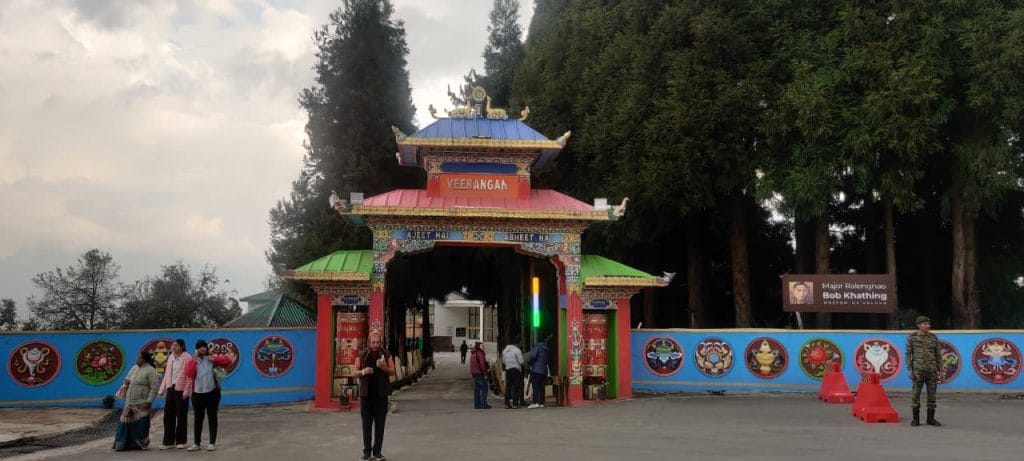
In his inauguration speech, Singh stressed the Northeast’s central role in national identity. He said the museum and a statue of Sardar Vallabhbhai Patel unveiled in Tawang the same day were both symbols of “unity and strength” within a broader project to strengthen border regions.
“Our aim will be to take the matter beyond disengagement, but for that, we will have to wait a little longer…We will create such a Northeast that is strong and prosperous not only naturally and culturally but also economically,” he added.
The museum now functions as part of this national storytelling of a borderland, foregrounding war, strategy, as well as local participation.
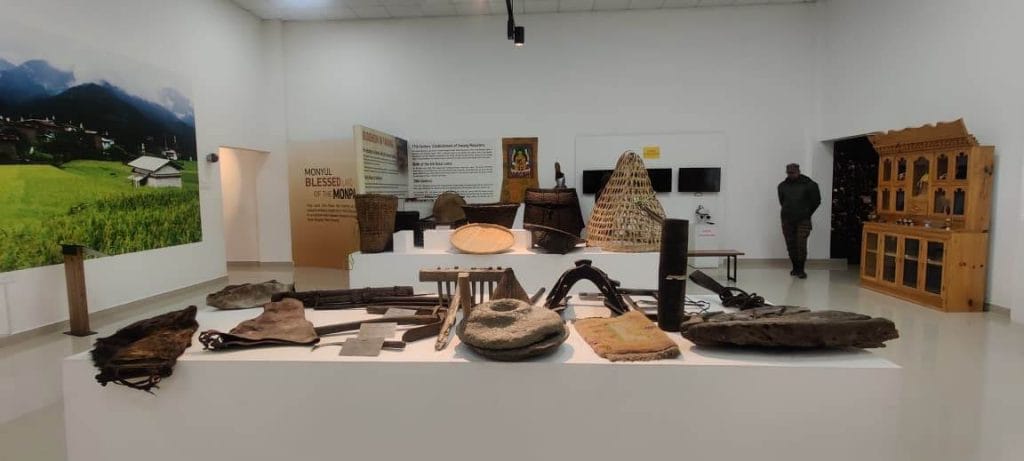
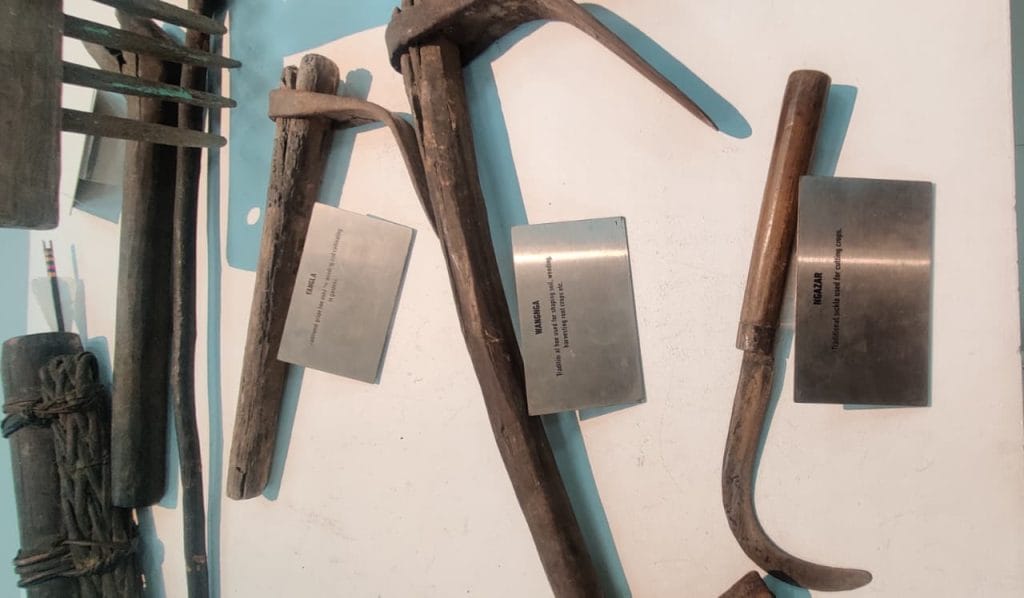
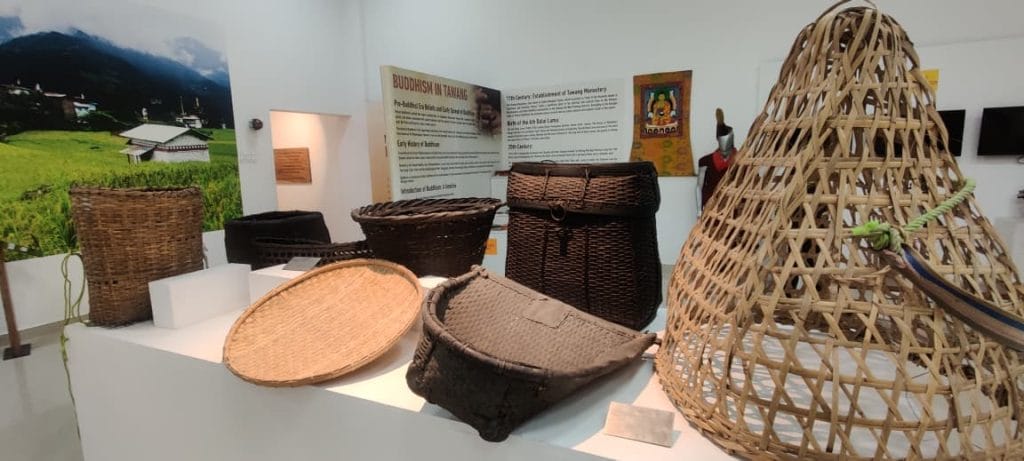
A long central display table at the museum holds an assortment of bamboo baskets in different weaves and sizes, darkened with age; squat wooden vessels; and tools used in farming and daily life. At one end, a heavy, fur-lined chest sits beside a plainer wooden box, both scarred by time.
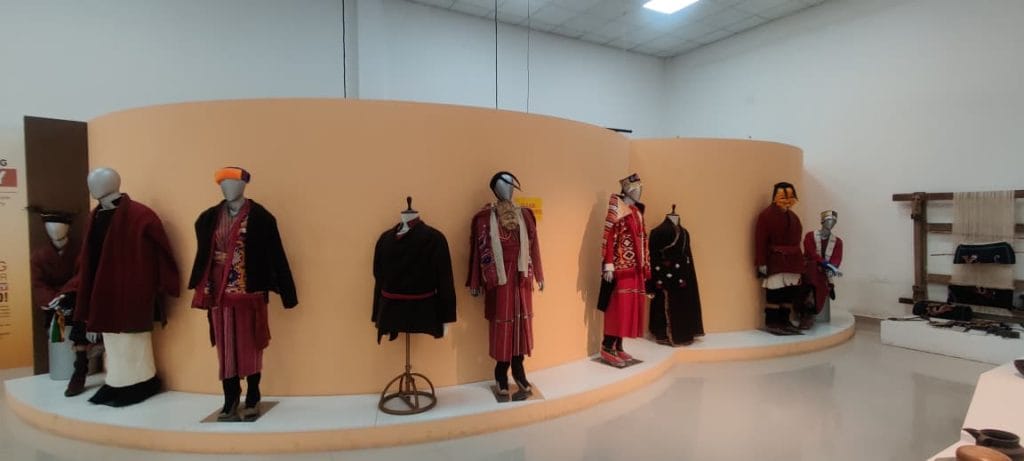
Along a curved wall, mannequins stand dressed in layered Monpa attire — deep reds, blacks, textured wraps, headgear. Nearby, glass cases hold implements of labour: agricultural tools, carrying frames, ropes, metal fixtures that speak of a life shaped by terrain and survival.
The message is explicit, printed on a panel that doubles as an appeal: Tawang needs your story to be told.
Also Read: Inside a night walkthrough at Delhi’s National Museum—ghosts, Buddha, and Mughal paintings
The museum and the man at its centre
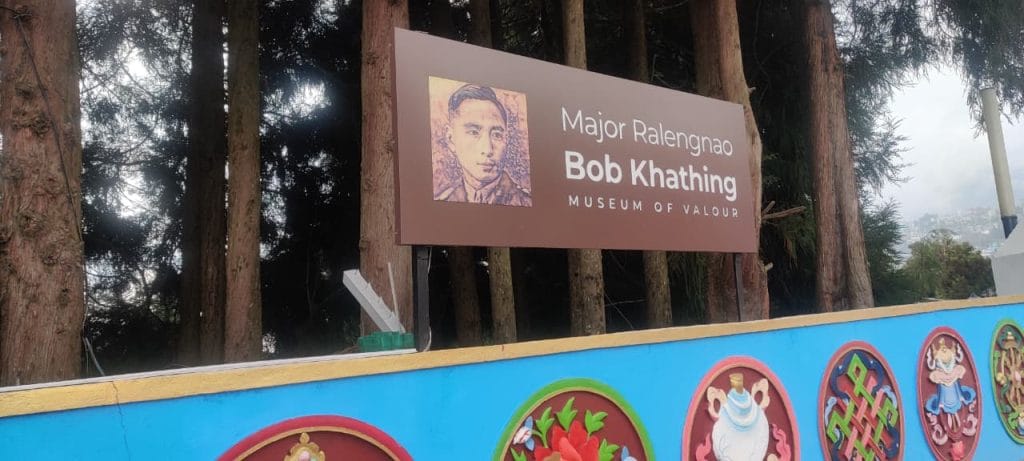
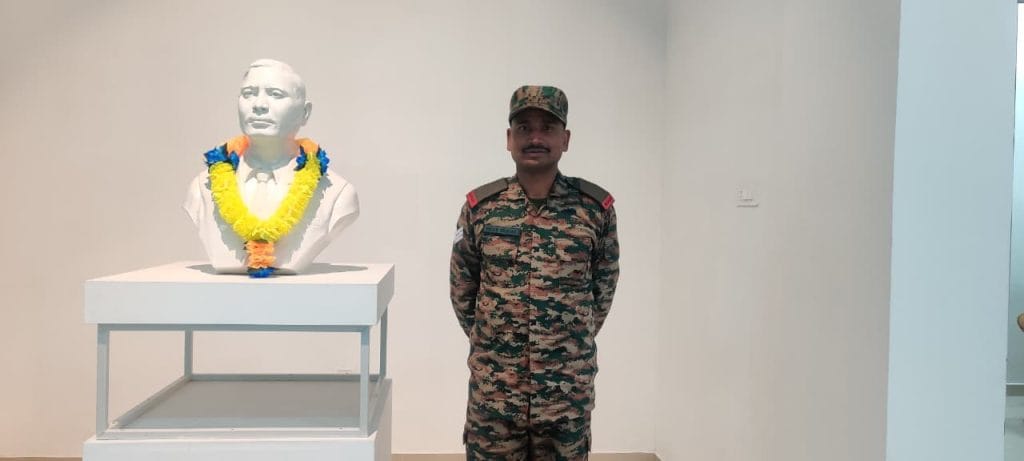
The museum is named after Major Ralengnao ‘Bob’ Khathing, a soldier, administrator, and the man credited with bringing Tawang under Indian administration in 1951.
By then, Khathing was already a decorated officer. Born in 1912 in Manipur’s Ukhrul district, he had served in World War II, earning the Military Cross for his role in organising local support against Japanese forces and leading guerrilla-style operations. He later joined the Indian Frontier Administrative Service.
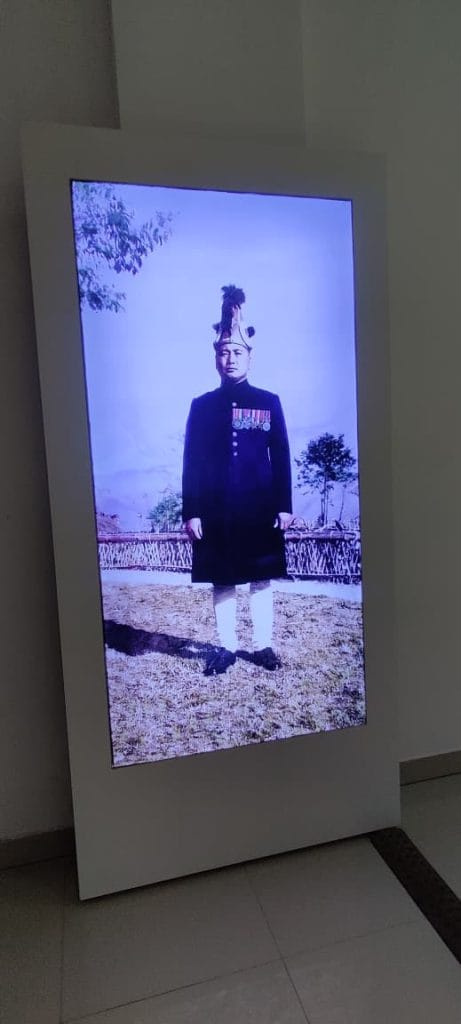
In January 1951, he was tasked with securing Tawang at a time when geopolitical anxieties around Tibet, then under Chinese control, were mounting. Starting from Assam with Assam Rifles troops, the Tangkhul Naga commander led an expedition through difficult terrain and extreme weather, reaching Tawang weeks later.
What followed was not a conventional military operation. He engaged with local communities, held parleys, and established an administrative set-up by appointing gaon buras (village elders) in each village. On 14 February, 1951, he planted the Indian flag in Tawang. The date is now commemorated annually in his memory, not just as Valentine’s Day in the town.
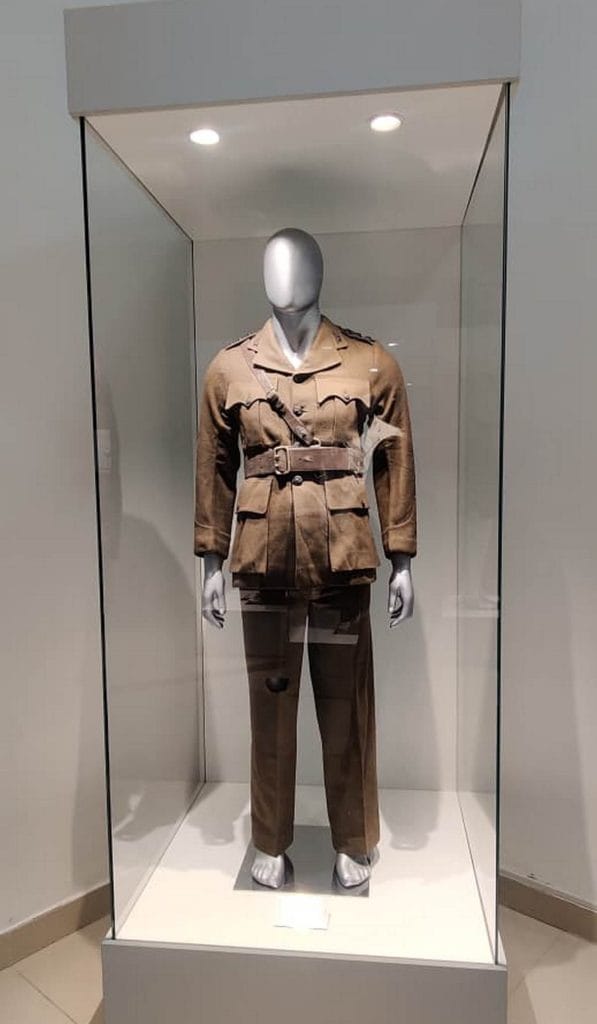
The museum reconstructs this era through maps, archival photographs, and displays of Khathing’s life — including replicas of his many medals, his uniform, and even guns.
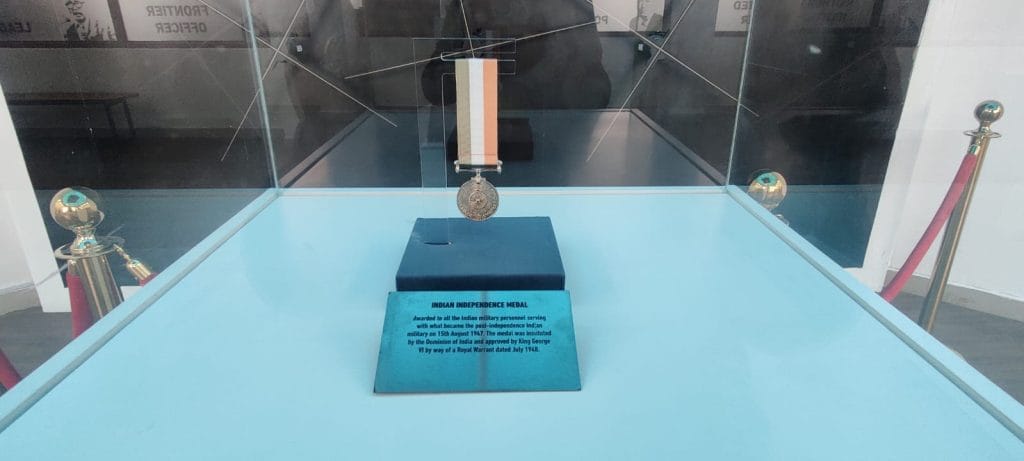
Six galleries, one story
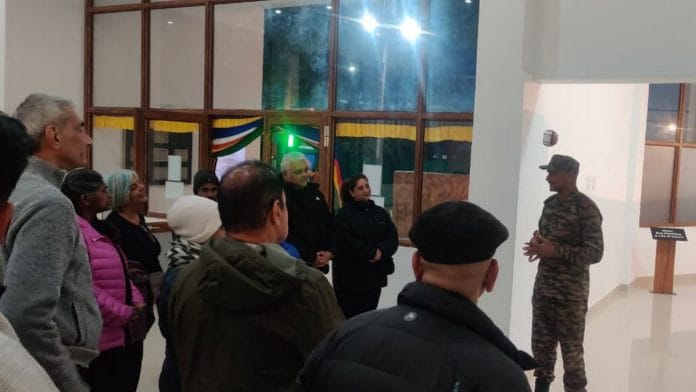
At the entrance, visitors are received by Army personnel who conduct guided tours in small groups through the museum. Havildar Dipak Prasad, 43, leads dozens of visitors from one gallery to the next, explaining the displays, pausing at key sections, and connecting objects to the sweep of history.
He has a script ready; he has memorised everything about the memorial and museum since arriving at the military compound three months ago.
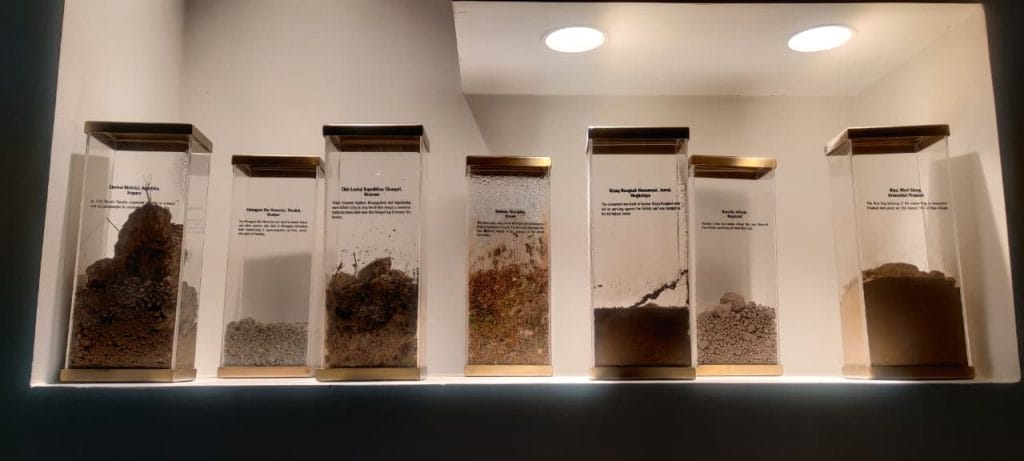
At the very start, visitors encounter an installation of soil collected from across India. The soil was transported by bikers who travelled for nearly a month, covering over 12,000 kilometres across multiple states, to deliver it in time for the museum’s inauguration. Soil from other states was added later.
The installation serves as a symbolic tribute to soldiers and freedom fighters, connecting Tawang — a remote, high-altitude border town — to the rest of the country through a shared element: India’s soil.
The museum is organised into six distinct galleries that move between biography, history, war, and culture.
The first focuses on Major Khathing’s life, from his early years to his military service to his administrative role in the Northeast. The second, titled ‘The Taking of Tawang, 1951,’ details the expedition routes and the process of the region’s integration into India. The third gallery turns to the 1962 India-China war, documenting soldiers killed in action and the war’s events in the region.
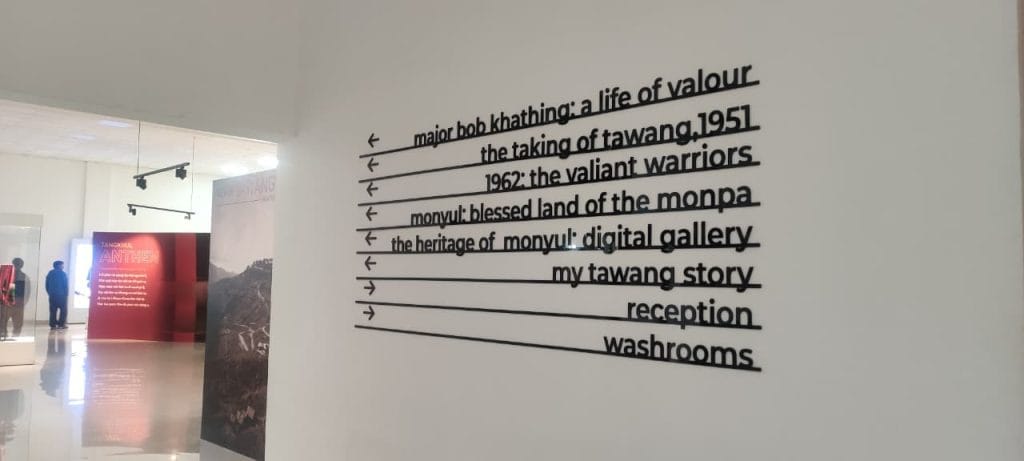
The fourth shifts away from war, focusing on the Monpa community, presenting their traditions, lifestyle, and cultural practices through digital displays. This section contains all the contributions from local residents to the museum. A final section, ‘My Tawang Story’, brings together personal accounts that offer a more localised perspective on daily life in the region.
Before the museum, before the state
The name ‘Tawang’ itself carries a story. The mountainous land was once known as Monyul — the land of the Monpas, an indigenous tribe that has lived in the region for centuries.
Lore has it that the name ‘Tawang’ was born from an incident involving Buddhist lama Lodre Gyatso whose horse wandered off and was later found at the site where the 17th century Tawang Monastery — India’s oldest and largest — now stands. In Tibetan, ‘Ta’ means horse and ‘Wang’ means the place where the horse chose to rest.
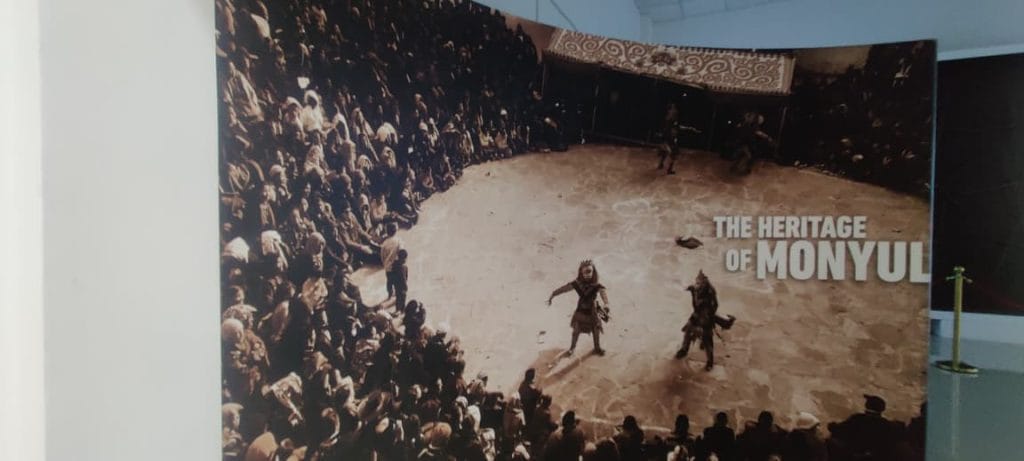
The Monpas are a predominantly Buddhist tribal community spread across western Arunachal Pradesh, with cultural and historical links to Tibet and Bhutan. Monasteries anchor their spiritual and community life. Their lives follow the rhythms of high-altitude agriculture—such as farming red rice and yak herding— along with craft traditions such as woodwork, bamboo and cane products, thangka painting, and carpet weaving.
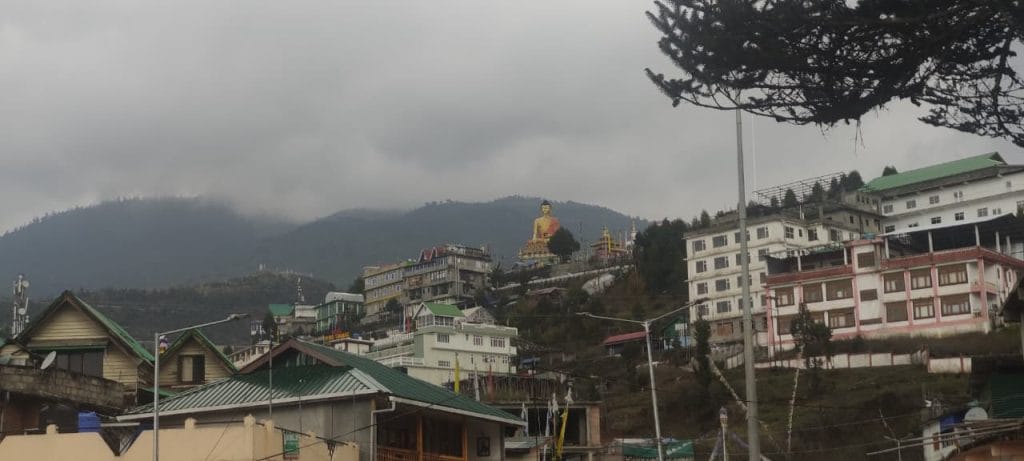
They also make dairy products such as butter and churpi (hardened cheese), while yak hair and wool are used in weaving. The tools and artefacts of their daily life are now preserved in the museum.
Beyond their heritage, the community’s history is also defined by their support for Indian soldiers during the 1962 war. Many lost their lives and have been commemorated at the war memorial outside.
War, and what remains
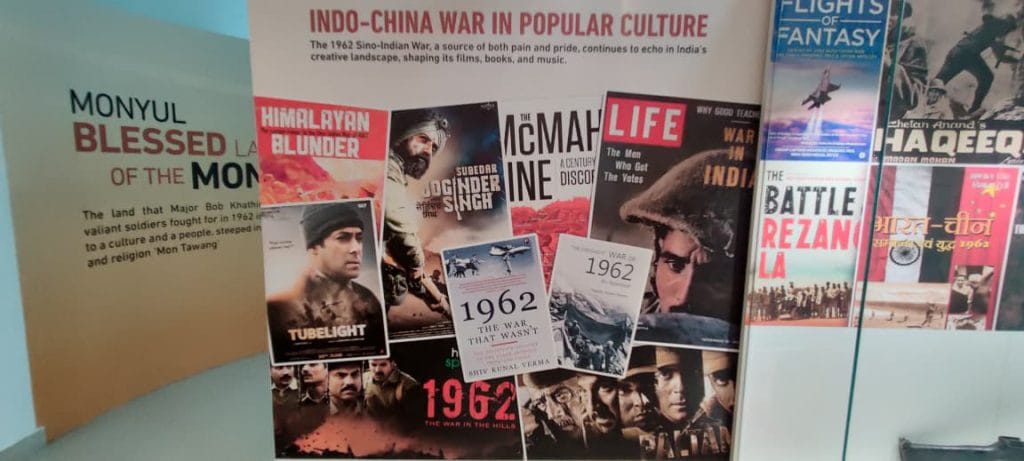
Further along, the museum moves into more recent history: the 1962 India-China war. Panels reference the war’s afterlife — how it is depicted in books and films in the present day. Covers and posters of films such as Salman Khan’s Tubelight line a section of the wall.
But the weight of that history is felt more acutely outside.
Just beyond the museum stands a war memorial, built in 1999, to honour soldiers who lost their lives in the war. A total of 2,420 personnel are commemorated here, including 80 officers, junior commissioned officers, and over 2,200 soldiers.
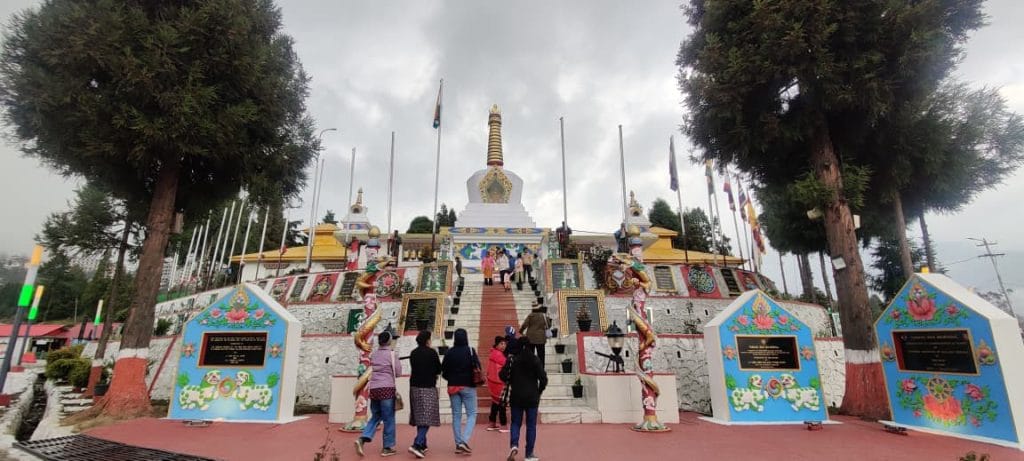
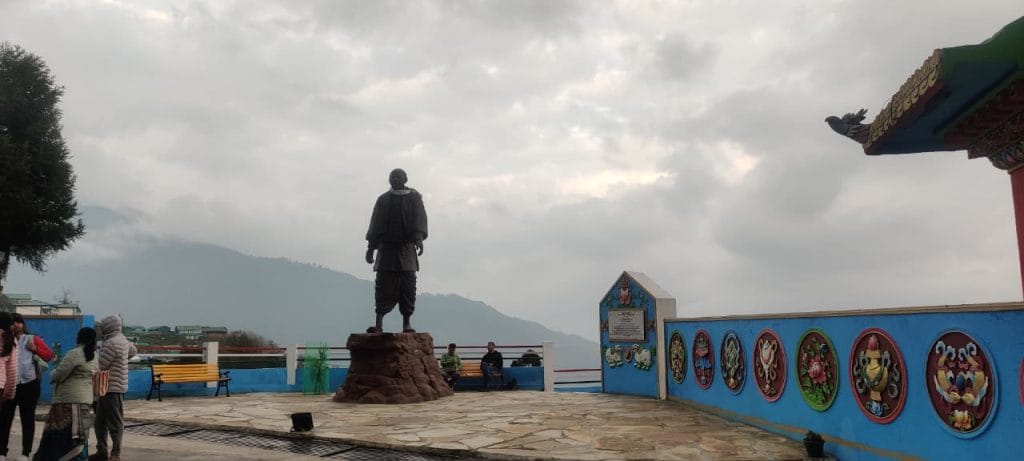
The statue of Vallabhbhai Patel stands on the cliff right outside both the memorial and museum, intended to depict India’s unity even in its farthest points.
The memorial’s design draws from the shared cultural vein of the Himalayan region — Nepal, Bhutan, and Tibet. Names of martyrs are inscribed in gold. Monks from nearby monasteries conduct daily prayers every morning.
Army officials stand guard outside the memorial and museum, a flag is hoisted in the evening and two torches are lit every day.
Inside, the war is narrated; outside it is memorialised.
Also Read: Mahishasura Mardini in Ghazni: Humayun’s Tomb museum exhibition offers unsafe truths
An archive still being made
What sets this museum apart is not just what it shows, but how it grows. Residents have become participants in documenting their own history.
The contributions from local residents are not a one-time exercise. The invitation remains open and the archive continues to expand, shaped by what people choose to give up, and what they choose to remember.
“Some of the recent contributions we received are too new, so a few of them didn’t make it to the final display. But contributions keep coming in,” Pema Yuton, a guide at the museum said.
In Tawang, the archive is not complete. It is still arriving.
(Edited by Asavari Singh)