








Bhopal/Indore/Vidisha/Raipur/Tulsi: Tikeshwar Verma’s phone doesn’t stop ringing on his way to work. Customers from Maharashtra to Chhattisgarh want to know about electric vehicles and lithium batteries. But it isn’t the 24-year-old’s hole-in-the-wall repair shop ‘TikTechEV’ in a small Chhattisgarh village that’s driving the business. It’s the shop’s namesake YouTube channel.
The young man began posting videos of battery and EV repairs in late 2024. They were a hit, and soon catapulted him to a pay-grade at least twice of his peers working long shifts in the cement and power plants near their village.
Tulsi, a village about 50 km from Raipur, was dubbed India’s “YouTube capital” in 2023 by the media. The small outpost with partially paved roads was held up as a model of rural digital aspiration, where nearly a quarter of its 4,000 residents forayed into content creation dazzled by the YouTube boom in 2018. Tikeshwar was one of them.
Today, that buzz is gone from Tulsi. At India’s ground zero of content creation, the dream lies dead.
A Rs 25-lakh content studio installed by then-Raipur collector Sarveshwar Bhure in 2023, now doubles up as a decrepit panchayat office. Most creators have logged off, returning to farms, factories, or unemployment. The collapse, people say, came from falling views, internal rifts, and an inability to adapt to short-form video.
In 2010, academic Craig Jeffrey wrote a seminal book on the great Indian youth ‘timepass’ endemic. ‘Timepass: Youth, Class, and the Politics of Waiting in India’ chronicled how the youth plagued by unemployment killed hours by waiting at teashops, loitering around college campuses and village culverts even after graduating.
Not much has changed since. The “timepass generation” has now given way to a youth who now film, edit and upload the wait, clinging to the fragile hope of earning big money in the ephemeral and overcrowded world of likes and virality.
For a generation staring at shrinking job opportunities, content creation has emerged as both aspiration and fallback. Across small towns and cities, Gen Z is turning to Instagram, YouTube and short-form content for work, often a primary source of income. Cheap data, smartphones and easy-to-use editing tools have made entry effortless, even as stable employment, particularly for graduates, remains scarce. The result is a cohort that is simultaneously underemployed and hyperconnected, chasing visibility in the hope that it can be converted into money, fame, and independence — though, for most, like in Tulsi, that promise remains uncertain.
Pop-culture commentator and writer Anurag Minus Verma likens this moment to the BPO boom of the early 2000s — an entry point shaped as much by aspiration as by opportunity.
“This aspiration is what people’s favourite content creators are selling,” he said, pointing to how displays of wealth and lifestyle by creators drive similar ambitions. “Carryminati or Anubhav Singh Bassi put up photos of expensive cars. So especially in smaller towns, this idea of aspiration is a big motivating factor.”
This precariousness is visible to recruiters as well. Tarun, an Indore-based hiring consultant, said 60 to 70 per cent of Gen Z applicants now come with some form of content creation experience.
“But I still tell them to take a BPO job,” he said. “It pays Rs 15,000-20,000, there’s no glamour, but it’s stable.” Even those jobs, he added, are becoming harder to secure.
College students, he says, still keep trying their luck in content even if they pick up BPO jobs. “They look up to creators like comedians Zakir Khan and Aditya Kulshreshth from cities like Indore and Bhopal, and think they should also try their luck.”
Tulsi’s rise — and fall
Tulsi’s YouTube boom began in 2018, when locals Jai Verma, a Chemistry tutor and his friend Gyanendra Shukla, then with the SBI, launched a comedy channel on YouTube called ‘Being Chhattisgarhiya’.
They made comedy skits that ranged from village life, exams, parodies of Sony’s popular show CID, and other sketch videos inspired by YouTube successes like The Viral Fever (TVF). Locals acted in the videos, and success snowballed. With nearly 1.28 lakh subscribers and over 2.78 crore views, the channel was a hit.
At its peak in 2024, over 40 channels operated from the village. The most
well-known channels included ‘36 Garhiya’, ‘Alwa Jalwa’, ‘Fun Tapri’, and ‘Gold CG04’, known for their sketch videos and local music. Over a dozen earned through advertisements and brand deals. For a brief period, content creation seemed like a viable rural economy.
Then the views dropped. Money earned through brand collaborations vanished. ‘Being Chhattigarhiya’ also lies stagnant.
“Our biggest mistake was our inability to switch to Reels and short-form,” said Jai, 33, now unemployed after a stint with the Election Commission. “Gradually, we stopped getting content ideas and even the villagers slowly lost interest.”
Others followed similar trajectories. Co-founder Shukla now works factory shifts. Villagers who once acted in videos have returned to fields and daily wage work. What was once a digital gold rush has thinned into memory.
Yet the idea hasn’t disappeared entirely in Tulsi, it has just evolved.
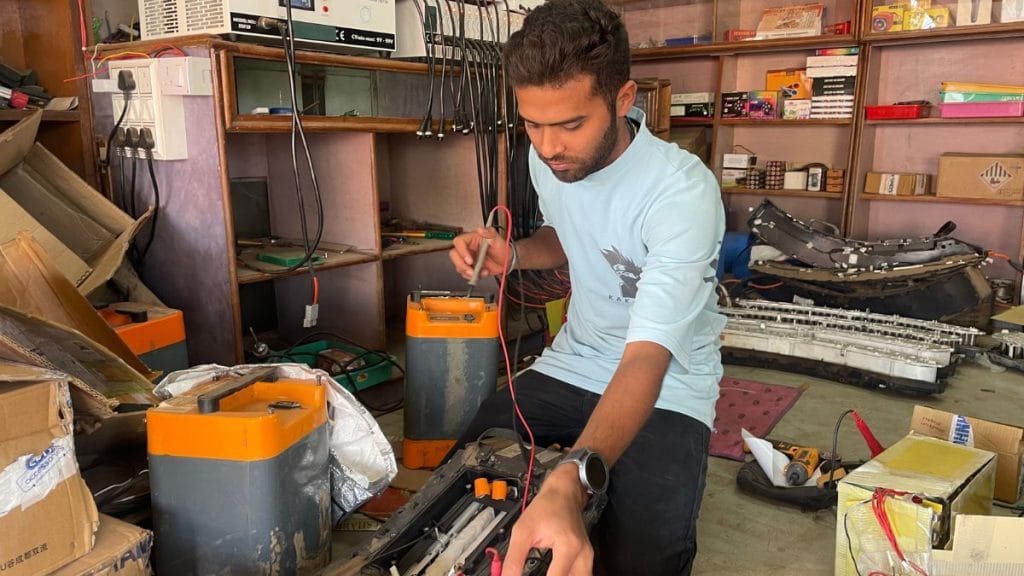
Tikeshwar Verma is that unlikely success story. Thanks to the videos, business is booming and unlike earlier creators chasing virality, his YouTube channel is an extension of his trade.
“I earn around Rs 35,000 a month, sometimes even a lakh,” a sheepish Tikeshwar, reluctant to divulge the minutiae of his earnings.
The numbers behind the boom
The scale of India’s creator surge is staggering — and uneven. According to YouTube’s 2024 Culture and Trends report, 65 per cent of Gen Z across the world identified as content creators. In India, the number is a whopping 83 per cent. Social media platforms promoted short-form formats like Instagram Reels and YouTube Shorts, making it easy to film and publish content in minutes.
But this explosion is unfolding alongside a worsening job crisis. The unemployment rate amongst college graduates in India is as high as 29.1 per cent, according to a 2024 report by the International Labour Organization (ILO). In a March 2026 report, the Azim Premji University found that as of this year, nearly 40 per cent of graduates between 15 to 25 and 20 per cent of those aged 25 to 29 were unemployed.
This led to spike in screen time. A 2025 Ernst & Young report found that Indians spend an average of five hours a day on their smartphones, up sharply from 3.3 hours a day in 2023.
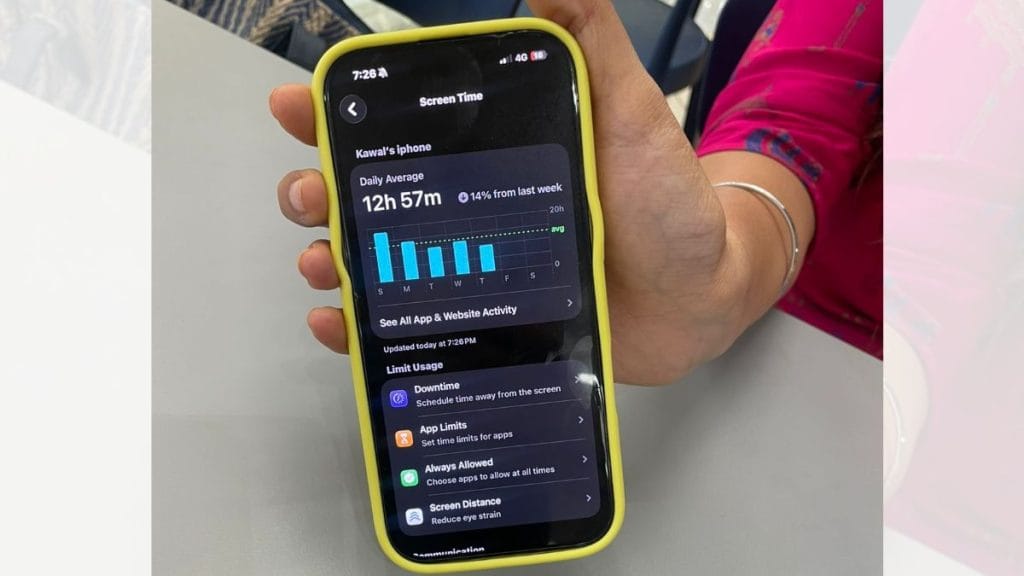
The overlap is not incidental. As opportunities shrink offline, time and ambition are increasingly redirected online. Even Prime Minister Narendra Modi has publicly framed digital content as income opportunities enabled by cheap data.
Policy, too, is catching up. The Union Budget 2026 proposed Rs 250 crore for “content creator labs”. From Bhopal to Bathinda, the promise is seductive: brand deals, sponsorships, ad revenue, and visibility. Young people are now filming everything — from dancing in town chowks, to walks in parks, to kitchen conversations and deadlifts at the gym — turning the mundane into monetisable content.
But not everyone is making money from it. That is still a chimera.
Bloomberg columnist Andy Mukherjee noted that young Indians are borrowing from China’s “lying flat” movement as opportunities shrink and a growing number of 20-somethings choose to opt out of the conventional job-market and rat race altogether.
“The so-called creator economy is basically the commercialisation of timepass — with active encouragement of the state,” he wrote in 2025.
The small-town creators boom
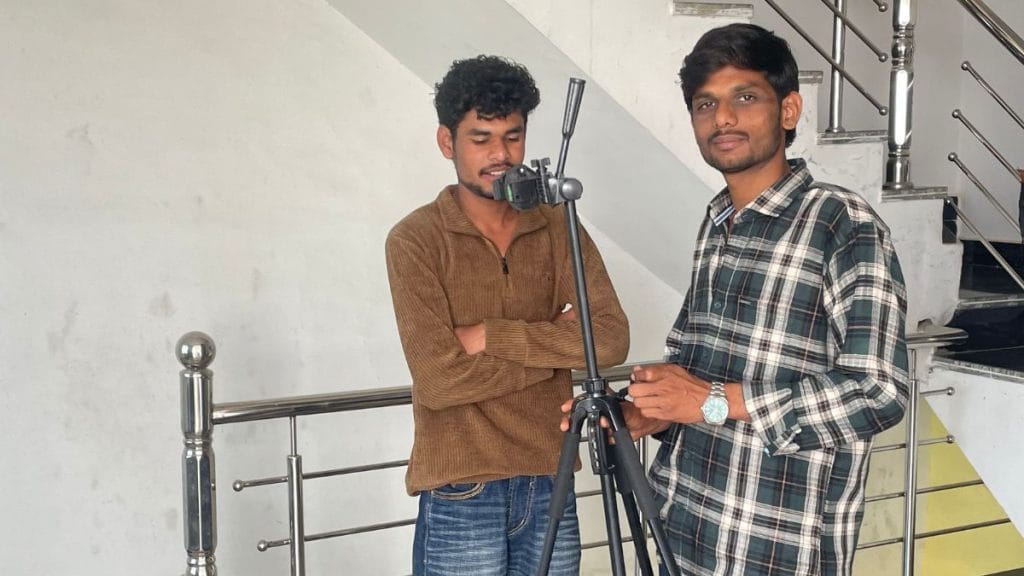
Nearly 600 km from Tulsi, in Vidisha, Madhya Pradesh, 29-year-old Vijay Bairagi’s day begins with planning shots for an Instagram Reel that could decide his week’s earnings.
He was directing two college students — one pursuing BTech, the other BBA — on camera angles and locations. Neither is formally trained. Both learnt editing on apps like InShot and Premiere Pro, hoping these gigs might pay better than entry-level jobs.
Vijay’s own path to content creation was accidental. He quit his job as a security supervisor in 2019 to open a fast-food outlet. The pandemic shut it down. What remained was his phone and an Instagram page he had started to share Covid alerts for oxygen and blood.
“So many people started following, so I made a separate Instagram page for updates on Vidisha,” he said. That page, ‘Vidisha Shahar’, now doubles up as a local advertising platform. Shops, clinics, restaurants and tutors pay him to feature in short videos.
“When DMart opened here and wanted people to come, we made a reel. We’ve collaborated with DMart, coffee shops, local wedding photographers and more. I have over 1.3 lakh followers now,” he said excitedly.
“A Reel gets me around Rs 5,000 to Rs 8,000,” he said.
The work is steady, but not predictable. Some weeks bring multiple collaborations; others pass without a single call. He tracks local trends, negotiates with clients, shoots, edits, uploads and waits for the algorithm to do its part.
At home, the stakes are visible. His widowed mother, once the sole earner, bought him his first iPhone to support this pivot. His sister now makes “timepass Reels”. An aunt has joined in too, gaining thousands of followers after a few viral skits.
The household has reorganised itself around a new kind of work — one that did not exist a few years ago, and still carries no guarantees.
That uncertainty runs through others in his circle.
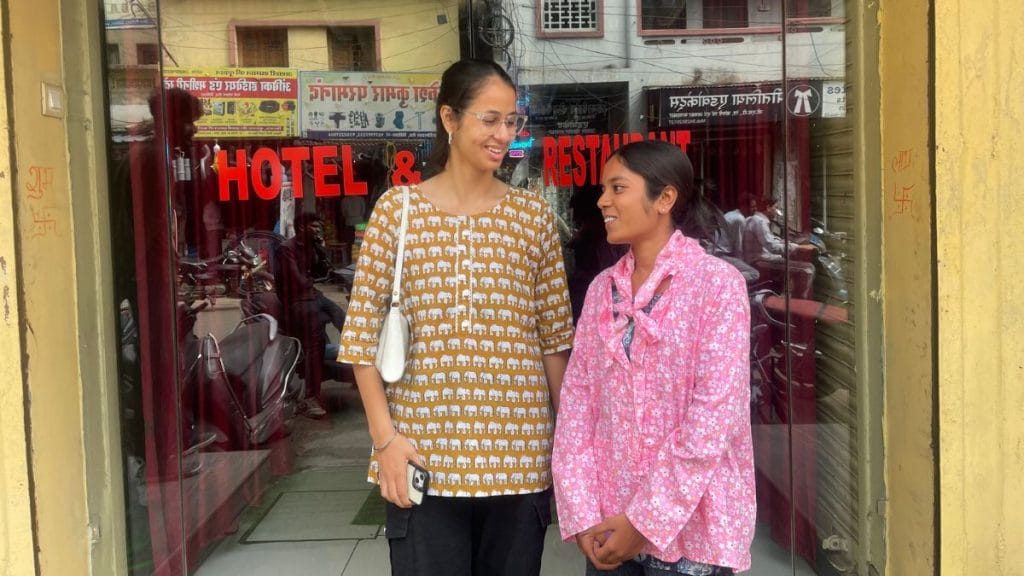
Vijay’s friend Ashmeet Kaur Sethi, 23, turned to content creation after failing her CA foundation exam in 2021. She cleared it the following year, but didn’t return to the track.
By then, her food vlogging page ‘Cravings 24 Seven’ had begun to take off.
“I had started receiving so much love from people, that I lost interest in becoming a CA,” she said.
Her parents were initially hesitant with the career pivot but that changed as brand collaborations came in and Ashmeet’s earnings stabilised.
“There was nobody from a small town like Vidisha who was reviewing food and interesting places to eat here,” she said. “I managed to grow because I had a hyper-local feel and a deeply invested local audience.”
She now charges Rs 6,000 to 8,000 per Reel, sometimes making Rs 1 lakh in a good month.
But even she has a fallback plan. Ashmeet is now pursuing an MBA alongside her content creation.
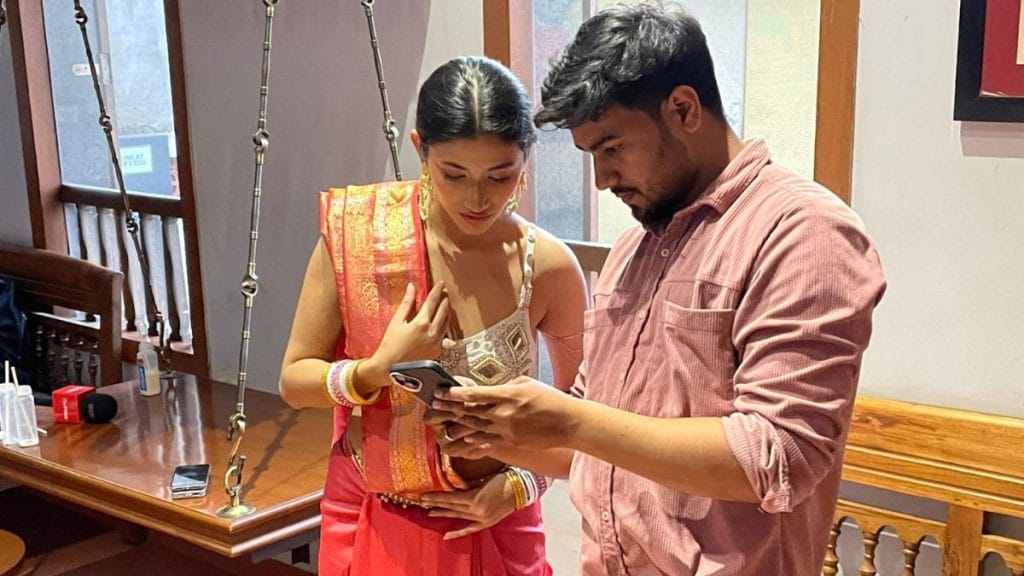
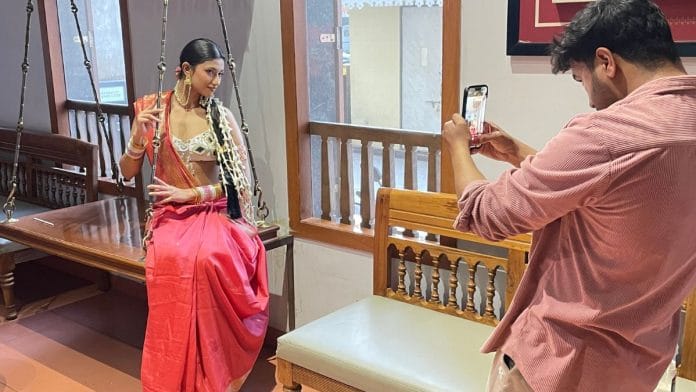
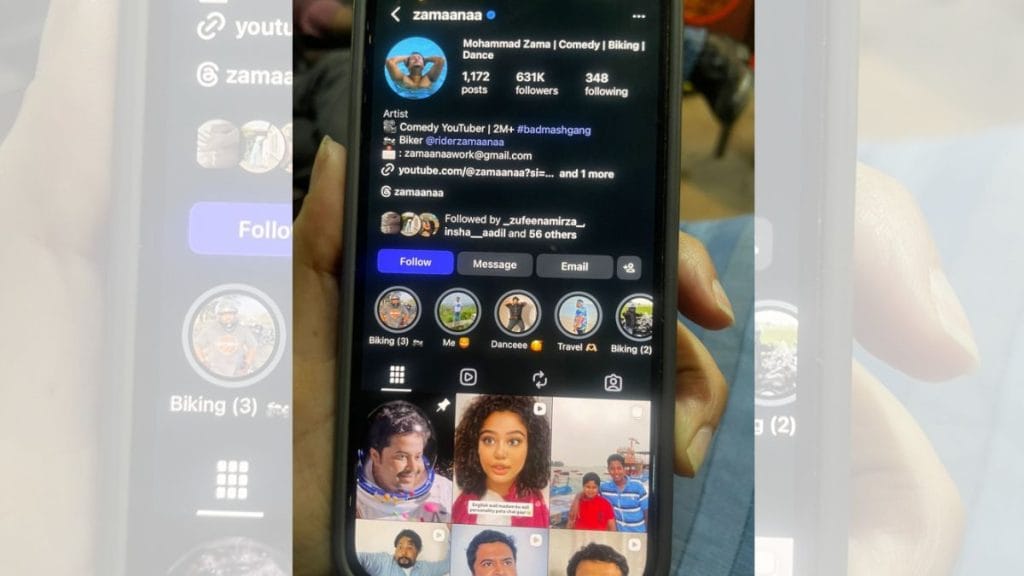
But for Raipur resident and beauty content creator Pratibha Sahu, 20, there are no back up plans. In just a year, she has garnered over 54,000 Instagram followers and knows the key to virality: Pinterest girlie and brainrot content.
Her posts are not hyperlocal; she describes her “aesthetic” as a SoBo (South Bombay) girl.
“Cosmopolitan content is what makes my videos work,” Pratibha said while at a ‘concept photoshoot’ at a local south Indian restaurant.
She has a BSc degree but her real interest lies in content. The dream, she says, is Mumbai and she has no plans to pivot.
A parallel industry
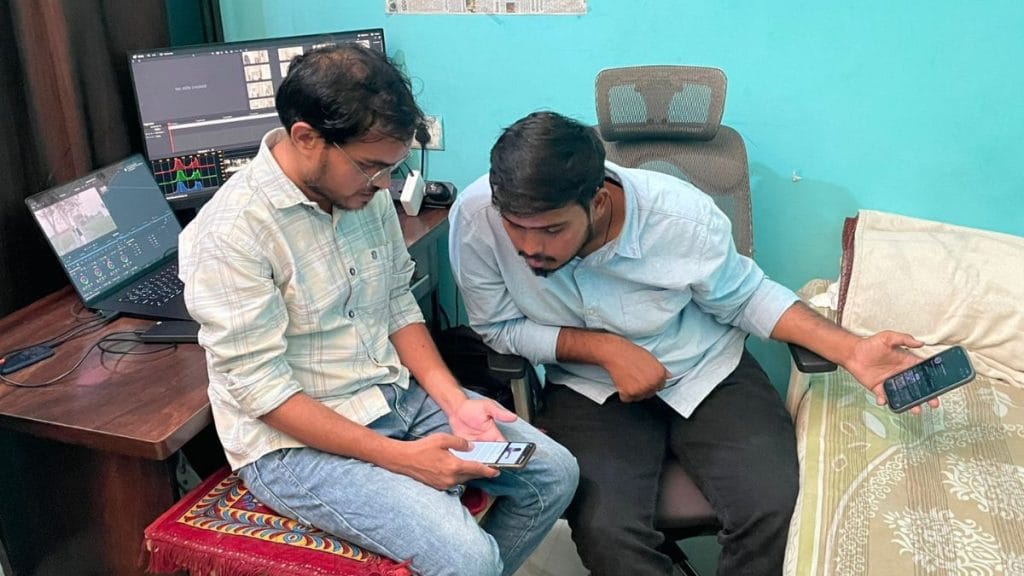
What has emerged alongside creators like Vijay and Ashmeet is a small but expanding ecosystem of gig work — editors, camera operators, script helpers — most of them self-taught, almost all of them young.
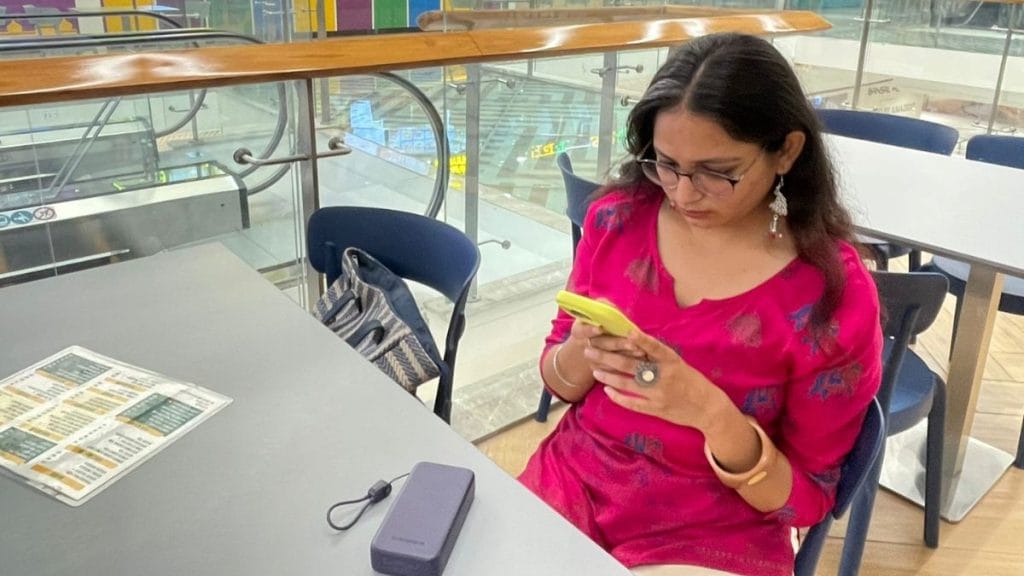
In Bhopal, 20-something Kawalpreet Kaur Kalsi — with a BCom degree and few promising job options — began posting food videos. Like her friend Ashmeet, brand collaborations now bring in significantly more than the Rs 15,000 to 20,000 she once earned in sales roles.
But her work depends on others as well: two young editors from rural Rajasthan who handle filming and post-production.
“It’s creating a parallel industry of people who may not be professionally trained, but self-taught,” Kalsi said.
In Vidisha, college students who spend their mornings in BTech or BCom classrooms often spend evenings shooting reels or editing footage for local influencers. The skills come from YouTube tutorials; the work comes through informal networks.
“A student who knows basic editing can make Rs 1,500 to 2,000 per reel,” Ashmeet said. She now maintains a roster of freelancers she can call depending on the project.
The work is irregular but accessible. It requires no formal training, no degree, and very little upfront investment beyond a smartphone or laptop. For many, it becomes a first taste of earning — quicker, and sometimes more rewarding, than campus placements that may never arrive.
India today has approximately 850 million internet users, four million of whom identify as creators or ‘influencers’. Even if only a fraction earn meaningfully, they generate demand for a wider chain of services turning content into a fragmented, gig-based industry.
That chain, however, remains informal and fragile. There are no contracts, no fixed salaries, and no guarantees of continuity. Work flows with trends, followers and algorithms.
The algorithm economy and its limits
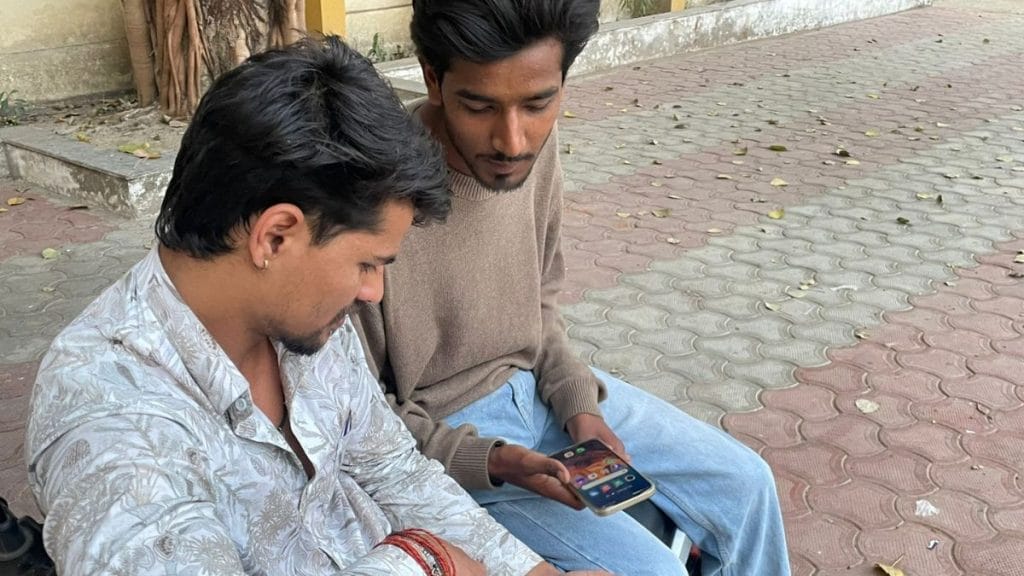
For all its visible churn, the creator economy remains sharply unequal. Only a small fraction of India’s millions of creators earn consistently; most remain “nano-creators”— posting consistently, chasing reach, but earning little to nothing.
The endgame many imagine is the leap made by creators like Kusha Kapila or Dolly Singh — from Reels to real businesses — but that jump is rare.
Incomes vary wildly. According to influencer-marketing platform Kofluence, creators with a few thousand followers may earn as little as Rs 500 to Rs 5,000 per post, while top-tier influencers with a million followers, command an upwards of Rs 2 lakh. For smaller-town creators like those in Vidisha and Tulsi, earnings tend to fall on the lower end and fluctuate with every dip in engagement.
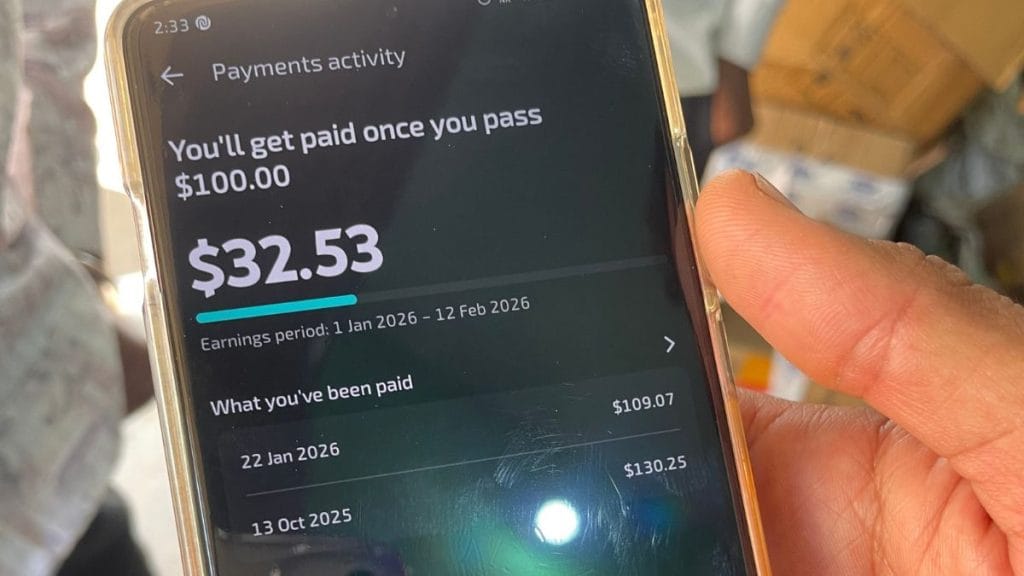
Platforms themselves offer uneven incentives. While YouTube allows monetisation through ads and memberships, Instagram — the default platform for many — relies almost entirely on brand deals.
Despite the instability, Indore-based career counsellor Vibha Gandhi, who sees dozens of students each month, said a growing number — especially in the 16 to 25 age group — now view content creation as a primary career option.
“They’re tired of the grind,” she said. “But unless you offer something different, this isn’t sustainable. You need to have a Plan B.”
Even those who succeed hedge their bets. A backup plan, side ventures, or parallel gigs are constant for many.
Entrepreneur Akshay Hunka, who founded the ‘Berozgaar Sena’ in Madhya Pradesh, points to a bigger problem: lack of reliable employment data and limited policy delivery like the Mukhyamantri Rozgar Yojana. Based on his campaign work ahead of the 2023 state elections, he estimates that “at least 70 per cent” of the state’s youth remains unemployed, pushing many towards stopgap options like content creation.
“People want stability. What percent of people can actually strike success through YouTube or Instagram?” he asked. “Just because it looks so appealing, doesn’t mean it is.”
After the views
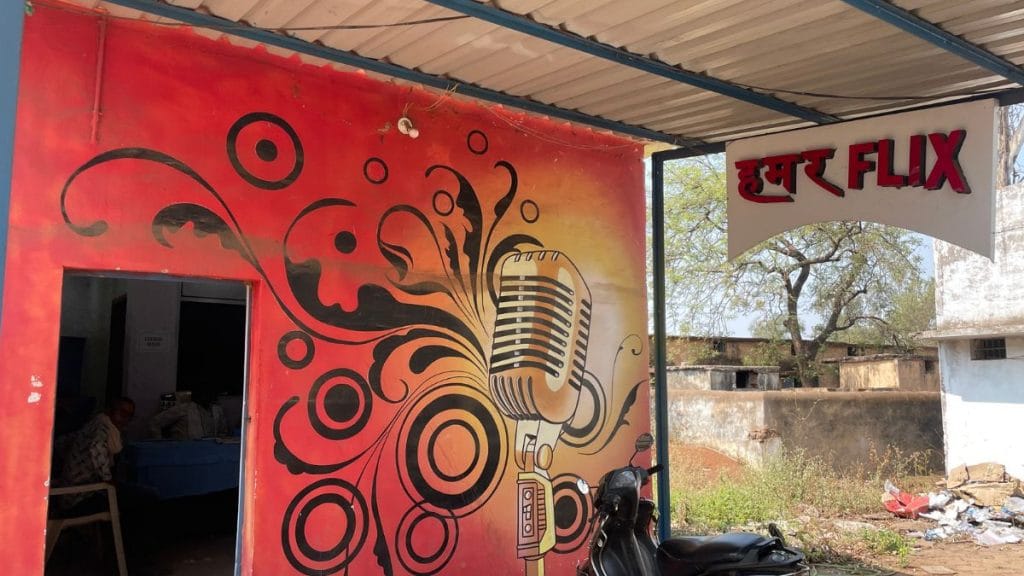
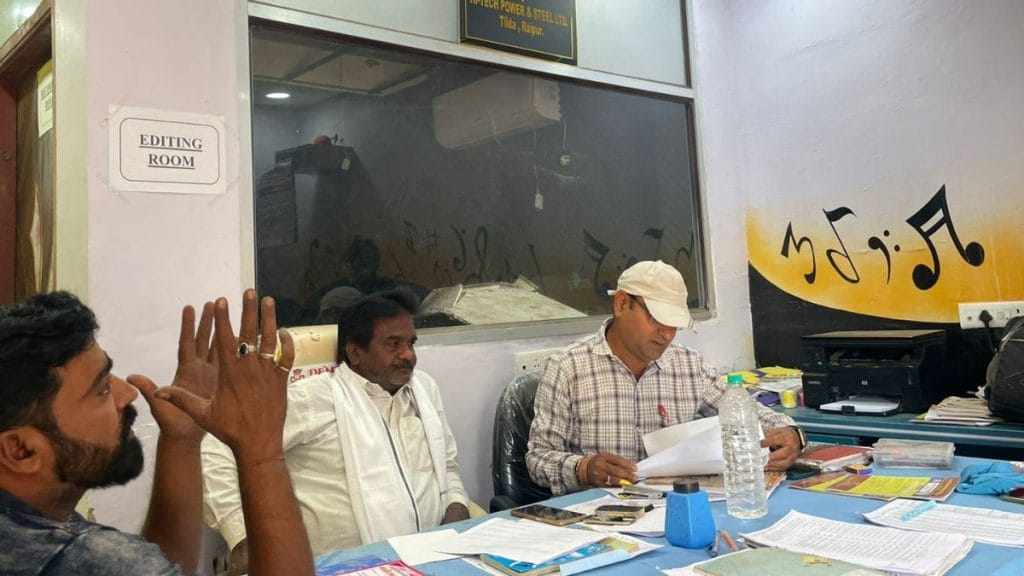
In Tulsi, the old studio stands unlocked most days. A Netflix-inspired font on a signboard says ‘HamaarFlix’, and a colourful YouTube logo adorn the dusty, muralled wall. Panchayat members sit around documents, shuffling between cups of tea, beedis and paperwork.
The ‘editing room’ that until last year had cameras and computers now stands emptied and locked. Only a broken LCD monitor gathers dust inside.
Outside, 61-year-old Pyarelal Verma, once a regular face in ‘Being Chhattisgarhiya’ videos, is back in his fields. The camera has been replaced by his routine grind.
Also Read: Inside the influencer industry—relevance, relatability and revenue
Not far away, Tikeshwar records another repair video between customers, propping his phone against a toolbox. For him, YouTube is no longer a gamble — it has become a tool.
“I still do my regular job, but content creation has helped me market it better,” he said. “It’s ultimately about knowing how to use it efficiently.”
And somewhere along the way, it has become indispensable for him.
“Jo social media par nahi hai, woh life mein bhi kuch nahi hai (those who aren’t on social media, aren’t anywhere in life),” he said with a chuckle.
(Edited by Stela Dey)