



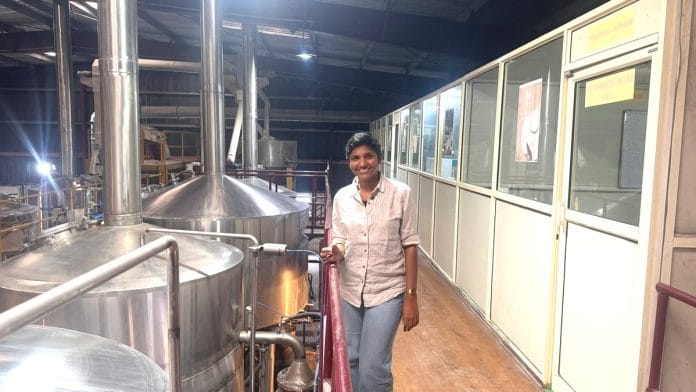
Panaji: Rasagna Rao Dharmana walked into a bank in Visakhapatnam in 2017 asking for a loan to open Andhra Pradesh’s first microbrewery. Bankers said, “Bring your husband, father, or even a male partner. You are a woman, how will you run a brewery?” She fired off an email straight to the State Bank of India’s higher officials demanding to know exactly which of her credentials was the problem. Four and a half months later, she got her loan and her brewery.
By 2021, when she set out to expand with a commercial manufacturing facility in Goa, the same banking system chased her down, loan papers in hand. This time, the money came through in 15 days.
Beer may have become more accessible, but the business of making it remains a man’s world. In India’s growing beer industry, female brewers and entrepreneurs can be counted on fingertips, with most women limited to HR and marketing roles. But things are now changing. The Women Brewers Collective in India started with just five members in 2021 but four years on it had 26. When Kiran Mazumdar-Shaw trained as a master brewer in Australia in the 1970s, gender bias forced her to quit her brewing dreams for biotechnology. Today, though, women such as Dharmana and Lynette Pires have forced open the doors.
Rasagna Rao Dharmana has a string of firsts under her belt. She became the first woman to set up a microbrewery in India, Myz-Uno in Vizag. Then the first to start a commercial beer manufacturing unit, Reybeir, and the first to launch a corn-based lager, Thala. But in her own words, she has “just started.”
“I have wanted to run a manufacturing unit since I was a child. Beer just happened to me by accident. And Vijay Mallya became my inspiration,” Dharmana told ThePrint. “People can say whatever they want, but he made beer fashionable and turned it into part of a lifestyle. The proof of his abilities as a businessman is that, after Kingfisher, many beer brands came, but none could reach the status he achieved. It’s a far-fetched goal, but that success is something I want to replicate.”
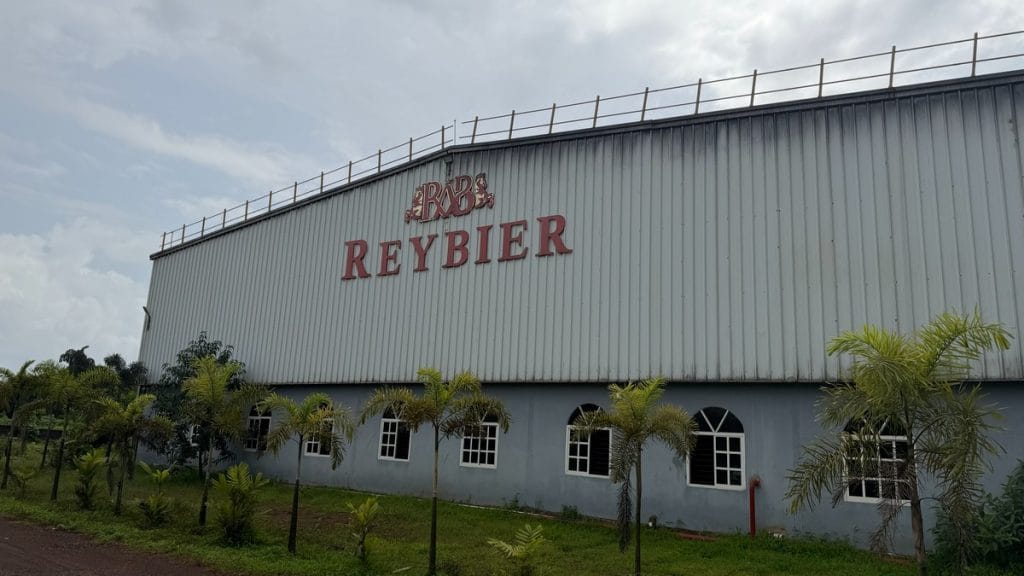
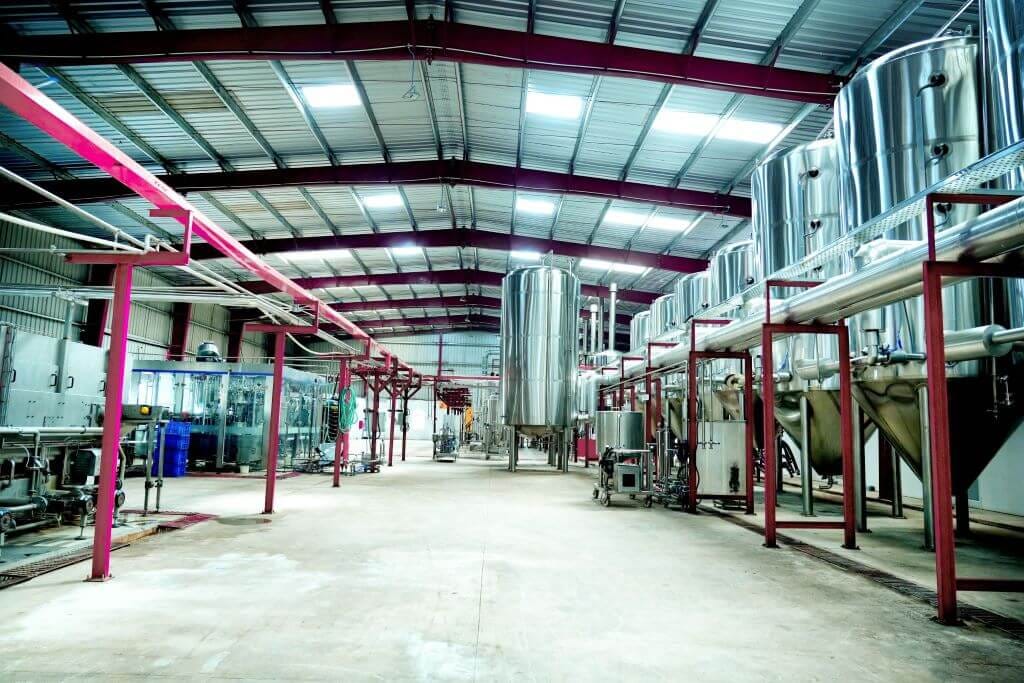
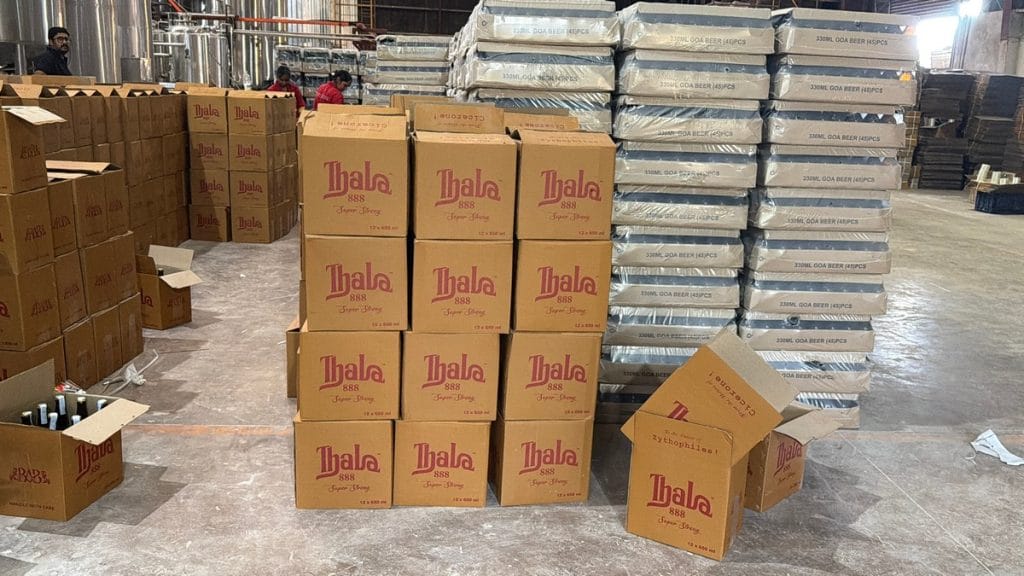
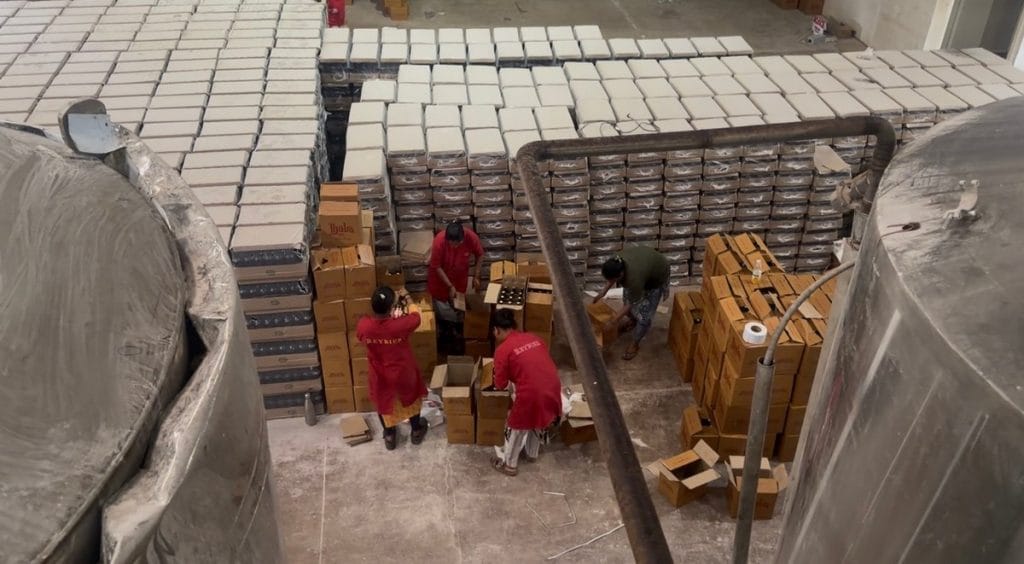
At the production line of the three-acre Reybeir brewery in Harvalem, Goa, a group of women stick Thala labels on beer bottles while, in another corner, two men work the bottling belt. The plant happens to be just about 26 km from United Breweries’ facility in Bethora, where Kingfisher is also made.
Dharmana is a trailblazer in her own right, which is something that other women in the liquor industry at large attest to.
“When one woman breaks through in a space where women have historically been underrepresented, she doesn’t just create a career for herself,” said Kimberly Pereira, COO of Goa-based agave-spirit company Maya Pistola. “She makes the path for everyone toying with the idea and eases the apprehensions for everyone looking to do what she has done.”
According to her, seeing a woman succeed in a technical, commercial and traditionally male-dominated part of the industry changes what people believe is possible.
Also Read: India’s sticky problem with molasses. Old Monk that’s ‘not rum’, whisky that’s rum
The teetotal brewer
Dharmana has brewed beer for a decade and created the country’s first corn-based lager—yet as a strict teetotaller, she has never taken a single sip.
While corn has been used in fermentation and brewing for centuries in India, modern industrial brewing sidelined it for barley and hops. Dharmana saw an opening to solve a specific problem: a strong beer without a bitter taste.
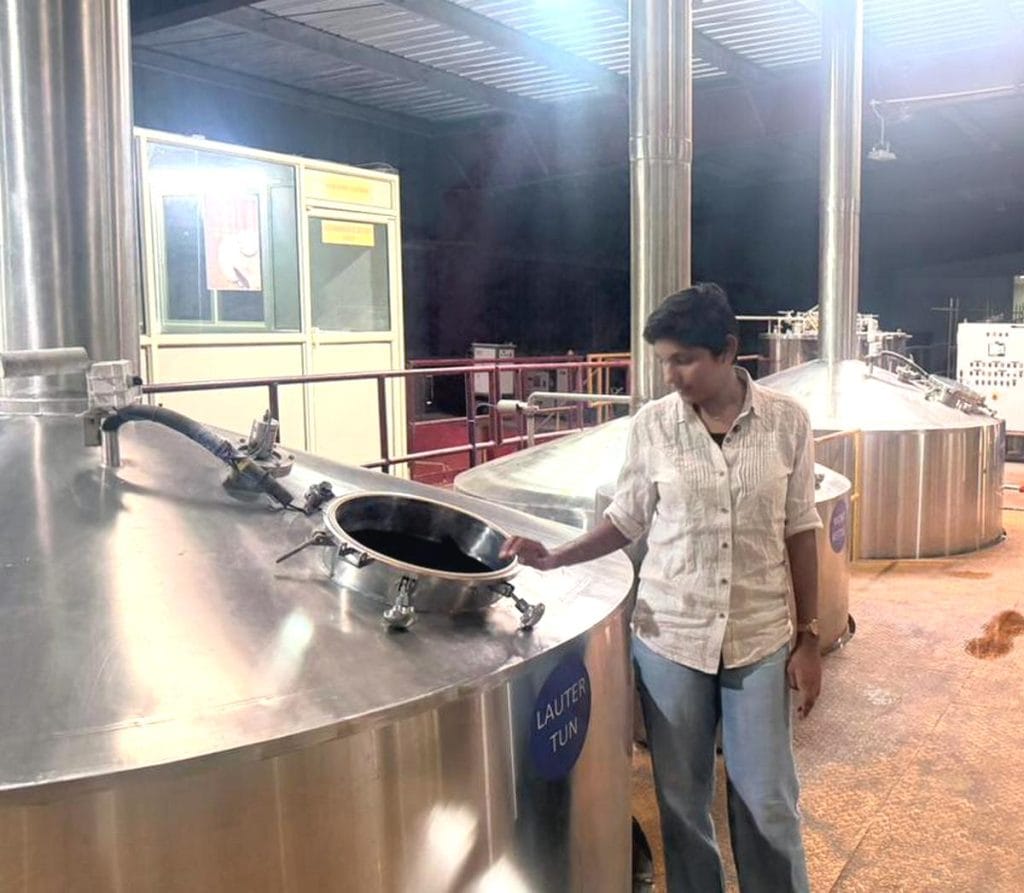
“Around 85 to 88 percent of Indian drinkers reach for strong beer because all they want is the ‘high’ for a cheaper price. But high-alcohol beers get bitter. Most high-alcohol beers punish you for wanting strength. Corn doesn’t. It brings a technical smoothness that other grains simply can’t replicate, letting a beer hit hard without turning sharp or bitter on the way down,” she said at the Reybeir plant.
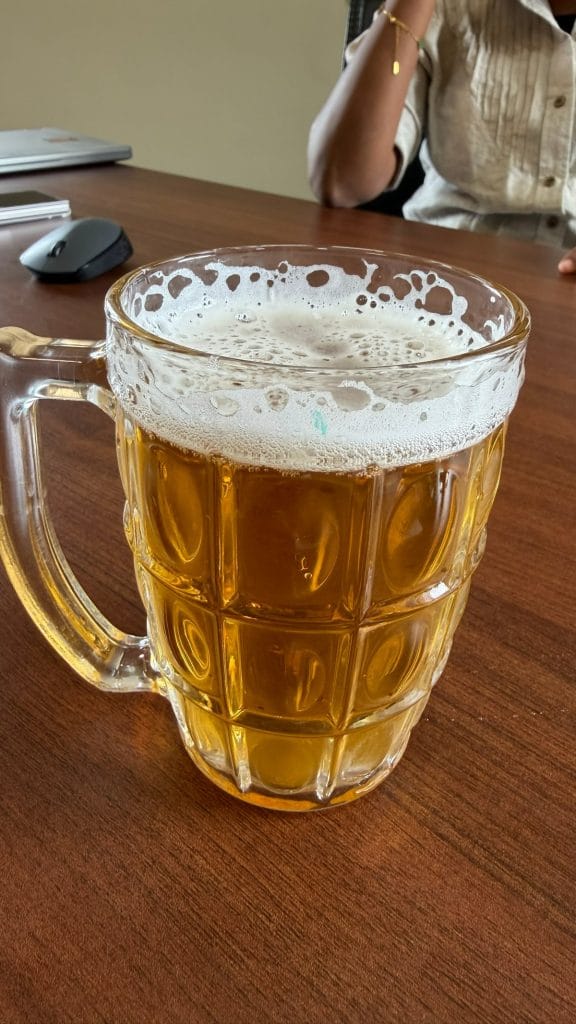
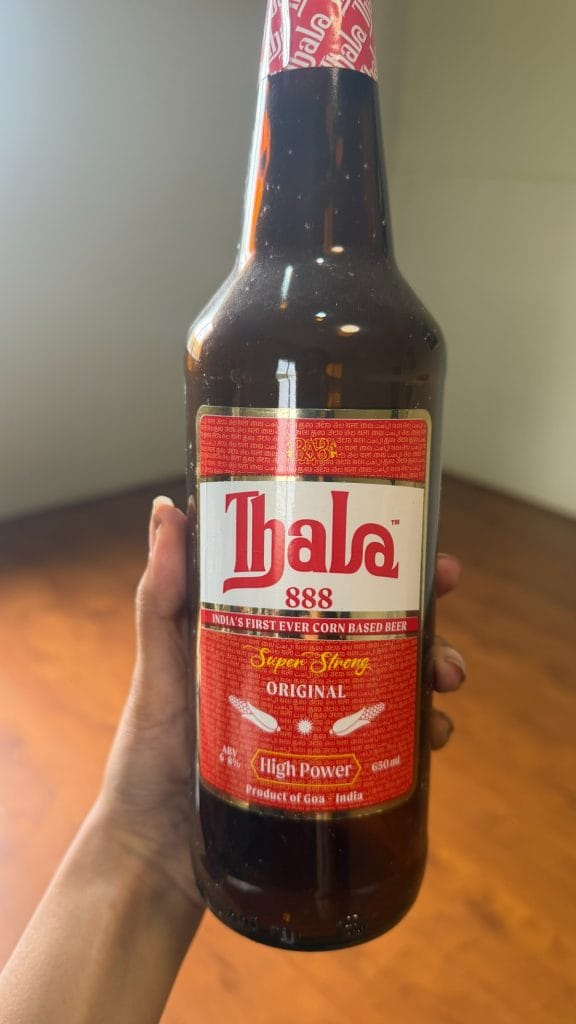
The idea was also to create a strong beer that could hold its own with spicy Indian food without clashing with the taste or introducing too much sweetness. She found her proof of concept an ocean away in Mexico, where beers like Modelo lean on corn to deliver smoothness. And so was born her brand Thala last year, with each bottle proclaiming: “India’s first corn beer.” The name comes from the Tamil word for ‘leader’.
“I don’t want to reinvent the wheel. With my beer, I picked a century-old ingredient. For the name of the brand also, I followed a similar route,” said Dharmana, an engineer who also has MBAs from both Cornell and Universidad Complutense de Madrid. “A leader leads by example, and that’s what my beer will do.”
I am not passionate about beer. I am passionate about running a manufacturing plant, doing business and a profitable one
– Rasagna Rao Dharmana, founder of Reybeir
Thala currently comes in two variants: a 5% ABV and an 8% ABV. Made at the Goa brewery, it has travelled to far-off pockets of India, but Dharmana wasn’t interested in adding one more bottle to Bengaluru or Mumbai’s already-crowded craft scene. The beer has found its real traction elsewhere, in markets such as Pondicherry and Chhattisgarh, where demand for smooth, high-alcohol beer runs deep. She is now in talks to carry Thala further out still, into the UAE, the US, and Singapore by the end of this year.
Breaking the contract brewing ceiling
Dharmana built her plant in Goa specifically for “its water quality”, the kind of unglamorous technical detail that ends up defining a beer’s actual character far more than its branding does. But she’s not just making Thala here. The plant brews several third-party brands on contract, including Goa’s ubiquitous People’s Lager.
It is in this behind-the-scenes strand of the business that she’s a real outlier.
A handful of women have built serious reputations as brewers, especially in craft beer capital Bengaluru: Lynette Pires founded the Women Brewers Collective and is Master Brewer at Seven Rivers Brewing Co; Vidya Kubher heads operations at Geist Brewing; and Varsha Bhat has long led brewing in several of the city’s top brewpubs. Yet Dharmana is the only woman running her own commercial manufacturing plant.
Gautam Gandhi, who runs Fort City, a brewery in Delhi’s Hauz Khas market, calls Dharmana a “great entrepreneur”.
“It’s not about a man or a woman. The market is very difficult to crack. It’s competitive and a high-risk space but she did it. Especially as a contract manufacturer, she is doing a fabulous job. Goa’s most popular beer, People’s Lager, is made at her brewery,” he said.
Gandhi added he isn’t surprised—“Women have been brewing since ancient times. Men started doing it just 500 years ago.”
Contract brewing allows a beer brand to outsource production to a licensed brewery instead of investing in its own plant. It’s a useful route into India’s capital-intensive beer market, especially for newer brands. White Owl, for instance, has partnered with an on-contract manufacturing brewery in MP’s Raisen,while Bira 91 initially had its beer contract-manufactured in Belgium before it started producing in India as well.
Contract brewing is typically run by men as it is a demanding space—crores of loan is required to set up and then function. Commercial units aren’t easy at all. They are financially demanding for everyone irrespective of gender
– Nakul Bhonsle, founder of Great State Aleworks
This year, United Breweries also signed a long-term production deal with Adie Broswon Breweries in Punjab after the closure of its Ludhiana plant.
“Contract brewing is common in the commercial beer space. And it is typically run by men as it is a demanding space—crores of loan is required to set up and then function,” said Nakul Bhonsle, founder of Great State Aleworks, a craft brewery that supplies to more than 50 bars and restaurants in Pune, Mumbai, and Goa. “Commercial units aren’t easy at all. They are financially demanding for everyone irrespective of gender.”
Because Dharmana deliberately keeps a low profile, staying away from the fanfare, social media, and press coverage that usually follows entrepreneurs in her position, most people in the industry have no idea who she actually is.
Bhonsle recalled stumbling onto a new beer on Goa’s shelves and being blown away by the taste. He called it “the best commercial lager” he’d had. Yet he had no idea who the brand belonged to or who was brewing it. He started actively hunting for it, but couldn’t track it down for months. It was only when Bhonsle heard the name of her commercial plant, Reybeir, that it clicked.
Dharmana, for her part, has no plans to chase the Goa market anytime soon. In her view, local residents don’t drink much beer, and tourists are usually chasing local flavours such as feni.
“I am not passionate about beer. I am passionate about running a manufacturing plant, doing business and a profitable one,” she said.
Manager at work, manager at home
Dharmana’s beer story began around 12 years ago. Just months after they married in 2014, she and her husband, Bharath Kamma, moved to Spain to pursue their respective MBAs. They studied a semester apart, supported each other through it, and somewhere along the way, beer entered their shared vocabulary of ambition.
It was in Spain that the idea of beer as a business began bubbling in Dharmana’s mind. On her first day of class at Universidad Complutense de Madrid, she said she felt like an “alien”. The only Indian student in the room, she was bewildered when she saw fellow students walking in with cans and glasses of beer. It was a “cultural shock” for her which soon gave way to curiosity.
Even though she didn’t drink, Dharmana began attending wine tastings and brewery tours, observing not just what people drank, but the business and culture that had grown around it. The industry fascinated her, and the absence of women in it back home didn’t stop her from jumping right in.
“I had a dream of opening a manufacturing unit. It just found its product,” she said.
That dream eventually became Reybier. Kamma, whom she calls her “strongest pillar”, has headed operations there for the past eight years. He reports directly to his wife.
She is a tough nut to crack. She is not emotionally led in business. She needs rationality in everything. For her, 2+2=4. She doesn’t make decisions on emotional grounds
– Bharath Kamma, Dharmana’s husband and head of operations at Reybeir
“Finances, managerial and business decisions are all taken by her because they are her key strength. Operations is my strong suit, so I manage the floor,” Kamma said.
That arrangement puts him closer to employees on the manufacturing floor—and gives him a view of Dharmana through their eyes.
“She is a tough nut to crack,” he said. “She is not emotionally led in business. She needs rationality in everything. For her, 2+2=4. She doesn’t make decisions on emotional grounds.”
Dharmana follows what she calls the “triple bottom line”: environmental, social and economic sustainability.
The plant is powered entirely by solar energy, with natural gas used in its operations. Employees receive pay based on skill rather than gender, according to Kamma. And the third part of the equation is a no-brainer: the business has to make money.
“She always says, ‘Passion without numbers makes no sense,’” Kamma added. Yet he also describes her as someone who “favours feminist” thinking, and the employee profile at Reybier reflects that.
Women make up roughly 70 per cent of the workforce at the facility. On the factory floor, women pack beer bottles, apply labels and assemble cartons. Some have also been trained in brewing. One intern travelled all the way from Chennai to Goa specifically to learn brewing at Reybier and has been training there for four months.
“Rasagna says if women are empowered, a whole family is empowered,” Kamma said.
There are disagreements. There are clashes. Work follows them home, and home finds its way into work. Yet the two have managed to build a relationship in which neither sees the other as a rival.
Most importantly, Kamma said, “ego has no room in our equation.”
Also Read: Indian whisky takes over the domestic market. It’s giving global names stiff competition
A sin business?
Dharmana’s journey from a small-town upbringing to becoming one of the few women to enter India’s commercial brewing industry elicits varying reactions.
“Some people are inspired by her journey, while some find her formidable and get unsettled,” Kamma said.
When she started out by opening Myz-Uno, a microbrewery in Visakhapatnam in 2017, the questions did not come from the business world alone. Relatives and social circles questioned her too. Some even questioned her parents about the values they had instilled in their only child. Others were more direct: “Why are you doing this sin business?”
Dharmana paid little heed to the noise. She had an empire to grow.
“The factory or the equipment don’t know whether the person operating them is a man or a woman. Why should people? I was never raised with the idea of a difference between men and women,” she said.
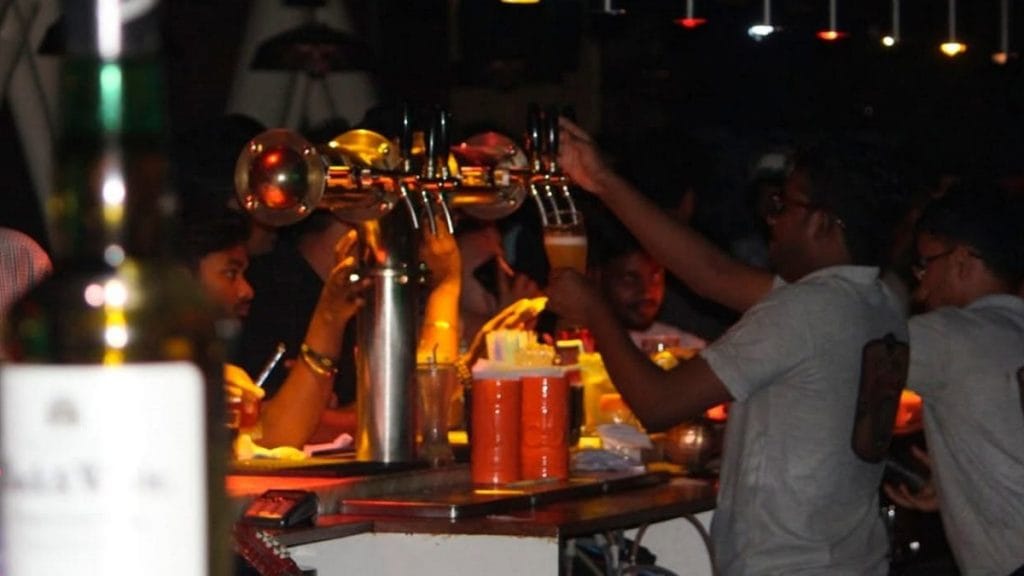
Dharmana did, however, think carefully about what kind of place Myz-Uno would be. She did not want it to acquire a sleazy reputation or become somewhere families might hesitate to enter. She designed it more like an upscale restaurant, where people could come for food, atmosphere and the experience, with freshly brewed beer at its centre.
If something is legal for a man to do, why can I not do it? If it is a sin or something wrong, the government should ban it. Don’t question my morality just because I am a woman
– Rasagna Rao Dharmana
Glowing reviews soon started pouring in. Yo! Vizag, one of Andhra Pradesh’s oldest lifestyle publications, included the opening of Myz-Uno and another new microbrewery, Ironhill, among its “17 memorable things that marked 2017 in Vizag.” The city, it wrote, had “raised a toast” to its first microbreweries. On Tripadvisor, one reviewer in 2018 wrote that walking in felt “like entering a whole new world.” Others praised the beer and atmosphere; some, inevitably, complained about the prices, service or particular brews.
Yet outside the pages of lifestyle magazines and restaurant reviews, many in Dharmana’s social and family circle kept up the old refrain about how women shouldn’t be selling alcohol.
“I told her Indian society has not matured to understand women’s capability to enter into the alcohol space,” recalled Kamma. “So we knew what would come her way. But through whatever, we decided to remain stable.”
For Dharmana, stability meant refusing to let other people’s discomfort become her moral compass.
“If something is legal for a man to do, why can I not do it? If it is a sin or something wrong, the government should ban it. Don’t question my morality just because I am a woman,” she said.
And, once Dharmana had made her point loud and clear, she went back to work in her unglamorous cabin.
It is a wide, clean space with little more than a table and a chair. No elaborate decor, no theatrics, nothing designed to announce the boss. In its sparseness, the room mirrors Dharmana herself: practical, stripped of drama and focused on outcomes.
(Edited by Asavari Singh)
Wonderful news for diabetologists, gastroenterologists, cardiologists, psychiatrists, and traffic police. May her tribe increase.