





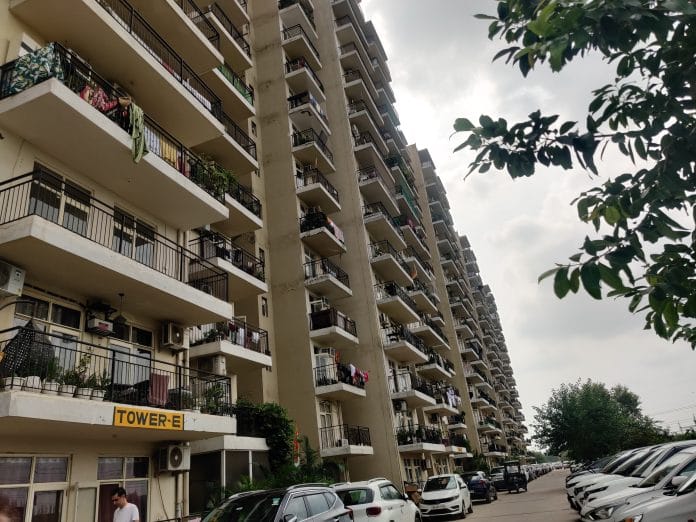


Forty-year-old Rishi Shukla moved into his new home in ROF Ananda Society, Sector 95, Gurugram, in 2022. He expected the usual transition that comes with owning a home — moving in, settling down and joining the residents’ community.
Before he moved in, Rishi had paid ₹1,188 to the builder as fees to become a member of the Residents’ Welfare Association (RWA). At the time, the builder was managing the society, including collecting maintenance charges, as there was no functioning body representing the homeowners.
His expectations were simple. Once the builder hands over the society to the residents, an RWA would be formed, homeowners would eventually become members and residents would have a say in the management of their community.
“We thought it was a minor issue and that an RWA would soon be formed, after which, we would get membership — an apartment owner’s right. But it turned into a fight that continues even today,” said Rishi.
Across Gurugram’s gated societies, the questions — who represents residents and who decides which resident becomes a member — have increasingly become a flashpoint. Apartment owners find themselves caught among builders, resident groups seeking control of the RWA, and government authorities responsible for resolving registration and membership disputes.
“In Gurugram, the difficulty many apartment owners face in becoming members of an RWA or AOA is not merely an administrative problem. It is largely a consequence of the way Haryana has allowed apartment ownership laws, society laws, RERA provisions and builder-controlled maintenance arrangements to overlap, without a clear statutory framework,” said advocate Sanjay Lal.
Membership of RWAs is primarily governed by the Haryana Registration and Regulation of Societies Act, 2012 or the HRRS Act, 2012. It says that an RWA or Apartment Owners’ Association (AOA) is meant to give apartment owners a formal role in the management of their community.
But on the ground, disputes among builders, existing RWAs and residents have made the process far more complicated.
Membership laws and confusion
For Rishi, the fight over a membership certificate became a four-year-long struggle involving complaints, confrontations and repeated visits to authorities.
It was only after multiple complaints to the builder and multiple visits to the District Registrar’s office that residents discovered a committee had already been formed and an RWA had been registered in 2023.
“This is how the builder and his team cheated an entire society. An RWA existed, yet no one knew about it for more than a year,” said Rishi. He further alleged that the previous RWA was formed under the builder’s influence, and eventually resigned in 2025.
Rishi filed repeated complaints against the 12 founding members of the former RWA over alleged denial of membership.
“I am travelling 25 kilometres every day just to fight for our rights, but the authorities are only giving us dates and notices,” said Rishi.
Ananda Society is not the only one suffering from this problem.
At Urban Homes 2 in Sector 86, Gurugram, 1,045 apartment owners are still waiting for membership of either an RWA or AOA. The story goes back to 2021, when the builder registered the Urban Homes Pyramid Condominium Association by nominating seven members from the society. In 2024, another member was added, an election was conducted among the members, and the RWA was formed.
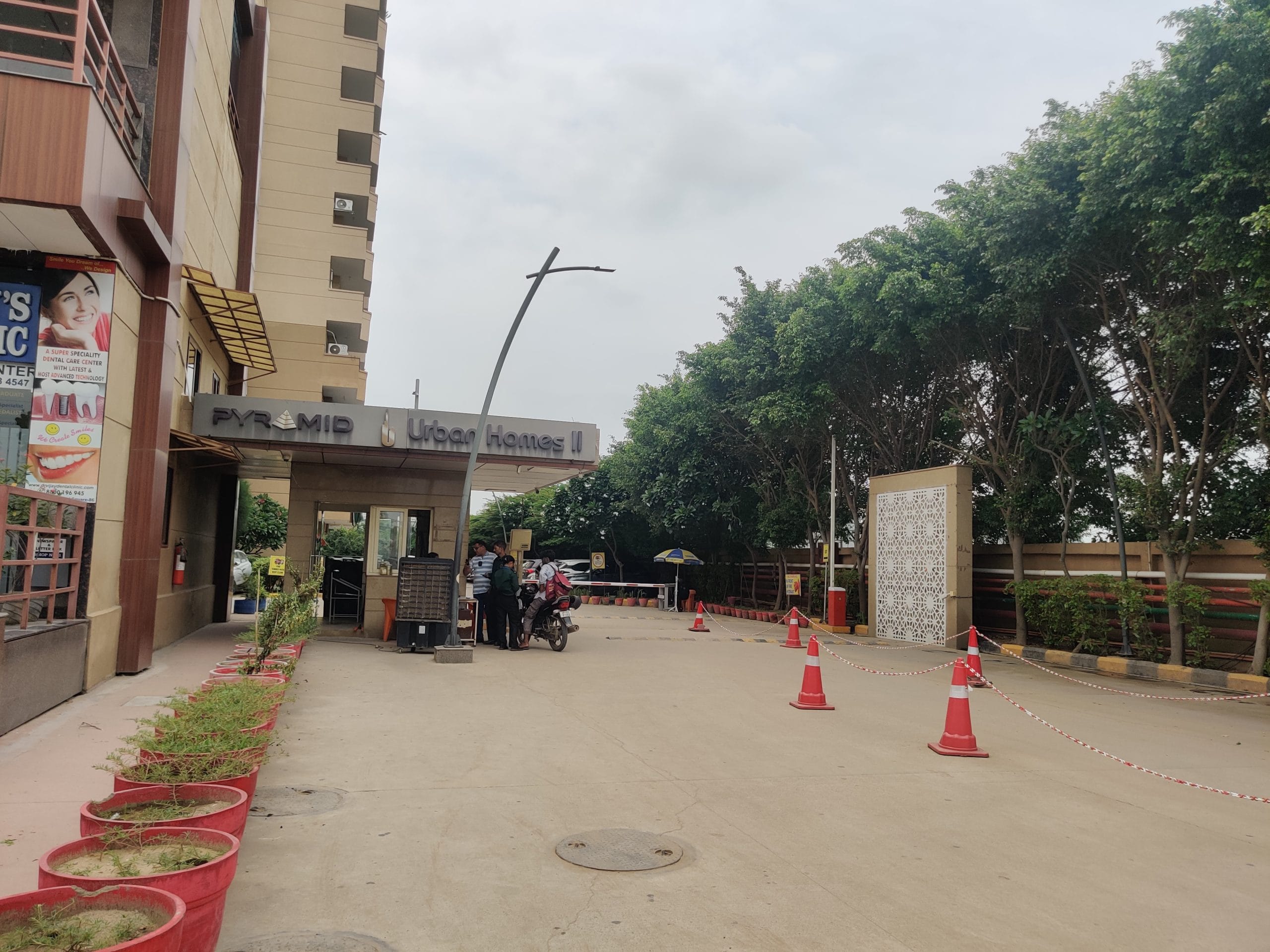
Five years on, however, the membership of 1,045 apartment owners remains unresolved.
The issue has moved from the society’s corridors to government offices. Joint complaint letters have been submitted to the District Registrar and State Registrar, while the matter has also reached the Punjab and Haryana High Court, where the homeowners are awaiting a resolution.
“This is an administrative loophole. Hundreds of people are fighting and waiting for years for the membership of the association. But all they get is the next date and cold replies from administrative offices,” said advocate Ritu Bhariok, who is assisting the homeowners in the case.
The problem of apartment owners not getting RWA/AOA membership in Gurugram is much bigger than a simple paperwork issue. The main problem is that the laws do not clearly explain how ownership and membership should be connected.
One of the biggest problems is the confusion between an RWA and AOA. In Gurugram, these terms are often used interchangeably but legally, they are different.
An AOA, under the Haryana Apartment Ownership Act, is linked to ownership of the apartment and the owner’s share in the common areas. An RWA, meanwhile, is a separate legal entity, typically registered as a society under the HRRS Act. Because of this overlap, an apartment owner can sometimes be told that although he owns the flat, he is not yet a “member” of the RWA.
“We have invested so much money and our lifetime savings, yet we do not have the right to make decisions in our own society because we are not members,” said 36-year-old Satyanand Shukla, holding the complaint letters he has submitted at the District Registrar’s office.
The letters tell a story of repeated visits and unanswered questions. Each time, the District Registrar’s office has directed the homeowners towards the RWA for a mutual settlement. But the RWA is not willing to lose their rights.
“We are spending our time and money fighting for membership — something that should never have been a matter of dispute in the first place,” Satyanand said.
The registration of many apartment associations as societies under the Haryana society law adds another layer of confusion.
“This needs to be made clear. A society or RWA should not be able to create rules that take away rights that an apartment owner gets because of ownership of the apartment,” Lal said. He added that Haryana’s complicated housing rules have been creating more disputes and confusion among the associations and apartment owners.
Fight for rights
Satyanand works in the maintenance department of Maruti Suzuki. Over the past two years, he says, he has taken more leaves from work than in any other period of his career — not for a family emergency or personal matter, but to visit the District Registrar’s office, consult legal experts and pursue what he considers a basic right: membership of his own society.
Satyanand, along with 132 other homeowners, submitted membership applications to the district’s Administrator-cum-Returning Officer in 2025. The applications are still pending with the authorities.
“I don’t usually take leave unless I am sick or there is something important to attend to in my family. But I have been forced to take leaves repeatedly because of this membership dispute. We are spending our own time, money and effort to claim a basic right, while the RWA and the builder engage with expensive legal teams at the residents’ cost,” said Satyanand.
The fight for membership is not about holding a position or having the title of a member. It is about the rights and responsibilities that come with it.
Membership gives apartment owners the right to vote, contest society elections, access the society’s audit and financial records, and raise questions or seek changes in RWA’s decisions.
“Everything is simple and clear, but the authorities are not ready to help hundreds of residents over eight RWA members. This clearly raises questions about their involvement in the entire matter,” said Rajesh Kumar Jain, another resident.
He added, “If we get membership, we can hold elections and remove them. We can also ask for every detail of the society’s finances and how our money has been spent. This is what makes the RWA and the authorities reluctant to give us our rights. Instead, we are given one date after another.”
The problem turns into a vicious cycle when membership is controlled by the RWA, and residents contesting this are directed by authorities to approach the same RWA for a resolution.
Only those residents who are members of the RWA can contest elections and vote, and become part of the committee.
“RWA has become a money-making machine, and the authorities think that if they give us the right to vote, we will remove them,” said 60-year-old Jain.
RWA state manager Saurabh Pratap Singh denied the allegations. He said the RWA conducts membership campaigns every month and notices are placed on the notice boards of every tower. He claimed that the latest notice for membership was posted in July.
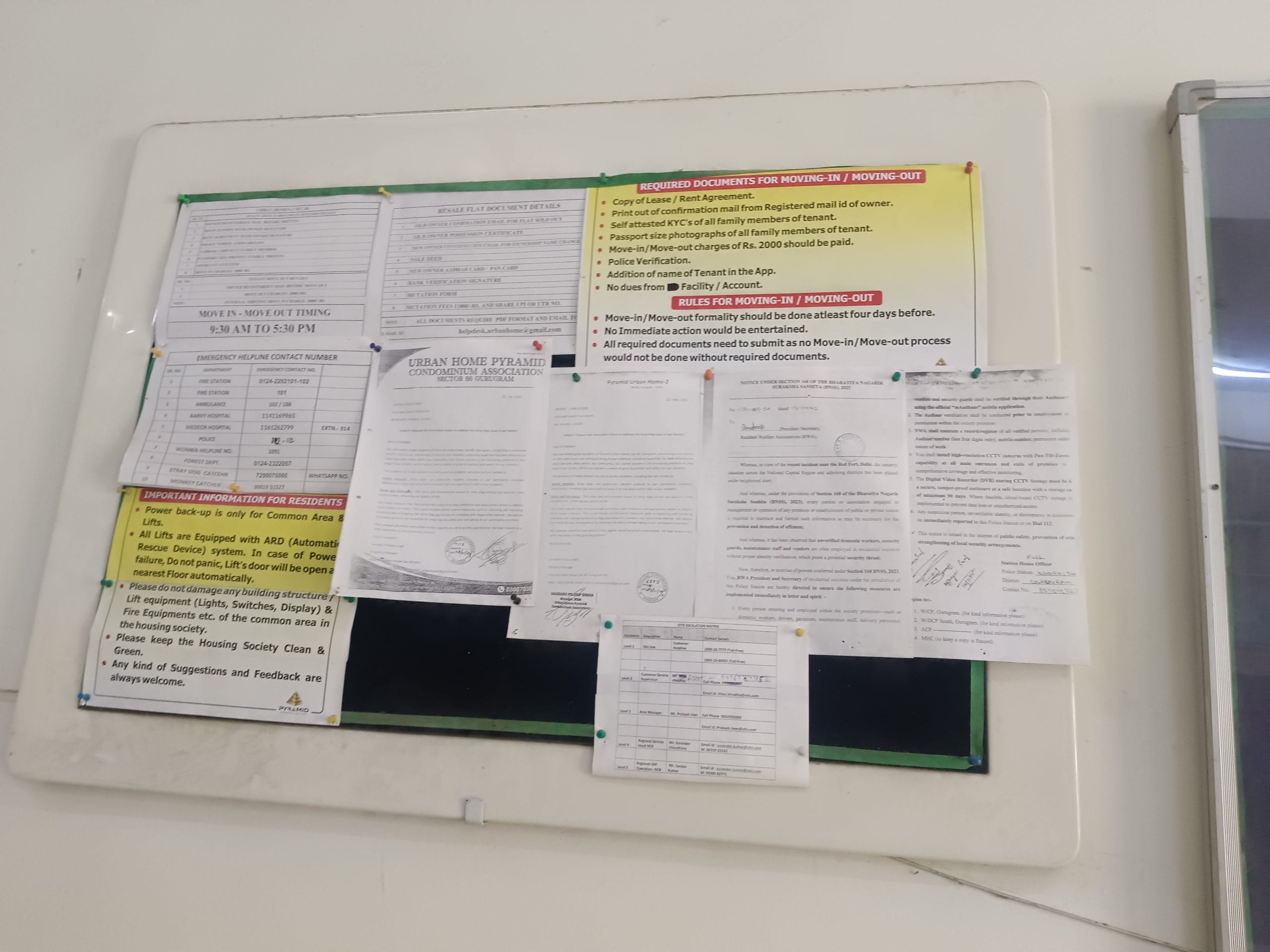
However, ThePrint found no such membership notice on the RWA notice board or on the notice boards of any other blocks it checked.
“We have more than 50 members, and notices are pasted whenever the membership campaign is conducted,” Singh said.
Residents denied having seen any such notice on the society’s notice boards. “They never send any notice or even message on the society app regarding membership,” said Ratnesh Tiwari, another resident.
A tedious process
Rishi Shukla, who owns a two-bedroom apartment in ROF Ananda, has been ardently following up on every development in the case. His complaints against the RWA eventually led to the resignation of its members, after an inquiry by the authorities.
“There is a nexus between the RWA and the builders. They used to charge us for parking, electricity units were increased internally, and we were still helpless,” said Shukla.
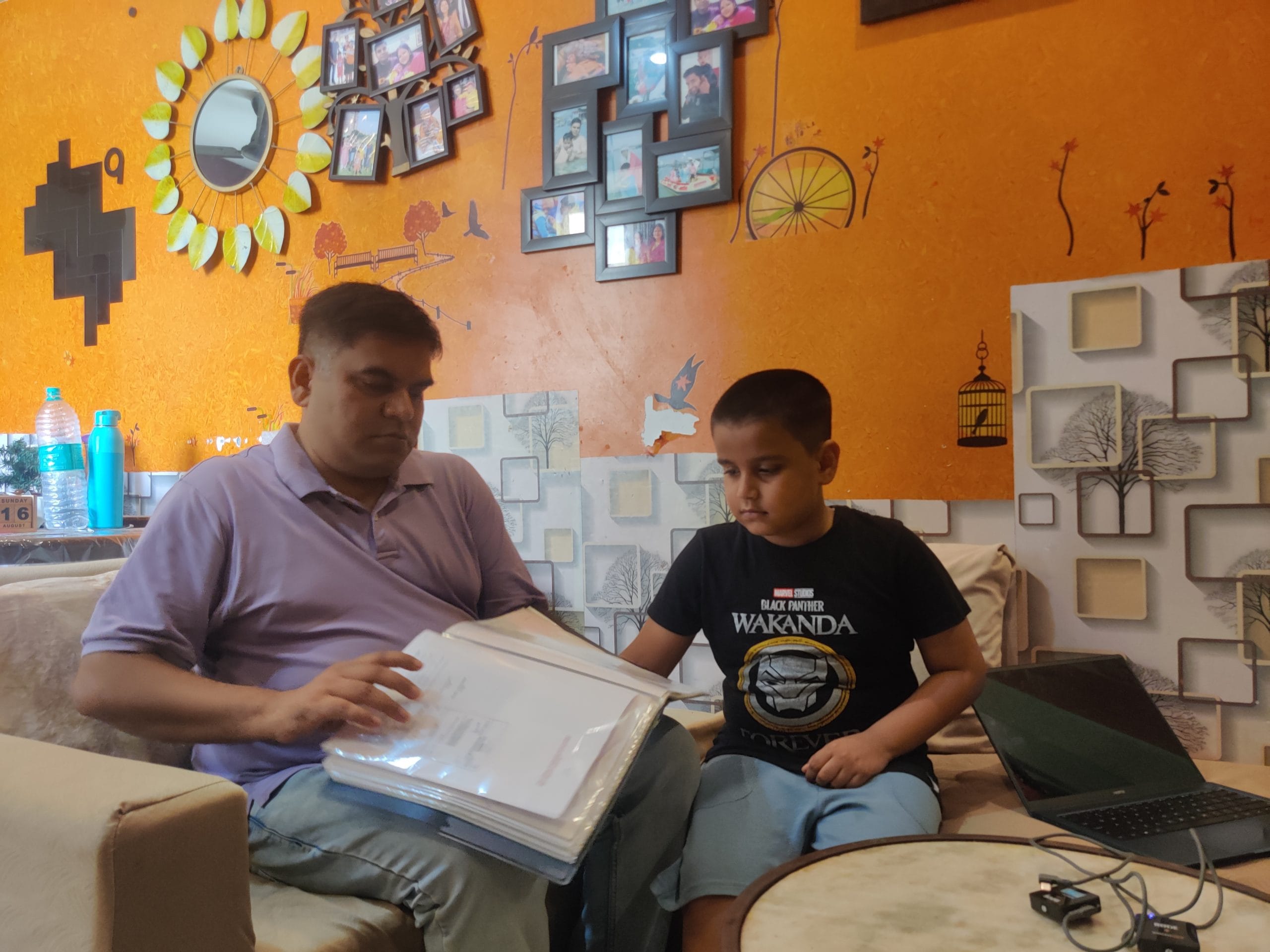
Holding a bundle of papers and scrolling through emails on his phone, Rishi goes through the complaints he has filed and the correspondence he has sent to various authorities. He keeps track of every application, notice and response, still waiting for an election or membership process that would give apartment owners a formal say in the matters concerning the society.
“I don’t have the money to spend on legal battles. We are middle class families. But as soon as I am able to collect a few lakhs, I am going to fight this in the High Court,” said Rishi, a corporate employee in logistics.
He has taught himself about the Haryana Registration and Regulation of Societies Act and membership rules through research. He regularly speaks with other Gurugram residents, association members and advocates, looking for legal guidance and a possible way forward.
“There is no solution until the authorities do their work. They can simply constitute an inquiry team, look into the matter and, if the facts support it, provide membership to the apartment owners. But that is not happening, and people are left fighting these battles for years,” said advocate Ritu Bhariok.
A successful fight
Not far from Sector 95, another homeowner’s fight over membership in a Gurugram society is offering hope to others facing similar disputes.
Ritu Singh, 44, moved from a rented house to her own two-bedroom apartment in Rising Homes Society, Sector 92, in 2022. Membership was never a priority for her. She had no interest in getting involved in the RWA’s affairs until one evening in September 2023, when a routine walk through the society changed that.
She noticed that the park was poorly maintained. There was little greenery, parts of the boundary wall were broken and the walking paths were in poor condition. She approached the RWA members with a complaint about maintenance.
“As soon as I approached the RWA, they started shouting at me and told me that I was not a member and could not complain. That was the day I started thinking about becoming a member,” said Shukla.
She paid the ₹500 membership fee, filled out the form and completed the required process. What appeared to be a simple step soon turned into another dispute.
Singh received an email from the RWA, which said that she had been making unnecessary complaints and that other residents had also complained about her. Her membership was subsequently denied.
“They denied my membership because I had repeatedly complained about the RWA and its work, both in the society groups and at the District Registrar’s office,” she said.
In September 2025, Shukla began writing to the District Registrar’s office and making repeated visits. “I used to sit there for hours until somebody spoke to me and explained the process of how I would get my membership, which is my right as an apartment owner,” she said.
After multiple visits, the District Registrar’s office conducted an inquiry and directed the RWA to grant Singh membership as an apartment owner. The office also issued a notice to the RWA, asking it to submit a written report within seven days on the status of the matter.
“It takes time, effort and money, and that is why RWAs think nobody will fight against them. They start behaving like dictators,” said Singh. “But it is high time people fought for their basic rights inside their societies and reminded RWAs that they are not the governing body but volunteers.”
(Edited by Aakriti Handa)