



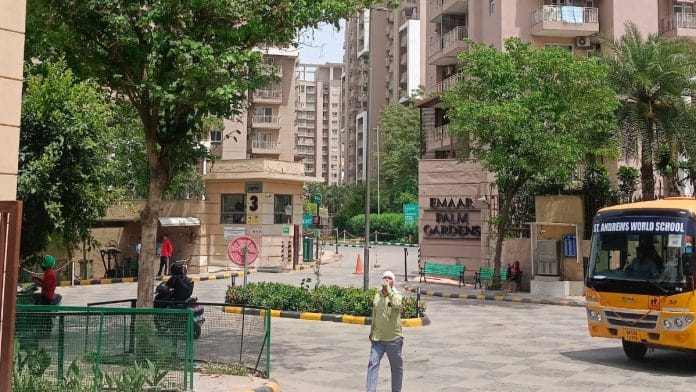

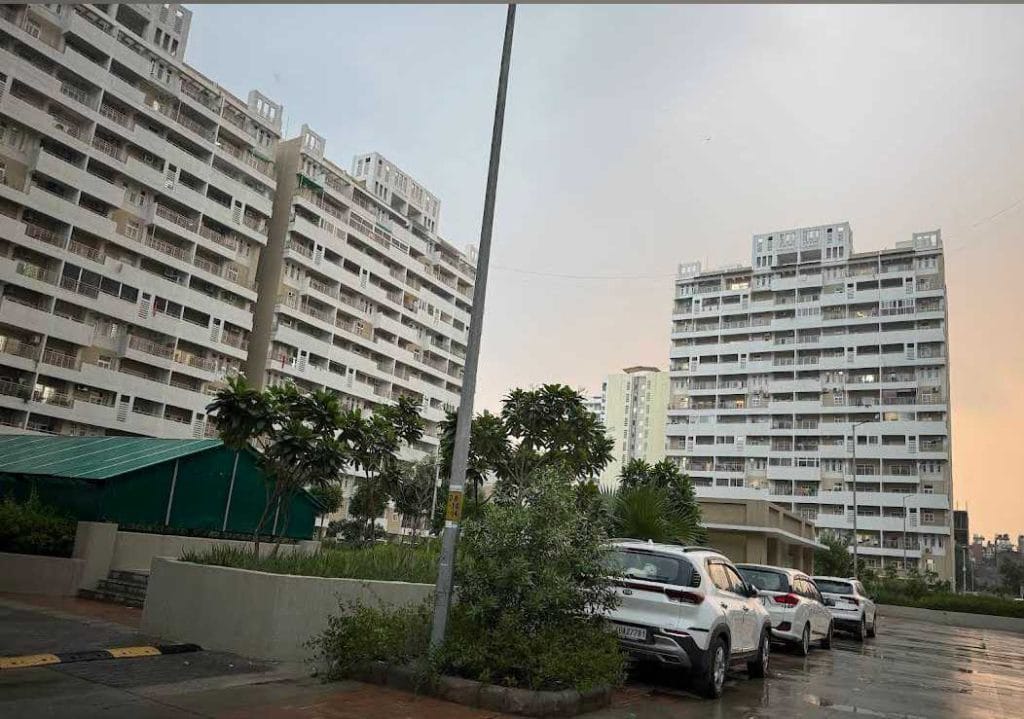
New Delhi: The entry gate of Emaar Palm Gardens in Sector 83, Gurugram, is heavily guarded with CCTV cameras installed at almost every corner. Inside, towering buildings, which shadow the spotless internal roads, are difficult to look at without straining your neck. But a sharp contrast lies within the same address. Another building that carries the same elite name tells a completely different story.
“Palm Garden RWA (Residents Welfare Association) haye haye, Palm Garden RWA haye haye,” residents of the Economically Weaker Section (EWS) block shouted a few weeks ago as they marched to the society’s main gate, demanding basic services. Residents accused the RWA of neglecting sanitation work, ignoring repeated complaints, and treating EWS residents differently from those living in the main towers.
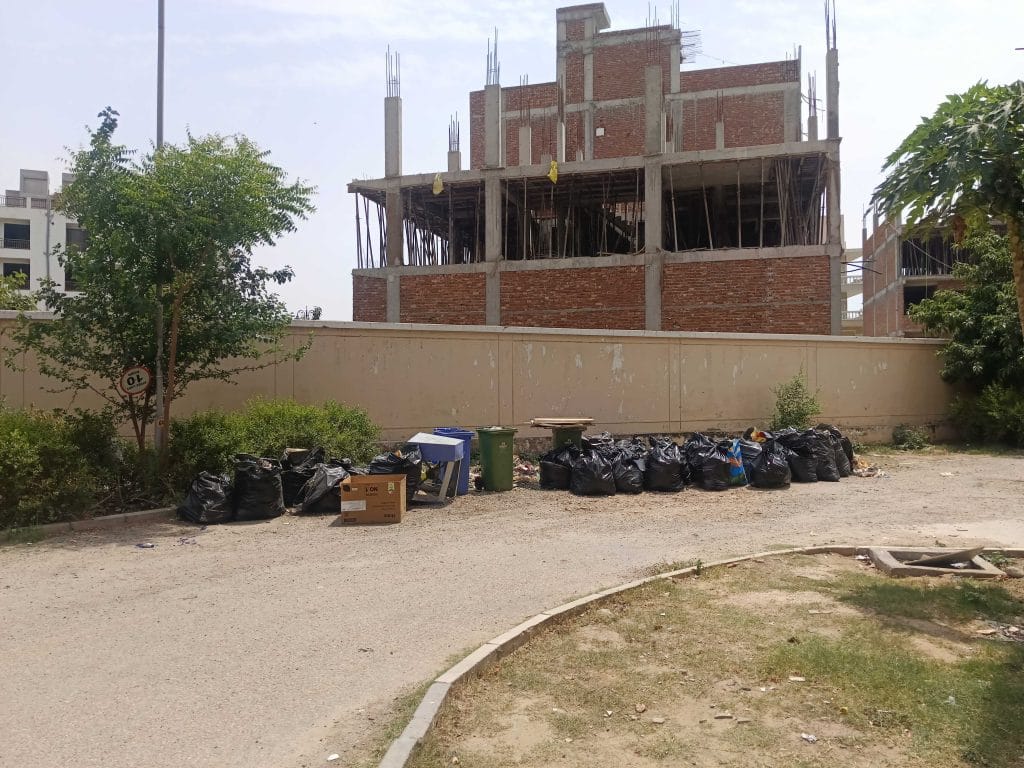
A narrow black gate hangs permanently open. No guards or cameras are to be seen anywhere. The smell of garbage hits before the building’s staircase even comes into view. Paint peels off the walls in thick patches. A lift in one of the towers groans its way up, but often refuses to come back down. This is the EWS housing block of Emaar Palm Gardens.
Thirty-year-old Rajkumari, who has been living in one of the EWS for the past six years, says even getting a guard is a struggle.
“Look at that side. You have to go through several security checks before entering the premises, and here we are not even getting one despite asking every single time,” said 30-year-old Rajkumari, pointing toward the main society before looking up at the EWS tower. She has been residing in the EWS flat for six years.
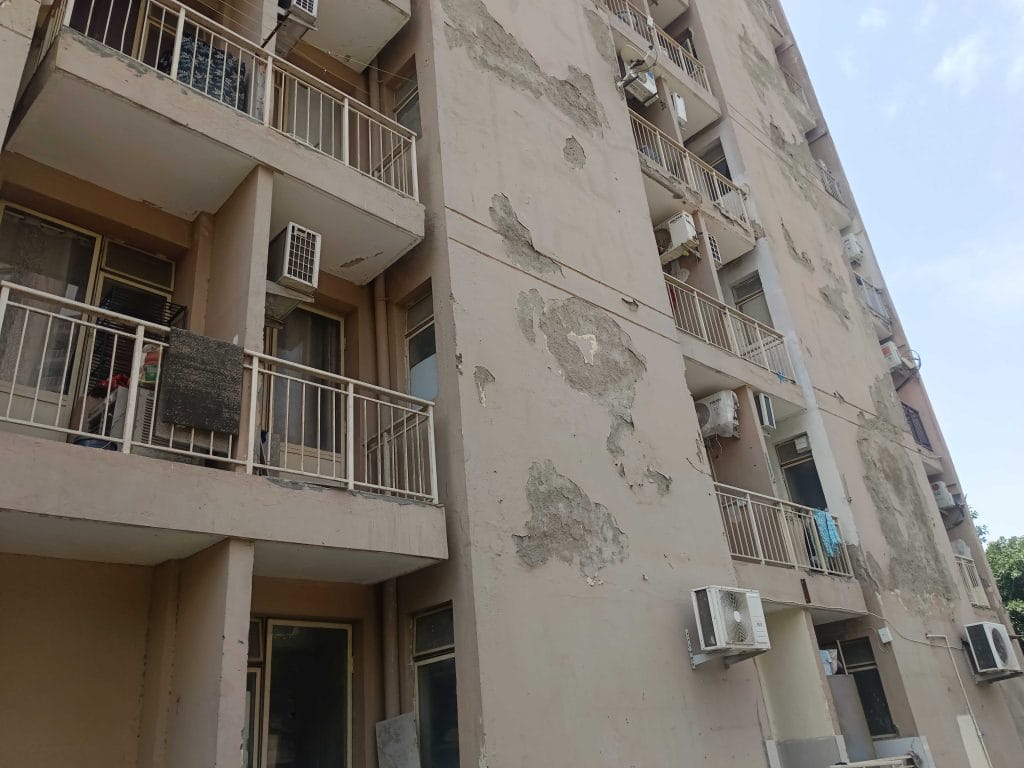
The conflict playing out inside Emaar Palm Gardens is not unique. Across parts of Delhi-NCR, EWS residents living inside or beside premium gated societies describe feeling invisible within the very complexes they were promised as part of “inclusive housing.”
Residents claim garbage lies in their colony all the time. There are no sanitation workers, and stray dogs tear open the garbage bags. The place stinks most of the time.
“If this happened in the main towers, it would be cleaned within hours,” added Rajkumari.
According to the Haryana government’s affordable housing and urban development policies, it is mandatory for residential housing projects to reserve a portion of units for the EWS category. Under the policy, around 15 per cent of the total housing units in many licensed group housing projects are required to be allocated for EWS residents.
The EWS units may be constructed within the main residential premises, in separate towers inside the same complex, or in some cases slightly away from the primary residential blocks, depending on the approved layout plan and permissions granted by the authorities.
The allotment rules for EWS housing depend on the concerned authority, such as the Delhi Development Authority (DDA) in Delhi, State Housing Boards, Town and Country Planning Authorities, and the Pradhan Mantri Awas Yojana (PMAY). In many cases, EWS housing allotment becomes mandatory for obtaining project approval or clearance, especially where the project involves a large land parcel, group housing approval, additional FAR (Floor Area Ratio), land pooling schemes, PMAY benefits, or projects developed under PPP (Public-Private Partnership) models or on government land.
In several societies, the divide is distinctly visible. The main towers stand tall and polished with every facility, while the EWS blocks struggle with broken floors, malfunctioning lifts, and damaged boundary walls, among others.
“They don’t even allow us to enter the main building to meet the RWA and raise our concerns,” said Santosh Kumar, another resident of Emaar Palm Gardens. “We have submitted written complaints several times, but whenever we ask for a response, they either argue with us or tell us that nothing is going to change.”
RWA vs EWS
Thirty-one-year-old Najma Khatoon holds her five-year-old son as she walks past a broken wall in front of her flat at Emaar Palm Gardens. She points toward a wall with a large hole and a lift that mostly malfunctions.
Residents said they have been facing lift maintenance issues for a long time. According to them, the lift often goes up and gets stuck for several minutes. They alleged that the issue has been raised multiple times before the RWA, but no permanent solution has been provided so far.
The EWS block of Emaar Palms Garden consists of 210 flats. Most of the flats are occupied by tenants. Rents at such premises hover around Rs 6,000-7,000.
“The building is full of problems, and the only concern of the authorities is that we are tenants, not owners. We are afraid to send our children outside, even during the daytime. Anyone can enter the premises because there is no gate or CCTV camera for safety,” said Khatoon.
Khatoon moved from a slum cluster near the Sapphire Mall, Sector 83, two years ago, hoping to provide her son with a safer, better environment. However, she says the challenges began increasing soon after they shifted.
“We are paying around Rs 7,000 as rent. It’s higher than what we used to pay in the slums, but now we live without electricity for hours and face constant water shortages. Even after complaining, the landlord only says the issues will be resolved,” said Khatoon, adding that she and her husband are considering moving elsewhere if the problems continue. Her husband is the sole breadwinner of the family and works as a cab driver.
In many societies, EWS residents are not required to pay maintenance charges. However, in several housing societies, RWAs charge a minimal maintenance fee ranging from Rs 500 to Rs 800 per month to provide essential services and upkeep for EWS residents, including sanitation, lift maintenance, and power backup facilities.
The RWA of Emaar Palm Gardens does not currently charge any maintenance fee from EWS residents, and therefore, no power backup facility is provided to them.
“It is not possible to provide every facility without maintenance fees because the government does not pay for these services. We even maintain the lifts using RWA funds,” said Sunil Sharma, president of Emaar Palm Gardens. He further added that the RWA is considering charging a minimal amount from EWS residents in the future to provide better services and maintenance facilities.
Emaar Palm Gardens is not the only housing society in Gurugram or the NCR where EWS residents and RWAs present sharply contrasting versions of the same reality. From Brisk Lumbini in sector 109, Gurugram, to societies in Noida’s Sectors 82 and 62, and several residential complexes in Dwarka, tensions between RWAs and EWS residents have increasingly turned into prolonged conflicts over basic services, access, and equal treatment.
While EWS residents allege discrimination and unequal treatment, RWA residents living in regular sections deny such claims and maintain that equal rights and necessary facilities are being provided.
RWAs argue that the situation is more complicated than simple discrimination. Sharma said sanitation problems had affected the entire society because of a shortage of workers. According to him, many sanitation workers had travelled back to their hometowns during the Bengal elections, leading to staff shortages.
While Sharma said that the sanitation problem has existed only since last month, EWS residents denied the claim and said that sanitation and lift maintenance issues have increased over the past six months, and no action has been taken by the RWA despite repeated complaints.
“If it is a workers’ problem, then why is their society always clean while ours is not? There is no security at the gate. Anybody can enter and litter the area. People even enter the premises in the evening and drink at the backside,” said 30-year-old Rajkumari.
Meanwhile, Sharma alleged that a few builders are creating a nuisance against the RWA.
As per the Town and Country Planning Department, Haryana, builders or RWAs cannot recover annual maintenance charges, maintenance security deposits, or refundable contingency deposits from EWS flat/plot holders. However, they are allowed to recover actual user charges for services such as water supply, sewerage, electricity, and other utilities if those services are being provided to the EWS residents.
In many societies, RWA charges a minimal amount from the RWA residents as maintenance. However, the maintenance charge recovered from other residents mostly depends on the size of the flats.
According to many RWAs in Gurugram, Noida, and Delhi, one of the major challenges in managing EWS residences is the lack of clear ownership and tenant records. RWA members said that many EWS flat owners remain connected with the builders, and in several cases, flats are informally sold or transferred multiple times without proper updates being shared with the association. As a result, it often becomes difficult for RWAs to identify the current owner or track frequent tenant changes in these flats.
“Owners are still connected with the builders. Many times, we do not even know who the actual owner is or which new tenant is living in the house because no information is shared with us,” said Sharma. “However, there is no discrimination. If a person is paying maintenance charges, they will naturally receive better facilities. The EWS owners are not charged maintenance, so we cannot provide every facility they demand.”
Also read: Delhi’s DEVi buses can revolutionise neighbourhood mobility. Fix frequency first
Inequalities and discriminations
A 34-year-old man has been residing at a one-bedroom accommodation in Janta Flat Pocket 7, Sector 82, Noida, for 11 years. He knew about the differences and discrimination soon after moving into his new flat.
“EWS flats become another kind of slum hidden inside gated societies,” he said. “The discrimination is subtle, but you feel it every day.”
He lives with his wife, two children, and another family member in the apartment. He says residents have repeatedly complained about broken walls, poor water supply, and delayed repairs.
“We have been asking the authorities to repair the boundary wall for years,” he said. “Every time, we are given a new date and another assurance.”
From stray animals to outsiders sneaking in, the broken walls are a nuisance for the residents. Residents also fear that the wall could collapse on someone at any time, as its condition has deteriorated significantly.
EWS residents also complain about restricted access to common facilities such as parks, clubhouses, and swimming pools. They say they are not included in RWA or residents’ groups and often do not have access to common communication channels where other residents raise concerns and receive updates.
“We don’t have access to the groups where the RWA shares information and updates,” the 34-year-old man alleged. “Many times, we don’t even know when elections are announced or conducted.”
Dismissing the allegations, RWAs responded that they had never created any separate groups for society members and that the groups were formed by residents themselves for communication purposes. They added that communication is carried out through society management apps such as MyGate and NoBrokerHood.
“Members are connected through these apps, and the RWA never creates any separate groups. We share information only through notices on these apps, and EWS residents are informed whenever there is something important for them,” said a member of the RWA of a society in Sector 82, Noida.
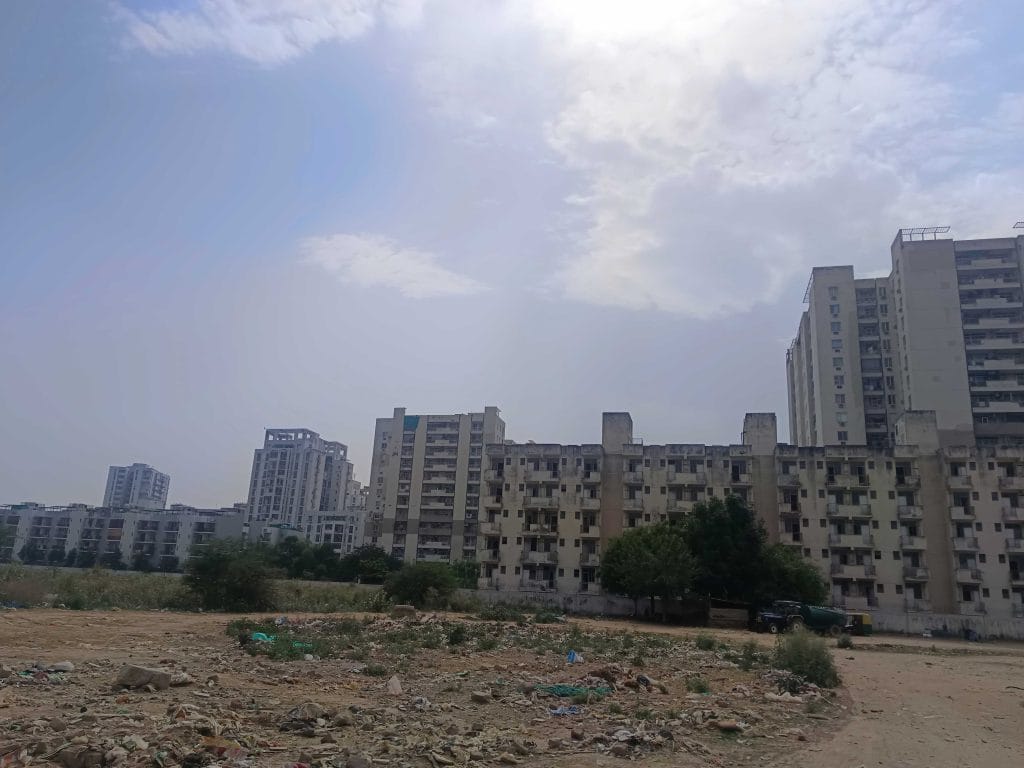
The housing block, known as Janta Flat Pocket 7, consists of 843 EWS houses. Many residents initially moved in as tenants and later purchased the flats, though some now regret their decision.
When residents approach authorities with complaints, it often takes months or even years for their grievances to be addressed, the 34-year-old man said, adding, “We have repeatedly complained to the authorities about repairing the boundary wall on our side, but it has been years, and we only receive assurances and new dates. Sometimes it feels like we are untouchable, the way RWAs behave ignorantly with us”.
Another concern raised by the Janta Flat residents is the alleged neglect by RWAs and other authorities associated with the societies. Residents claim that EWS families are rarely involved in society-related matters or community activities.
“They never involve us in any matter, festival, or event organised by the society, nor do they organise anything separately for us,” said another resident.
Also read: Delhi’s only rugby stadium is a mess—players clear cow dung before practice, no toilets
‘Our children aren’t allowed in the common park’
In many societies, EWS housing is located outside the main residential complex, precisely just beside it, or behind the luxurious properties. In some cases, EWS flats are situated within the same premises but in separate towers.
Brisk Lumbini has 272 regular flats and a separate tower containing 48 EWS flats within the same premises. While EWS residents speak about discrimination and restrictions on the use of common areas, several other residents deny such allegations.
EWS residents of the society alleged that they are not even allowed to let their children play in the common parks.
“You will never see our kids playing with those living in the normal blocks,” said an EWS resident of the society on the condition of anonymity. “Our children are not allowed to play in the common park, let alone use other facilities.”
Speaking about access to common facilities, another EWS resident said that amenities such as the gym, clubhouse, and swimming pool are meant for those who pay maintenance and membership charges. He added that, in many societies, even tenants are sometimes restricted from using these facilities, so the same rules apply to EWS tenants as well.
He further said that in many societies, EWS residents either do not pay maintenance charges or contribute only a minimal amount towards the upkeep of their designated areas. According to him, providing all facilities free of cost would make it difficult to maintain the society and would be unfair to residents who pay substantial maintenance fees.
“If every common area is opened to everyone without charges, maintaining these facilities will become difficult. It could also create disputes between residents who pay maintenance and membership fees and those who use the facilities without contributing,” he added.
Also read: In Assam’s ‘Wakanda’, a company is bringing women farmers to the supply chain
The wall of dispute
Dwarka Greens housing society in Pocket 5 of Sector 14 has been witnessing a dispute for the past two years over an iron fence separating the EWS flats from the Lower and Middle Income Group (LIG and MIG) flats.
On 26 April 2024, an iron fence was constructed by the DDA to control disputes between EWS and LIG, as well as MIG residents, regarding parking space conflicts within the society.
When labourers were constructing the fence, EWS residents gathered on the spot, opposing the fencing.
Soon, complaints were raised against the move after DDA officials attempted to build a fence inside the society to separate the EWS towers from the other residential blocks. EWS residents opposed the move, claiming it promoted social segregation and restricted their access to parks and common spaces and mainly the common parking.
“These housing concepts are meant to ensure that every section of society lives together, but they are building a wall to again separate EWS residents from their rights to use common areas,” said a resident of the society on the condition of anonymity.
EWS residents opposed the DDA’s solution of constructing a wall to separate the sections, and eventually, DDA left the unfinished fencing work as the matter was soon taken to the Dwarka District Court.
“The area where the wall was being built is a common parking area, and they are constructing the wall on the assumption that EWS homeowners do not need parking because they do not own cars,” he said.
In Sector 86 of Faridabad, EWS residents of Ozone Park have not only been fighting internally with the RWA for their rights but have also filed a complaint with the Registrar Office to pursue the matter legally.
More than 150 residents of Ozone Park submitted a joint complaint to the Registrar General of Societies and the State Registrar of Societies, Haryana, alleging that EWS residents were being denied voting rights in society elections.
Residents sitting in the office of advocate Satinder Duggal at his Faridabad office described how the RWA had consistently denied EWS residents the right to participate in the election process.
“The RWA does not even consider us a part of society. We don’t even know when elections are announced or conducted because they never inform us about anything,” said one of the complainants on condition of anonymity.
According to the Haryana Apartment Ownership Act, 2012, EWS residents who are legal apartment owners generally have the right to participate in society elections, including voting and contesting elections.
The residents also demanded a separate EWS RWA if they were not granted voting rights. Most of the residents, who belong to the Scheduled Caste and OBC communities, also alleged that despite multiple complaints to the Registrar Office, no inquiry has been initiated.
“We only received houses in these gated societies, but our rights and dignity are still missing,” said another EWS resident of the society. “Even after facing so many problems and discrimination, we cannot even protest openly because they will start harassing us more.”
(Edited by Saptak Datta)