







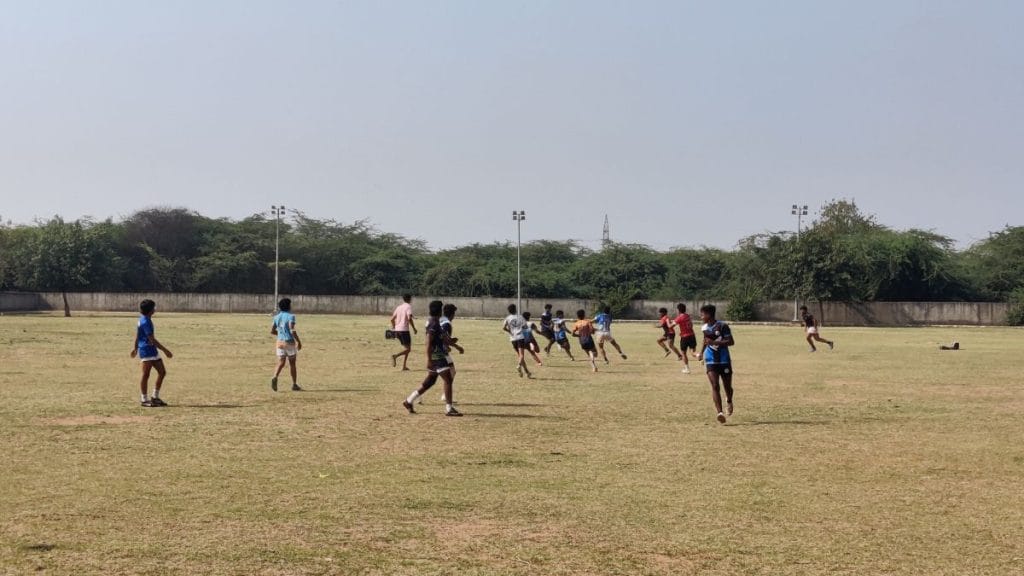
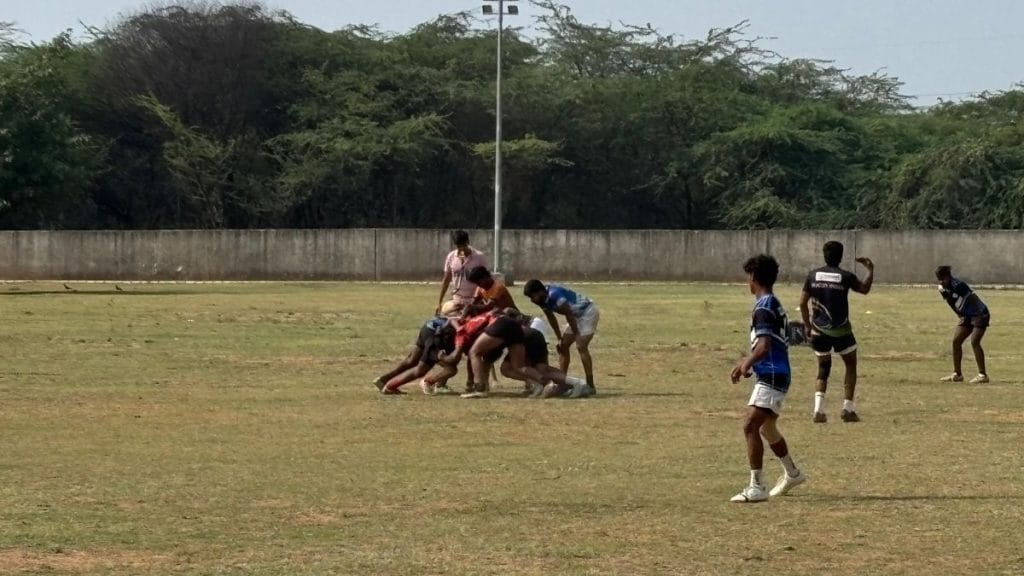
New Delhi: At 6 every Saturday and Sunday morning, children begin trickling into south Delhi’s Maidan Garhi carrying rugby balls under their arms. But before the sprint drills and tackles begin, they first bend down to pick up cow dung, discarded alcohol bottles, broken glass and sharp stones from the ground.
Only after nearly an hour of cleaning does practice begin.
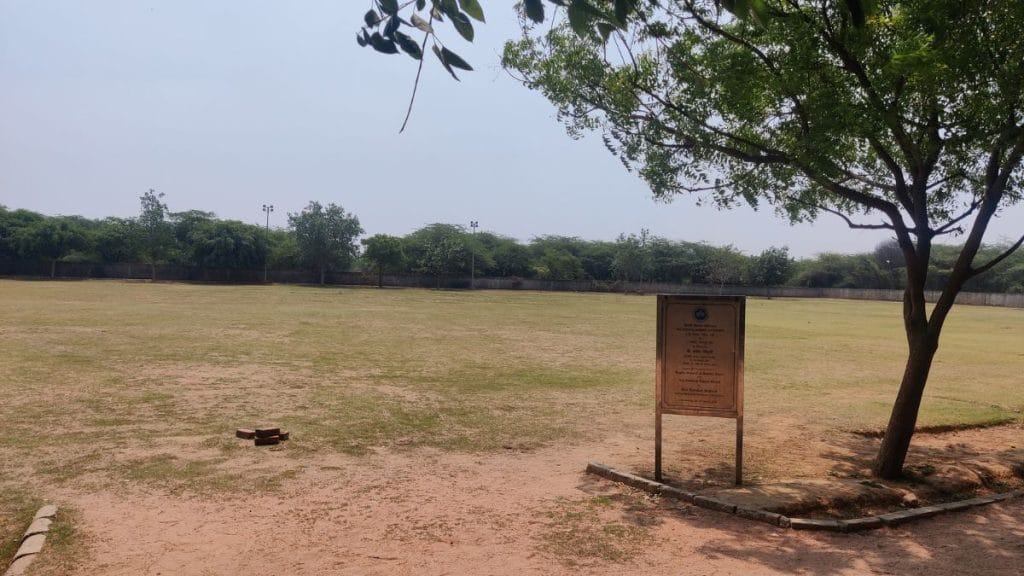
The field they train on is officially designated as a rugby stadium. But six years after the Delhi Development Authority (DDA) allotted 3.25 acres here for the sport, the ground still does not have any rugby posts, drinking water facilities, changing rooms and proper toilets.
“(Former BJP MP) Ramesh Bidhuri inaugurated this place as a rugby stadium, but everyone can see for themselves what is here now,” said Rohit, one of the coaches. There is nothing here — no water, no toilets, no changing rooms and no maintenance.”
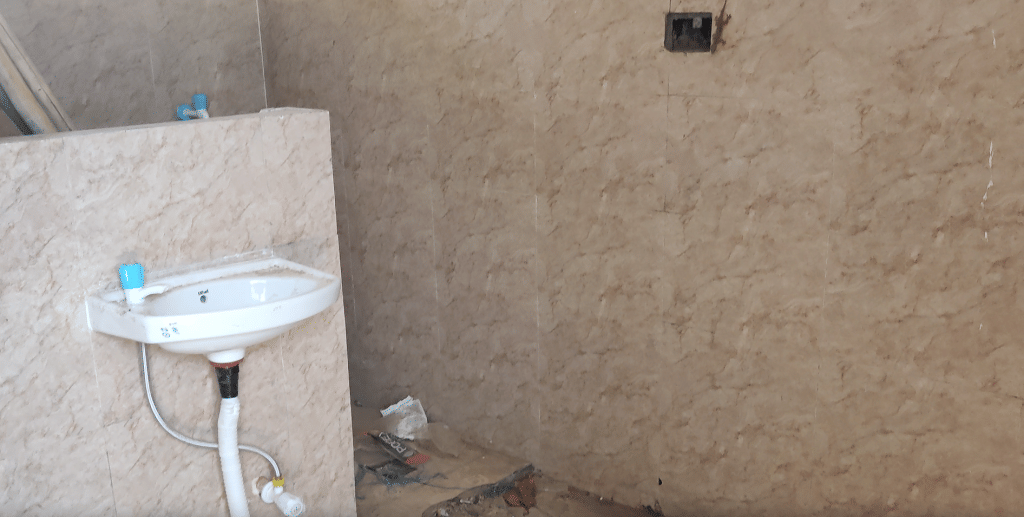
Near the edge of the field stands a crumbling concrete structure that was once supposed to function as a toilet block. Most players now change in the open or walk away from practice searching for washrooms and drinking water nearby.
“It gets very difficult during periods. How do we change here? How do we wash up?” asked 18-year-old Srishti, pointing at the abandoned structure.
The ground has no fencing or security guards, and as a result doubles up as a hangout spot. Cows frequently enter the field. Coaches say girls often face harassment from men passing through the area, forcing trainers to constantly monitor the younger players during practice.
And yet, every weekend before sunrise, hundreds of young players continue to gather at Delhi’s only rugby stadium.
Some travel nearly 10 kilometres to attend practice. Others take lifts from strangers because there is no direct transport to the ground. Many keep track of teams from Odisha and Bihar where rugby has grown rapidly through state-backed tournaments, structured clubs and even government job opportunities for players. They want to play for India, make their coaches proud.
But the journey to the ground itself often remains unsafe, especially for girls arriving alone before dawn.
“It’s dangerous for these young girls,” Rohit said. “There are no guards. Sometimes they face harassment. We can’t leave them alone even for a moment.”
Building rugby from the ground up
When Mithun Gaur first began playing rugby in Delhi in 1995, most people had never even seen a rugby ball before.
“When we used to carry a rugby ball in the 1990s, people would stop and ask us what kind of ball it was,” recalled Gaur, president of the Delhi Rugby Association.
Back then, rugby was barely recognised in Delhi. The elongated oval ball stood out against the familiarity of footballs and cricket bats, often inviting curiosity and ridicule. Today, Gaur estimates that over 1,000 players across age groups are connected to Delhi’s rugby ecosystem, many training out of Maidan Garhi.
Unlike in parts of England, where rugby union has historically been associated with elite schools, much of Delhi’s rugby survives through the working-class. Most players come from economically weaker backgrounds — children of drivers, vegetable vendors, security guards and daily wage workers.
“We are trying to change their lives through rugby,” Gaur said. “Some of these children cannot afford expensive schools or colleges. Through rugby, they are getting admissions and scholarships.”
One of them, 24-year-old Sanju Thapa, is currently pursuing a master’s degree in physical education after years of playing rugby through the association. He has been playing rugby for the past seven years, a start that happened by a chance introduction from his classmate.
From school games to national championships, rugby has funded almost his entire education.
He will now be playing in Khelo India games from Lovely Professional University and then hopes to work as a teacher.
Young players on the pitch
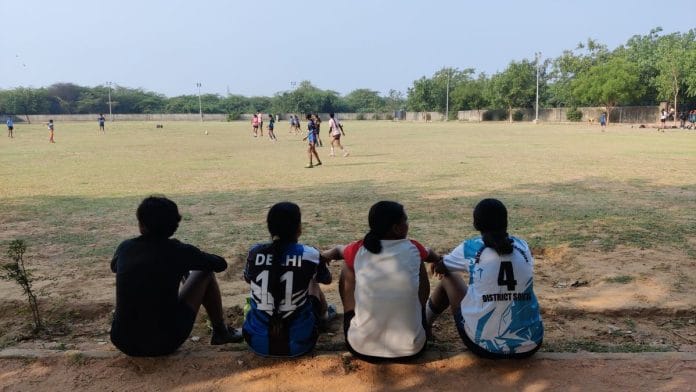
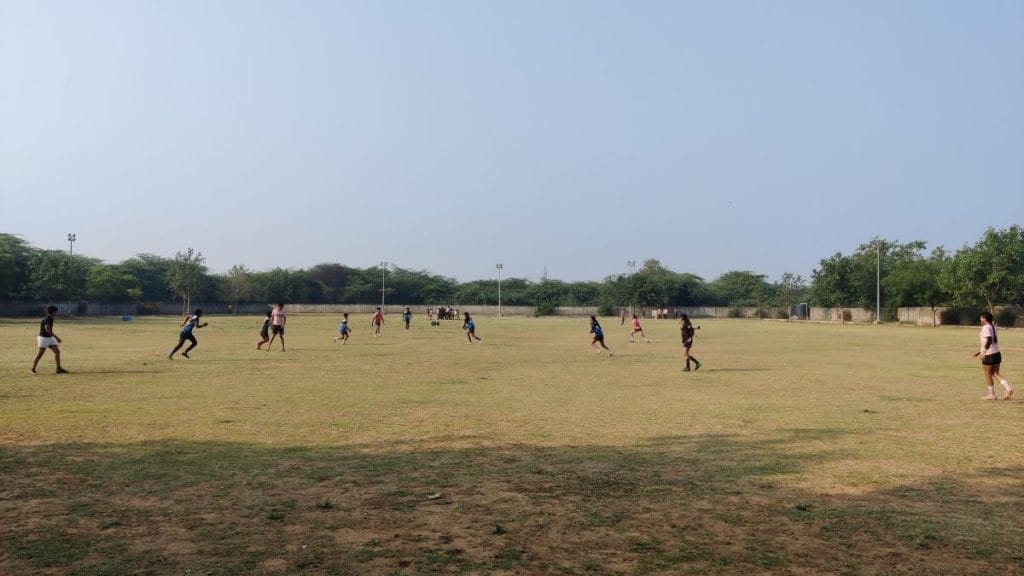
At one edge of the ground, younger girls sit cross-legged waiting for their turn to train while senior players run tackling drills nearby. Between practice rounds, jokes and shouting constantly ripple across the field.
Eighteen-year-old Srishti, 17-year-old Sandhya and 15-year-old Aisha were all introduced to rugby through school outreach programmes run by Dagar and the Delhi Rugby Association. Most had previously played kabaddi or kho-kho.
“We liked how aggressive it was,” one of them said, laughing. “The tackles, the running, everything.”
The girls often travel together to tournaments outside Delhi. They know who among them is the fastest runner, who panics during tackles and who can calm the team before matches.
When Sandhya won Rs 3,000 prize money during a tournament recently, she used it to buy clothes and shoes.
“What I actually want is a scooty,” she joked. “So I don’t have to keep taking lifts from strangers every morning.”
But beneath the humour lies the reality of what it takes for many of them to continue playing.
Sandhya said she had to repeatedly argue with her family for permission to travel to tournaments, eventually cutting her hair short in protest when they objected to the sport.
Her rugby journey has since taken her to Uttarakhand and Odisha as part of Delhi teams.
Vitasta Kaul | ThePrint
Travelling outside Delhi has also exposed the gaps they face.
“Only in Delhi does rugby still feel like a new sport,” Aisha said. “When we go to other states, we realise how much we lack—in training, facilities and support.”
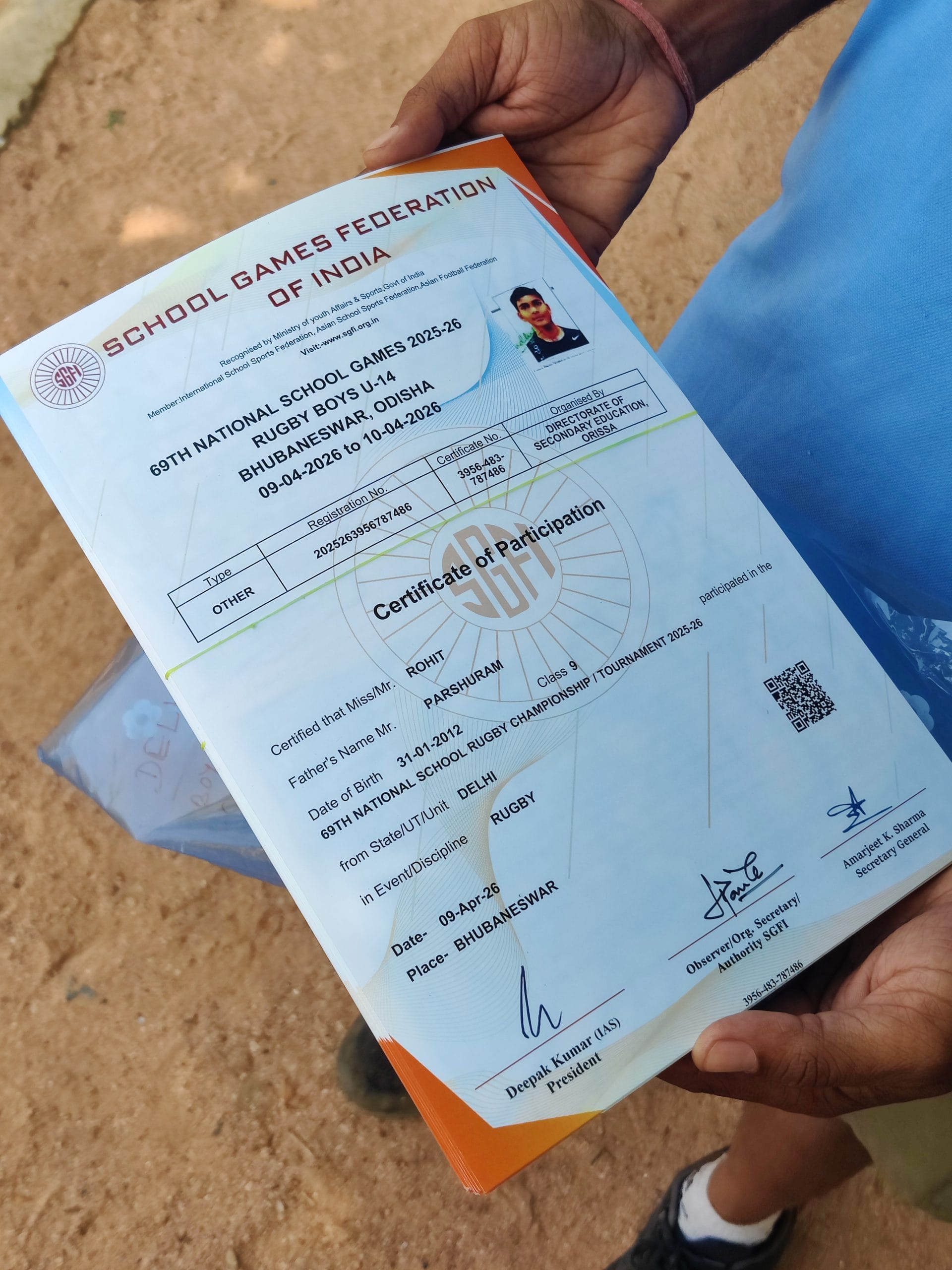
Krish, who is only 14, has already been playing rugby for the last three years and has competed in national tournaments across Odisha, Gujarat, Bihar, and Madhya Pradesh.
“With this ground, it is very easy to get injured,” he said. “Rugby is aggressive by nature and needs tackling. But here we have to be careful while playing, otherwise it can cause serious injuries.”
Krish says his next goal is to represent India, play in the Rugby Premier League and “make his coaches proud”.
For all of them, girls and boys, the ambition remains the same: to play for India, one day.
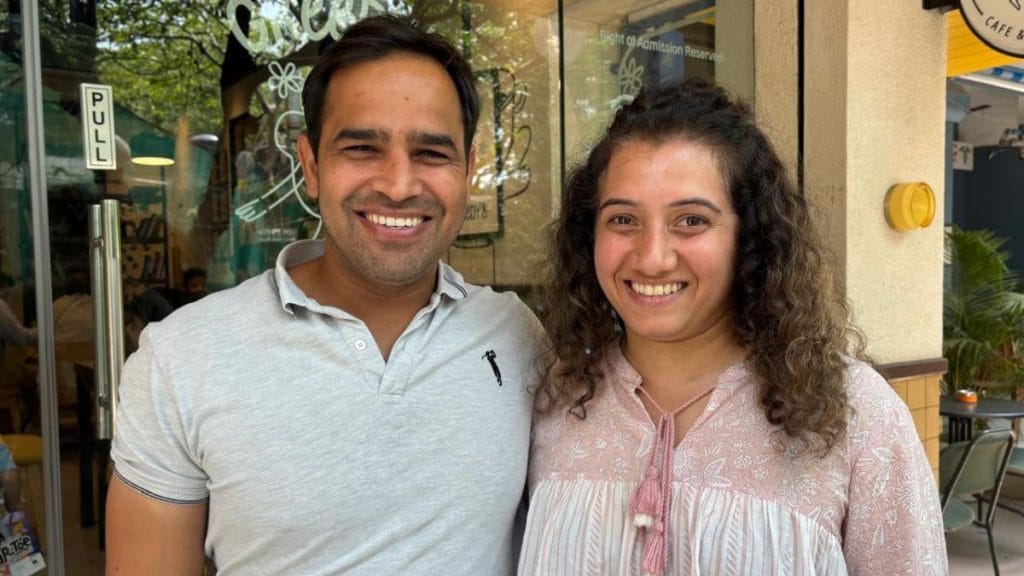
The couple behind Delhi’s rugby movement
By the time most children begin arriving at the ground, their role models and coaches Gautam Dagar and Neha Pardeshi are usually checking the field for sharp objects.
Most of the former India captains’ lives have revolved around rugby teams.
During conversations, the couple slips easily between roles — administrators, parents and mentors — often finishing each other’s sentences as they move between stories of national camps, injuries, politics in Indian rugby to whether every player brought water.
For them, rugby is not just the sport through which they represented India — it is also the reason they met, built a life together and now spend their weekends coaching children on a dusty field in Maidan Garhi.
Pardeshi first picked up rugby in Pune in 2009 at age 15 after a coach invited her to watch an exhibition match. She had been a national-level athlete in multiple sports was the kind of child who would try anything athletic.
“I made my first tackle and then I was hooked,” she said, recalling her initial rugby days.
Within two months of starting practice, she was selected for India’s women’s rugby team and would go on to captain the national side.
“There was no structure then,” she said. “No visibility, no facilities, no proper pathway. We were all just figuring it out as we went.”
Dagar’s journey began earlier in 2004, much closer to where he now coaches. Born and raised in Maidan Garhi, he studied in the same government school where he now works as a physical education teacher.
He captained India’s men’s rugby team and represented the country internationally for over 17 years.
But unlike athletes in more established sports, the couple say most of their careers unfolded without sponsorships, stable infrastructure or institutional support. Now, years later, rugby still dictates their lives.
Today, Pardeshi serves as secretary of the Delhi Rugby Association while Dagar oversees operations and development. They coordinate school outreach programmes, organise district camps, arrange travel for players, negotiate for grounds, look for sponsors and coach children across multiple age groups.
“We spend lakhs every year,” Pardeshi said. “But how much can individuals keep doing on their own?”
The coaching often extends beyond rugby itself.
Some children are helped into schools through sports quotas. Others later become assistant coaches. Dagar and Pardeshi also connect older players with universities and private schools looking for physical education instructors or sports coaches.
“We saw these kids not just as players, but almost as our own children,” Dagar said. “For some of them, this ground is the safest place they have.”
That responsibility becomes heavier when it comes to girls.
“Most of these girls fight tooth and nail to come here,” one coach said. “So we have to make sure the parents trust us.”
Also Read: Rust, rot & 2 dead athletes — Haryana’s sports powerhouse story has faultlines
Rugby stadium to public park
For years before getting access to the current field, players practised on an open clay ground nearby while constantly negotiating for space in parks and public grounds across Delhi.
Sometimes practice sessions were interrupted by cricket matches. At other times, players were simply asked to leave.
“In Delhi, access to grounds is one of the biggest struggles,” Dagar said. “Either the grounds are already controlled by cricket or football, or they are privatised.”
Even after the DDA allotted land for a rugby stadium in 2019, the association says the facility never became fully functional.
According to Pardeshi, the association later discovered through RTI documents that the ground’s designation had effectively shifted from a rugby stadium to a public park under the horticulture department.
“We later found out through papers that it had become a public park,” she said. “Our question was: if it was inaugurated as a rugby stadium, how did it become a park?”
The RTI documents described the space as “open for all”.
The couple are also critical of what they describe as growing politicisation within Indian rugby, particularly around access to coaching opportunities and professional leagues like the Rugby Premier League (RPL).
“The sport is becoming professional, which is good,” Pardeshi said. “But the development side is still missing. Grassroots coaches and state associations are not getting support.”
She pointed to the lack of women in coaching and management roles despite repeated conversations around gender inclusion in sport.
“At a recent coaching conference, I was one of only two women in a room full of men,” she said. “People talk about empowerment, but the representation is still missing.”
A sharp contrast
Delhi’s struggle stands in sharp contrast to the direction rugby has taken elsewhere in the country.
States such as Odisha and Bihar have spent the last decade building structured rugby systems with district tournaments, dedicated facilities and government support.
According to Rugby India honorary secretary Gerald Prabhu, some states now offer government jobs to rugby players through sports quotas, while others still struggle to secure basic training grounds.
“States like Odisha and Bihar are currently among the strongest rugby ecosystems,” Prabhu said. “A lot of districts actively play rugby there.”
Odisha has emerged as one of Indian rugby’s biggest centres, hosting national tournaments and women’s competitions such as the Asmita League finals. Bihar recently hosted senior national tournaments in Rajgir.
Maharashtra, especially Pune, has also developed stronger rugby systems over the years, aided by better access to grounds and institutional networks.
Rugby India now claims the sport has spread to nearly 50 cities, with growing participation among women players. According to federation estimates, women may now outnumber men in the sport nationally.
At the same time, the Rugby Premier League — launched last year with international players and city-based franchises — has attempted to turn rugby into a more commercially visible sport.
But Prabhu noted that Delhi’s infrastructure problems are not entirely unique. Across several cities, rugby remains squeezed out by more commercially dominant sports.
“Access to grounds is becoming a major challenge everywhere. In cities like Bengaluru, grounds are either privatised or permanently occupied by cricket.”
‘Work hard’
On the ground in Maidan Garhi, the gap is visible in the smallest everyday routines.
For drinking water during long practice sessions, the players often depend on nearby shops, neighbours or even a Blinkit dark store. Yet the jokes continue between drills.
“Even reaching the ground every day is a struggle,” Srishti, one player, laughed. “At this point, the government should just give me Rs 1 lakh for the inconvenience.”
“If you work hard, you’ll get everything,” Aisha replied instantly.
(Edited by Stela Dey)