





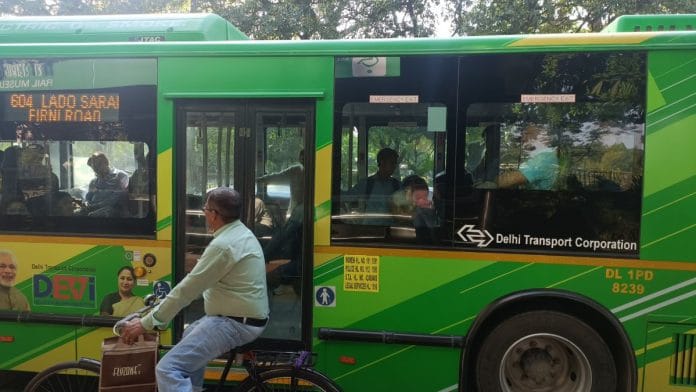


New Delhi: Most days, Rachna Kumari commutes to work for free. All thanks to the city’s new DEVi bus route. But what used to be a reliable commute in phat-phat autos and metros is now marred by an unpredictable bus schedule.
“No DTC buses would pass by both my house and my work, so it has been a godsend for me the last few months,” said Kumari. “I just wish they would be on time.”
The choked lanes of Madanpur Khadar, where she lives, are barely 10 km away from Nehru Place’s Apollo Hospital, where Kumari works. It’s one of 80 new routes covered by the Delhi Transport Corporation’s latest fleet of Delhi Electric Vehicle Interconnector (DEVi) buses. These nine-metre-long buses, launched in May 2025, had the twin goal of shifting more people to public transport and unclogging Delhi’s car-filled streets, while also improving the city’s air quality.
From metro stations to schools to parks, the DEVi bus is meant to connect Delhi’s citizens to the insides of their neighbourhoods. While other Indian cities have nine-metre-long buses, none have attempted the neighbourhood mobility route that DEVi offers. Transport officials cite examples such as London or Beijing’s bus services while talking about their plans to expand DEVi.
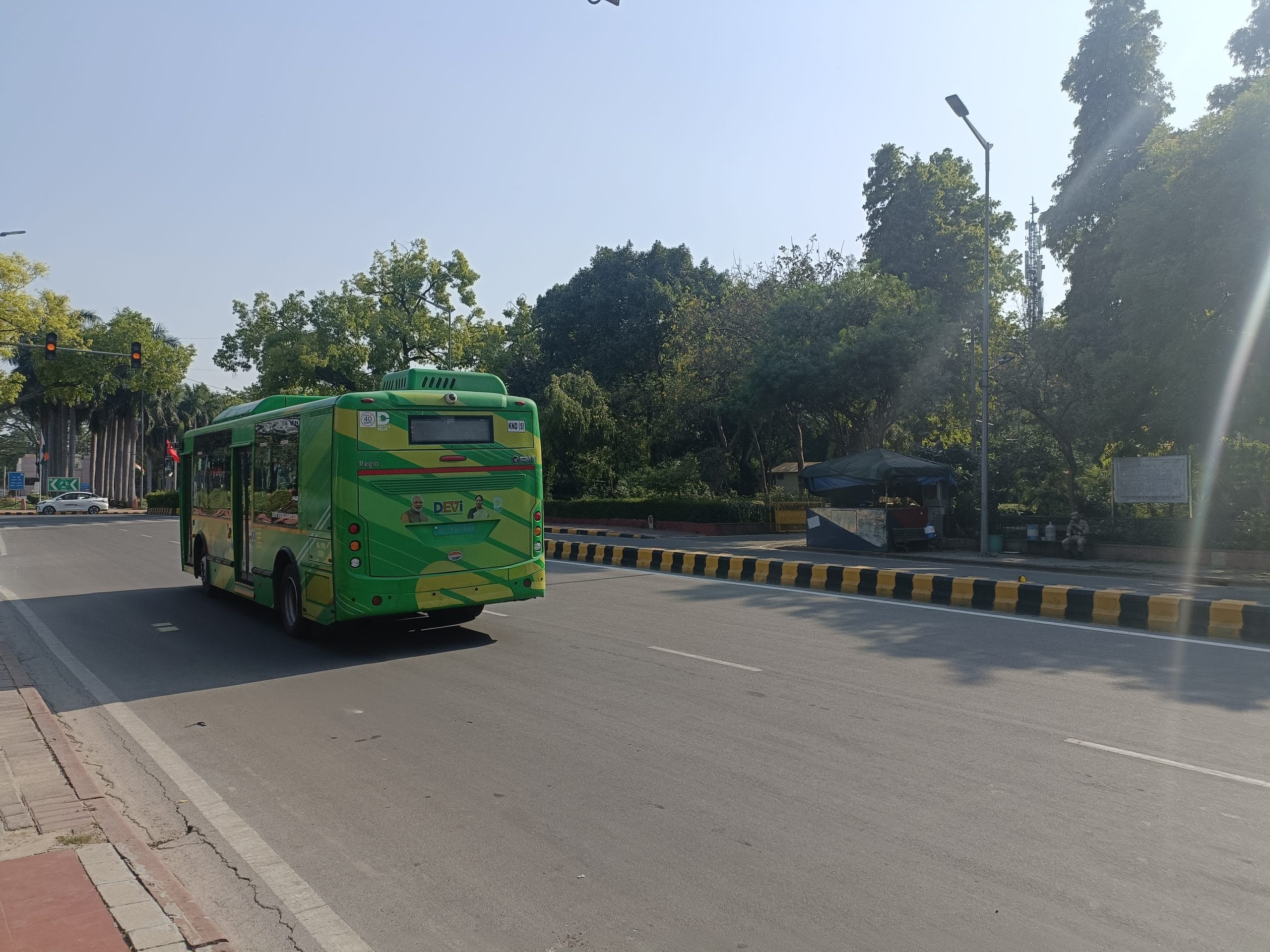
In just a year, Delhi’s DEVi bus fleet has added 1,489 electric buses and gained an average of 2.8 lakh daily commuters. For riders like Rachna Kumari, the green buses have become a part of daily life—but even this new clean, green fleet runs into an old Delhi problem: Buses that arrive late, infrequently, and fail to serve the city’s busiest routes.
The DTC plans to launch another 500 DEVi buses by the end of this year, and even expand into smaller, seven-metre buses in the future. But even as the corporation builds new depots and plies these buses on the narrow, neighbourhood streets, the fact remains that DEVi buses have not drastically increased DTC’s average number of commuters. They are not converting non-bus users to bus users in Delhi.
The DTC’s daily average ridership has fluctuated between 24 to 33 lakh over the last five years, with no major change even with DEVi’s launch.
“We’re hoping that people eventually give up their bikes and cars and prefer buses even for short rides,” said Jitendra Yadav, Managing Director, DTC. “But to do that, we need to first build trust and reliability in our buses. That is what DEVi buses will help us do, but we know it will take time.”
Also read: Mera Bharat, Mera Photo-Op—From Rekha Gupta’s Metro ride to Modi’s broom
What are DEVi buses?
Underneath the arch-shaped foot overbridge, in Kushak Nallah bus depot, near Jawaharlal Nehru Stadium, a row of green DEVi buses stands proudly. This was one of the first depots to see the rollout of these nine-metre-long, low-floored EV buses in 2024, under the Aam Aadmi Party government’s original ‘Mohalla buses’ scheme.
They function in essentially the same way as DTC’s other buses—costing Rs 10 to Rs 25 for a ride, with free tickets for women passengers.
Now, the same green buses bear the ‘DEVi’ branding, flanked on either side by a picture of PM Narendra Modi and CM Rekha Gupta.
It was Kailash Gehlot, the state Minister of Transport in 2023 under AAP, who originally came up with the idea of Mohalla Buses and announced the pilot release of 100 buses running on neighbourhood routes. The plan was to serve the neighbourhood or mohalla, much like the AAP government’s ‘mohalla clinics’ scheme.
The Mohalla bus scheme was the blueprint for the current DEVi buses, designing a “short route, high frequency” model to ensure commuters can access the important spots in their neighbourhood.
Sourced from the same manufacturers—PMI and JBM—as the other electric 12-meter-long DTC buses, the DEVi buses are nine metres long to ensure access to smaller roads, and their routes are around 10 to 15 km long.
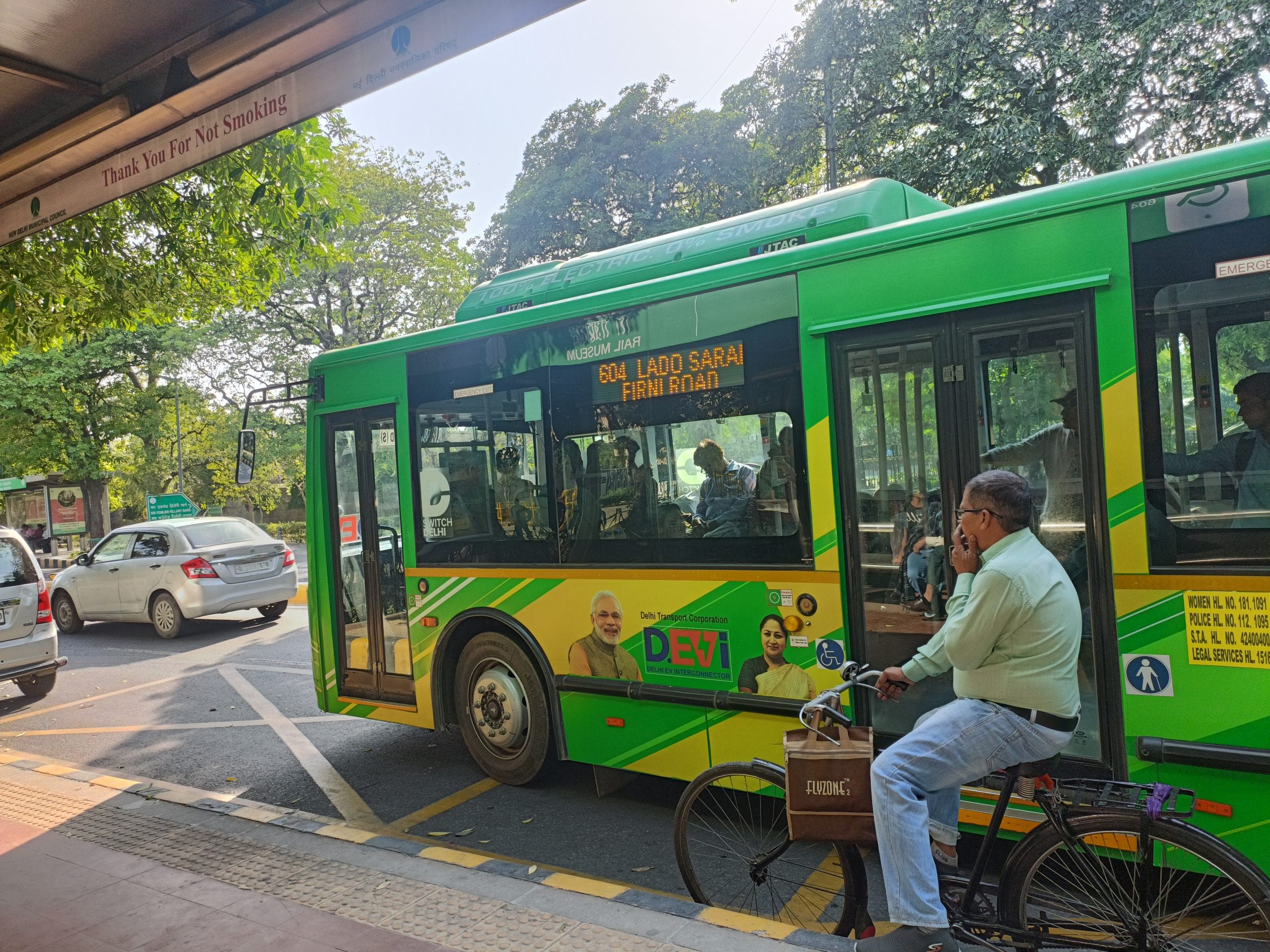
“The buses are primarily deployed to connect you to all important locations in your neighbourhood—schools, malls, parks, residential areas,” explained Bhaumik Gowande, researcher, The International Council on Clean Transportation. “So they use internal roads instead of main roads, and have circular routes.”
Under the AAP government, the DTC planned and initiated the Mohalla bus scheme in 2023, and even acquired around 100 new nine-metre buses. The government roped in IIT Delhi’s research centre to design new, AI-based routes based on existing transport and travel data. By 2024, four pilot routes were started by the DTC in some parts of Delhi to test their efficiency and understand if commuters were using them.
The routes were in areas such as Burari, Mayur Vihar and Vasant Vihar, which, according to the DTC-IIT Delhi study, suffered from a lack of last-mile connectivity.
After the BJP-led government came to power in 2025, the Mohalla bus service was renamed DEVi bus service and scaled up fast. The first launch of 400 buses on 2 May 2025 was followed by new launches almost every month, bringing the number to 1,489 in a year. The buses are swanky and equipped with features like GPS tracking, CCTV cameras, and even QR-code-based ticket scanners with the conductors.
Meanwhile, each quarter, the DTC took stock of the ridership, the routes that worked well, and the feedback from the commuters. The reports are not yet public, but Yadav assured that the DTC is working to incorporate the feedback.
“The overall number of commuters using DTC is the same—there’s been no substantial increase since we launched DEVi buses,” said Yadav. “But we have gotten feedback saying it has improved last-mile connectivity for some areas, and we’ve seen that the use of phat-phats and e-ricks has reduced in areas with DEVi bus service.”
While the government’s feedback reports remain opaque, daily commuters on DTC buses have mixed reviews about the new fleet of green and orange buses. For passengers in South Delhi’s Chhatarpur and Vasant Kunj areas, the D-7701 route is perfect for connecting residential colonies to the yellow and magenta line metro stations.
In central Delhi’s Patel Chowk and Central Secretariat areas too, the number of autos have dwindled over the past few months with the introduction of new DEVi buses.
However, many commuters in busy areas like Lajpat Nagar, Okhla, and Delhi-Noida and Delhi-Gurugram borders still choose to rely on autos, e-rickshaws and Uber or Rapido services. While some routes don’t have operational DEVi buses yet, other passengers just haven’t figured out the bus system.
“How do I know where a DEVi bus is going and where a normal bus is going? The DMRC app is at least reliable, I don’t know if the buses in Delhi are,” said Ayushi Maheswari, a service consultant who lives in Lajpat Nagar and works in Okhla. “I’d rather spend Rs 80 on cabs than wait for buses indefinitely.”
Also read: What India can learn from Dunkirk free bus experiment–Plan, design, invest
Last-mile connectivity
A giant, colourful map of Delhi’s multi-modal transport system looks over Yadav’s desk at his office in Delhi’s Indraprastha Estate. Through a zigzag of lines and markings, it displays how the city has planned its 10 metro lines and over 600 bus routes, undercutting each other in a semi-chaotic mess.
“Delhi’s development has been haphazard, and so has been the growth of its public transport system. Even now, you see some metro stations aren’t connected to main roads, and some bus routes overlap with metros,” explained Yadav.
A research paper by Amity University, Noida found that the lack of effective and affordable last-mile connectors like feeder buses, autorickshaws, and pedestrian crossings could hinder overall usage of public transport like the Delhi Metro and DMRC buses. Last-mile connectivity refers to the connection between the last stop of any major public transport route and a commuter’s destination.
According to a 2025 study by the International Council on Clean Transportation, 60 per cent of all bus trips taken by riders in Delhi are less than 4 km long, yet most of the city’s network is dominated by long-haul buses that ply on trunk roads. This shows the need for short-distance transit systems in the city.
London, with less than a third of Delhi’s population, has a fleet of almost 9,000 buses. Delhi, meanwhile, has 6,300 buses, and the DTC estimates that it needs 10,000 to 12,000 to provide public transport to all its citizens. Without the numbers, the city can only hope that its people actually choose public transport over their own vehicles.
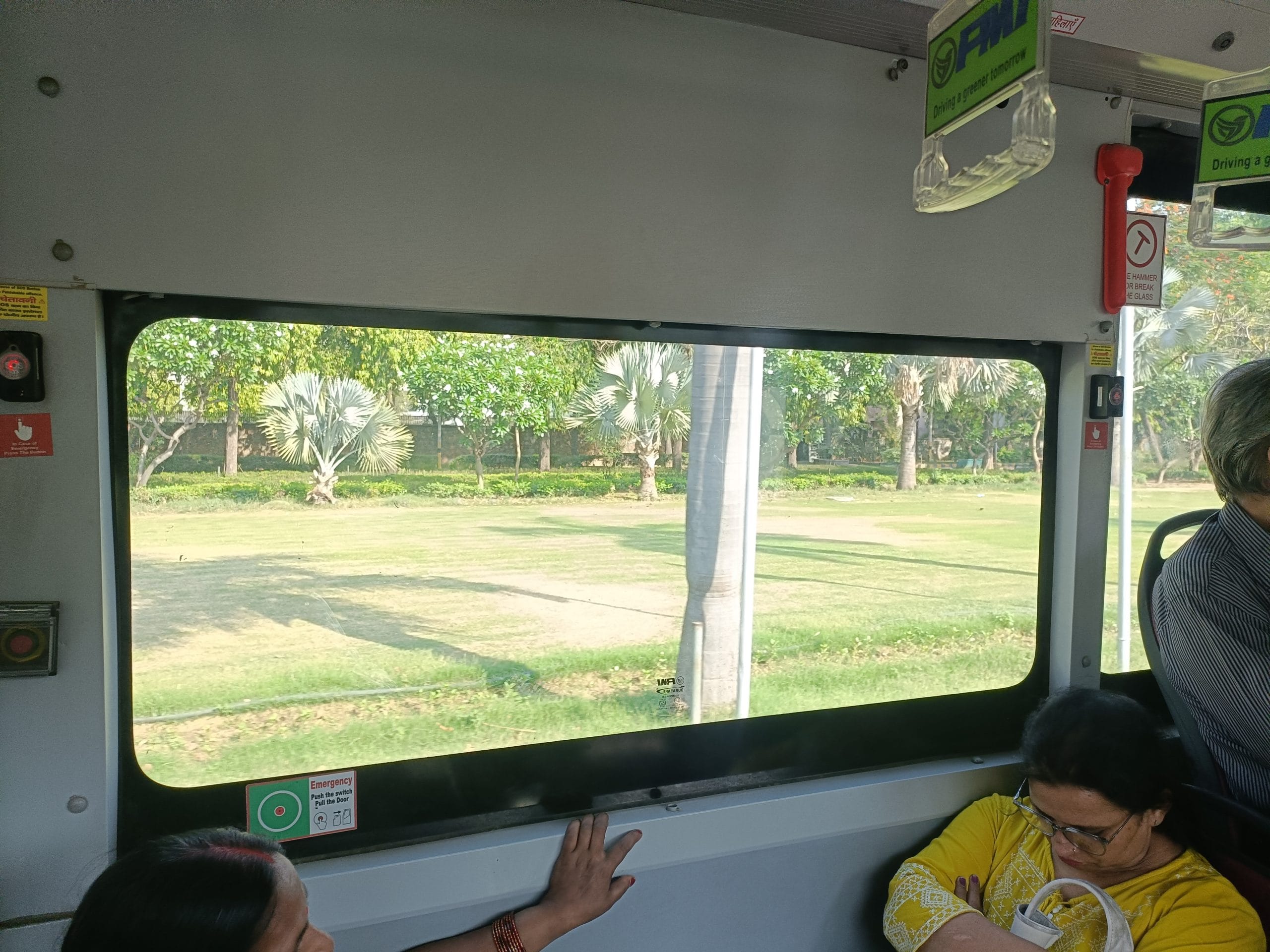
“We want DEVi buses to arrive at a frequency of every five to ten minutes, so that passengers don’t have to wait too long,” said Yadav. “We want buses to be the way to connect people across the city.”
Delhi’s transport authorities have been chasing last-mile connectivity for decades now, introducing newer metro lines, e-rickshaws and phat-phat services, and, for a brief period, even metro feeder buses. The DEVi buses also aimed to fill this gap, with their affordable price point and promise of quick service.
They’ve been a partial success, especially in areas with no existing bus route, such as Madanpur Khadar and Nehru Place.
Working as a nurse in Apollo Hospital, Kumari would have to spend around Rs 30 every day on her earlier commute—Rs 10 for the phat-phat from her house to the metro station, and another Rs 18 on the metro. With the new DEVi bus, she travels for free. But she has to pay with her time. On days when she is lucky, she reaches the bus stand at 7:10 am, and her bus drops her near her work by 7:30 am. But some days, her bus only reaches Madanpur Khadar by 7:30 am. There have been times when there was no sign of her bus at all.
Yadav’s goal of 10-minute frequency is still a little way away. Currently, the average frequency of DEVi buses, according to the DTC, is 20-30 minutes.
Another issue is that the buses have not been introduced in all of the new routes proposed by IIT Delhi. Out of 148 new routes, DEVi buses are only on 80 routes.
A quick look at the new DEVi bus routes shows their intentionality. Some routes connect border areas like Bawana and Narela to the nearest metro stations, which are around 13 km away. Others connect busy bus depots like Anand Vihar to courts, metro stations and government schools.
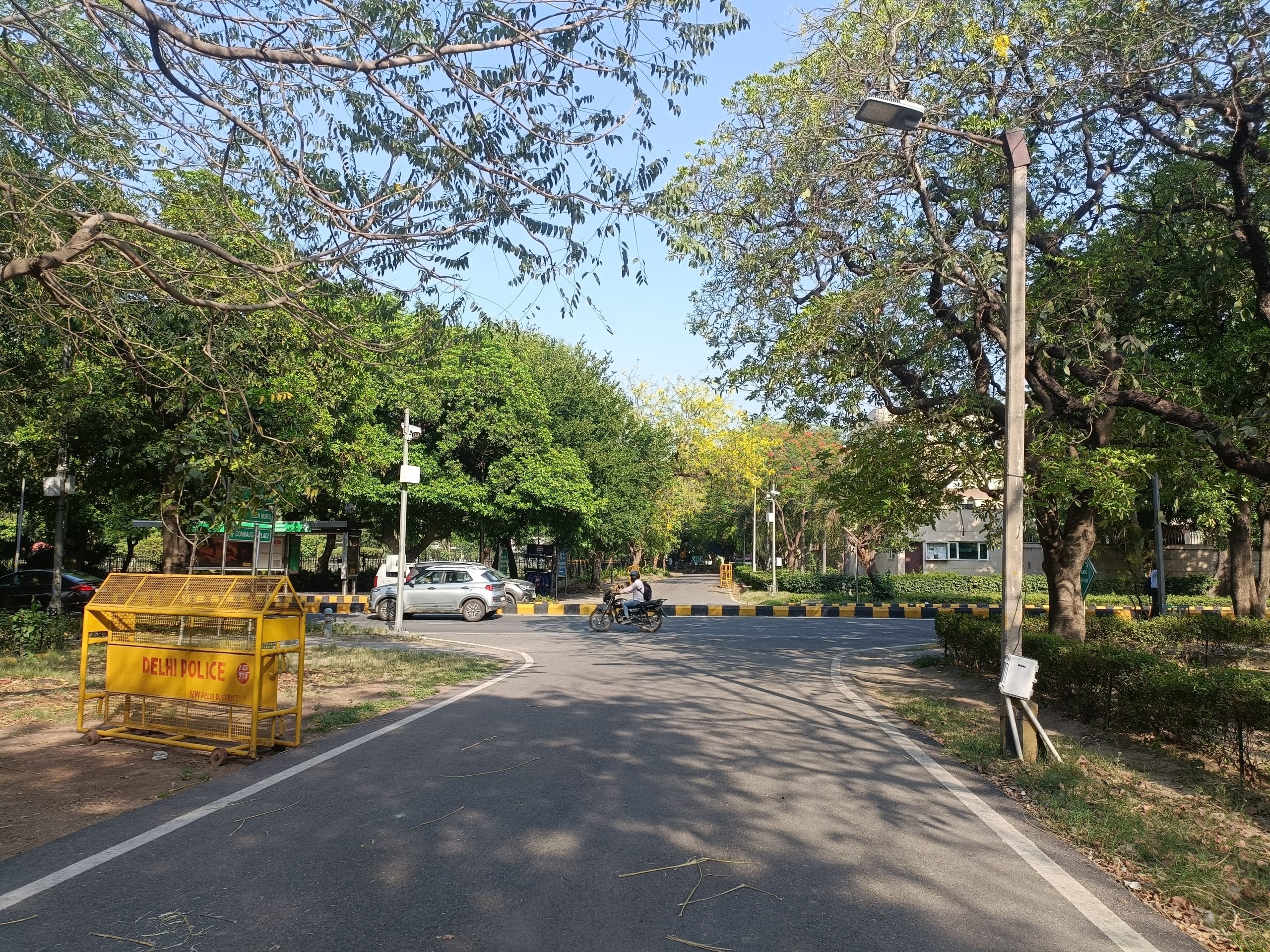
Some DEVi buses were also added in the posh Vasant Kunj and Chhatarpur areas, notorious for their lack of last-mile connectivity. However, most of the DEVi routes mentioned on the DTC website are in working-class neighbourhoods like Usmanpur and industrial areas like New Mandoli, expanding the city’s access to affordable and safe commute options.
Also read: Karnataka women are on non-stop joy ride. Backpacking to temples & palaces on free Shakti
Route modernisation and frequency
At the Nirman Bhawan bus depot in central Delhi, 55-year-old Ramesh Gupta phoned his wife to inform her he might be late for lunch—there was no sign of a bus after 20 minutes of waiting. It was his last working day in the Ministry of Culture after 20 years of service. DTC buses were his one constant.
“Whether it’s the old blue line buses or AC buses or these new green buses—it’s all a game of luck if they’ll come on time or not,” he said. “There’s no reliability here.”
However, a few hundred metres away at the Udyog Bhawan depot, a bus zooms past every five minutes. Some are the green DEVi buses, some the blue electric buses, and even a few orange, non-AC CNG buses.
This stark contrast in frequency is one of the kinks that DTC is yet to iron out. Delhi’s bus fleet now includes around 6,300 buses, of which nearly 4,500 are electric. All of these ply on 600-650 designated bus routes.
By December, the DTC plans to add 1400 new electric buses, of which 500 will be nine-meter DEVi buses. By 2027, the new seven-metre buses would also start plying on DEVi routes. And by 2028, the government plans to have 10,000 buses on Delhi’s roads.
Transport experts say the success of the EV transition and increasing public transport use depends less on the number of buses and more on how routes are designed and distributed across the city. Even after multiple route modernisation attempts, Delhi’s buses haven’t adapted as quickly as required.
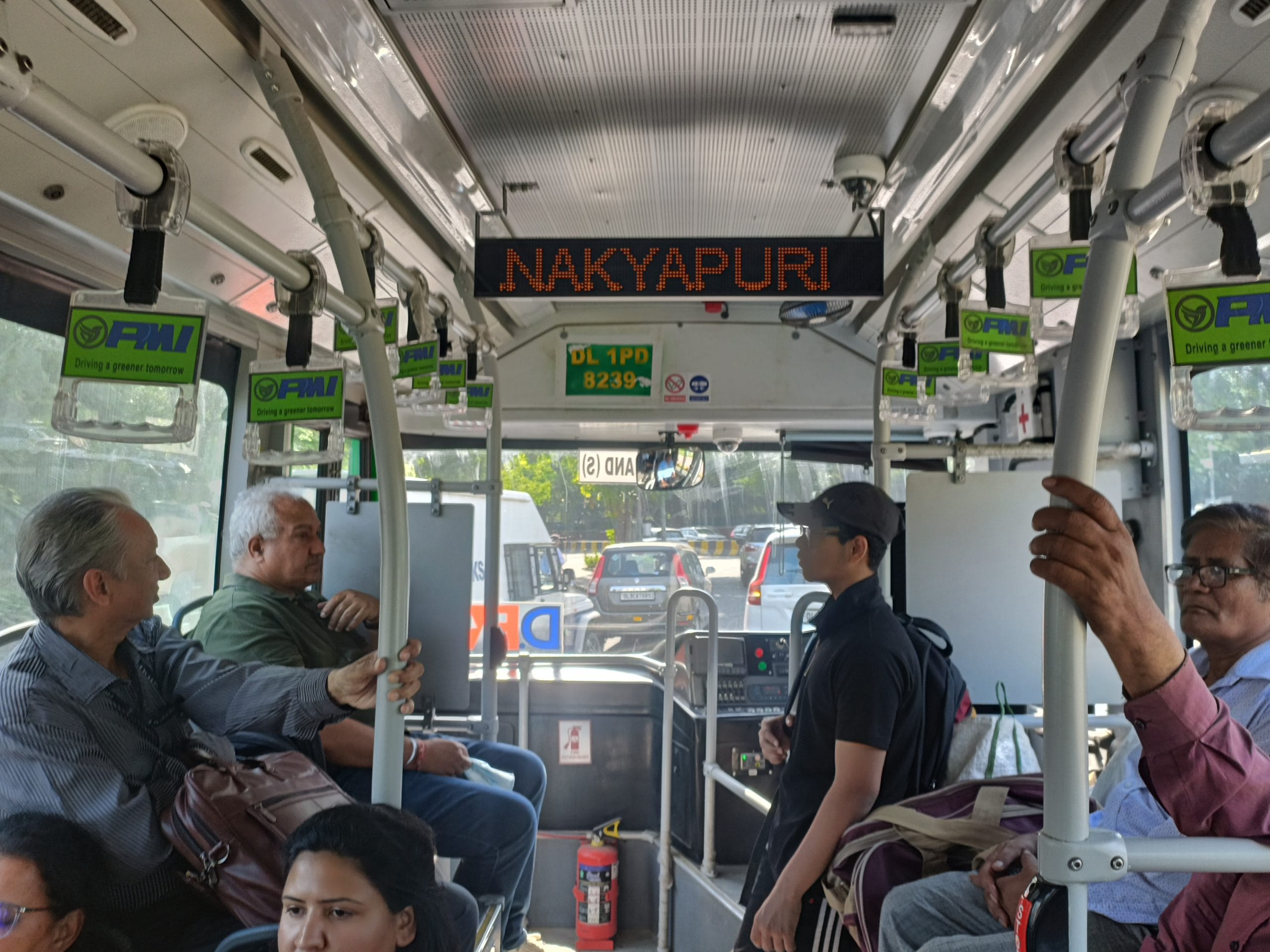
Researchers at IIT Delhi used commuter and transport data to design DEVi routes that would reduce congestion and improve access in underserved areas, with less than 30 per cent overlap with existing corridors. But only 80 out of these 148 routes are operational. More often than not, DEVi buses run on the same routes as the existing blue buses, adding to instead of relieving congestion.
DTC, in March 2026, even signed an MoU with IIT Delhi and BCG for a new route modernisation exercise on the existing 600 routes. Yadav is certain that once bus fleet numbers, reliability and punctuality are determined, commuters are bound to increase.
“We should understand that ridership on public transport is simply a function of availability,” said Amit Bhatt, Managing Director, ICCT. “Where should you add buses? Look at where people are commuting from—Noida, Ghaziabad, Gurugram. Delhi is about its people, not just administrative boundaries.”
(Edited by Theres Sudeep)