





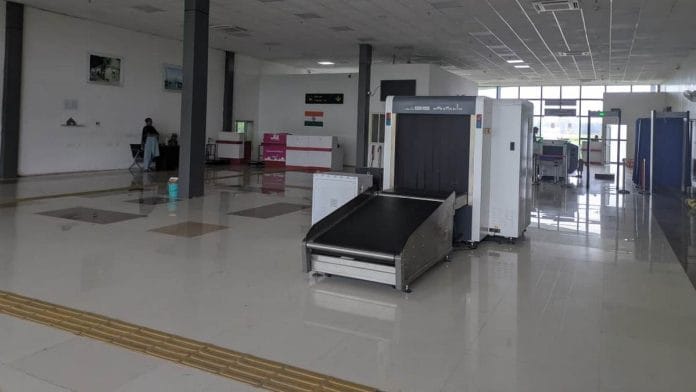

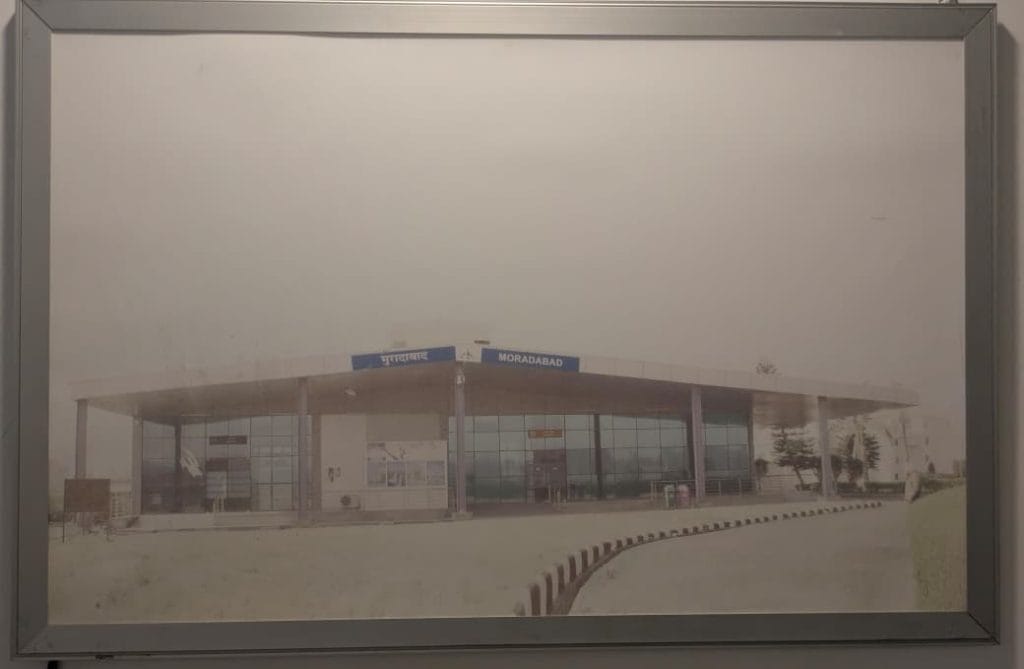
Moradabad: The grey-and-white airport in Moradabad was supposed to be western UP’s gateway to the world. When it opened in 2024, it brought hopes of faster trade for the local brassware industry and easier travel for residents. Inaugurated by Prime Minister Narendra Modi and Chief Minister Yogi Adityanath, it was part of the ambitious UDAN initiative, where ordinary people wearing hawai chappals could fly in a hawai jahaz.
For three months, the dream came to life. Passengers dressed up to board flights to Lucknow and there were expectations that more routes would be added. But today, the airport is a deserted ghost building, a pale memory of a promise that didn’t quite take off. No commercial flight has run for nearly two years.
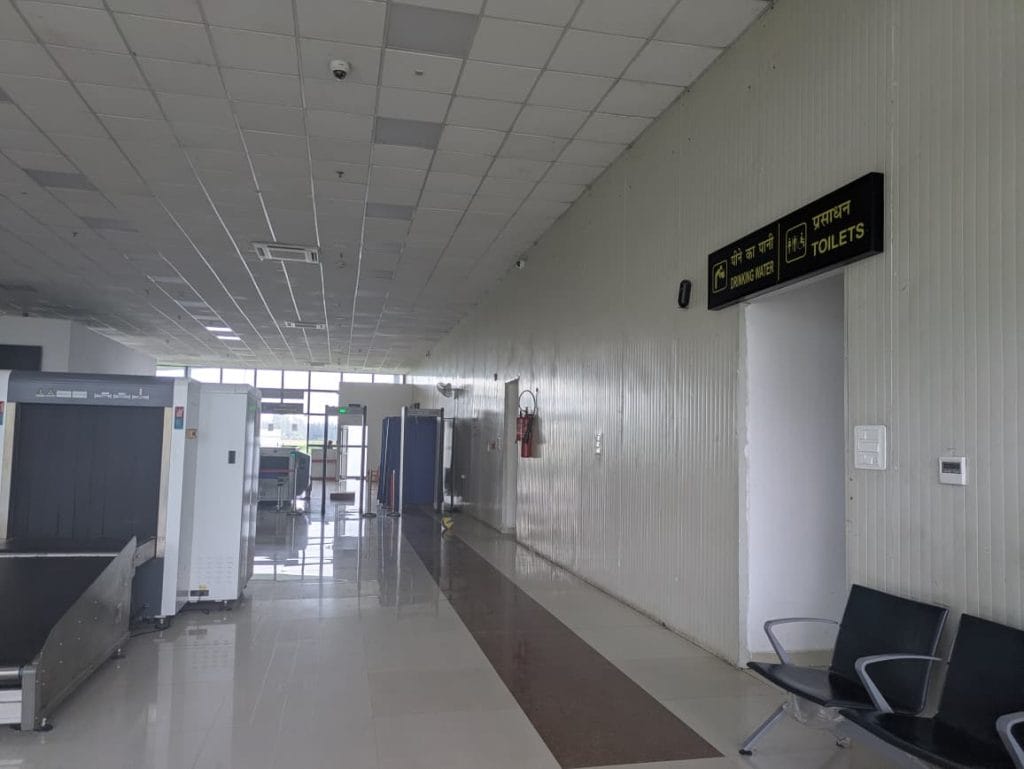
Inside, the terminal’s check-in counters and departure lounges lie deserted except for a skeleton crew guarding and cleaning the infrastructure that no one uses. The lustre of the new airport has faded. The tarmac is empty, licensed to receive aircraft that rarely come.
The UDAN airports in small towns were meant to boost trade, tourism and local economies across India. But Moradabad’s flight-plight is testimony to the ill-planned rush to build infrastructure that could not sustain itself financially or commercially. It goes against the dictum of ‘if you build it, they’ll come’.
A large project like an airport takes time to gain complete functionality. The infrastructure was there, but the runway did not have the strength for larger commercial flights
– Ashish Pal, AAI director at Moradabad airport
A 2023 CAG report noted that 52 per cent of 774 routes awarded under the first three phases of UDAN never commenced operations. Of the 371 that did, only 112 (30 per cent) completed the three-year concession period. Of all routes awarded up to UDAN-3, the report said, “only 54 (7 per cent) proved to be sustainable in 3-5 years”. The audit also found that Rs 1,089 crore had been spent on 83 airports, heliports and water aerodromes where operations either never began or were later discontinued.
Yet, expansion continues. The government approved Modified UDAN this March, committing Rs 28,840 crore over a decade to construct another 100 airports.
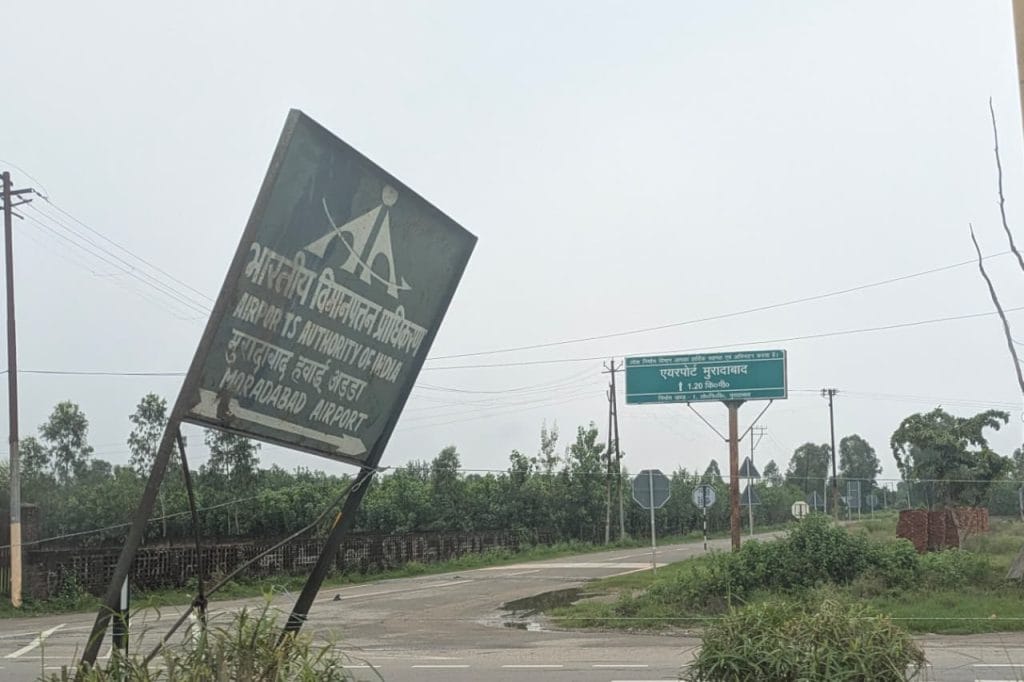
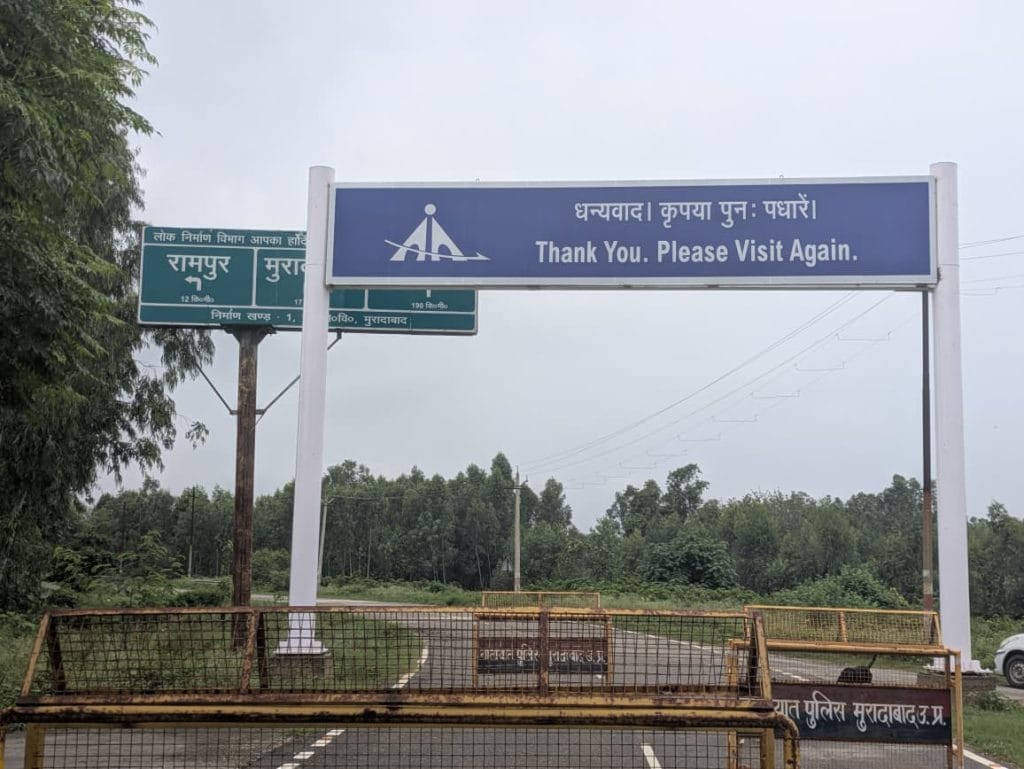
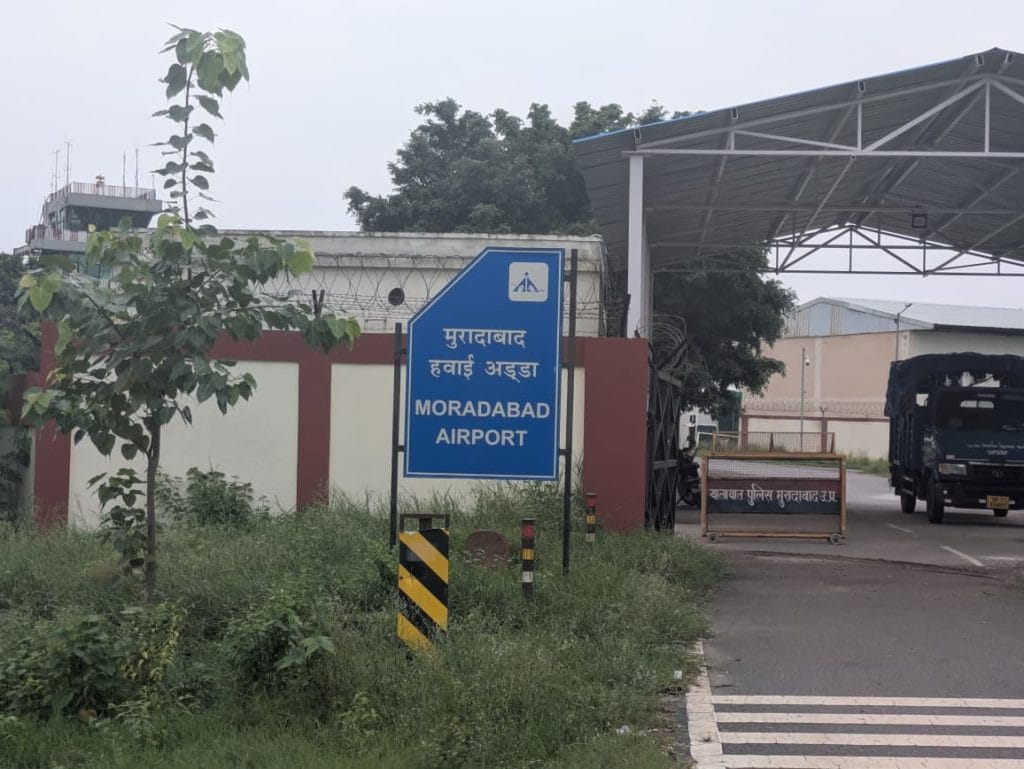
At Moradabad’s Mundha Pande village, the airport sits awkwardly among lush green fields. Grazing cattle and stray dogs wander outside the perimeter, while security guards at the main gate demand written clearance from anyone trying to enter the premises.
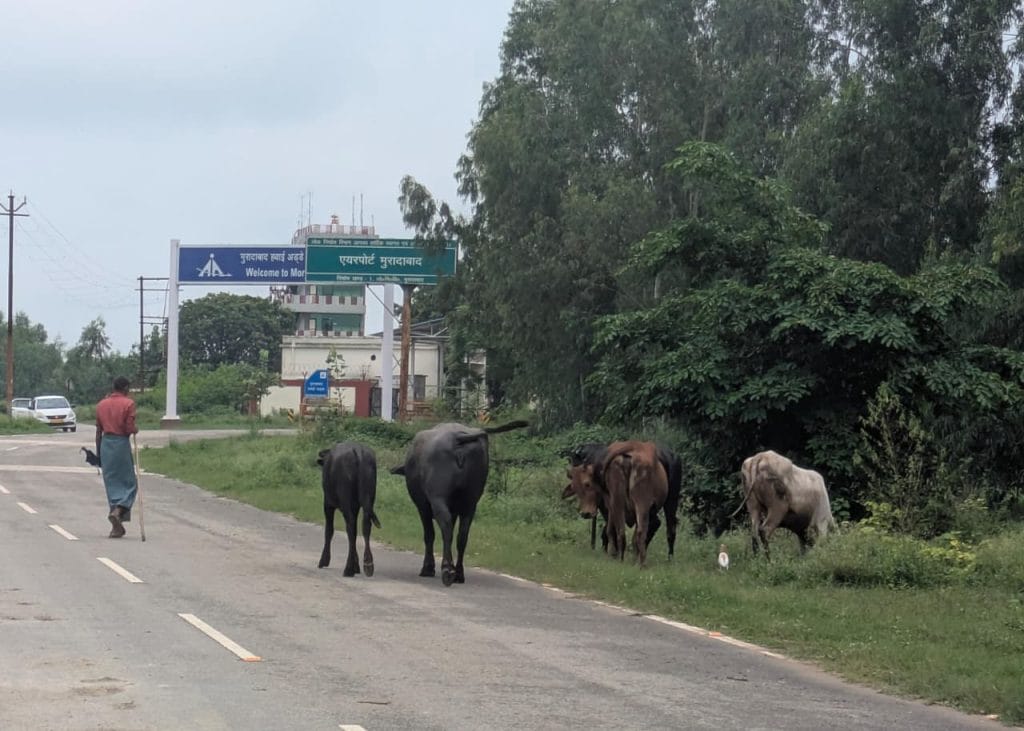
Seven Airports Authority of India (AAI) staff are posted here to keep systems functional: an airport director, a three-member Air Traffic Control unit, and a three-member Communications, Navigation, and Surveillance team. They stay on standby for occasional VIP landings. Housekeeping staff have also been stationed for the upkeep of the airport under a contract of Rs 29 lakh per year, according to a written response to ThePrint from the Civil Aviation Ministry. It also confirmed that Lucknow flights ran only from 10 August 2024 to 2 November 2024 before scheduled service was suspended.
“Non-scheduled flights land here once or twice a month, mostly VIPs,” said Ashish Pal, AAI director at the airport. “The airport remains operational only on Mondays and Wednesdays.”
Pal took charge of the airport in 2025, after commercial operations had already stopped. Behind the collapse was a knot of problems: a runway unsuitable for larger aircraft, too few compatible planes, a struggling airline and thin passenger traffic.
AAI data shows 197 passengers used the airport in its first month. From August to November 2024, only 542 passengers used the airport.
Gurugram-based airline FlyBig, which operated the Moradabad route, formally ceased operations altogether on 13 December 2025, when its air operator’s certificate expired. It is now permanently closed.
Also Read: Jharkhand’s govt recruitment is stuck in a loop—aspirants pay with years of their lives
Tarnished dreams
Few stood to gain more from the airport than Moradabad’s brass industry. In this robust brassware export hub, the idea of a local airport gave wings to bigger dreams.
Moradabad’s identity as “Peetal Nagri” is centuries old. The district now accounts for close to 40 per cent of India’s brass handicraft exports, worth an estimated Rs 4,500 crore a year. Roughly 600 registered export units reportedly supply buyers such as IKEA, Zara Home, H&M Home and Anthropologie across the US, UK, Germany, Canada and the Middle East.
Word of the proposed airport circulated among exporters well before the first flight took off. Nimish Sachdeva of Anand Industries, a local exporter dealing primarily with US buyers, noted that members of the trade fraternity met informally to discuss potential opportunities, though those talks yielded no formal initiatives.
“We thought, the airport is built, now customers from across the country can land straight here,” he said.
But with no international connections on the cards and no signal from the airlines or the government that volume was coming, excitement fizzled out. Officials from the government or AAI did not engage with exporters before or after the airport opened, according to Sachdeva. Nor, he added, was there any serious push to publicise it once it was ready.
“We would have made preparations if we saw things happening, if people had started coming, or if we got some response,” Sachdeva said. “When there’s demand, only then do you prepare. If they had promoted it, we would have welcomed it enthusiastically. But they kept completely quiet.”
The airport stopped scheduled operations before the industry could even wait and watch.
We had expectations but the airport didn’t bring any benefit, nothing came out of it. It’s completely zero here
– Nimish Sachdeva, Moradabad exporter
“We had expectations but the airport didn’t bring any benefit, nothing came out of it. It’s completely zero here,” Sachdeva added.
Buyers from cities such as Mumbai, Pune, and Hyderabad still route through Delhi before taking the four-hour drive to Moradabad. Air freight is also entirely tethered to the capital.
“If we send any shipments by air via DHL or FedEx, all those shipments go through Indira Gandhi International Airport in Delhi,” said Sachdeva.
The failed airport has also given fodder to the Opposition.
“Moradabad needed the airport the most, because exports go to various foreign countries from here,” said Ikram Qureshi, a Samajwadi Party MLA from the Moradabad constituency. “Brass is exported from here, and the country gets a lot of foreign currency through the hard work of Moradabad’s labourers. The airport could have helped the industry.”
More than a decade of delays
Long before Moradabad got an airport, a government airstrip occupied 52 hectares at Mundha Pande, midway between Moradabad and Rampur on National Highway 9.
In November 2012, the Civil Aviation Ministry under Ajit Singh proposed upgrading the airfield for commercial operations and asked the state to hand it over to AAI, along with another 300-350 acres.
The Uttar Pradesh cabinet cleared the handover in September 2013, bundling Moradabad with airstrips at Saifai, Faizabad and Meerut. A formal MoU between the state and AAI was signed in Delhi on 24 February 2014.
The next steps proceeded at a glacial pace.
Converting the strip into an airport took roughly seven years, only for the DGCA to raise a string of objections that took AAI two more years to clear. In November 2023, the licence finally came through.
“Glad to share that the Director General of Civil Aviation (DGCA) has granted Aerodrome License to Moradabad Airport,” SP Goyal, the chief secretary of the Uttar Pradesh government, had announced on 18 November 2023, in a post on X.
The catch was that the licence was only for Visual Flight Rules (VFR) operations. This means no instrument landing system, so any day with fog, haze or low cloud grounds the airport outright.
The finished airport was modest by design: a 2,112-metre-long, 30-metre-wide asphalt runway built for 19-seater aircraft.
Twelve airports, one inauguration
The Moradabad airport didn’t get a full-blown inauguration ceremony. It was one of many airports being inaugurated at the time.
On 10 March 2024, at a rally in Azamgarh, PM Modi virtually inaugurated new terminal buildings at twelve airports in one sitting, including the ones at Pune, Kolhapur, Gwalior, Jabalpur, Delhi, Lucknow, Aligarh, Azamgarh, Chitrakoot, Moradabad, Shravasti and Adampur. UP CM Adityanath was also part of the proceedings.
“Ye prayas desh ke samanaya maanvi ke liye hawai jahaz ki yaatra ko sahaj aur sulabh banayenge (these airports will make air travel easier and more accessible to the people),” the PM said in his speech.
The twelve terminals together cost around Rs 8,903 crore and were built to handle a combined 61.5 million passengers a year. Modi grouped Moradabad with Azamgarh, Chitrakoot and Shravasti as towns once written off as “small and backward” that were now getting air travel for the first time.
First flight ‘extravaganza’
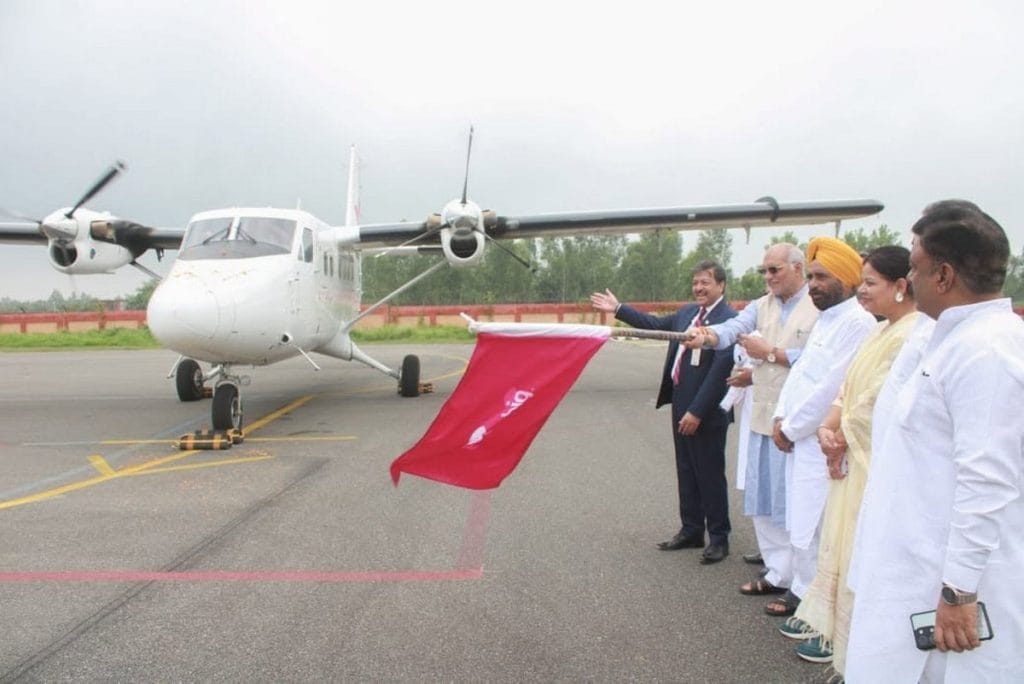
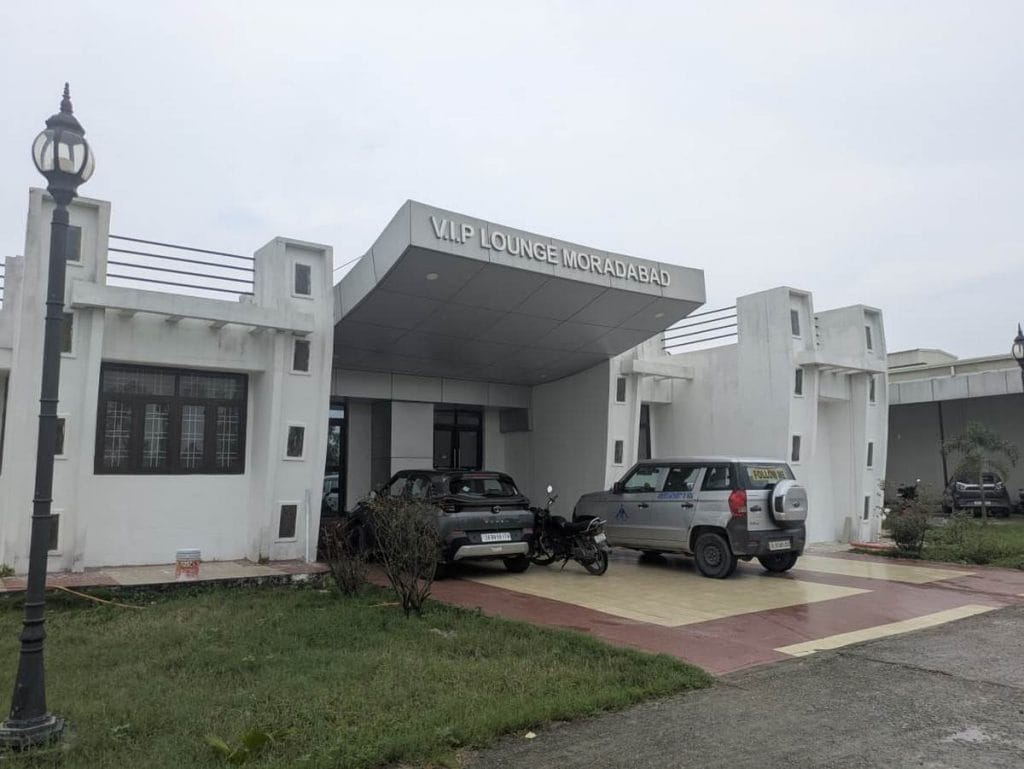
The first Moradabad flight took off five months after the virtual inauguration, on 10 August 2024. This time, there was more local fanfare, with UP ministers Dharmpal Singh and Baldev Singh Aulakh attending to flag off the service. In a buoyant Facebook post, FlyBig called the event a “meet-and-greet extravaganza” with “top officials” in the airport lounge.
At 10:10 am, a FlyBig 19-seater lifted off from Mundha Pande carrying six passengers to Lucknow’s Chaudhary Charan Singh International Airport. It was heralded by the airline as a “new era of connectivity” for Moradabad.
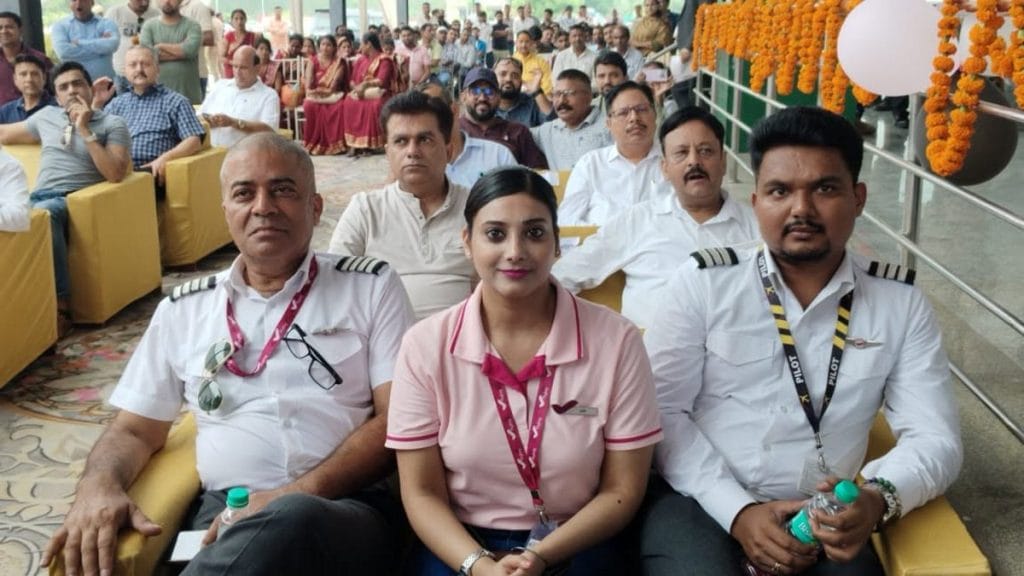
“The airline service will boost Moradabad’s brass export,” declared Dharampal Singh after the occasion. “The first flight has taken off for Lucknow, but soon there will be flights for Mumbai and Bangalore.”
The Lucknow service ran three days a week — Tuesday, Thursday and Saturday — with assurances that it would soon become daily. Routes to Dehradun, Hindon and Kanpur were also promised “in the coming few months”.
Reasons for the crash
None of the new routes materialised. Within three months, even the Lucknow flights were gone.
The immediate blow came when FlyBig — a regional airline serving tier-2 cities and promoted by Gurugram-based Big Charter Private Limited — suspended its Moradabad service in November 2024. The official reason was poor winter visibility, a hurdle Moradabad could not clear due to its VFR-only status.
“The airline… discontinued the flight operation due to poor visibility in North India from 03.11.2024. At present, resurfacing work is in progress at Lucknow airport in a phased manner and the runway is closed during the day time, hence the flight operations cannot be resumed since Moradabad is a VFR airport,” said a Lok Sabha reply from the Civil Aviation Ministry last year.
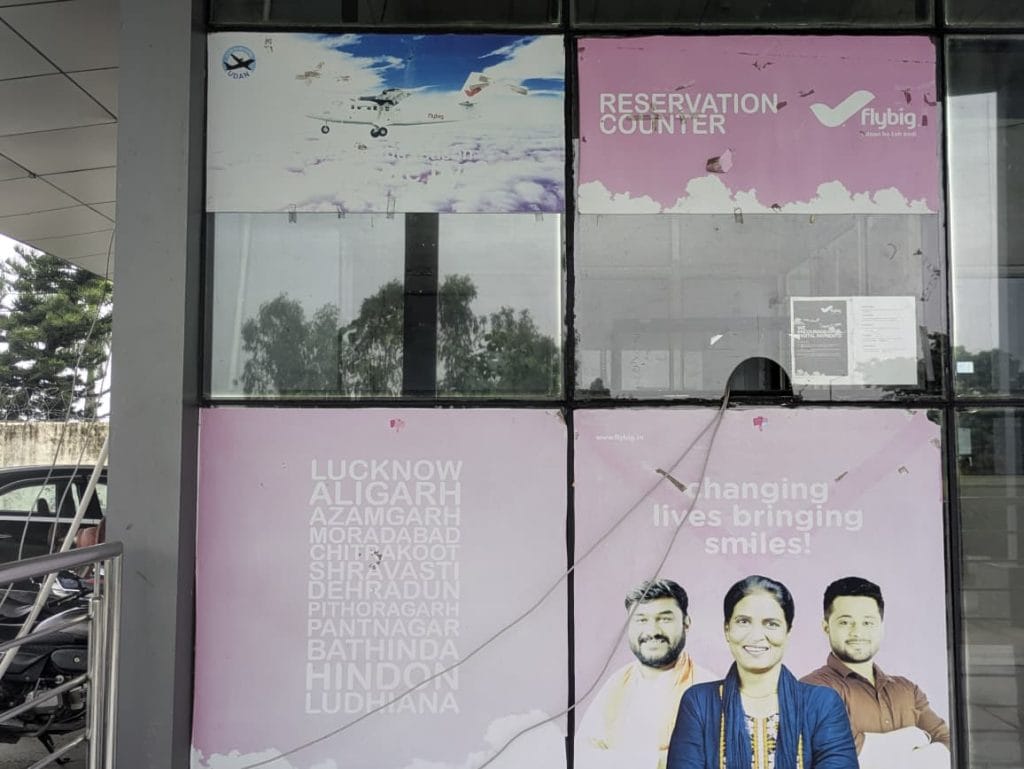
FlyBig never returned. The airline formally folded in December 2025 when its Air Operator Certificate expired. ThePrint attempted to contact FlyBig, but the phone number was out of service, emails bounced back, and its website was no longer accessible.
Without a replacement carrier, Moradabad was stranded. Airport director Ashish Pal cited the lack of compatible airlines as the primary reason for the suspension of commercial flights.
“The FlyBig aircraft was stopped by the company across the entire state of UP,” he said. “Only a 19-seater aircraft can land here, and only a few companies in all of India have those.”
In a statement to ThePrint, the Ministry of Civil Aviation also pointed to the closure of FlyBig for “operational reasons”, adding that “Moradabad airport is Code 2B airport and Critical aircraft is B-2 1900D.”
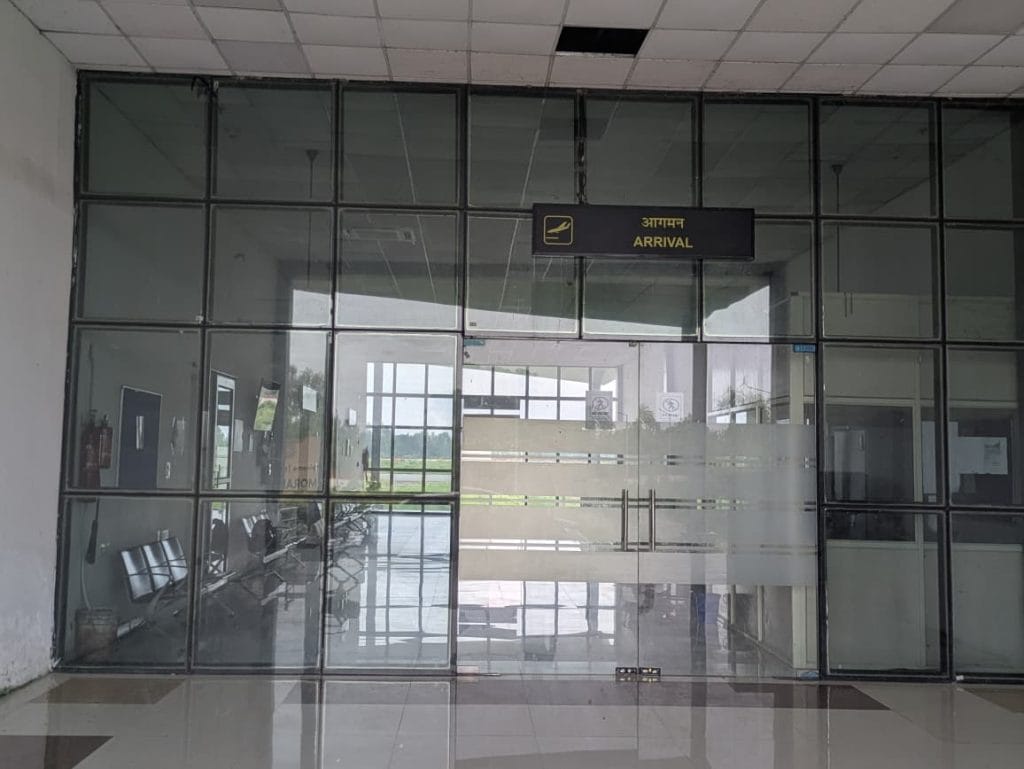
This Code 2B classification means the airfield was built for small regional or business aircraft. Its critical aircraft, the Beechcraft B-1900D, is a 19-passenger twin-engine turboprop once used by operators such as FlyBig, Air Deccan and Air Odisha on short feeder routes. All three carriers have since shut down, and no scheduled commercial airline in India currently operates the B-1900D.
“A large project like an airport takes time to gain complete functionality. The infrastructure was there, but the runway did not have the strength for larger commercial flights,” said Pal, adding that the unavailability of appropriate aircraft is beyond their control.
But the lack of functionality has also raised questions about poor planning at UDAN airports in UP.
UP’s UDAN record
Moradabad Airport was built under UDAN (Ude Desh ka Aam Nagrik), the Regional Connectivity Scheme launched in 2016 to make flying cheap enough for people who’d never boarded a plane. The scheme has grown substantially since. By mid-2026, it covered 669 routes across 95 airports, heliports and water aerodromes.
Uttar Pradesh has been among the most active states under the scheme on paper, with seven airports — Kushinagar, Ayodhya, Azamgarh, Chitrakoot, Shravasti, Aligarh and Moradabad. Of those, only Ayodhya has maintained uninterrupted scheduled commercial service.
We thought there would be factories coming in, increasing the chances of employment for the village youth. But there has been no development
– Anik Pal Singh, farmer from Bhadasana
Between April 2024 and February 2025, Moradabad saw just 542 passengers before flights stopped. In the same period, Hindon airport led with 40,714 passengers and 2,576 movements, Aligarh handled 1,239 passengers, Chitrakoot 1,202 and Azamgarh 956. Kushinagar — billed as an international airport for Buddhist pilgrims — managed only 270 passengers and 44 movements. They are all virtually non-functional now.
In its 2023 report, CAG had already flagged “gaps in planning” for UDAN airports and routes and called for feasibility to be assessed before routes were awarded, taking into account factors such as the local economy and tourism potential.
While the state government is in charge of land acquisition and expansion, the responsibility for operations has been handed over to the AAI.
In Moradabad, the argument over what went wrong has also acquired a political hue.
Girish Chandra, a Bahujan Samaj Party leader who represented the neighbouring Nagina constituency in the Lok Sabha from 2019 to 2024, blamed the failure on poor planning.
“There’s no fuelling system at all; they built the airport but never built the fuel infrastructure to run it,” he said. “Nothing can run without planning, and the government has none. These airports were constructed without government oversight on maintenance, and as a result, the people are suffering.”
Chandra estimated the annual upkeep of the UP UDAN airports at “Rs 50 crore a year”, calling it money that serves no purpose for the public. Government officials declined to disclose Moradabad airport’s total maintenance costs.
However, Akashpal Singh, the BJP’s Moradabad district president, argued that the airport needed time to become fully functional.
“The aircraft first assigned to the route needed more runway than Mundha Pande could offer,” he said. “It used to be just an airstrip, and an airstrip is a different thing from a proper airport. It takes time to get things running.”
The airport, however, has not been written off yet.
A second chance?
Rather than being scaled back, Moradabad airport is now the subject of a fresh land acquisition drive. The plan is to extend the runway to accommodate 90-seater aircraft and also expand the airport.
“The local residents have agreed to give us the land for expansion,” Akashpal Singh said. “We are determined to restore operations at the airport.”
The Aviation Ministry told ThePrint that it also envisioned a phased expansion of the terminal building and other support infrastructure “based on projected traffic demand and the long-term traffic forecast.”
Beyond the terminal itself, the ministry said the area could be developed as an “Integrated Airport City” – with hotels, retail, offices, logistics facilities, parking and multimodal connectivity hubs — with the stated aim of turning the airport area into “an economic and business destination, rather than limiting it to aviation-related functions.”
The ministry described this as part of a broader shift in which airports are seen as “major economic catalysts and growth centres”.
But expansion means more land.
Bhadasana and Niamatpur-Ikrosia villages had already given up farmland for the airport. Villagers say they were promised roads and economic opportunities in return, but little materialised other than more inconvenience. Now, they are sceptical.
Also Read: Why a Rs 300-crore luxury housing project is empty in Delhi’s Vasant Kunj
More VIPs, less ease
Moradabad Airport cuts directly through Bhadasana, dividing the village in two. For farmer Anik Pal Singh, that turned a short walk to his fields into a 2-kilometre detour.
“I used to walk straight across, but now I have to take the longer way over,” he said. “The children used to come by in the afternoon with food, but now that is also not an option. You cannot travel back and forth easily.”
For people in Bhadasana and neighbouring villages, the airport had once been an aspirational space, a marker of progress and a promise that their stretch of farmland along the Rampur-Moradabad road would soon grow into a small town.
“We thought there would be factories coming in, increasing the chances of employment for the village youth,” Anik Pal Singh said. “But there has been no development.”
Other farmers described the same disappointment. Land had been taken for the airport, but no returns had followed for them.
A separate access road was also promised at the time of acquisition, so residents wouldn’t have to cross the airport boundary to reach their fields. It was never built. Now, VIP movements have brought a new hassle.
“The village’s main entrance gets blocked whenever a VIP flight lands, cutting off our movement for hours,” Singh said.
(Edited by Asavari Singh)